- The Belgian-Dutch group Ahold Delhaize is the leader in some European markets, but the retailer generates more than 60 percent of its sales in the United States - and the trend is rising
- Thanks to the non-cyclical business model in consumer staples trading and the defensive nature of the sector, the company is characterized by stability in terms of profits and cash flows
- The expansion of e-commerce sales and the focus on the direct-to-consumer business in the major cities on the US East Coast should strengthen the company's competitive position in the long term
- Since the merger in 2016, Ahold Delhaize has paid an increasing dividend for each financial year. The retailer also impresses with an opportunistic share buyback program. Over the past six years, the buy-backs have reduced the proportion of outstanding shares by around a quarter
- Click here for the DGI model portfolio and here to the overview of this series The dividend custody account.
Company profile and business model: Who is Ahold Delhaize and what does it do?
The merger of the Dutch Koninklijke Ahold with the then smaller Delhaize Group in 2016 marked the beginning of the The birth of "modern history" of this industry heavyweight.
But why does the conglomerate from the Benelux countries advertise with a 150 years of history on the official website? That's because the roots of the Belgian arm of the company go back to 1867. At that time Jules Delhaize Together with his brothers, he runs a grocery store near Charleroi.
The origin of the Dutch part of the GroupKoninklijke Ahold NV", goes back to a grocery store founded by Albert Heijn in Oostzaan in 1887. Named after the company pioneer, the "Albert Heijn" retail brand rose to become the leading supermarket chain in the Netherlands in the 1970s. During this period, Ahold began to expand by acquiring companies in Spain and the USA internationally. The "Koninklijke" in the company name stands for the Dutch word royal and refers to the centenary award in 1987, when Kings Beatrix which Ahold N.V. fittingly congratulated with this honorary title.
A few decades later and after a first attempt at the Fusion in 2006, Ahold and Delhaize announced their agreement to merge in the summer of 2015. Increased competitive pressure, primarily driven by the expansion offensive of discounters such as the German flagships Aldi and Lidl, fueled this strategic move. Ahold paid around 25 billion euros to Delhaize. The merger agreement was signed on July 23, 2016 following approval by the shareholders and competition authorities. The first day of trading of the shares on the stock exchange was July 25, 2016.
Today, the Group includes 19 local brandswhich are represented in a total of ten countries. In the 7,659 supermarkets worldwide become Over 60 million customers every week from over 414,000 employees serviced.
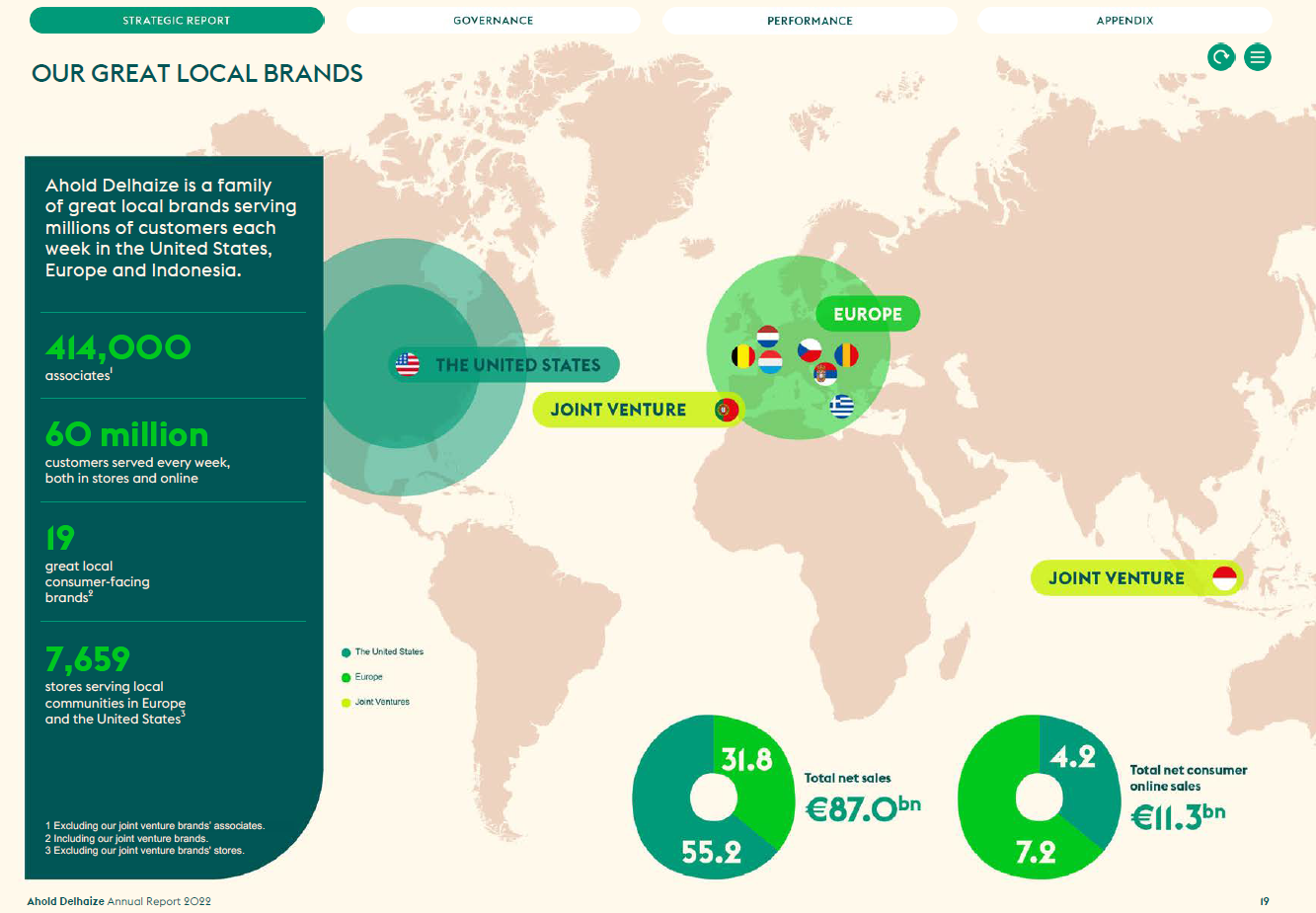
The business model of Ahold Delhaizes essentially consists of traditional food retailing and other consumer goods in the non-food, pharmacy and gasoline segments. Together, perishable and non-perishable foodstuffs form the core, accounting for 80 percent of sales. Non-food" includes, for example, the sale of care products, pet food, tobacco products, electrical appliances, etc. Sales in the petrol station and pharmacy business are limited to the US branch under the The Giant Company.
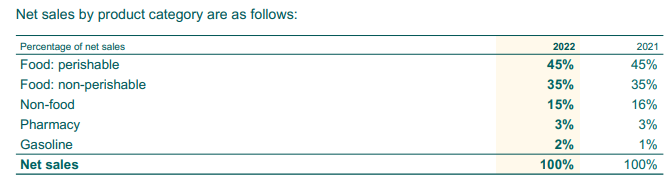
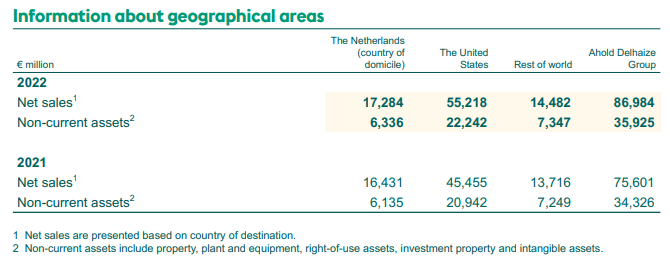
A special feature of the high degree of diversification of Ahold Delhaize is the international nature of its business activities. In the individual countries, the company pursues a multi-brand approach for the various local supermarket chains. Almost two thirds of sales come from the US businessThe rest comes from Europe, with the Netherlands alone accounting for around 20% of sales. The other countries are Belgium, Luxembourg, Romania, the Czech Republic, Serbia and Greece. In Indonesia (Super Indo) and Portugal (Pingo Doce), Ahold Delhaize manages the business activities as Joint venture with external partners.
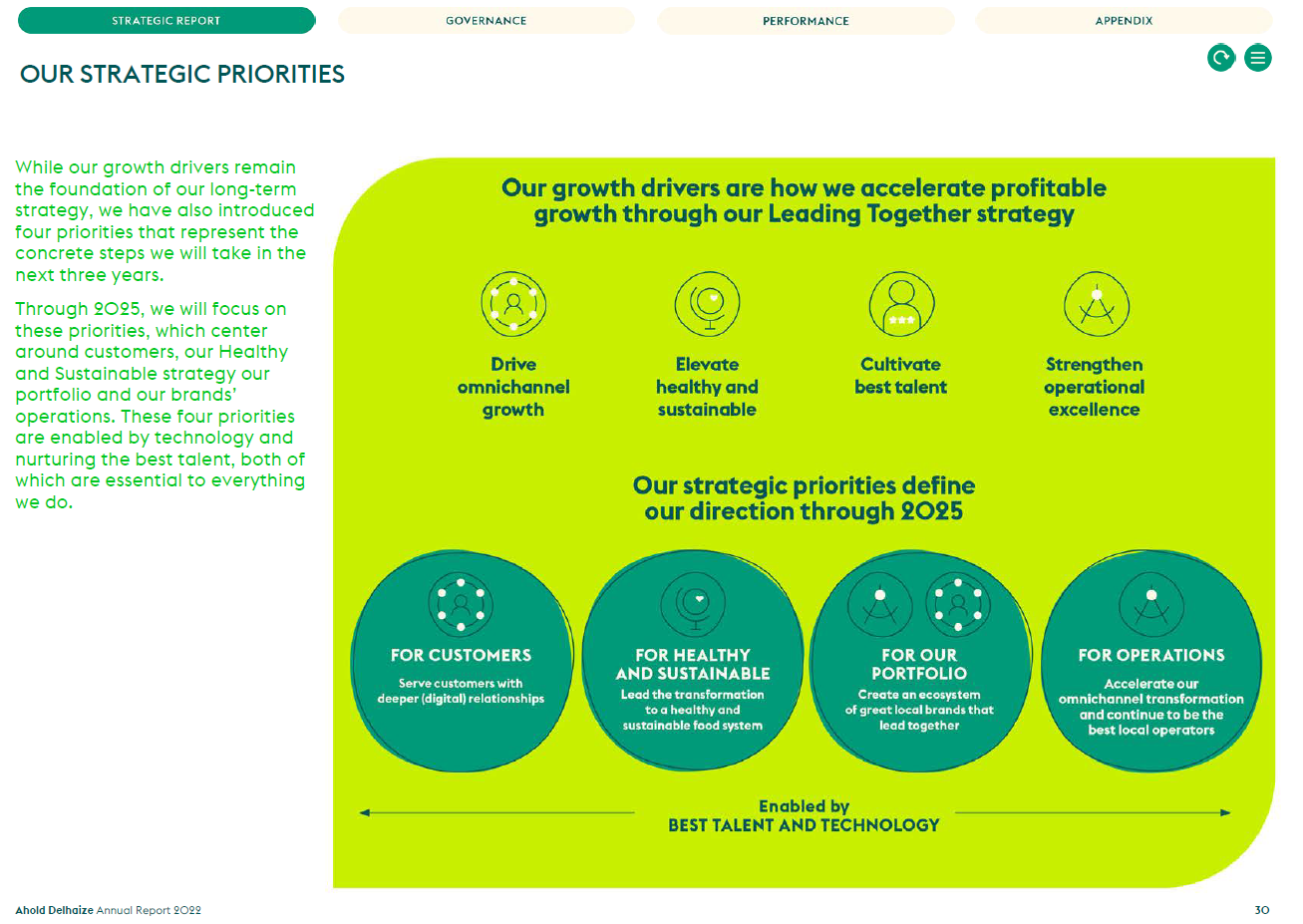
In recent years, the management has concentrated on the Corporate strategy on the transformation of the product portfolio and the underlying servicing. On the basis of four strategic priorities Ahold Delhaize is focusing on the expansion of its e-commerce business, the expansion of its range of high-quality own brands, high employee satisfaction and efficient, cost-optimized processing (operations).
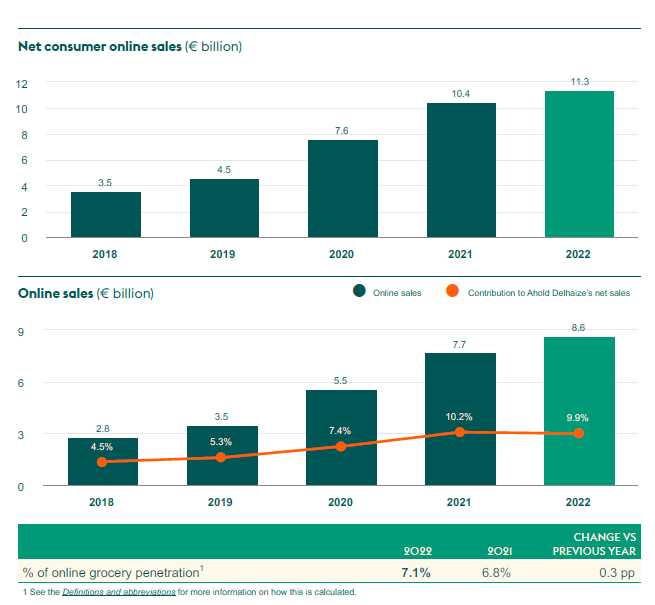
The implementation of measures to promote the Digitization in online sales and e-commerce is reflected in the successive growth in the share of total sales over the years. In the USA in particular, measures such as the expansion of click & collect and pick-up locations, the reduction of delivery fees and minimum order quantities as well as a customer loyalty program with enhanced benefits are beginning to have a positive impact.
The food group's digital agenda also includes the long-term development of so-called "complementary revenue streams". This refers to those fields of activity away from the classic retail business which are expected to emerge as worthwhile investments and expand the base of revenue drivers. The stated strategic goal is one billion euros in additional revenue by the year 2025 to achieve.
A minority stake was recently acquired in the Belgian company specializing in digital advertising Tech company Adhese acquired. It is hoped that the integration of Adhesive solutions to offer its Business-2-Business partners a broader range of services and thus strengthen customer loyalty.
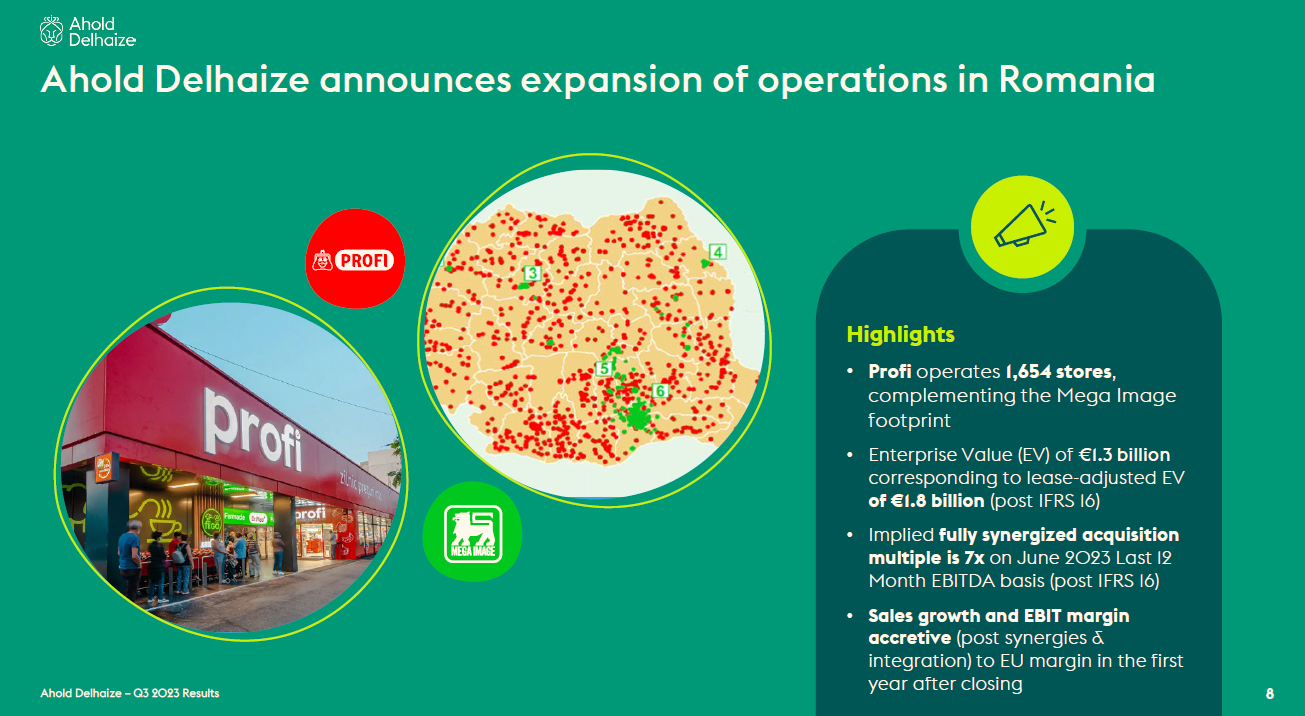
A key component of Ahold Delhaize's growth strategy are Acquisitions of companies. In addition to the positive effects on the business figures, this inorganic growth also serves to strengthen the company's competitive position by acquiring competitors. On October 30, 2023, Ahold Delhaize announced that it had reached an agreement with the previous owner on the Full acquisition of the food retailer Profi Rom Food SRL (Profi) agreed. Profi is a leading traditional food retailer in the Romania and operates 1,654 stores there. The takeover doubles the size of Ahold Delhaize, which operates in Romania under the Mega Image and has more than 969 stores, mainly in urban areas.
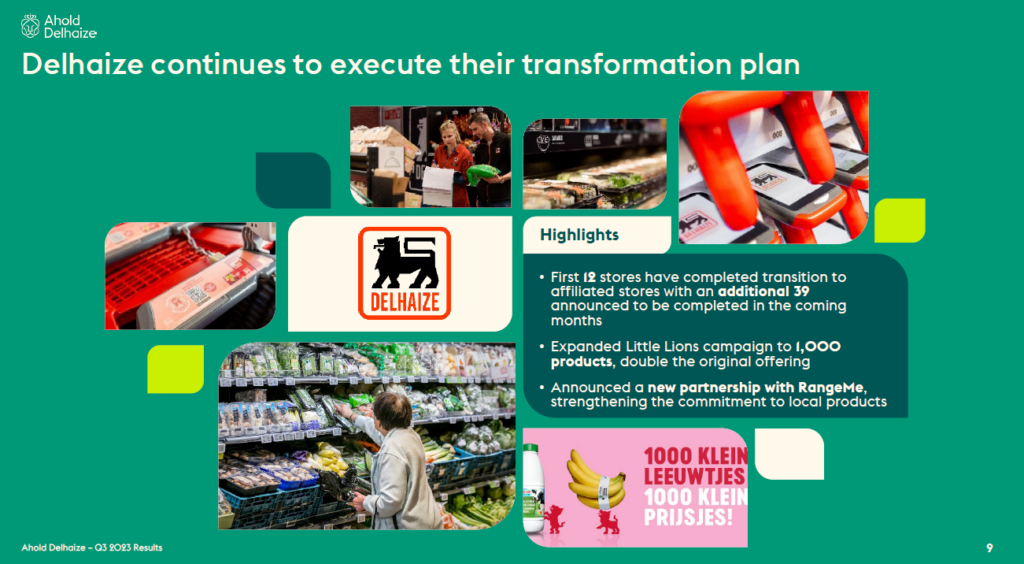
The flip side of continuous Portfolio optimization are disposals of parts of the existing business. In addition to the surprising Sale of FreshDirectthe online grocery retailer was only acquired at the beginning of 2021, the Group announced that all its supermarkets in Belgium in future Independently operated Delhaize stores to convert. According to management, this is due to the highly competitive Belgian retail market.
As Chief Executive Officer and President of the Management Board Frans Muller the business of Ahold Delhaize. Born in the Netherlands, he was largely responsible for the organizational merger of Ahold and Delhaize before his appointment as CEO in 2018.
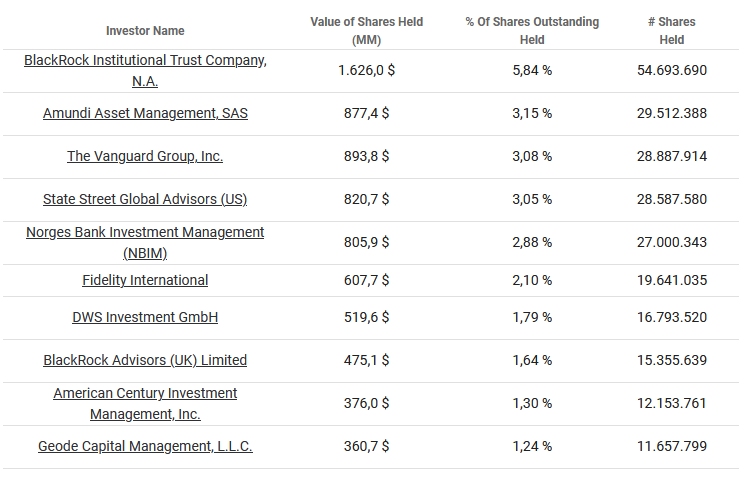
At the ownership structure of Ahold Delhaize, the extremely high proportion of institutional investors is striking. This group is usually made up of the "usual suspects" of asset managers.
Industry profile and competitive situation
The characteristics of Ahold Delhaize's business model make the comparison with listed competitors quite simple, as the retail sector is generally characterized by intense competition. The individual parameters for each company, such as the degree of internationalization or the product portfolio, should be considered in more detail as part of the qualitative company analysis.
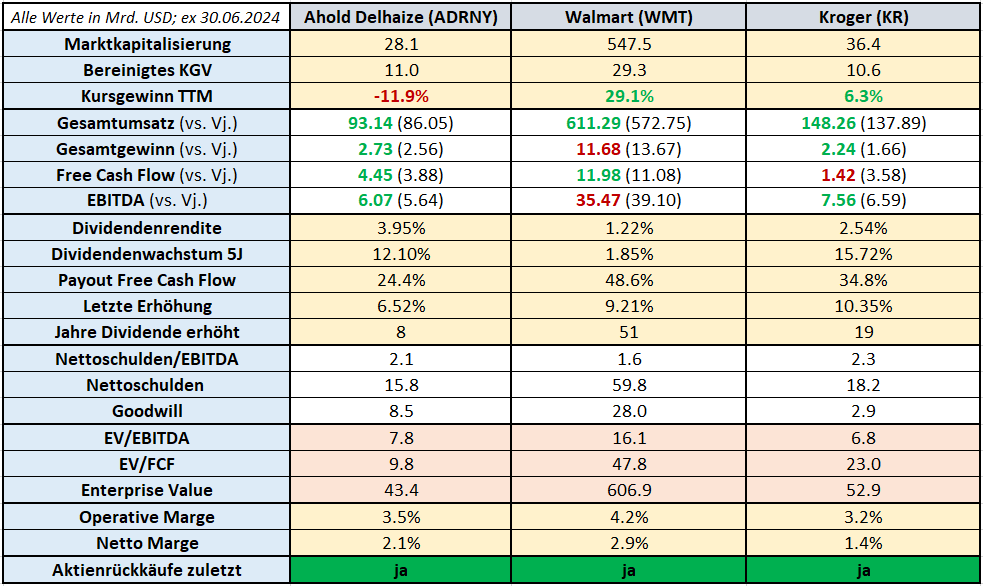
Let's get an overview thanks to the following comparison.
Due to the high US share of total sales, I opted for the two competitors in an initial comparison Walmart and Kroger. Whether this list should now be extended to include other industry giants such as Target, Carrefour etc. is a matter for each investor to decide in a more detailed industry analysis.
Notes on the values contained in the table:
- Green or red coloring of the figures indicates growth or decline compared to the previous year
- All values are stated in US dollars
The financial situation of Ahold Delhaize
After gaining an overview of the industry in general and taking a closer look at the company, management and competition as relevant factors, we take a look at Ahold Delhaize's balance sheet and the key financial figures derived from it. The focus here is on the following aspects Growth, profitability and Financing.
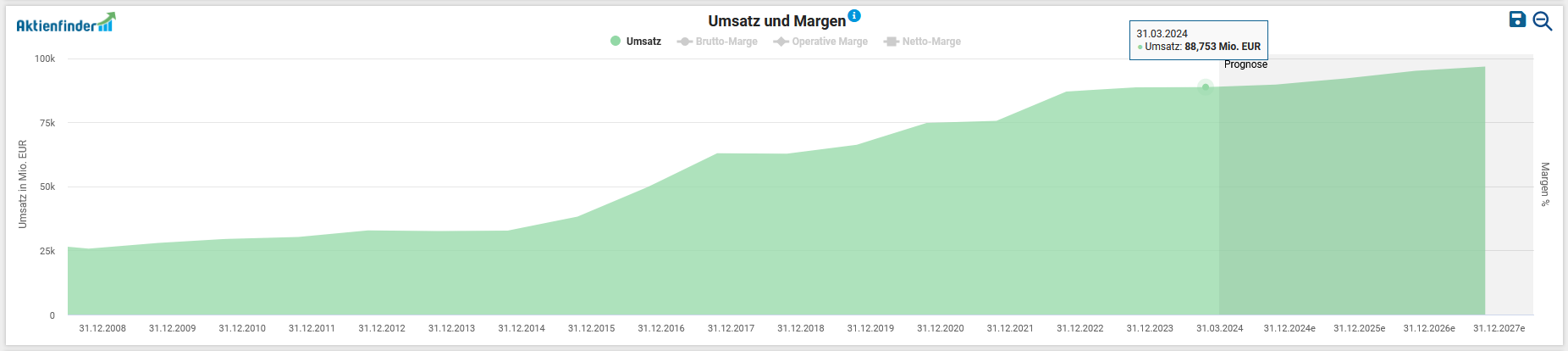
The first step in analyzing the financial situation is to look at the development of sales, profits and earnings. Free Cash Flow to. I have already discussed the internal distribution of sales across segments, product categories and regions in the chapter on the business model above. On average, the Top Line has grown by 8.2 % in the last five years. percent p.a. an.
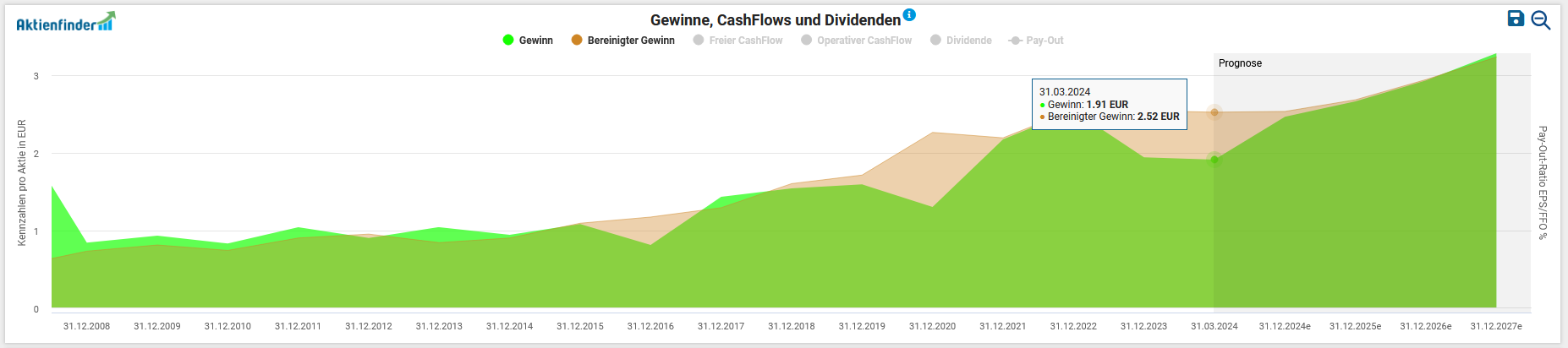
At Earnings per share we have seen a continuous upward trend since the merger of Ahold and Delhaize. If we look at the past financial year 2022, the Adjusted earnings per share at 16.4 percent (EUR 2.55 vs. 2.19). In the past financial year, Ahold Delhaize generated a profit of Net profit from EUR 2.56 billion (2021: EUR 2.25 billion).
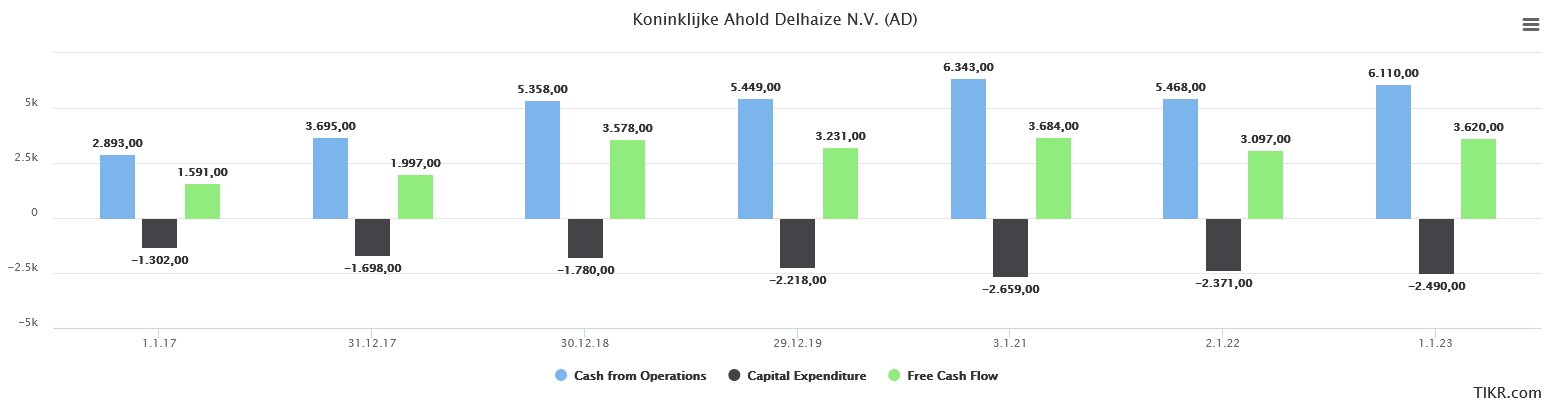
The amount available to the company Free Cash Flow can be used to repay debt, expand via company acquisitions, pay out (increasing) dividends or buy back shares. In absolute figures - which I primarily like to use - the picture of operating and free cash flow as well as capital investments for the period 2017 to 2023 is as follows:
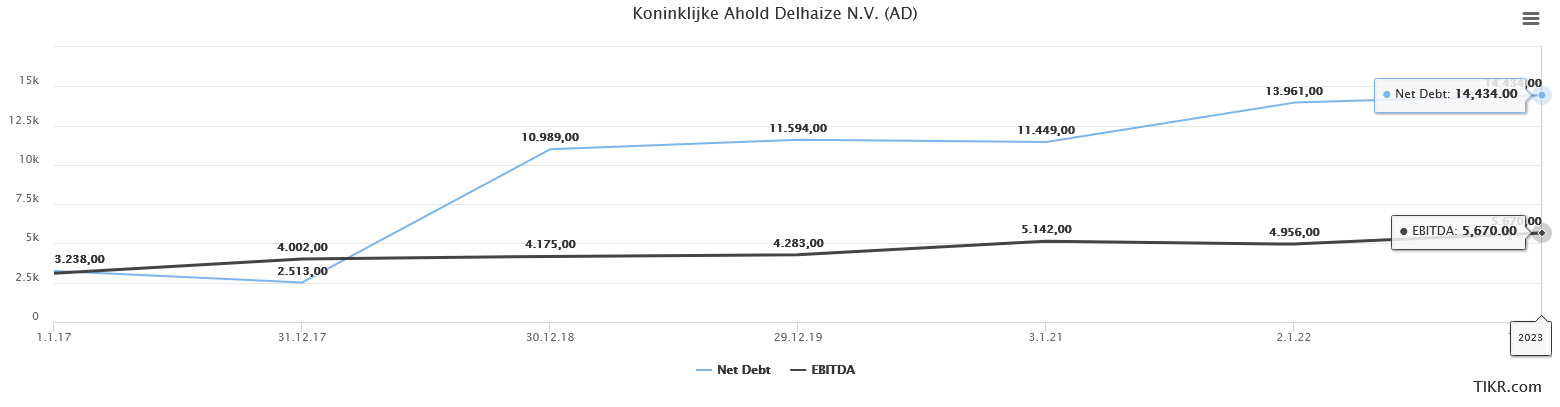
A look at the Debt situation tells us that, based on the last financial year, Ahold Delhaize has a share of interest-bearing financial liabilities of EUR 17.6 bn, which in turn is offset by cash and cash equivalents and securities totaling EUR 3.2 bn. If we now divide the remaining net debt of EUR 14.4 billion by the most recently generated EBITDA of EUR 5.7 billion, we arrive at a ratio of 2.5, which is below the critical threshold of 3 (although this depends on the sector).
In connection with Ahold Delhaize's debt, it should be noted that Ahold Delhaize's bonds are denominated in both euros and US dollars, of which almost exactly two thirds are denominated in euros. In March 2023, Standard & Poor's raised the Credit rating of the company from Investment grade BBB to BBB+ with a stable outlook.
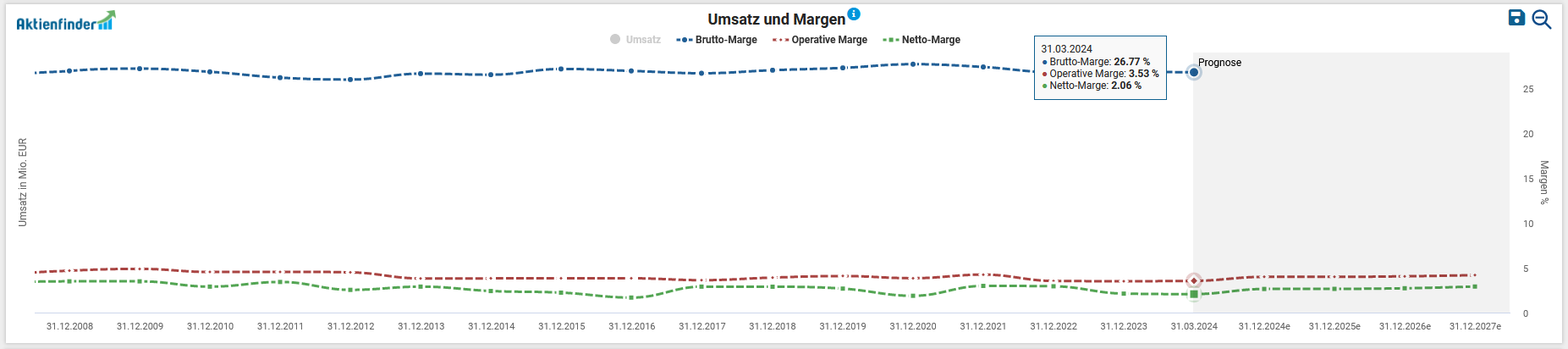
Finally, we look at the Profitability of Ahold Delhaize based on the development of gross, operating and net margins. The slump in the net margin in 2020, when the coronavirus pandemic broke out worldwide, is clearly visible.
Opportunities & risks
Based on a solid balance sheet, Ahold Delhaize operates in a sector that is characterized by Stability and moderate growth in profits and cash flows. The consumer staples sector proves to be relatively robust, particularly in phases of increased volatility on the stock markets.
Despite intense competition in the retail sector, globally positioned companies such as Ahold Delhaize are creating adequate opportunities to offset the cost increases triggered by high inflation in the course of Price increases to the consumer. Another means is the price discounts that are typical for the industry, which can be passed on to consumers due to the Negotiating power are negotiable with suppliers.
Ahold Delhaize's corporate strategy focuses on Investments to expand the value chain and gradually transform the portfolio. In the United States, the subsidiary specializing in digitalization announced Peapod Digital Labs new plans to establish a Own end-to-end media business for the retail trade.
The retail sector has a high degree of Competition as customers' willingness to switch is primarily determined by price sensitivity. Attractive customer loyalty programs are an effective means of combating discounters and e-commerce providers, but they do not go far enough. at the expense of profitability. The geographical diversification of income streams across several regions entails a higher risk exposure on the downside and makes active risk management in conjunction with Currency fluctuations required.
One risk for Ahold Delhaize that cannot be ignored is the Susceptibility to supply chain disruptions. Any precautionary measures against future disruptions to global supply chains may have a negative impact on profitability due to the build-up of increased inventories.
Current valuation of the Ahold Delhaize share
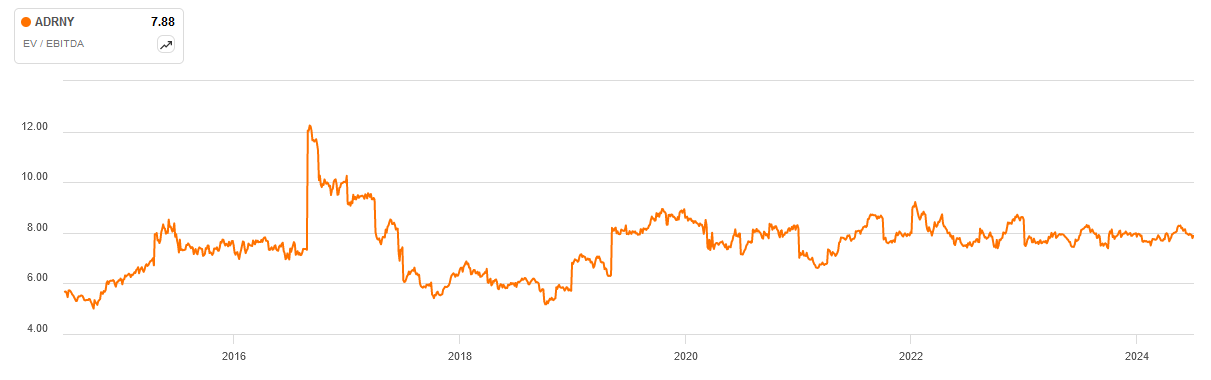
For the valuation of companies, I use the so-called Enterprise Value (EV) is used. In the case of a takeover, the EV indicates the amount required to purchase the assets required for operations and excludes the non-operating assets. I relate this key figure to the operating profitability (before taxes, interest and investments (CAPEX)), expressed by the EBITDA. The prevailing opinion is that a value of less than 10 signals a "healthy valuation" - as always with generic Rules of thumb the company-specific context must be considered in the analysis by the careful investor himself. In the case of Ahold Delhaize we have been seeing a valuation around the value of 8:
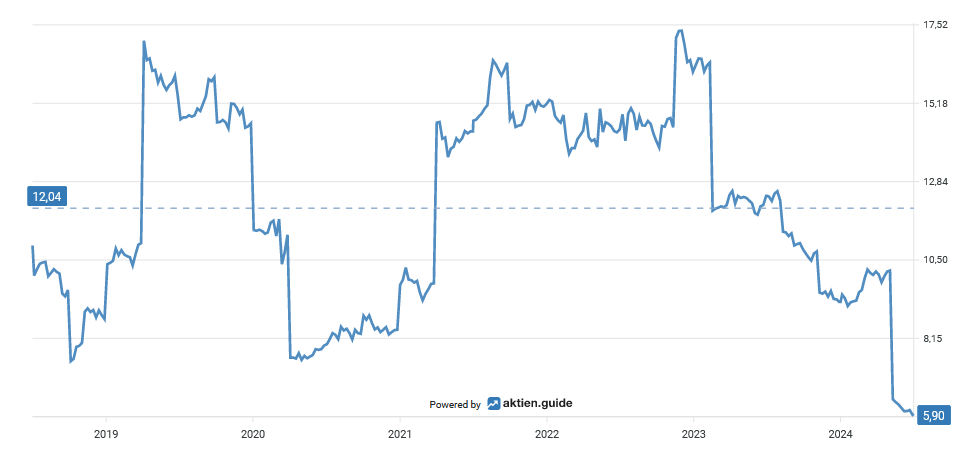
Another way of answering the valuation question is to compare the EV with the hardly manipulable Free Cash Flow (FCF) to be set. A high EV/FCF multiple indicates a high valuation, while a low result signals a cheap valuation. From the chart below we can clearly see that Ahold Delhaize's shares are trading at a value of 5.9 for the EV/FCF ratio clear under the average level of 12 of the last six years.
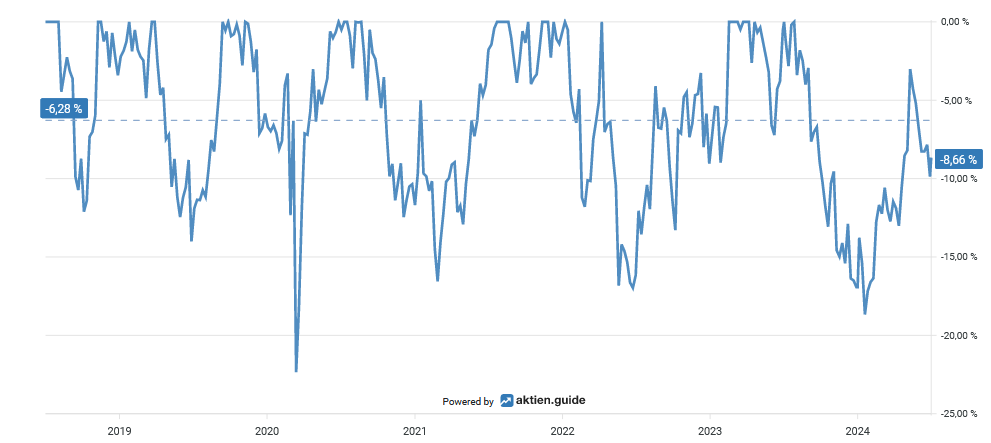
The Maximum decrease in the last six years amounted to approx. 23 percent just in the wake of the corona pandemic in 2020:
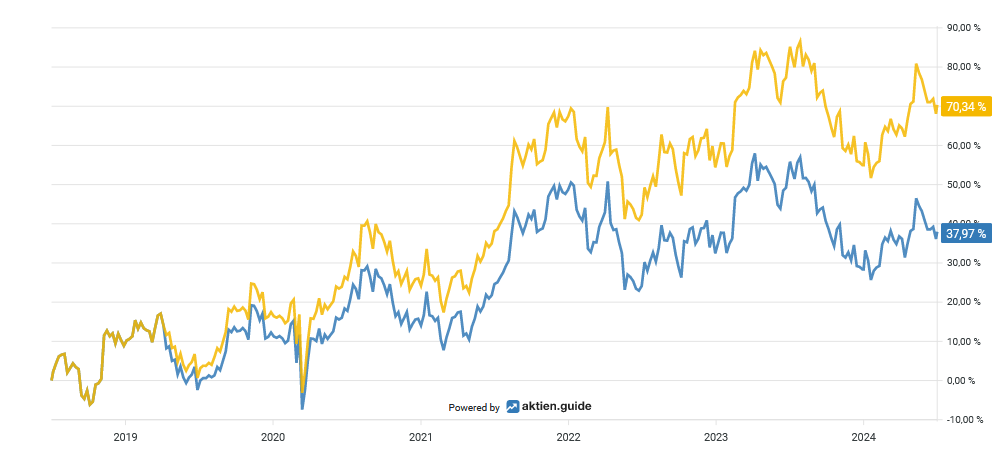
Over the past six years, an investment in Ahold Delhaize has yielded a return of Total Return, including dividends received, a Overall performance from 70.3 percent for the investor:
Capital allocation
When looking at the dividend history, it is noticeable that Ahold Delhaize, as a half-yearly payer, distributes dividends as an interim dividend and a final dividend. This has been the case since 2019; before that, dividends were paid once a year, as is customary for continental European companies. As the final dividend is paid out in the first half of the year, this resulted in a total dividend payment of Discrepancy between financial year and calendar yearwhich could be wrongly interpreted as a dividend cut.
This deviation for the The calculation of dividend growth is explained by the distinction between the financial year and the calendar year. In 2019, shareholders received the newly introduced interim dividend in addition to the annual dividend.
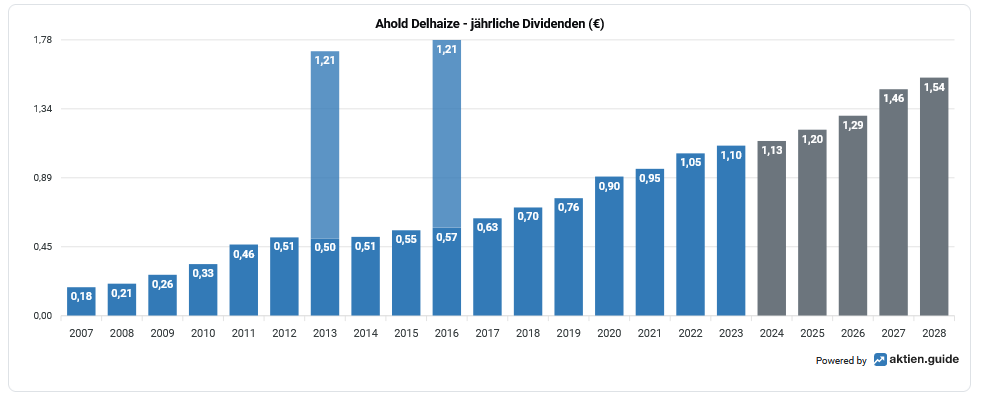
At the current share price of EUR 27.71, this results in a Dividend yield from 3.97 percent. The Five-year dividend growth rate amounts to 12.1 percent p.a.. or 8 percent p.a. over a ten-year period.
Ahold Delhaize is striving for Dividend policy the goal of achieving a dividend payout of 40 to 50 percent of the underlying profit from operating activities. When determining the underlying payout ratio, any special effects such as amortization of goodwill, proceeds from the sale of assets or provisions for restructuring are deducted.
Now that we have looked at the track record, we can better understand why Ahold Delhaize has been distributing an increasing dividend per financial year since the merger of the two companies in 2016.
If we take the average value of the Free Cash Flow of the last three years as the basis for determining the Payout ratio we end up with a comfortable result of 29.2 percent for the payout ratio.
The Number of shares outstanding reduzierte sich um 3.8 percent per year respectively 22.9 percent accumulated over the past six years.
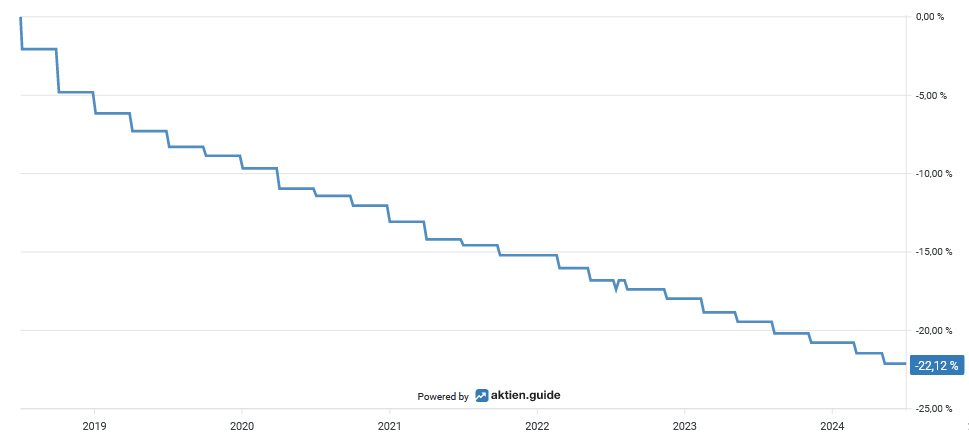
There is currently a Aktienrückkaufprogrammwhich grants the management a power of one billion euros for share buybacks. This should be completed by the end of next year.
Conclusion: Considerations for my decision to invest in Ahold Delhaize
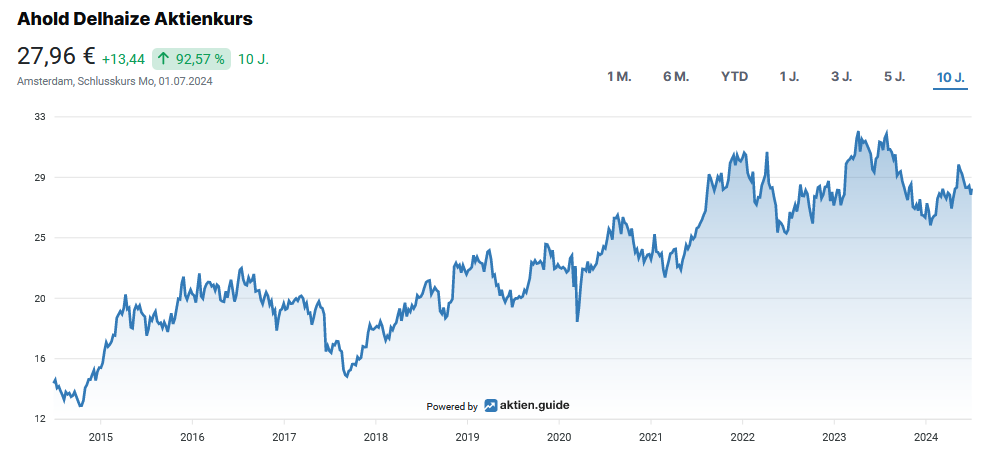
Ahold Delhaize's share price has been moving sideways for several months. It is a good 15 percent short of its mid-2023 high. Fierce competition on price remains a constant challenge in the retail sector. Organic growth in bricks-and-mortar retail also has its hands tied to a certain extent, as basic consumption is considered a saturated market in industrialized countries.
For long-term investors looking to acquire quality companies at fair valuations, I consider the current price level of Ahold Delhaize shares to be an attractive opportunity. The management recognized the signs of the times early on and is investing in the expansion of earnings streams. The acquisitions of start-ups such as Adhese or partnerships with third-party companies are part of a gradual portfolio transformation in which the company is also withdrawing from lower-growth markets such as Belgium.