Hardly any other time of year influences consumer behavior in Germany as strongly as the weeks leading up to Christmas. From Black Friday to Cyber Week and right up to the final days before Christmas Eve, consumers„ willingness to spend traditionally increases significantly. In addition to gifts for family and friends, food for the festive meal or spontaneous trips over the holidays - the pre-Christmas period is usually the strongest sales phase of the year.
Some consumers are opting for early online shopping, while others are opting for the traditional stroll through city centers. The possible increase in consumer sentiment in this context could also have an impact on the financial markets. Companies from the retail sector to e-commerce and payment providers could benefit. In this context, the pre-Christmas season can provide interesting impetus for investors.

The most important in a nutshell
- According to HDE, German consumers plan to spend an average of 263 euros per person on Christmas gifts
- Popular items include gift vouchers, toys, books, cosmetics and personal care products.
- Black Friday 2025 in the USA: 1 trillion website visits to US online stores; sales increased by 9.1 percent to 11.8 billion dollars compared to 2024
- Companies such as Amazon, Walmart, Shopify and eBay could benefit from Christmas sales
What will Germans be spending over the next few weeks?
Christmas remains the decisive event for many retailers. Around 18.5 percent of their annual turnover is generated in the last two months of the year. Other sectors such as toys even account for a whopping 25 percent.
According to the German Retail Association (HDE) Around 126 billion euros are expected to be generated in the German retail sector from November to December 2025, which would correspond to a nominal increase of 1.5% compared to 2024. Adjusted for inflation, the result should therefore tend to be at the previous year's level.
According to the German Retail Association: 263 euros per person for Christmas presents
According to the HDE, consumers are planning to spend an average of EUR 263 per person on Christmas gifts, which is EUR 34 less than last year.
21 percent of respondents plan to spend less in 2025 than in 2024, while 10 percent plan to spend more, 54 percent as much in the previous year and 6 percent nothing at all.
Popular items include gift vouchers, toys, books, cosmetics and personal care products.
Online sales could increase by 2.3 percent year-on-year in nominal terms
The HDE also estimates that online Christmas sales will increase by 3.3% in nominal terms in 2025 (2.3% in real terms), resulting in a total volume of around EUR 22.2 billion.
ifo Institute: Business may deteriorate in some segments
According to the ifo Institute In certain segments, such as toy retailers, business could even be worse than in the previous year. „Retailers“ expectations are subdued. Many are entering the most important sales period of the year without high hopes," said Klaus Wohlrabe, head of the ifo Institute. Around half of retailers expect average business and only 10 percent expect positive business.
US online business turnover could increase by 5.3 percent compared to 2024
The Sales in online business could increase in the USA from November 1 to December 31 could be 253.4 billion dollars, 5.3% higher than in the previous year, which would also be a new record for digital spending during the Christmas period. A total of around 43.7 billion dollars is expected to be spent during Cyber Week, which would account for 17% of total spending. Cyber Monday is therefore expected to bring in around 14.2 billion dollars.
Worth knowing: On „Black Friday“, consumers in the USA were able to purchase items in online stores according to data from Adobe Analytics one trillion visits by shoppers to retail websites. On the most important shopping day of the year, 11.8 billion dollars were spent, 9.1 percent more than in 2024.
Which shares could benefit from the Christmas business?
- Retail & online trade
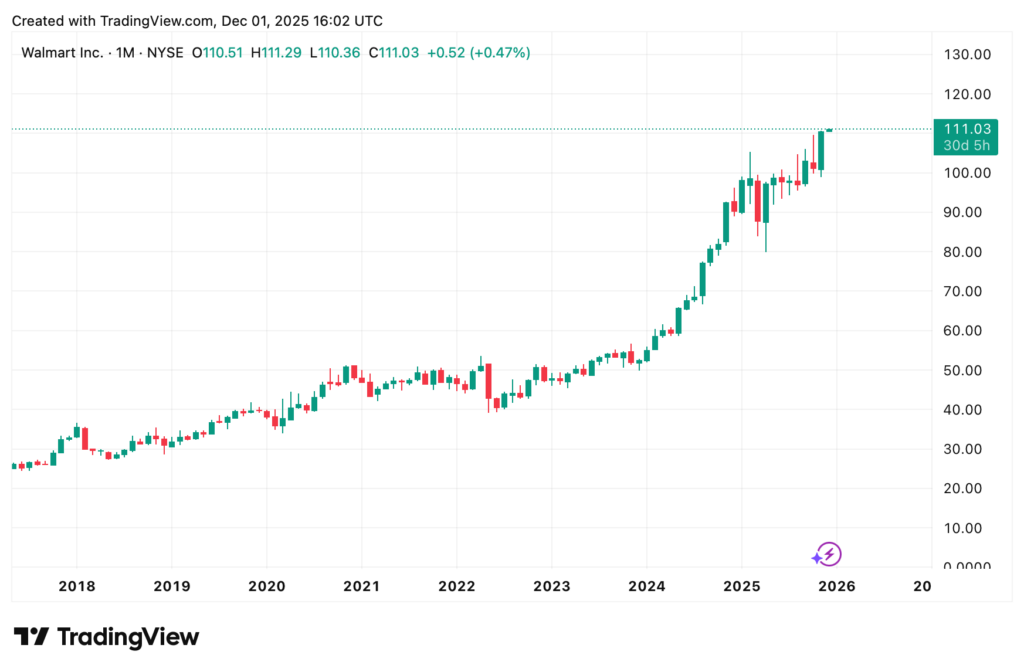
Walmart: the place to go for price-conscious Christmas shopping?
The US retail giant Walmart could attract customers who want to shop price-consciously and combine gifts and everyday shopping.
Walmart (ISIN: US9311421039)
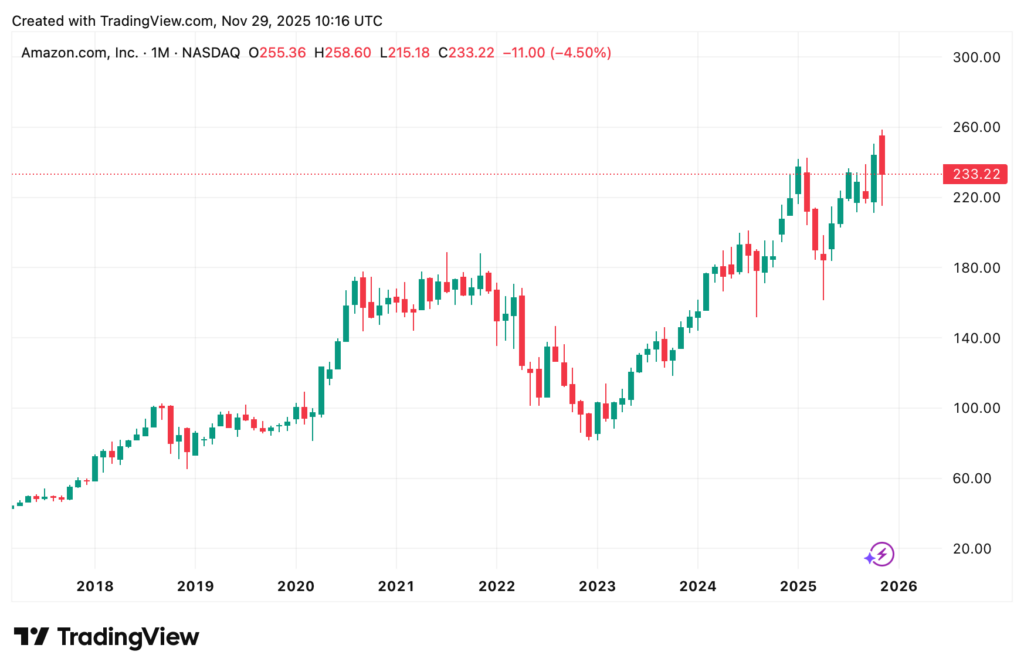
Amazon as a potential profiteer in Christmas consumption
As a global online market leader with a wide range of products, from electronics and clothing to toys and Christmas gifts, Amazon's shares could benefit over the Christmas period. As many consumers continue to buy their gifts online, the company is likely to be one of the beneficiaries.
Amazon (ISIN: US0231351067)
- Online platforms, e-commerce
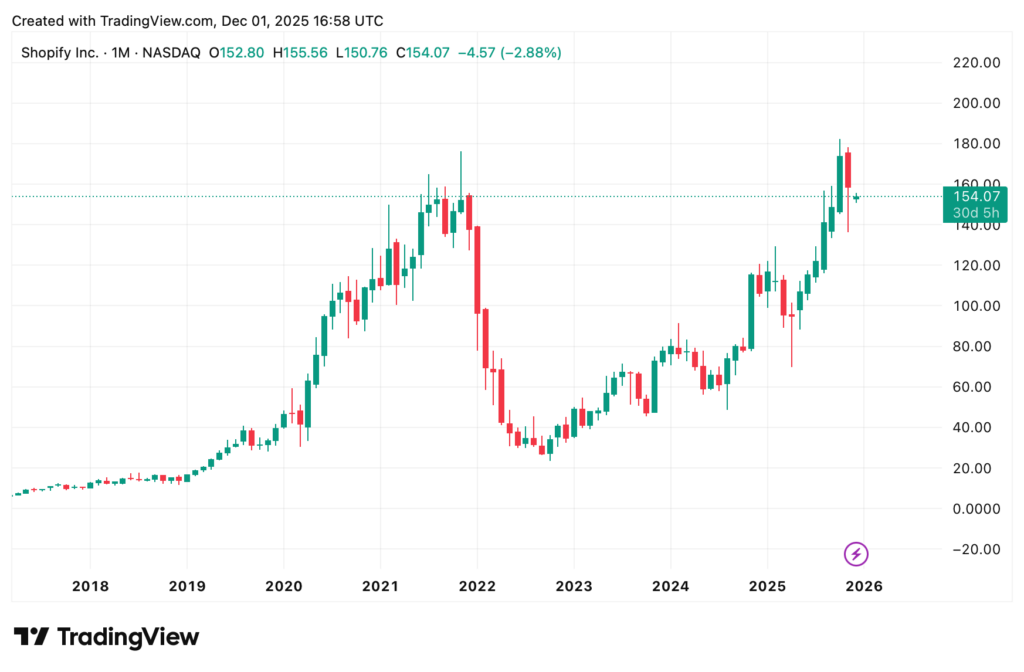
Shopify: Winner of the digital Christmas rush?
Shopify is a leading provider in the e-commerce sector. Companies ranging from start-ups to larger retailers can operate online stores via Shopify and also process payments and shipping.
Especially during the Christmas season, when gifts, toys and clothing or other items are sold over the digital counter, part of the seasonal boom could indirectly play into the platform's hands.
Shopify (ISIN: CA82509L1076)
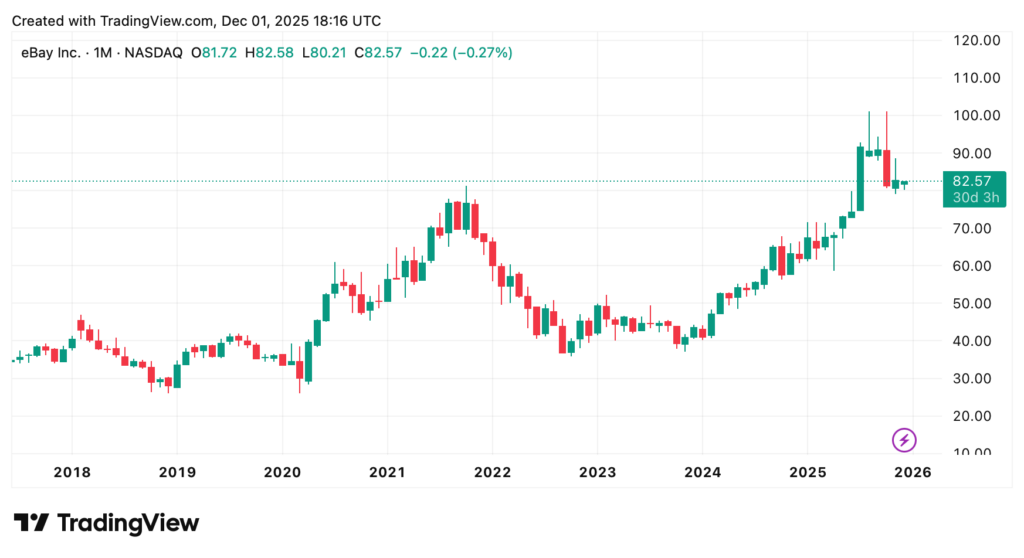
eBay: Potential opportunities for investors from the 2025 Christmas business
eBay could become particularly interesting for investors at Christmas time. eBay acts as an online marketplace for buyers and sellers around the globe. Gifts such as electronics, games and second-hand goods are often sought after. In addition, in economically fragile times, price-sensitive customers could try to find a „bargain“ on the platform.
eBay (ISIN: US2786421030)


Summary: Online retail could drive Christmas sales in 2025 - luxury products likely to fall by the wayside
Christmas sales in 2025 are likely to remain a decisive factor for the German retail sector despite a potentially subdued consumer mood. Even if consumers are estimated to be planning to spend less on gifts overall, they are still likely to be willing to invest in gifts such as vouchers. However, luxury and high-priced items could suffer due to the pronounced price consciousness. Online retail in particular could show above-average growth and thus continue to put pressure on bricks-and-mortar retailers.
Segments such as toys, books, cosmetics and electronics are likely to be among the winners. According to estimates, online sales in the USA are expected to reach 253.4 billion dollars, which would correspond to an increase of around 5.3% compared to the previous year.
In view of the economic uncertainty and the associated possible tendency of consumers to save, it remains to be seen how Christmas business will actually develop.
In an overall challenging environment, at the end of the day it may be primarily retailers who have to come up with new strategies to attract consumers to the stores.
Actual sales and therefore profits are likely to depend not least on whether consumers are willing to spend money despite discount battles due to ongoing inflation and economic uncertainties.