


Many people don't get involved with investing until later in life - often due to uncertainty or a lack of time.
David Ernsting has been intensively involved with capital markets, online brokers and financial education for many years.
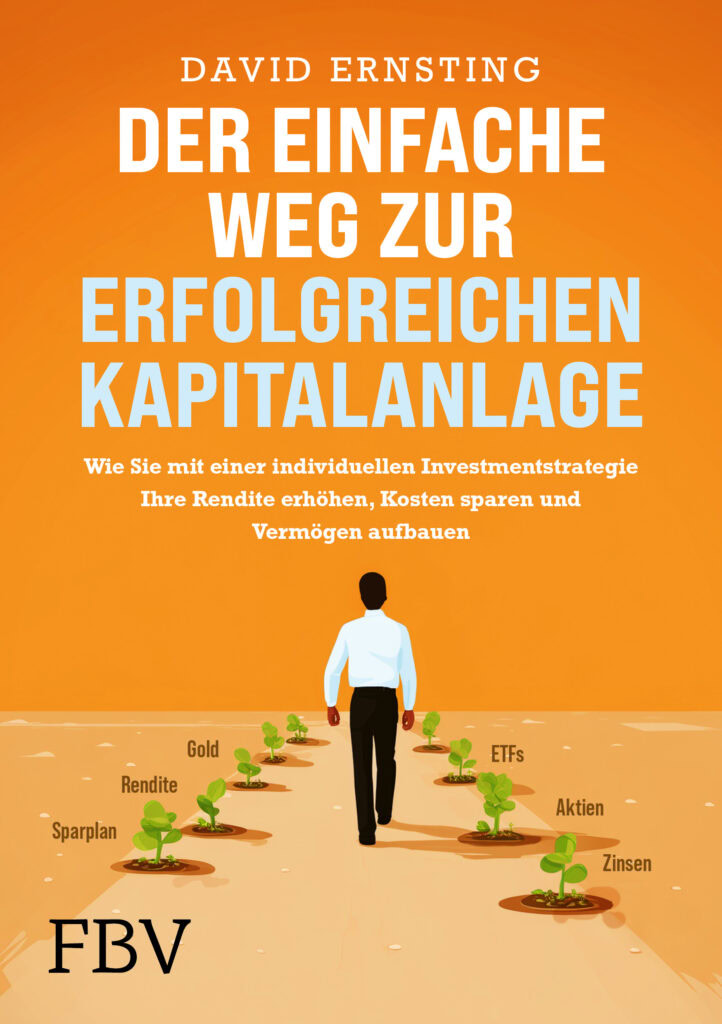
In his current book „The simple way to a successful investment“ he specifically targets investors who want to invest in a structured and understandable way. In this interview, he talks about typical mistakes made by beginners, sensible strategies - and why simplicity is often the best approach.
1. you have been working intensively on investments and financial education for many years. What motivated you to write this book and why now?
Due to the increasing uncertainty caused by the worsening economic situation, but also after the share rally of recent years, there are many people who are now much more concerned about their own future.
People who didn't used to pay much attention to the stock market or to retirement planning because they simply assumed that their pension alone would be enough - somehow!
And they realize that this will probably not work out as originally planned. At least not at the level that most people would like!
And these are often newcomers to the stock market who are successful in their professional lives but have not yet managed to enter the financial market for various reasons. And I wanted to give them some help and, above all, calculate what will happen if they continue to do nothing - and contrast this with what can be achieved financially with a simple investment strategy.
I wrote the book "Der einfache Weg zur erfolgreichen Kapitalanlage" (The easy way to successful investment) precisely for these investment beginners.
2. you also deliberately address investors without much stock market experience. What typical mistakes do you see beginners making time and again and how do you deal with them in your book?
The biggest mistake that you see again and again with beginners is that they think the timing is not right, I'll do it later when the prices have fallen and in the meantime the prices continue to rise. There is no such thing as the best time to start, neither as a beginner nor as a professional.
Even the greatest stock market expert will not always have the right timing and buy when prices are at their lowest and from then on they will only go up. That's not how it works on the stock market.
And beginners simply have to “accept” that you just have to start.
In the book, I therefore show why direct trading with continuous savings plans is the better strategy. The cost-average effect can even turn price setbacks into an advantage - a huge psychological relief for newcomers.
3 ETFs play a central role in your book. Why do you think ETF strategies are a sensible way for private investors in particular to start building long-term wealth?
I think the biggest advantage of ETFs or ETF strategies for private investors simply lies in the fact that private investors are relieved of a great deal of complexity and that the whole process is much simpler.
Of course, this also makes it easier to monitor the portfolio if you only have two or three different ETFs revolving around different markets or sectors, especially as a beginner, instead of having to constantly monitor 15 different stocks.
For beginners and private investors, this simplification is often the key to success - not because they can't do it, but because they simply don't have the time.
4 As the operator of Broker-Test.de, you know the broker market very well. What should investors really look out for when choosing a broker, beyond advertising and glossy promises?
I think the most important thing for an investor when choosing a broker is to realize that there is not THE best broker, but that the broker has to suit you, your own investment style.
This also means that this can change over the years - that you may start with one broker and then look for another broker five years later.
Not because the previous broker has become bad, but because it simply no longer suits my trading style. It makes a difference whether I only buy ETFs or whether, for example, at some point I also trade with Options and futures trading or day trading. These are completely different requirements.
And you should also take your time and not just chase after others with the motto "which broker do you have?". Oh, he's good, then I'll go with him too. Unfortunately, it doesn't work like that.
That's the first mistake you can make when starting out. You should take a bit of time to look at what you actually want to do with your investment and then see which broker is right for you.
On Broker-Test.de you will of course find many comparisons and calculators with which you can compare the brokers or even interviews with brokers or webinars and news from the brokers.
I myself have custody accounts with various brokers - depending on which investment strategy I want to implement.
5. we have been working together for a very long time, why can you recommend CapTrader to beginners and advanced traders and investors with a clear conscience?
As I have just said, a broker must suit the investor. In this respect, CapTrader can also be interesting for beginners, for example if someone is interested in trading with Currencies hedge its portfolio.
So I'm not talking about day trading in foreign exchange, but currency hedging of the cash portion.
Specifically: An investor chooses as a strategic orientation that the current cash amount of e.g. 100,000 euros should no longer be held in euros, but in Swiss francs. In other words, a currency swap is to take place. And 12 months later, the investor revises his strategy and perhaps wants to hold the entire cash package in US dollars or some other currency. And again the currency is swapped.
And you simply have to realize that some brokers, especially local banks, often charge very high (!) fees of up to 1%. This means that with an investment sum of 100,000 euros, I have to pay a total of 2% when buying and selling. That's 2,000 euros without me getting anything in return.
And here, for example, CapTrader is very favorable.
Another advantage would be the many options I have. CapTrader, as not everyone may know, is a white label of Interactive Brokers, one of the largest brokers in the world. And the possibilities here are almost unlimited. Fortunately, there is also a web platform for beginners (in addition to the professional trading platform TWS), which is much simpler. Advanced traders can then use the in-house TWS trading software later on.
But I think for beginners, the web application and the app on the cell phone are more than enough to get started.
6 What is planned for the future?
We originally come from the trading and day trading sector. We operate Broker-Test.de has been around for over 25 years and in the beginning we were mainly day traders or traders who were at least very intensively involved in share trading.
However, this has now changed. In addition to many new readers, many traders have been with us since the beginning. And the young day traders have now become experienced investors who may not trade quite as frequently, but have much larger sums at their disposal and use them strategically.
So far, our Finanzinfos am Wochenende newsletter reaches over 160,000 readers every Sunday. And there are not only the latest news from or about brokers and analyses on the subject of shares and trading, but also a lot on the subjects of capital investment, ETFs, dividend strategies, bonds, gold & silver etc..
And our readers are becoming more and more interested in this - so the topic of capital investment has become increasingly important for us recently. That's why we will soon be launching our new website Kapitalanlagen-Test.de, where we talk about investment strategies, portfolio design, crash hedging, etc. - we want to expand on this in the future. In addition, there will also be an investment newsletter.
7. you travel a lot, we currently meet you in Lisbon, where you play in an international field hockey team. What does this lifestyle give you personally and why is exercise and sport so important to you?
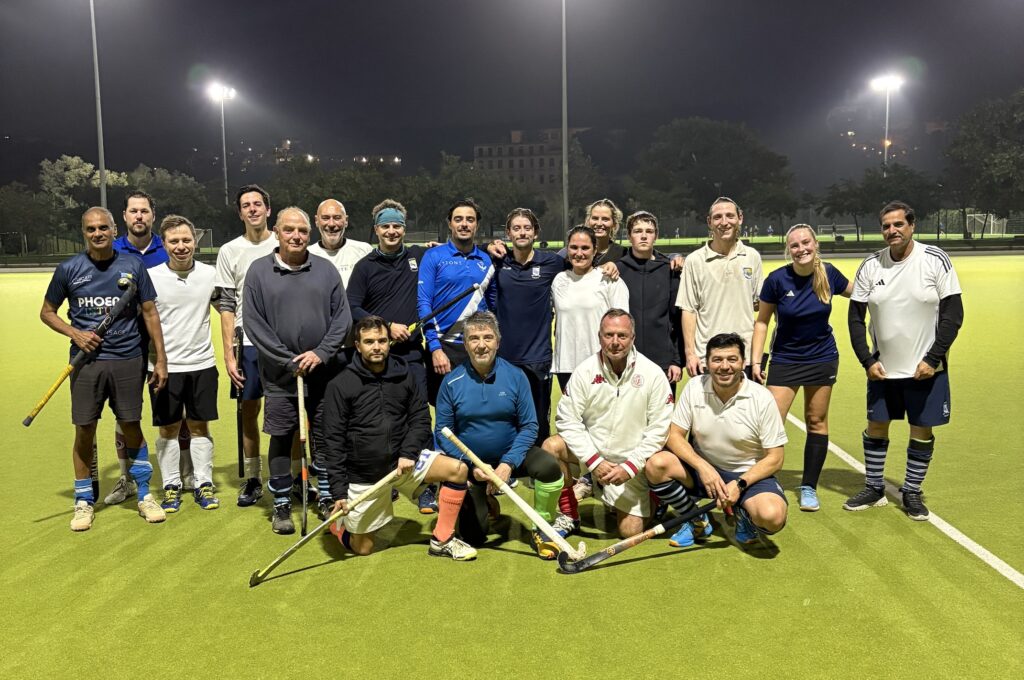
Yes, that's right. In the winter months in particular, I usually travel to southern European countries, especially Italy, Spain and Portugal. I always make sure that I do a lot of sport when I'm on the road. Over the last 20 years of traveling, I have made many friends in different cities. In Lisbon, for example, I play in an international field hockey team (Casuals Hockey Club Cascais) with players from Portugal, England, Germany, Sweden, India, Pakistan, the Netherlands and so on. - We train there twice a week. And that not only keeps me fit, but also gives me a lot of new personal experiences that you might not otherwise get if you only live in one place. All these trips bring me into contact with all kinds of people, sometimes very different people from all over the world. This gives you a completely different view of Germany and the world. I also really like the Mediterranean cuisine and of course the "more" sunshine in southern Europe!
Basically, the old Latin saying ”Mens sana in corpore sano” applies to me! Traveling, good food and sport keep you fit and healthy :)
8. you put padel on the map in Europe early on. What fascinates you about this sport and why do you think padel is booming so strongly right now?
When I first came into contact with the sport of padel in Valencia in 2012, I was immediately fascinated. To be honest, I hadn't even heard of this sport before and when I saw it for the first time, I booked a training session straight away and had an incredible amount of fun. Simply because padel is so extremely varied, because there are thousands of variations.
When I came back to Berlin, I briefly thought about whether I could open a court somewhere in Berlin... But at that very moment, Alexander Hillbricht and Ralf Stoffers had just launched two padel projects in Berlin and I got in touch with them. And instead of investing in another padel court, I set up Padel-Test.de.
This was the first central padel portal in Germany, where everything came together, all the dates, tournaments, racket presentations, new padel locations, etc.
And about the sport itself: it's simply a very varied sport. I've been playing tennis since I was a child and it's a great sport, but padel simply offers even more opportunities.
And padel is much, much easier to learn. Even beginners have an immediate sense of achievement. If you have a coach with you, you can basically start a padel match the very first time.
Another important point is that you can make new friends and acquaintances very quickly through padel. At the same time, the entry costs for padel are not particularly high. All you need is normal sports clothing and a simple racket, which you can get for as little as 100 euros.
And as I learned at this year's Invest, the managing directors of CapTrader are also big padel enthusiasts! When will we see you on the padel court? :)
9. if readers are to take away just one key insight from your book and this interview: What mindset is crucial for successful wealth accumulation in the long term?
You shouldn't let the daily "ups and downs" on the stock market drive you too crazy.
There is no optimal time to buy, or at least there is not always the optimal time to buy or sell.
It is important that you have a good structure in your portfolio, that you don't put all your eggs in one basket, but that you spread the risks through clever asset allocation.
That you have different portfolio components that hedge each other a little.
That you stick with it, even if things aren't going so well at the moment. That you continue to deal with the topic of capital investment and give it some thought.
Why are the courses going in this direction? What can I learn from them?
Even the best investors, such as Warren Buffett, have put in a great performance over the years, but they haven't made money every day or every month.
Even the masters of the trade suffer setbacks.
And they take a very close look at why they are not making any money at the moment and why the investment decision may not have gone as they had imagined.
You have to deal with this. And if you are prepared to learn from it and not give up straight away and continue to build on it with continuous portfolio optimization, you will also be successful in the end.
Patience, a strategic approach and the effects of compound interest that grow over time are a successful investor's best friends!
