The most important facts in brief
- Andritz is a global market leader in each of its business areas. High market entry barriers, such as capital intensity and technological expertise, structurally secure this position.
- The Group operates in four largely independent industrial markets with different economic cycles. This diversification helps smooth out fluctuations in the project business and provides Andritz with a high degree of earnings stability
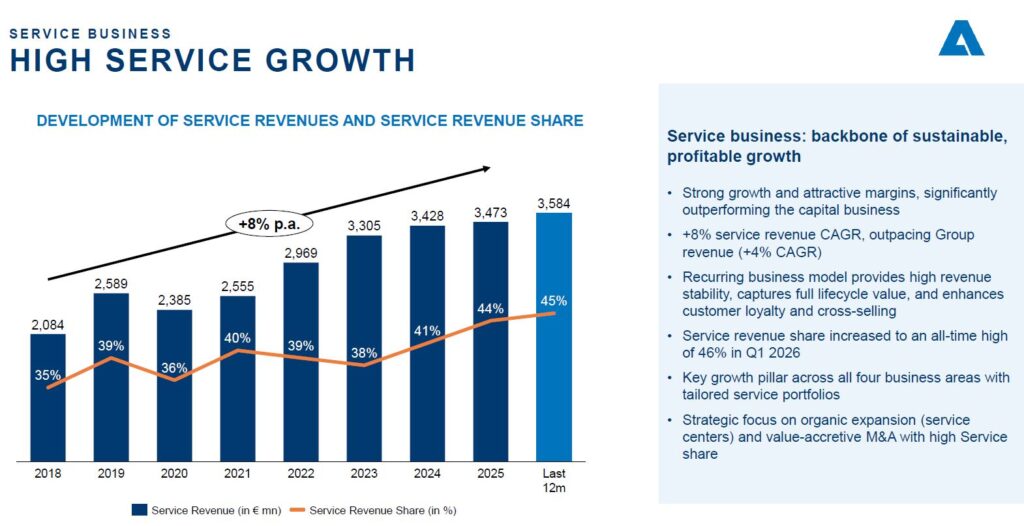
- Andritz is systematically expanding its higher-margin service business. Its share of total revenue has recently risen to 44 percent. These recurring revenues help stabilize the margin
- A conservative, debt-free balance sheet with high net liquidity and a record order backlog of over 12 billion euros allow for a growth- and at the same time shareholder-oriented capital allocation.
Who is Andritz?
In 1852, Josef Körösi, a hardware merchant originally from Hungary, founded a small iron foundry in the then-independent municipality of Andritz—now Graz’s 12th district. What began as a small-scale production of simple cast iron goods quickly grew into an industrial enterprise. By 1870, the company already employed over 1,300 workers. Production had since expanded to include water turbines, cranes, pumps, steam boilers, mining machinery, and bridge construction. In 1900, the company was converted into a stock corporation under the name „Maschinenfabrik Andritz Actiengesellschaft,“ which was subsequently incorporated into the Gutmann Group.
In 1932, the Andritz machine factory had to temporarily cease production due to the Great Depression. After the disruptions caused by the two World Wars and the interwar period, a strategically significant cooperation with the Swiss Escher Wyss Group took place in 1949. Starting in 1951, complete paper machines could be manufactured in collaboration with Escher Wyss. The Austrian Creditanstalt-Bankverein, now part of the Italian UniCredit as Bank Austria, acquired the majority stake in Andritz at this time, leading to the eighth change of ownership in its not quite 100-year history. However, the second oil crisis of 1979/1980 and the stagnating global economy hit the company hard. Ultimately, liquidation could only be prevented through massive government subsidies and rationalization measures, with the workforce being reduced from 2300 to 1600.
In 1987, the company achieved operating profits for the first time in a while, and the German investment company AGIV, headquartered in Frankfurt am Main, took a majority stake. Andritz underwent a strategic reorientation: from a mere licensee to an independent international provider of high-tech production systems. Internationalization was initiated with the acquisition of the US company Sprout-Bauer, which manufactured machinery for the production of wood pulp and animal feed. 1987 was also the year Wolfgang Leitner, who would shape the company for decades, joined as Chief Financial Officer. In 1999, AGIV sold its stake to a consortium comprising Carlyle Group, GE Capital, Unternehmensinvest AG, Deutsche Beteiligungs AG, and Leitner's Custos Foundation.
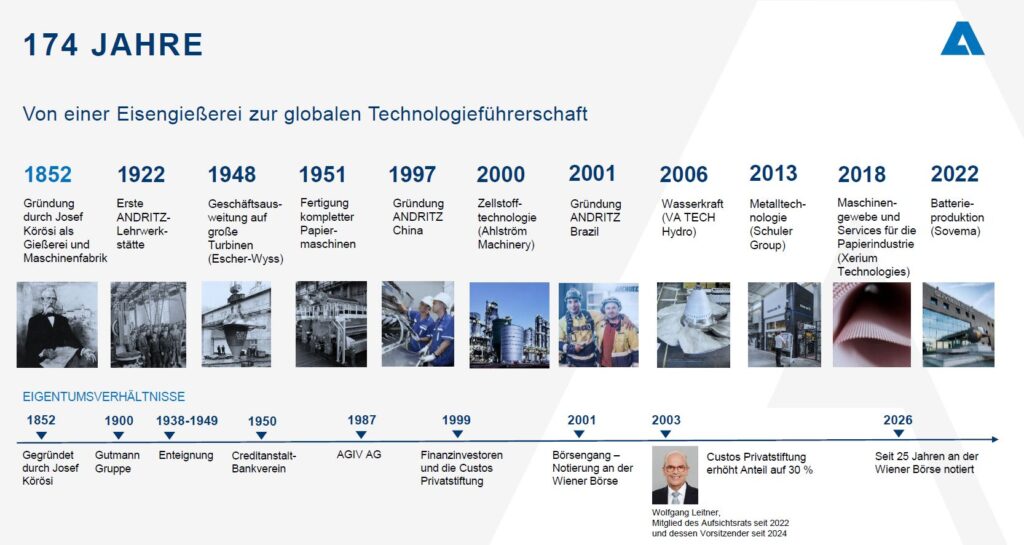
Andritz shares have been listed on the official market of the Vienna Stock Exchange since June 25, 2001. In June 2003, approximately 6.1 million shares held by financial investors were issued to private and institutional investors as part of a secondary public offering. The fresh capital served as the basis for an aggressive acquisition strategy: In 2000, Andritz acquired a fifty percent stake in Ahlström Machinery Group, and in June 2001, Ahlström was fully acquired. With the acquisition of ABB.
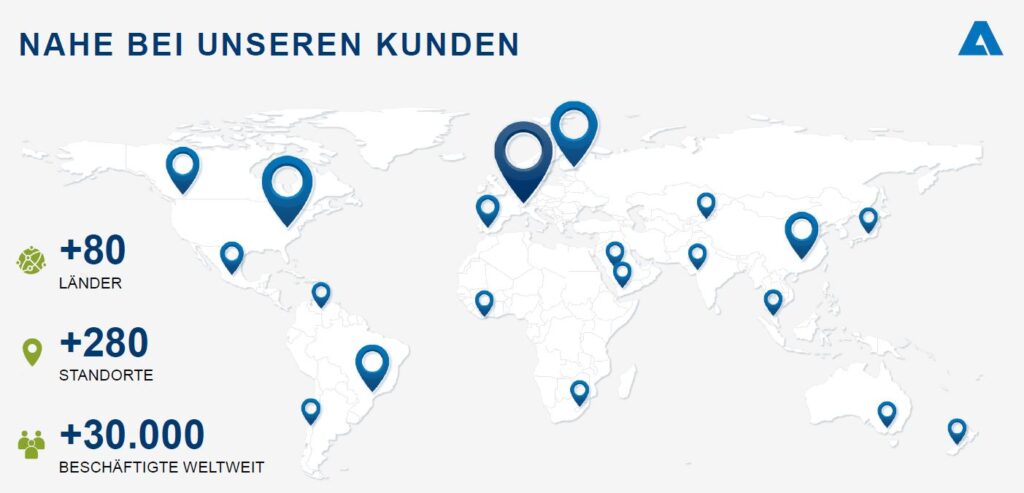
In July 2021, Joachim Schönbeck was appointed to succeed Wolfgang Leitner as CEO, effective April 2022. The main shareholder, Leitner, subsequently moved to the Supervisory Board. Today, Andritz is one of the five most heavily weighted stocks in the leading ATX index. The company has over 280 production facilities worldwide, as well as service and sales companies, with approximately 30,000 employees.
Andritz's Business Model and Strategy
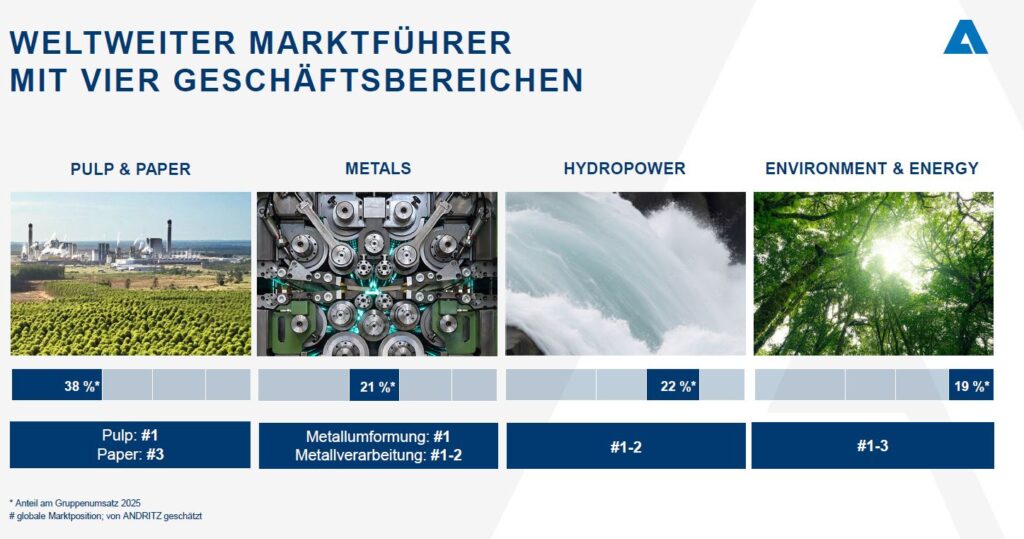
Im Zentrum des Geschäftsmodells is an internationally active technology group that operates as a full-service provider in industrial plant and mechanical engineering. Since January 2024, Andritz's business activities have been divided into four independent business areas: Hydropower (electromechanical equipment for hydropower plants), Pulp & Paper (plants for pulp and paper production), Metals (solutions for metal forming and metal processing), and Environment & Energy (technologies for clean air, drinking water, and renewable energies). Andritz is among the world market leaders in all four segments.
Value creation encompasses three closely interlinked components of the classic project business with customer-specific, custom-built large plants, a growing service business (maintenance, spare parts, modernizations, aftermarket), and digital solutions bundled under the Metris umbrella brand. Furthermore, Andritz is active in power generation – for example, with steam boiler plants, biomass and recovery boilers, gasification plants, as well as systems for green hydrogen, CO₂ capture, and Power-to-X – and in solid-liquid separation for municipal and industrial operations. The portfolio also includes recycling plants, nonwovens, viscose pulp, and fiberboard production, as well as plants for animal feed and biomass pelleting. A characteristic feature is that customers from very diverse industries are supplied, which limits sensitivity to economic fluctuations in individual end markets.
Economically, the model is increasingly showing a shift away from pure project business with volatile margins towards more stable recurring revenues from services. This development is evident in the increase in service revenues, which reached €3.4 billion in 2025, representing 44 percent of total revenue.
The Business strategy Andritz’s strategy is based on growth ambitions driven by decarbonization, digitalization, customer service, and the implementation of the #1ANDRITZway corporate culture. The company expresses the vision behind this under the slogan „Growth That Counts." Specifically, Andritz has set a target of achieving revenue of over 10 billion euros by 2026, with annual growth rates of over 5 percent across all business segments, while the Environment & Energy segment is expected to grow by as much as 10 percent per year.
A key strategic lever is the company’s consistent M&A policy. One of its primary strategic goals is to become a full-service provider across all business segments, driven not only by organic growth but also by complementary acquisitions. Since 1990, the company has acquired a large number of companies worldwide as part of this strategy. 2025 was another very active year for M&A; with six major acquisitions aimed at strengthening service capabilities and the environmental offering, as well as closing gaps in the product portfolio. Unlike many conglomerates, however, the company deliberately refrains from diversifying beyond its four core business areas. The targeted growth is to take place within the existing end markets where Andritz claims technological leadership.
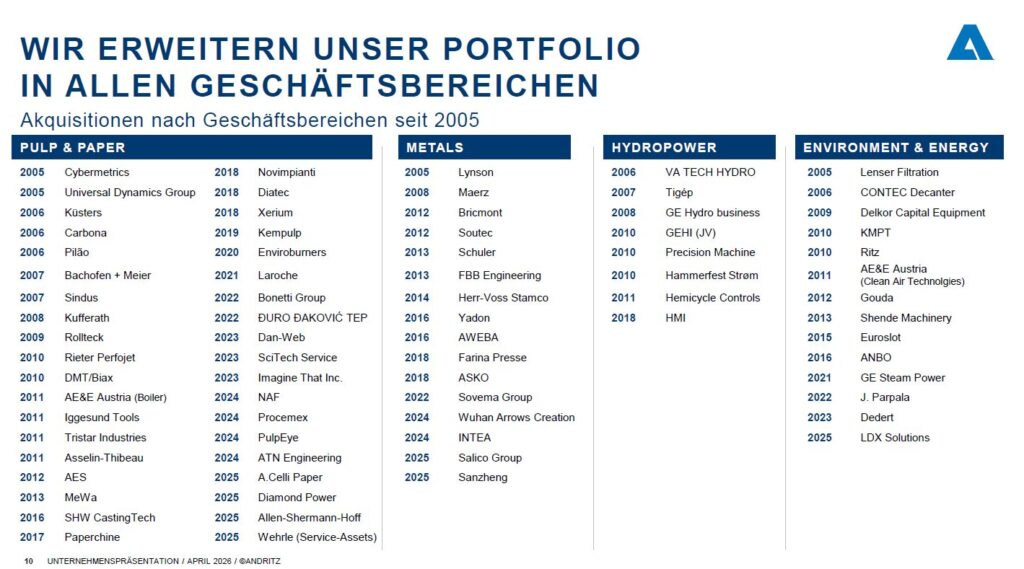
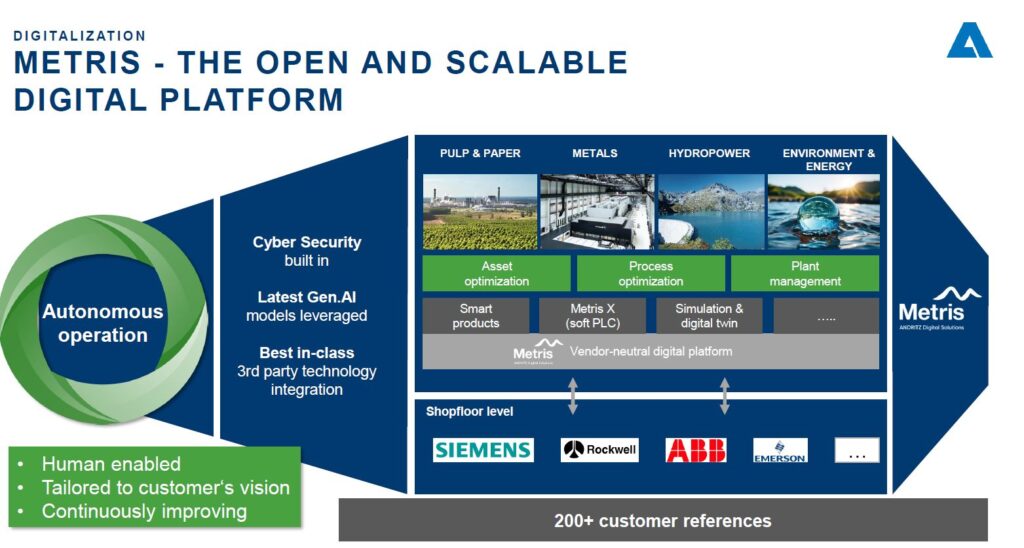
The second pillar is digitalization. Under the Metris umbrella brand, Andritz has bundled all of its Industry 4.0 activities. This ranges from sensor technology and big data analysis to its in-house developed control system Metris X, and even AI-based solutions for autonomous plant operation. This serves two purposes: firstly, differentiation from competitors in the new plant business, and secondly, expansion of the high-margin service business over the entire plant lifecycle.
Third, sustainability is positioned not as an ESG duty program, but as a business opportunity. Andritz presents itself as a partner in its customers„ "green transformation," for example, through CO₂ capture in the cement, steel, and paper industries, through plants for e-fuels and biofuels, through systems for battery production in gigafactories, and through solutions that drive hydropower, circular economy, and resource efficiency. This positions the company in a structural growth area supported by the global megatrends of electrification, renewable energies, and circular economy.
In summary, Andritz can be described as a technology-driven, globally positioned industrial group that stabilizes its cyclical large-project business through service growth and digital solutions, aims for market leadership in four focused end markets, and consistently positions itself strategically as a beneficiary and „enabler“ of industrial decarbonization.
Owners and Management of Andritz
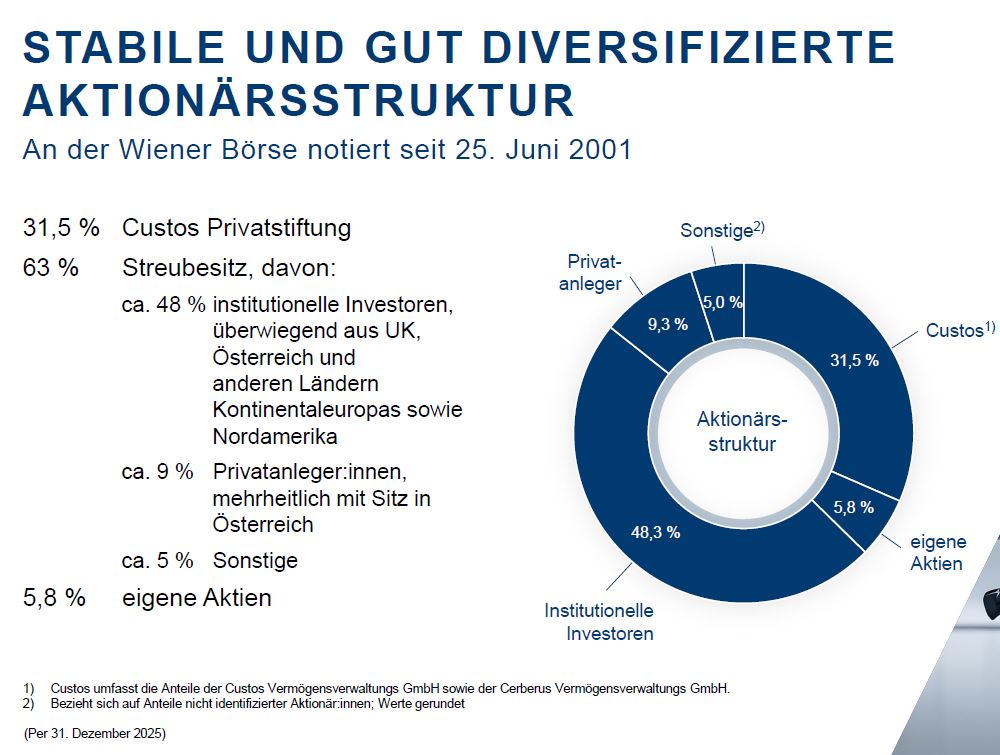
The Shareholder structure is remarkable for an industrial group of this size. Around 31.5 percent of the share capital is held directly or indirectly by Custos Privatstiftung and Wolfgang Leitner. Silchester International Investors LLP holds more than 5 percent of the share capital. Free float is approximately 62.7 percent. The most recent shareholder survey from December 2025 revealed that 9.3 percent of Andritz shares are held by private investors and 48.3 percent by institutional investors, with the majority of institutional investors originating from the United Kingdom and Ireland, continental Europe, and North America.
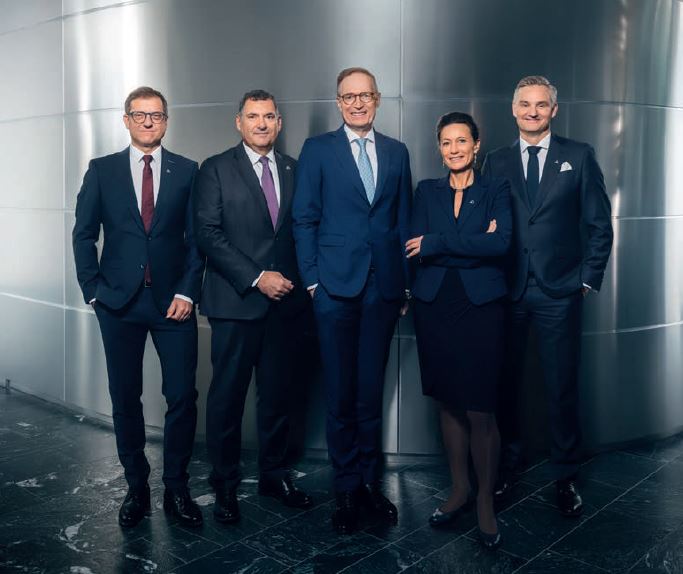
At the forefront of operations since April 2022 Joachim Schönbeck. The engineer with a doctorate from Germany has been on the Andritz board since 2014 and succeeded Wolfgang Leitner, who had shaped the company as CEO for 27 years. Before his appointment as CEO, Schönbeck was most recently in charge of the Pulp & Paper Capital Systems division and headed the Andritz subsidiary Schuler. Prior to that, he was Chairman of the Executive Board and Managing Director of SMS Holding and SMS Meer and held management positions at Siemens and Mannesmann. In addition to his role as CEO, he is also responsible for the Metals business area and central corporate functions such as Human Resources, Communications, Internal Audit, Project Management, IT, and Automation & Digitalization. On the Supervisory Board side, Wolfgang Leitner has retained his role as a formative figure of the group even after his operational retirement. The native of Styria handed over to Schönbeck in April 2022 and has been Chairman of the Supervisory Board since the constitutive meeting in 2024. His mandate is elected until the Annual General Meeting in 2030 – thus, he is expected to continue to accompany Andritz at the highest level of control for many more years.
Industry profile and competitive situation
Andritz's unique characteristic lies in the fact that the company operates not in one, but in four largely separate competitive environments. Each of these segments has different competitors, market structures, and margin levels. However, three structural characteristics are common to all four markets: they are organized as oligopolies, exhibit very high market entry barriers (capital intensity, technological know-how, reference list, global service network, creditworthiness for large project financing), and they are increasingly driven by the same megatrend – industrial decarbonization.
In the Pulp & Paper sector, Andritz essentially competes with two heavyweights: the publicly listed Finnish group Valmet and the German company Voith Paper (part of the family-owned Voith GmbH & Co. KGaA). While Valmet is more focused on pulp, paper, and energy and is considered particularly deeply integrated, Andritz scores with a strong presence in hydropower plant construction and the metals sector. In the hydropower sector, the market structure is even more concentrated. The global turbine and generator business is concentrated on GE Renewable Energy, Siemens Energy, Andritz, and Voith, whose combined capacity exceeds around 60 percent of large hydropower capacity. In addition, there are Toshiba, Hitachi, and Mitsubishi Heavy Industries (with their joint venture Hitachi Mitsubishi Hydro), as well as increasingly Chinese manufacturers like Harbin Electric and Dongfang Electric, who leverage cost advantages and political credit financing to win contracts in Asia and Africa.
In the metals business, which is strongly shaped by Schuler, acquired by Andritz in 2013, the Graz-based company competes with three significantly larger specialists: SMS group (Düsseldorf, Weiss Family Foundation, global leader in plant engineering for the metal industry), Primetals Technologies (Joint venture of Mitsubishi Heavy Industries, headquartered in London, originating from the former steel and rolling mill activities of Siemens VAI/voestalpine), and the Italian, publicly traded Danieli. In the Environment & Energy sector, the competitive landscape is most fragmented because pumps, solid-liquid separation, flue gas cleaning, and biomass boilers are consolidated here. Key competitors in this area are the Swiss company Sulzer (pumps, separation), the Swedish company Alfa Laval (heat transfer, separation), and the German company GEA Group (process technology). In individual subsegments, Andritz also competes with Pentair, KSB, Flowserve, and Mitsubishi Power.
One notable structural feature is that, in several of its end markets, Andritz competes against providers that are not publicly traded themselves or are part of larger, diversified conglomerates—Voith is family-owned, SMS is owned by a family foundation, Primetals is an MHI subsidiary, and Hitachi Mitsubishi Hydro is a joint venture. This market structure poses several methodological challenges for a rigorous peer analysis, meaning that the most direct operational competitors hardly provide a 1:1 basis for comparison, and a sound comparative analysis based on publicly traded companies does not appear meaningful. As a four-division group, Andritz is unique worldwide in its combination.
Opportunities & risks
One of the greatest structural opportunities undoubtedly lies in the global energy transition, the implementation of which Andritz serves on the supplier side with physical industrial hardware. In this area, where purely digital or consulting players cannot compete, hydropower impressively demonstrates this. In the Hydropower business segment, order intake in 2025 rose to a record level of 2.5 billion euros, an increase of 16 percent compared to 2024. The growth was driven by increasing demand for renewable energies, grid stability, and pumped storage capacities. Pumped storage is becoming massively important with the expansion of volatile wind and solar capacities, as it provides grid stability. Andritz benefits from this trend disproportionately as one of the few global full-range suppliers. In the first quarter of 2026, order intake in the Hydropower segment even reached a record high of 1.9 billion euros, including pumped storage projects such as Saidongar in India with 3,000 MW – the largest pumped storage power plant in the prosperous country.
Another significant opportunity is the ongoing expansion of the service business, which structurally stabilizes the business model: Service revenue reached a new record of EUR 3.4 billion in 2025, accounting for 44 percent of total revenue. Service has higher and more stable margins than project business, generates recurring revenue, and retains customers throughout the entire plant lifecycle. Management.
The market position in China creates a paradoxical dual role: Despite geopolitical risks, Andritz is currently benefiting greatly from the trend of backward integration among Chinese paper manufacturers. In the Pulp & Paper segment, Andritz has secured an order for a complete pulp mill in China for the fourth time since Q4 2024. A factor that should not be underestimated is the financial visibility provided by the order backlog. This allows for an exceptionally good basis for planning. The order backlog reached a new record high of 12.4 billion euros as of the end of the first quarter of 2026. This corresponds to more than one year's revenue in already booked orders. This high revenue visibility is a significant defensive factor in the plant engineering sector against short-term economic fluctuations.
The structurally most significant risk lies in the nature of the business model itself. Andritz largely operates in project business with complex, turnkey EPC (Engineering, Procurement, Construction) deliveries. The group has implemented corresponding risk management systems to minimize these, which include, among other things, insurance policies, contractual clauses, and standardized project management processes. However, there is no guarantee that these systems will be sufficient to compensate for project losses. Similar difficulties, as in the past, could occur in the future and have negative effects on the financial situation. Delays in major projects, technical problems, or disputes with consortium partners can significantly burden individual quarters. This structural feature also explains the historical margin volatility.
Closely linked to this is the pronounced cyclical nature of the end markets served. The Metals business unit, in particular, is dependent on investment trends in the automotive and steel industries. While this market contracted for the third consecutive year, Andritz was able to maintain its profitability through further capacity adjustments. In the Pulp & Paper segment as well, customers’ investment activity depends heavily on pulp prices and economic cycles.
Geopolitical risks are another central theme that management explicitly addresses multiple times. In 2025, Andritz faced „geopolitical hurdles and a cautious investment climate," although no significant impact from tariffs has been noted so far, the company continues to monitor developments closely. Behind this is a multi-layered exposure: strong China business, significant US activities, and globally distributed order intake, which can be highly disrupted by trade barriers, sanctions, tariffs, or capital controls. Significant political risks are reviewed before entering new countries; deliveries to countries classified as politically average to very risky are usually insured, although the conditions for full coverage are not always met.
Currency risks are also present due to the highly international nature of the business. The EBITA margin in 2025 remained stable at 8.9 percent for the full year 2025, despite significant negative effects from currency translation, demonstrating that FX movements can noticeably impact both revenue and margin.
A standalone reputation and compliance issue is the suspicion of corruption surrounding Venezuela. A subsidiary is reportedly Media report paid bribes more than ten years ago for a contract related to the modernization of Venezuela's giant Guri hydroelectric power plant. The company has responded with a comprehensive compliance management system, but the issue illustrates the fundamental risk associated with large projects in politically sensitive countries and through local intermediaries.
Further risk areas to mention are regulatory and tax issues, supply chain risks (partly with an impact on the project timeline due to the Ukraine war in recent years), cybersecurity, and M&A integration risks in light of the high frequency of acquisitions. As already mentioned, six major acquisitions were made in 2025, which promises synergies but also entails balance sheet, goodwill, and integration risks.
Andritz's Finances
After getting an overview of the industry in general, and looking closer at the company, management, and competition, I will now turn to Andritz's balance sheet and the financial ratios derived from it. The focus here will be on aspects Growth, profitability and - particularly important for utilities - the Financing.
To analyze the financial situation, I will first look at the development of revenue, profit, and free cash flow. On average, the top line grew by 4.9 percent per year over the last five years.
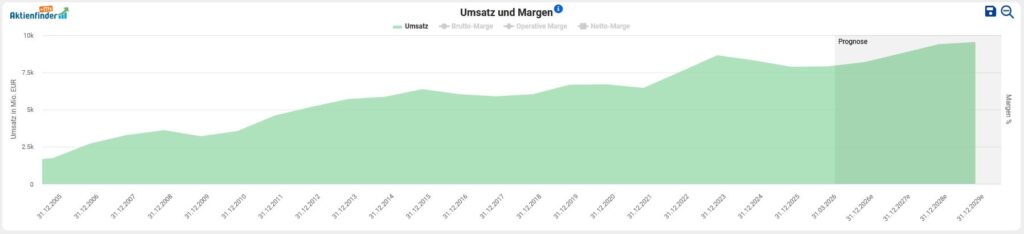
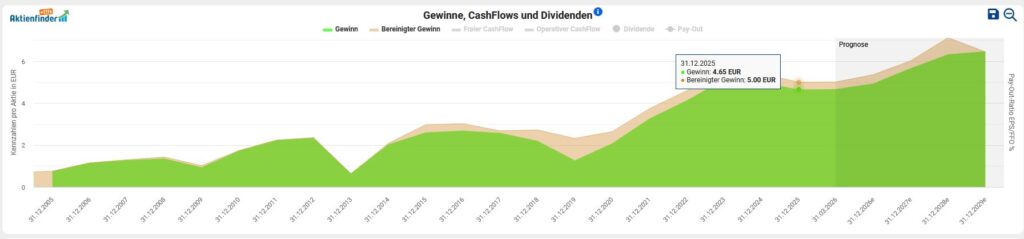
At Earnings per share Over the past five years, we have seen a very strong upward trend overall. However, if we look at the 2025 fiscal year, the Adjusted earnings per share by 7.5 percent (5.00 vs. 5.41 Euros). Andritz achieved in the past fiscal year a Net profit from 460 million EUR (2024: 0.50 billion euros).
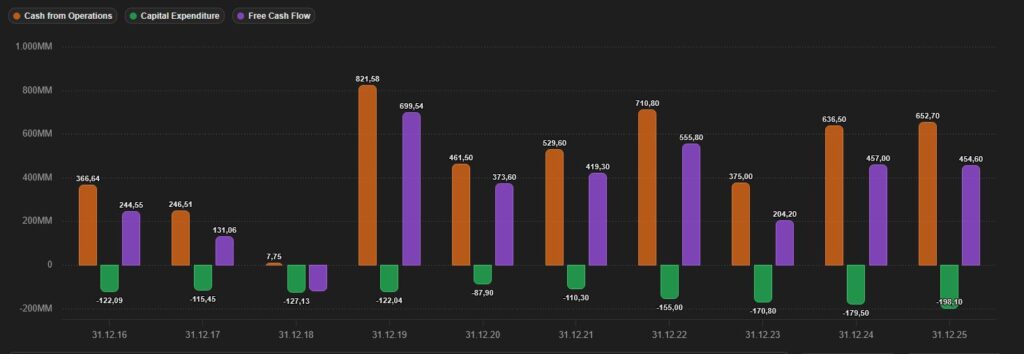
The amount available to the company Free Cashflow can be used for capital investments in organic growth, research and development, debt repayment, expansion through acquisitions, distributions of (increasing) dividends, or share buybacks. In absolute terms, the interplay of operating, free cash flow, and minimal capital expenditures (CapEx) from 2016 to 2025 is as follows. At first glance, this picture appears concerning.
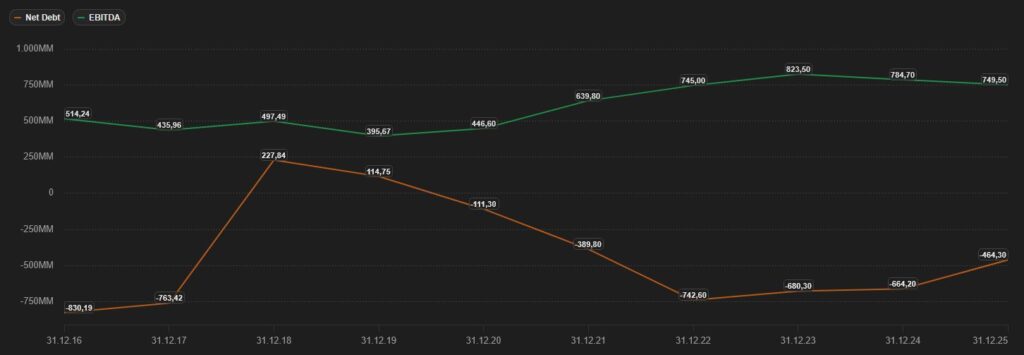
A look at the Debt situation shows that, based on the last fiscal year, Andritz has interest-bearing financial liabilities of €0.75 billion, which are offset by cash and marketable securities totaling €1.36 billion. You don’t have to be a math genius to see that Andritz is free of any net debt and thus has a formidable balance sheet. I will therefore refrain from further analysis of the debt structure.
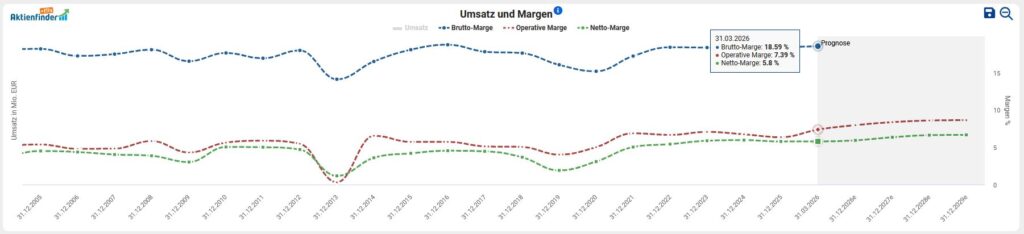
Finally, I am considering Profitability The Andritz based on the development of gross, operating, and net margins. The long-term upward trend in recent years follows a volatile pattern, which is consistent with the cyclical business model and fluctuates higher or lower depending on economic sentiment. Based on the data from the past five years, Andritz has consistently kept its net margin above 5 percent.
Current valuation of Andritz stock
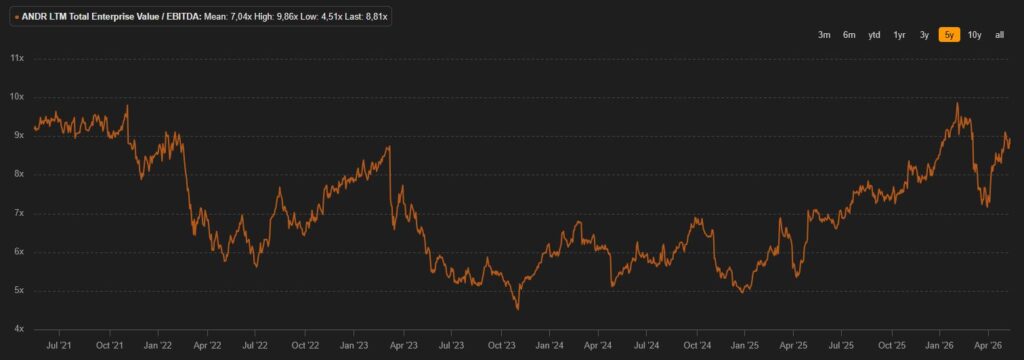
For the valuation of companies, I use the so-called Enterprise Value (EV) is used. In the case of a takeover, the EV indicates the amount required to purchase the assets required for operations and excludes the non-operating assets. I relate this key figure to operating profitability (before taxes, interest and investments (CapEx)), expressed as EBITDA. The prevailing opinion is that a value of less than 10 indicates a „healthy“ valuation - as is always the case with generic Rules of thumb must the company-specific context be considered in the analysis by the careful investor. In the case of Andritz, we see that a EV/EBITDA of 8.8 does not represent a good buying opportunity in the context of the past five years. Over the past two years, the multiple has fluctuated within a range of 5 to 7:
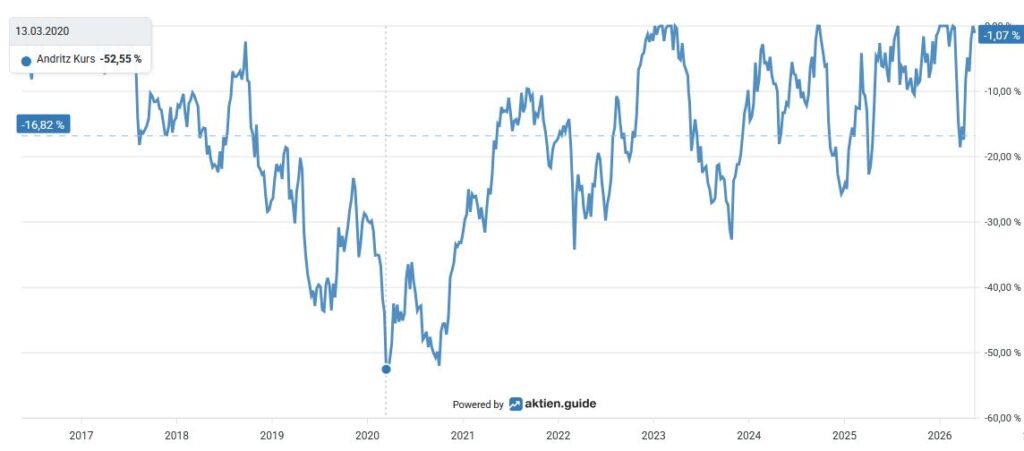
The Maximum decrease in the last ten years amounted to approx. 52 percent in the year 2020:
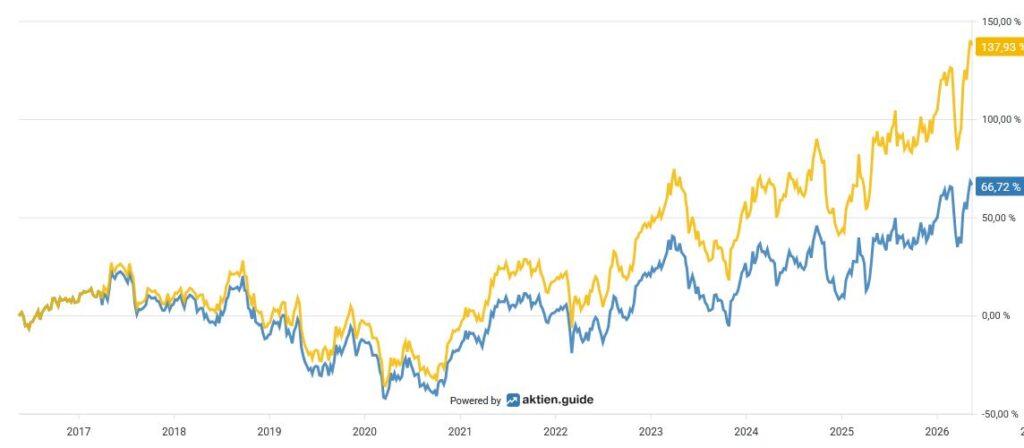
Over the past ten years, an investment in Andritz stock has yielded a return of Total Return including accrued dividends, a Overall performance from around 138 percent for the investor:
Andritz's Capital Allocation
Despite the capital-intensive business model, Andritz pursues a shareholder-friendly dividend policy. When considering the Dividendenhistorie It is worth noting, however, that Andritz does not shy away from cutting its dividend during economic downturns, thereby interpreting this tool of its capital allocation strategy flexibly.
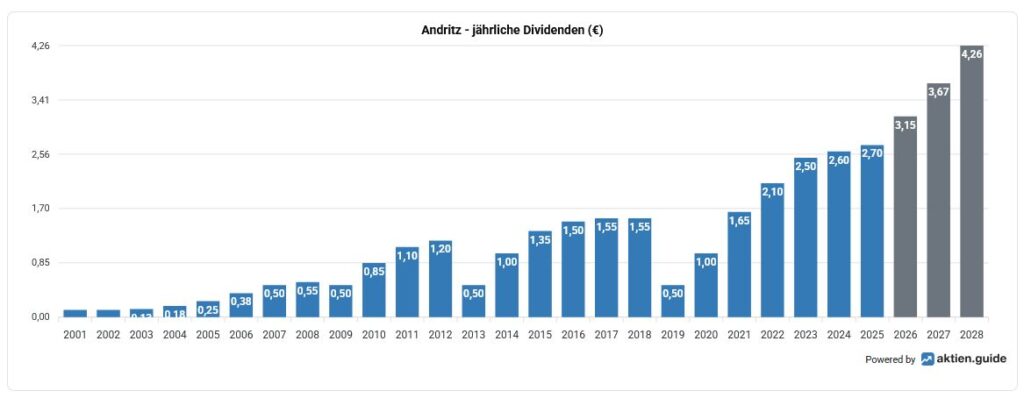
Regarding capital allocation: The dominant strategy is value-oriented M&A policy. Andritz systematically uses its cash generation for complementary acquisitions that close gaps in its product portfolio, strengthen service capacities, or expand its environmental business – in 2025 alone, there were six major takeovers. In addition, regular share buybacks serve as a supplementary instrument for capital repatriation. Between 2019 and 2022, Andritz has at least five repurchase programs completed as planned.
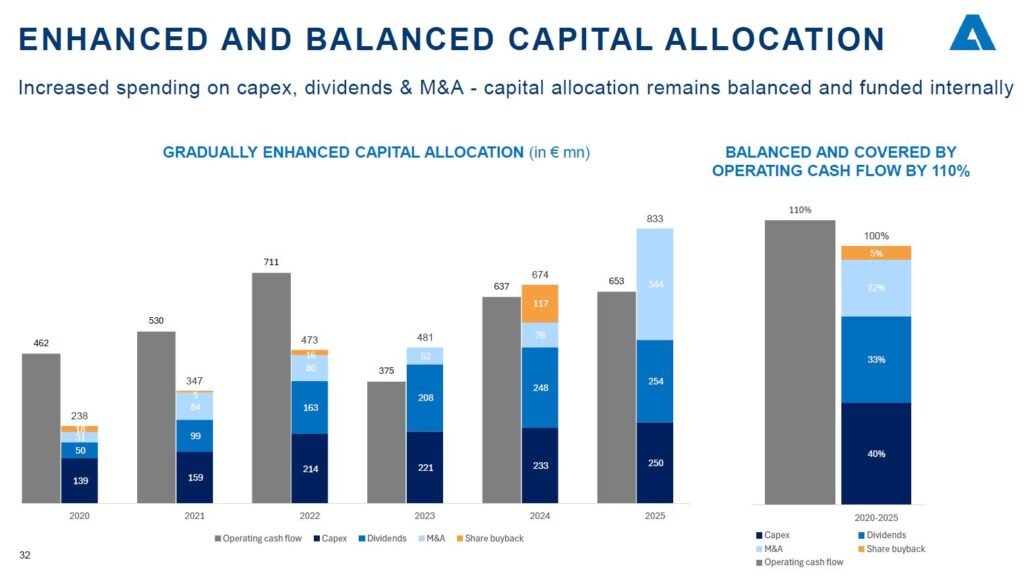
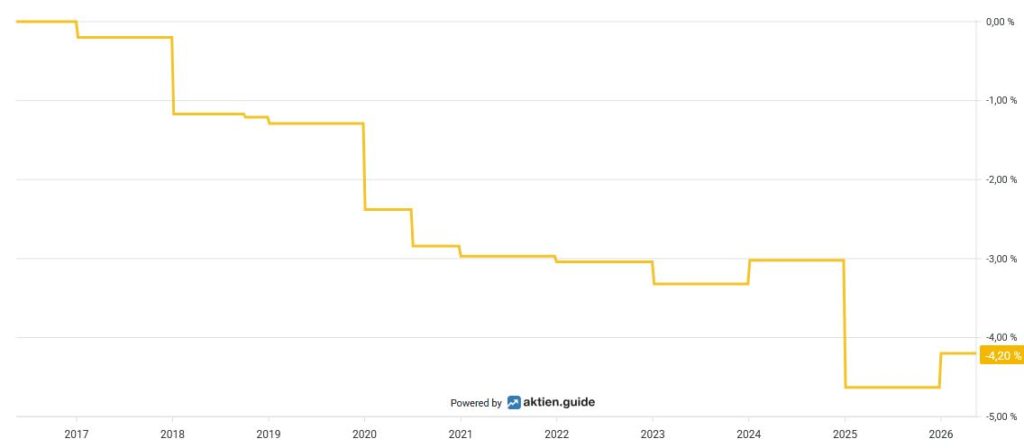
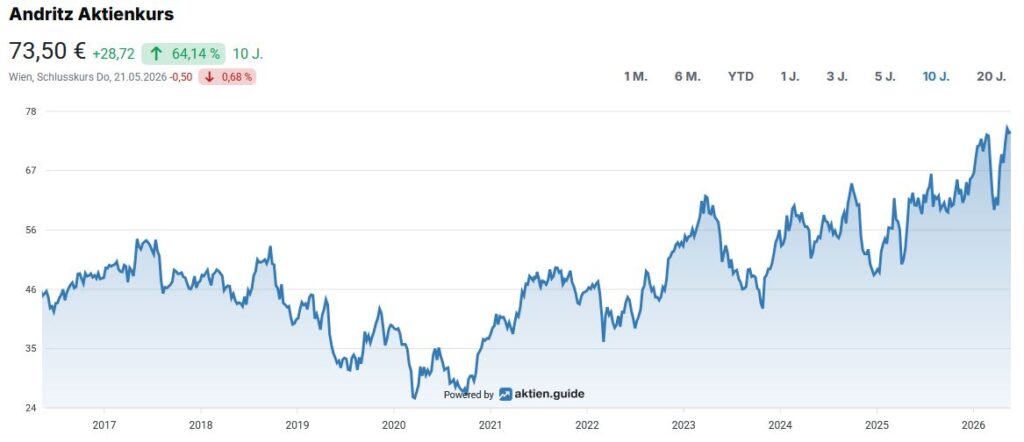
At the current price of 73.50 Euros, this calculates to a Dividend yield from 3.7 percent based on the regular dividend. Finally, a summary of the dividend payouts in recent years:
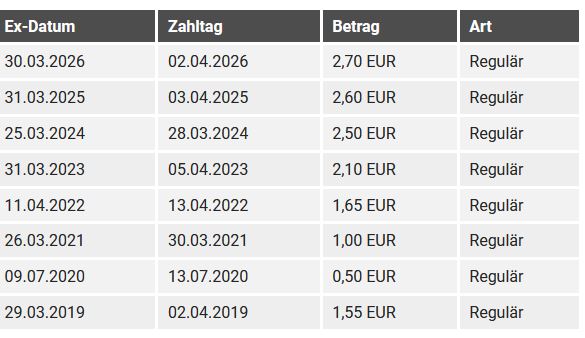
The annual dividend beträgt aktuell 2.70 euros per share and was paid out in April. If we use the average Free Cash Flow of the last three years as the basis for determining the payout ratio, we arrive at a moderate result of 52 percent for the Payout ratio.