Dear traders, dear stock market friends.
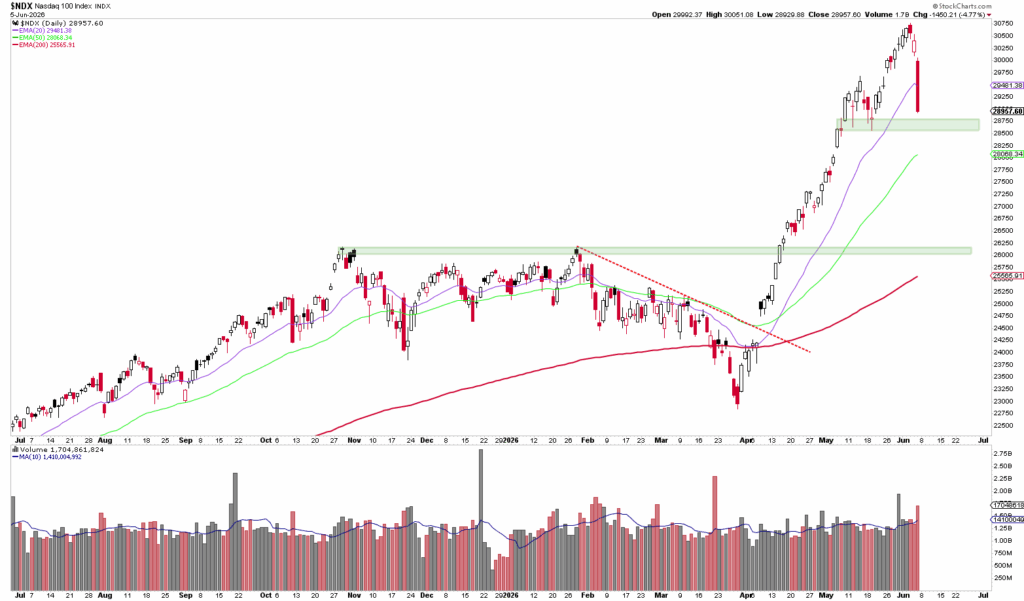
The Nasdaq 100 experienced a full-blown mini-crash on Friday. The tech index plummeted 4.77% in a single trading day, giving back a large portion of the gains it had made in recent weeks.
As strong as this setback appears at first glance, it was not entirely surprising. The Nasdaq 100 had previously undergone an exceptionally strong rally. Many large technology and AI stocks had risen significantly in a short period, sentiment was extremely optimistic, and the market appeared increasingly overheated. After such a move, a single trigger is often enough to initiate profit-taking.
That's exactly what we saw on Friday. The strong US jobs report led to rising interest rate expectations, bond yields rose, and investors primarily reduced positions in highly valued technology and growth stocks. AI and semiconductor stocks, in particular, came under pressure. What was a long overdue correction thus turned into a real sell-off.
Largest daily loss in the Nasdaq 100 since April 2025
The Nasdaq 100 fell 4.77% on Friday, marking its biggest one-day loss since April 2025. On the screen, it looked like a classic mini-crash: many of the previous winners were sold off simultaneously, support levels were broken, and the downward trend accelerated as the day progressed.
However, contextualization is also important. In the weeks prior, the market had experienced a massive rally. The broad US stock market was coming off a nine-week winning streak, with the Nasdaq benefiting particularly strongly from the euphoria surrounding artificial intelligence, semiconductors, and large tech stocks. Many stocks had seen strong short-term gains, some significantly above their moving averages. This is often a sign that the market is becoming susceptible to profit-taking.
The pullback on Friday was therefore less of an isolated event and more of a reaction by an overheated market to a clear negative factor. Investors took profits, particularly in the stocks that had previously risen the most. The trigger for the sell-off was the new US labor market data.
Strong US jobs data shift interest rate expectations
On Friday, the latest nonfarm payrolls figures for May were released in the U.S. The market had expected around 80,000 new jobs. In fact, however, 172,000 new jobs were created. This means the jobs report was more than twice as strong as forecast. At the same time, the unemployment rate remained stable at 4.3%.
At first glance, a strong job market sounds positive. Companies continue to hire, the economy appears robust, and a recession seems less likely. However, for the stock market, this very strength was the problem on Friday.
Because a very robust labor market gives the US central bank less room for interest rate cuts. If employment and the economy remain stable while inflation remains high, from the markets' perspective, the risk increases that the Fed will have to remain restrictive for longer or even discuss interest rate hikes again.
That very reassessment took place on Friday. According to the FedWatch tool, the probability of another interest rate hike this year rose to over 70% (%). At the same time, hopes for imminent interest rate cuts vanished almost entirely.
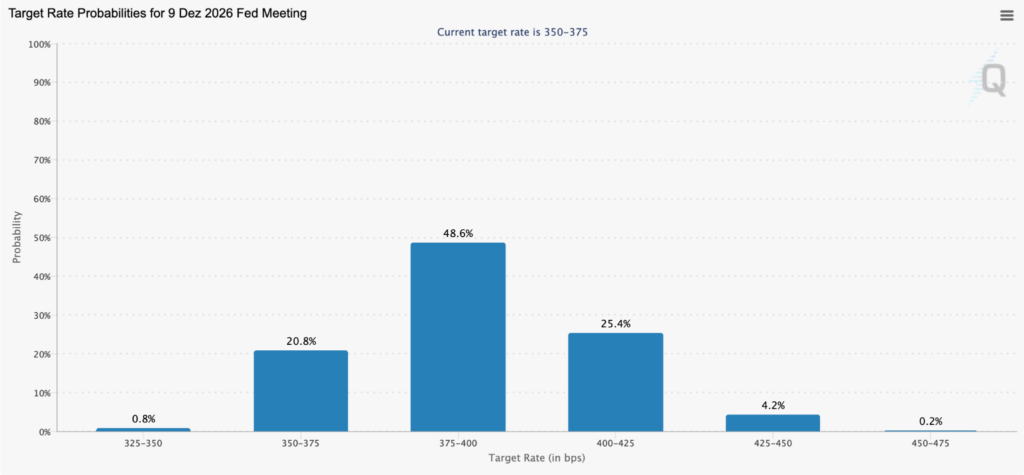
The next Fed meeting on June 16 and 17, 2026, will therefore be particularly exciting. It is the first FOMC meeting under new Fed Chair Kevin Warsh. Markets will be watching very closely to see how Warsh assesses the combination of a strong labor market, persistent inflation, and rising interest rate expectations.
Above all, the press conference following the interest rate decision is likely to be the focus. It will be crucial whether Warsh leaves the door open for later interest rate hikes, whether he emphasizes concerns about persistently high inflation, or whether he attempts to calm the markets with more balanced communication.
Rising bond yields hit growth and AI stocks particularly hard
Rising interest rate expectations also led to rising bond yields on Friday. This is precisely what is particularly problematic for growth and technology stocks.
The reason is relatively simple: many technology and AI companies are valued on the stock market not only by their current profits but primarily by their expected future profits. The further into the future these profits lie, the more sensitive valuations become to changes in interest rates.
When interest rates rise, the discount factor also rises. From today's perspective, future profits are then worth less. This particularly affects those companies whose very high future growth rates are already priced into their stock price. This is precisely why highly valued tech stocks often react disproportionately strongly when yields in the bond market rise.
A second effect is added: When safe government bonds offer higher returns again, risky stocks become relatively less attractive. Investors then demand a higher risk premium. This can lead to particularly expensive stocks being sold, even if little has changed in the long-term growth story initially.
Another point comes into play with AI stocks. Many companies are currently investing heavily in data centers, chips, infrastructure, and artificial intelligence. These investments are capital-intensive. Rising interest rates increase financing costs and make future investment projects less attractive. Therefore, the increase in yields particularly affected the stocks that had previously benefited most from the AI hype.
Important inflation data this week
Following the strong jobs report, inflation will come into even sharper focus in the new trading week. This is because the crucial question now is: Will inflation remain high while the labor market stays strong?
If so, the Fed would have significantly less reason to cut interest rates. On the contrary, hot inflation data could further fuel the discussion about a possible interest rate hike later in the year.
Therefore, several important US data releases are on the agenda next week.
- On Monday, June 8, the New York Fed's survey of consumer inflation expectations will be released. This data is important because the Fed watches very closely whether higher inflation expectations are becoming entrenched among the public.
- On Wednesday, June 10th, US consumer prices for May will be released. The Consumer Price Index, or CPI, is one of the most important inflation reports there is. Of particular relevance is not only overall inflation but also core inflation, excluding energy and food. If this turns out to be higher than expected, it could reignite concerns about interest rates.
- On Thursday, June 11th, the US producer price index will be released. The Producer Price Index, or PPI for short, shows how prices are developing at the producer level. Rising producer prices can later translate into consumer prices and are therefore an important early indicator of inflationary pressure.
- Also on Thursday, the weekly initial jobless claims will be released. These figures will also be closely watched after the strong jobs report.
- On Friday, the preliminary University of Michigan consumer sentiment index will also be in focus, particularly its inflation expectations.
For the Nasdaq 100, this means: The coming week could be volatile again. If CPI and PPI turn out hotter than expected, pressure on technology stocks is likely to continue. If, on the other hand, the data comes in more moderately, the market could stabilize after the sharp pullback.
Author: Tobias Schmid
Date: 06/08/2026