
The most important facts in brief
- Mayr-Melnhof is one of the world's leading suppliers of consumer packaging made from cardboard.
- The packaging divisions account for the majority of revenue. The carton business suffers from overcapacity, which is expected to persist at least until 2027.
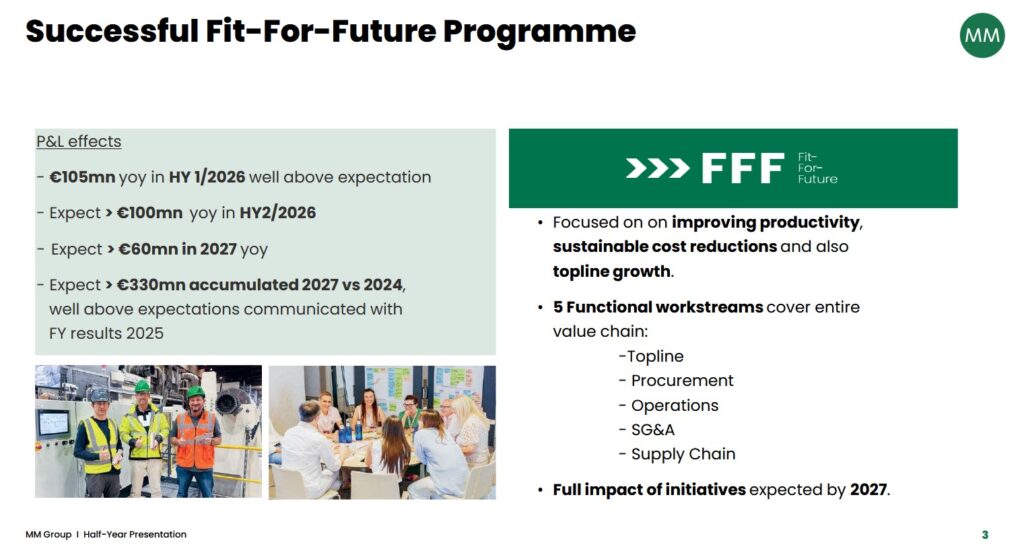
- The „Fit-For-Future” program is expected to generate over 330 million euros in earnings improvement by 2027. After that, investments will decline, which is expected to strengthen free cash flow.
- The pharmaceutical sector increases its earnings by double digits thanks to GLP-1 products. The EU packaging regulation supports fiber-based solutions
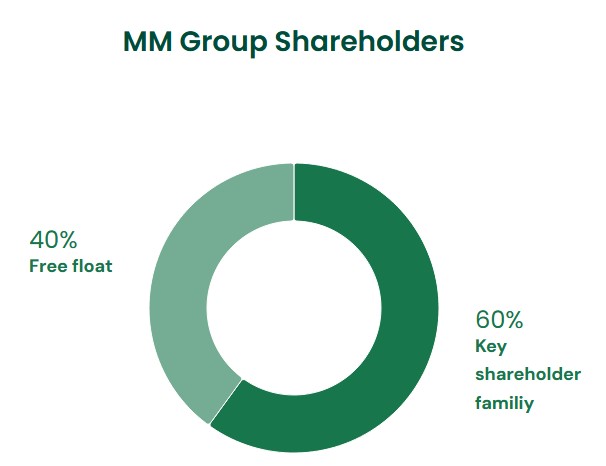
- The family syndicate, as the core shareholder, holds around 60 percent. The dividend (yield around 3.1 percent) fluctuates with the cycle, and the weak free cash flow limits higher payouts.
- If you want to read more from Clemens Faustenhammer, then click here DGI-Musterdepot and here for an overview of this series „The dividend custody account“
Who is Mayr-Melnhof?
The roots of Mayr-Melnhof Karton AG go far back: The eponymous family of Mayr-Melnhof originates from Spielberg in Styria and has been documented in documents since 1423. In the 19th century, they achieved prosperity in the steel and metallurgical industry and acquired Austria’s largest private forestry company from it. The foundation stone for the present company was laid in 1888 with the founding of a wood-working and cardboard factory in Frohnleiten, north of Graz. However, industrial cardboard production only began in 1950 with the first cardboard machine at the main plant in Frohnleiten, which is why some sources list 1950 as the founding year. From 1959, folding box production was added, and in 1974 Hirschwang on the Rax became the second location. With the acquisition of the German company FS-Karton in 1984, internationalization began.
A pivotal moment in the company’s history was the year 1994. The group was converted into a public limited company and listed on the Vienna Stock Exchange, with around 40 percent of the shares being placed. The issue price was 500 Schilling per share, equivalent to around 36 euros. Under CEO Michael Gröller, the share was additionally traded on the SEAQ in London, flanked by an ADR program in the USA. Control remained in the hands of the families: the core shareholder families still hold around 60 percent of the shares in the syndicate to this day.
In the following years, Mayr-Melnhof grew through acquisitions. Between 1995 and 2005, cardboard and folding box factories were acquired throughout Europe, primarily in Germany. In June 1998, Mayr-Melnhof acquired 40 percent of the Slovenian cardboard factory Količevo from Reno de Medici and took over management responsibility for the plant. The packaging division expanded to North Africa in 2006, Jordan in 2007, Turkey and Ukraine in 2010, Latin America in 2011, and Far East in 2011. In parallel, unprofitable sites were closed, such as the Bulgarian plant in Nikopol in 2008 and the Swiss cardboard factory Deisswil in 2010. In 2013, Mayr-Melnhof also acquired the closed Norwegian wood pulp factory Folla from Södra to secure the raw material supply. At the end of 2018, the then packaging division MM Packaging agreed to purchase the TANN Group from Traun, a world market leader in cigarette mouthpiece paper, for a purchase price of around 275 million euros.
A new phase began in the spring of 2020. Since April 2020, Peter J. Oswald has been running the company; he succeeded Wilhelm Hörmanseder, who had been CEO for 18 years. Under Oswald, the portfolio was fundamentally restructured. As early as 2020, carton production in Hirschwang was discontinued due to the outdated machine from 1952. In 2021, Mayr-Melnhof purchased the Polish plant in Kwidzyn from International Paper for around 670 million euros, as well as the Finnish plant Kotkamills for a company value of around 425 million euros. In parallel, the Baiersbronn and Eerbeek plants were sold to Oaktree. The carton division is henceforth known as MM Board & Paper.
In 2022, Mayr-Melnhof massively expanded its business in pharmaceutical packaging. In April, the Swedish company Eson Pac was acquired. Shortly thereafter, Essentra Packaging was acquired for around 365 million euros, which also brought the Austrian company a significant foothold in the US pharmaceutical market on the East Coast. In 2024, the packaging division was split into Food & Premium Packaging and Pharma & Healthcare Packaging, resulting in the group now consisting of three divisions. Shortly thereafter, Mayr-Melnhof again separated from TANN: The group was sold to an Indonesian buyer for a company value of 360 million euros because it did not fit into the core business of cardboard and consumer packaging. The sale was completed in June 2025.
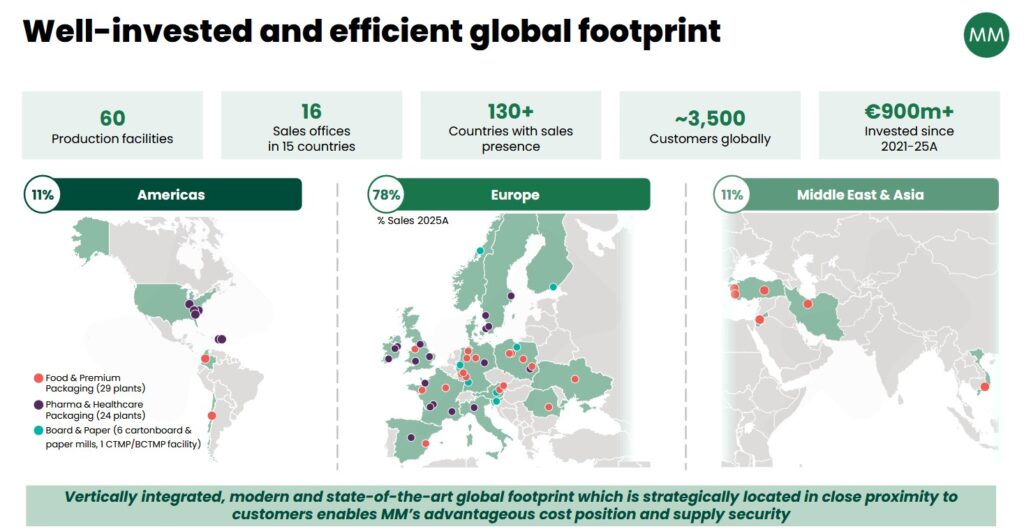
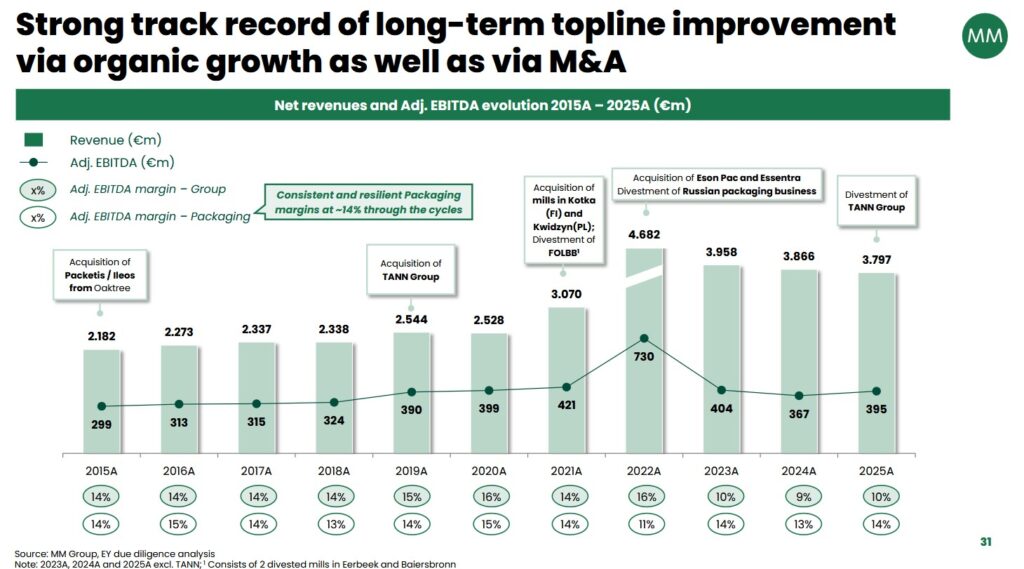
In the 2025 financial year, the Group achieved sales of around 3.9 billion euros with around 13,300 employees across 60 locations. The customer base includes around 3,500 companies in over 130 countries, with 78 percent of sales coming from Europe and 11 percent from the Americas and the rest of the world.
Mayr-Melnhof's business model and strategy
Mayr-Melnhof sees itself today as a world leader in the supply of consumer packaging based on cardboard and folding cartons, supplemented by kraft papers, uncoated fine papers, side labels and stickers, organized into three divisions.
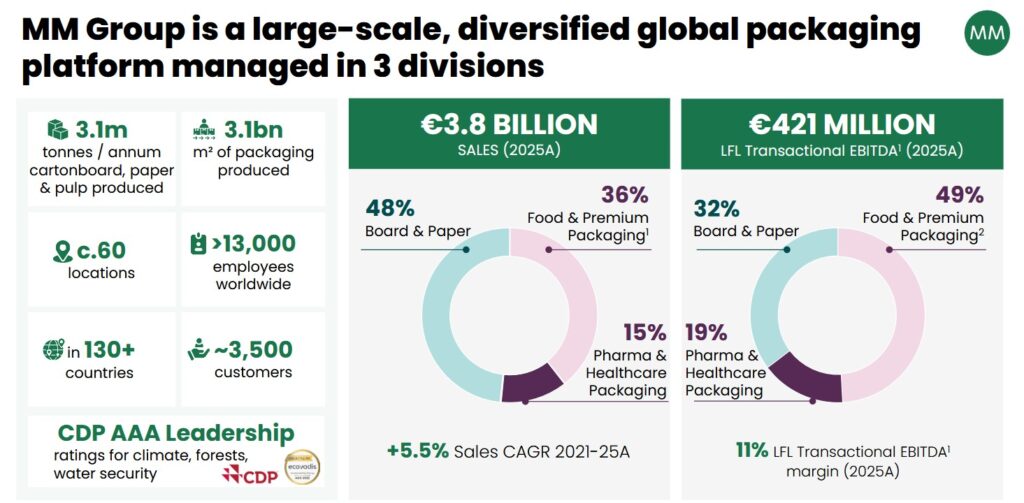
The business model is based on partial integration along the value chain. The Board & Paper division is Europe’s largest cardboard manufacturer with six cardboard mills in five countries, as well as a wood pulp mill, and produces fresh fiber and recycled cardboard, packaging papers, liners, barrier cardboard, fine paper and pulp. The two packaging divisions process cardboard into folding boxes. Important for understanding: The divisions operate as independent profit centers. Board & Paper supplies 85 percent of its cardboard to external customers; conversely, the packaging divisions purchase around 0.7 million tons of cardboard annually, more than a third of which is internally purchased at market conditions. Food & Premium Packaging is one of Europe’s leading folding box manufacturers with 29 plants and 40 percent of group sales. Pharma & Healthcare Packaging is, according to its own statements, the number one in secondary packaging for pharmaceuticals in Europe and the USA. The distribution of results is noteworthy: Board & Paper accounts for 44 percent of sales, but only 27 percent of adjusted EBITDA, while Food & Premium contributes 54 percent of EBITDA with 40 percent of sales share. The packaging divisions are therefore the revenue engine, with the carton business being the cyclical and currently weak part.
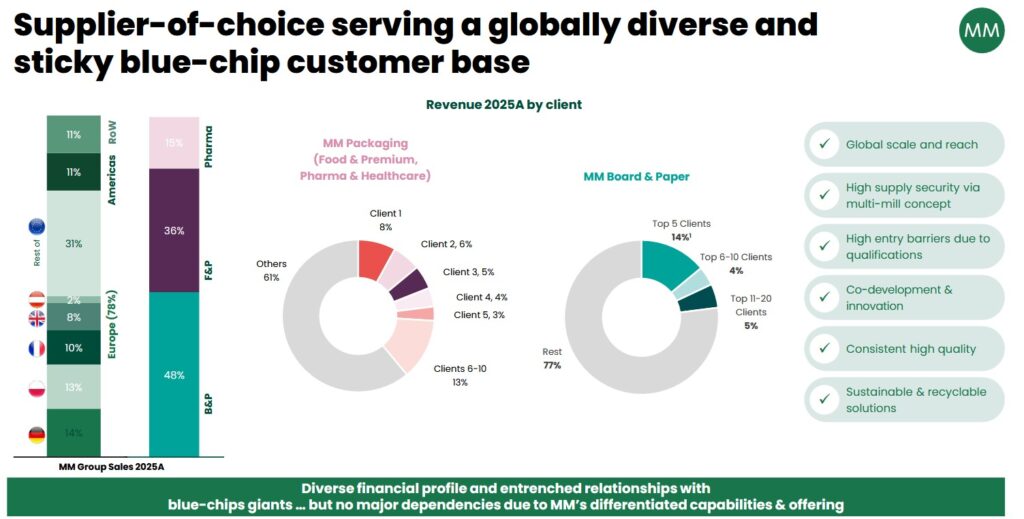
Strategically, Mayr-Melnhof describes its equity story with a few guiding principles: leadership in resilient fiber-based consumer packaging, efficiency and innovation to gain market share in sustainable folding boxes and papers, a combination of organic growth and acquisitions, a solid financial policy, a long-term-oriented core shareholder, and a diversified market and product portfolio. The overarching goal is to be a leader in cost, market, technology, and innovation in folding boxes and cartons.
The most important initiative at present is the Transformation Program „Fit-For-Future”. It aims at productivity, cost reductions and revenue growth and covers the entire value chain in five work streams: Sales, Purchasing, Production, Administrative costs and Supply Chain. After a contribution of 105 million euros in the first half of 2026, Mayr-Melnhof has raised the expected cumulative earnings effect by 2027 to over 330 million euros compared to 2024. Closely related to this is the optimization of the carton mills: According to the company, around 80 percent of capacity is located in the first or second quartile of the cost curve after three non-competitive machines were closed and two were sold to smaller mills. Targeted investments are intended to strengthen this position. In the autumn of 2026, Mayr-Melnhof is investing around 100 million euros in Kwidzyn, among other things in a new continuous pulp boiler that reduces energy, CO₂ and wood costs. Starting in 2027, the operating result is expected to increase by approximately 30 million euros annually. The planned acquisition of the German recycling cardboard mill Arnsberg by Reno de Medici is expected to bring significant synergies in 2027 and 2028.
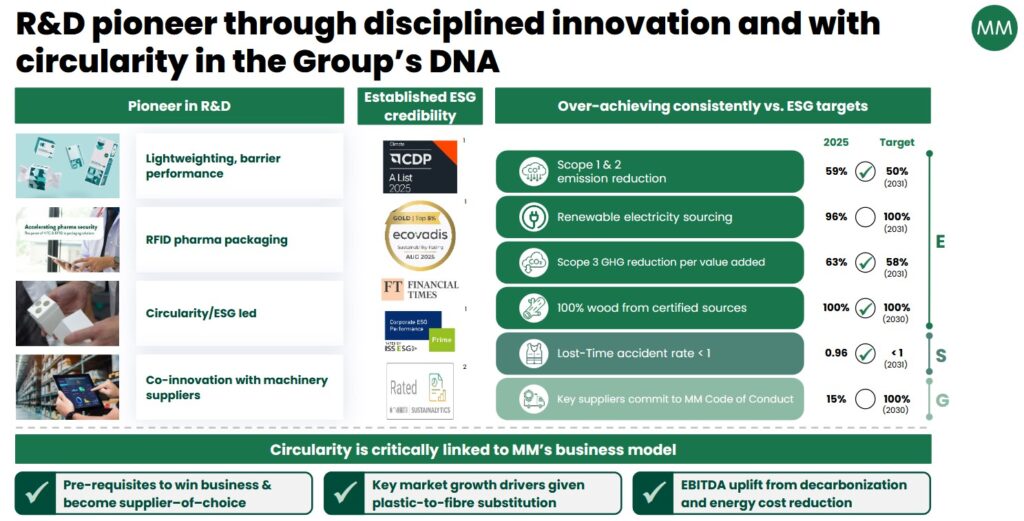
Mayr-Melnhof relies primarily on three levers for growth. First, the pharmaceutical sector, for which the management has set a special growth focus, both organically and in the medium term through acquisitions. Second, innovations to replace plastic, such as cardboard solutions instead of plastic, molded fiber parts as a replacement for plastic and metal, and tamper-proof labels with micro-optic technology. The company itself warns of caution here: While the willingness to switch from plastic to cardboard is certainly there, the pace is slowing down because plastic is usually cheaper.
Thirdly, Mayr-Melnhof is focusing on targeted capacity expansions in growth segments: Expansion investments in packaging plants in Romania (around 24 million euros) and the USA (around 20 million euros) are expected to deliver contributions by 2027. In addition, the volume in GLP-1 products, beauty, beverages and animal feed is increasing. The strategy is supported by sustainability targets and a clear financial policy.
Owners and management of Mayr-Melnhof
Looking at the ownership side, the most striking feature is that the shareholder structure has remained very stable since the IPO in 1994. The core family of shareholders currently holds around 60 percent of the share capital; the remaining 40 percent are held in dispersed ownership, predominantly by long-term institutional investors in Europe and the USA. The family shares have been pooled in a syndicate since the IPO, chaired by Franz VI. Mayr-Melnhof-Saurau since 2011. The syndicate agreement mainly regulates the members’ joint voting behavior and pre-emptive rights in the event of a sale.
Importantly, the family effectively controls the company and is at the same time present on the supervisory board. This ensures continuity and protects against takeover attempts, but limits the influence of the minority shareholders. Wolfgang Eder has been at the helm of the supervisory board since April 2023, succeeding Rainer Zellner. Eder is a prominent figure in the Austrian industry: He served on the board of voestalpine from 1995 to 2019 and led the company from 2004 as CEO; today he serves as chairman of the supervisory board there. Until February 2023, he was also chairman of the supervisory board of Infineon. His term at Mayr-Melnhof runs until the 2028 annual general meeting.
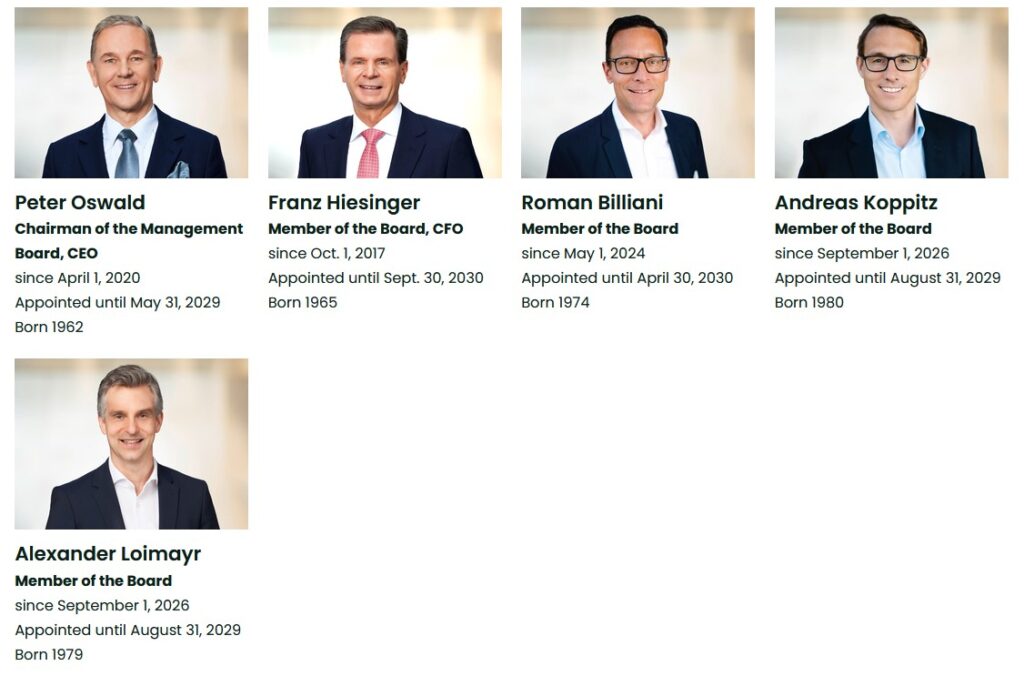
The board has been gradually expanded in recent years and now has five members since September 1, 2026. Peter Oswald has been chairman of the board since April 2020. He was previously CEO of the Mondi Group; his term runs until May 2029. Franz Hiesinger has been CFO since October 2017; his contract runs until September 2030. Roman Billiani has been in charge of Food & Premium Packaging since May 2024. New additions are Andreas Koppitz for Pharma & Healthcare Packaging and Alexander Loimayr for Board & Paper, both from within the company and appointed until August 2029. Mayr-Melnhof justified the expansion with the size and complexity of the group.
Industry profile and competitive situation
Mayr-Melnhof is active in two very different competitive fields. In carton production, few large manufacturers compete in a capital-intensive, cyclical and largely standardized market. In folding cartons, however, the market is fragmented because the delivery radius is limited and the factories must be close to the customers. In addition, with pharmaceutical packaging, there is a regulated niche with its own rules of the game.
Overcapacity currently dominates the cartonboard industry. Mayr-Melnhof itself cites persistent consumer weakness, overcapacity in Europe alongside continued capacity expansion in fresh fiberboard, rising import pressure from Turkey and Asia, competition for market share, structurally high costs and a so far only slow consolidation as the main challenges. US tariffs are exacerbating the situation because trade flows are reversing and additional goods are crowding into the European market. Nevertheless, the expansion wave in fresh fiberboard is reportedly nearing its end, according to industry press reports.
Historically, Mayr-Melnhof and the Italian company Reno de Medici (RDM) dominated the recycling carton market, holding together over 50 percent of the European recycling carton capacity. In addition, there are smaller private companies such as Weig and Buchmann. RDM is majority owned by the financial investor Apollo since 2021 and was taken over by the stock exchange. The planned purchase of the Arnsberg RDM plant by Mayr-Melnhof is also a consolidation step.
In the case of folding cartons, Graphic Packaging is the most important publicly listed competitor. The US group purchased AR Packaging in 2022, at that time Europe’s second largest manufacturer of fiber-based consumer packaging with 30 plants in 13 countries. Smurfit Westrock is also present; there, consumer packaging accounts for an estimated 20 to 25 percent of sales. In addition, there are many medium-sized, often private processors, facing major brands with significant bargaining power. In the case of pharmaceutical secondary packaging, Mayr-Melnhof is, according to its own statements, number one in Europe and the USA. The most important competitors are predominantly private specialists such as Faller Packaging, which acquired the Greek provider Paperpack in 2026, or the Edelmann Group. Regulationally, the EU Packaging Regulation PPWR, which has been largely in effect since August 12, 2026, imposes mandatory recycling requirements, which fundamentally favors fiber-based solutions.
When choosing a peer group, it is especially important to note that there is no true pure play, because Mayr-Melnhof combines carton production and processing. Board & Paper accounts for 44 percent of sales, but 54 percent of revenue comes from Food & Premium Packaging. In addition, Board & Paper sells 85 percent of its cartons to external customers, thus also supplying competitors in its own packaging divisions. Therefore, a segment-by-segment comparison is more meaningful than a single comparison group. However, four companies are nevertheless suitable as core peer groups, each covering individual segments:
- Metsä Board is the closest European comparable value in the carton business: market leader in fresh fiber folding carton with approximately 36 percent of European capacity.
- Stora Enso is relevant for the Consumer Packaging segment, which should be considered as isolated as possible due to the corporate structure.
- Graphic Packaging comes closest to the business model: the company combines its own cardboard production with folding cartons for consumer goods, but with a US focus.
- Huhtamaki is a Finnish consumer goods manufacturer with sales of around 4 billion euros in 2025, which produces not only fiber packaging but also flexible plastic packaging.
Opportunities and risks
On the opportunity side, the shift away from plastic is taking place first and foremost. The EU Packaging Regulation PPWR has been in effect since August 12, 2026. Packaging must meet strict criteria for recyclability; for plastics, recycling quotas are mandatory. This provides a regulatory boost for fiber-based solutions. Mayr-Melnhof is trying to capitalize on this trend with its own developments, such as cardboard solutions instead of plastic, molded fiber parts as a substitute for plastic and metal, and tamper-proof labels with micro optics.
The second big opportunity is the pharmaceutical business. In the first half of 2026, the adjusted EBITDA of this division rose by 14 percent, and the margin climbed to 14.3 percent. CEO Oswald sees the division on track to grow through restructuring backed by long-term customer contracts. The most important driver is primarily the demand for packaging for GLP-1 drugs (weight loss and diabetes medications). Overall, volumes in the packaging business are increasing in beauty, beverages, and pet food.
Thirdly, Mayr-Melnhof has significant leverage over its own results. The „Fit-for-Future” program generated around 105 million euros in the first half of 2026, and Mayr-Melnhof expects more than 100 million euros for the second half of the year. By 2027, the cumulative figure is expected to be over 330 million euros compared to 2024. In addition, there is leverage from a possible rebound in the carton business, which is currently operating with practically no operating margin. During the first half of 2026, prices in most product categories gradually recovered, but remained significantly below the level of the previous year. Furthermore, Mayr-Melnhof has announced a price increase of 75 euros per ton for the entire carton assortment for October 2026.
Fourthly, several investment projects are being completed that are expected to deliver earnings contributions in 2027. The investments of around 100 million euros in Kwidzyn are expected to improve the operating result by approximately 30 million euros annually starting in 2027. In Romania, expanded production is expected to start commercially in autumn 2026, with an expansion in the USA to follow. According to the CEO, no further major investments are planned thereafter. Declining capital investments would strengthen free cash flow. A capital ratio of 47 percent and debt within the target range would also give the company the necessary stability to overcome this phase.
The chances are fraught with significant risks, foremost among them the structural overcapacity in the European carton market. Mayr-Melnhof itself cites, in addition to new capacities, rising import pressure from Turkey and Asia. The rating agency Moody’s expects the overcapacity to persist at least until 2027. In the first half of 2026, prices for almost all varieties were significantly below the previous year. Whether the announced price increase in the market is feasible remains uncertain. The severity of the situation is demonstrated by the write-off of 70.5 million euros at the Slovenian plant Količevo, which Mayr-Melnhof justified with weaker long-term cash flow expectations. Further write-downs are not to be ruled out in the event of continued weakness.
A second risk is weak consumer demand. Mayr-Melnhof described the demand for folding boxes as sluggish for the first half of 2026, with competition remaining intense in most end markets. In the Food & Premium Packaging division, production volume decreased by over 7 percent. Structurally, the shift from plastic to cardboard is slowing down because plastic is usually cheaper. Therefore, the opportunity from plastic substitution is realized more slowly than often assumed.
Thirdly, the costs for energy, logistics, and chemicals are high. According to Mayr-Melnhof, they are significantly above historical levels and have fluctuated sharply since March 2026, when the war broke out in the Middle East. For the second half of the year, the company expects additional higher costs for wood and waste paper. In addition, there are site-specific risks: In Poland, Mayr-Melnhof already described the wood prices of the state-owned forestry monopoly as not competitive in 2023.
Fourthly, there are geopolitical risks. Mayr-Melnhof operates two packaging plants in the Middle East and Central Asia, which contributed around 2 percent to revenue in 2025 but approximately 6 percent to adjusted EBITDA. The company expects operational disruptions there, which the trade press is citing as possible consequences of the Iran war. US tariffs, in turn, divert trade flows and increase pressure on the European market.
Finally, there are implementation and financial risks. Part of the savings from Fit-for-Future is currently being used to reduce costs instead of increasing the results. The new pulp boiler in Kwidzyn has to start up smoothly, and the takeover of Arnsberg is still subject to a cartel clause. The return on capital is low at 5.3 percent after adjustment, and free cash flow was only 11.1 million euros in 2025.
The finances of Mayr-Melnhof
After having gained an overview of the industry in general and having taken a closer look at the company, management, and the competition, I look at the balance sheet and the derived financial ratios of Mayr-Melnhof. The focus here is on the aspects Growth, profitability and Financing.
For the analysis of the financial situation, in the first step I look at the development of revenue, profit and free cash flow. On average, the top line has grown by 6 percent per year over the last five years.
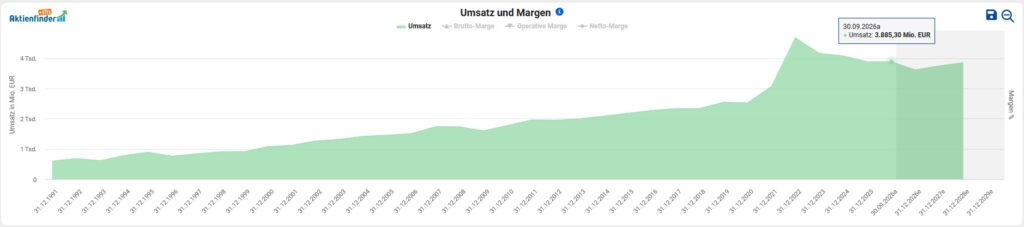
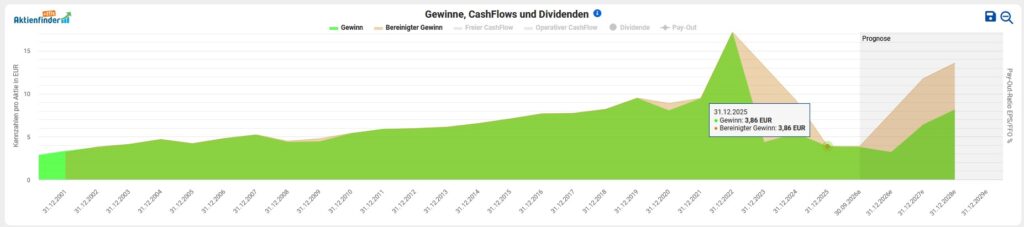
At Earnings per share For years, we have seen a very dynamic development both upwards and downwards. If I extrapolate the past business year 2025, it fell by 10%. Adjusted earnings per share by 59 percent (3.86 vs. 9.22 Euro). Mayr-Melnhof scored 2025 Net profit from 77 million euros.
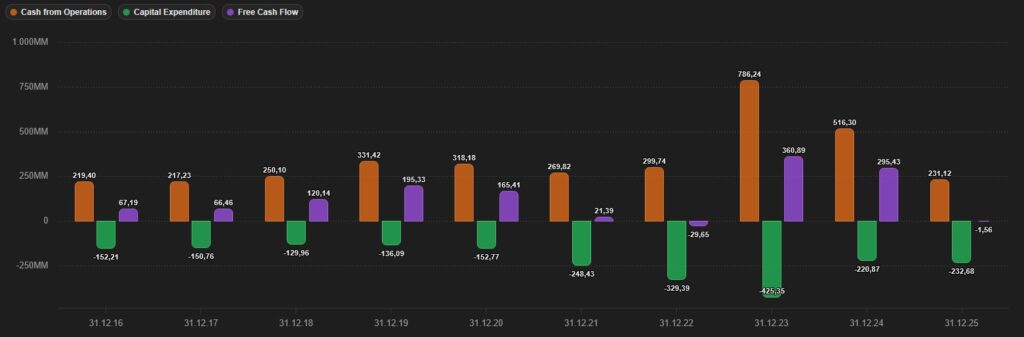
The amount available to the company Free Cashflow It can be used for investments in organic growth, research and development, debt repayment, expansion through acquisitions, dividend payments (increasing) or share buybacks. In absolute terms, the interplay between operating cash flow, free cash flow and capital investments (CapEx) over the period 2016 to 2025 is as follows:
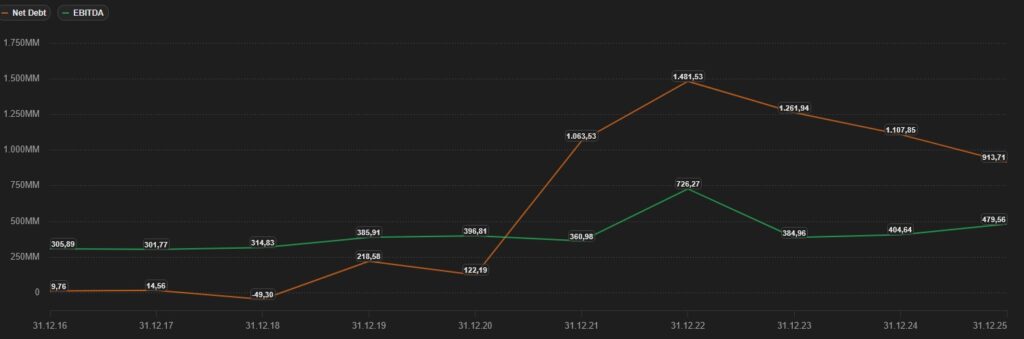
A look at the Debt situation This shows that Mayr-Melnhof had interest-bearing financial liabilities of 1.41 billion euros at the end of the last financial year, which were offset by liquid assets and securities of 0.5 billion euros. This results in a net indebtedness of 0.91 billion euros. Compared to the EBITDA of 0.48 billion euros, this ratio amounts to 1.9. This industry-specific value is below the threshold considered critical at 3, but includes the proceeds from the sale of TANN.
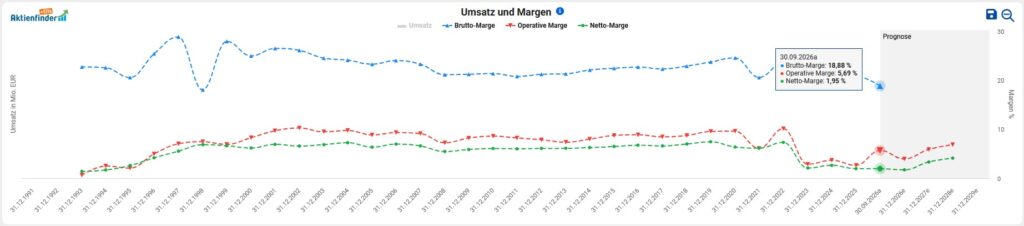
Finally, I am considering Profitability by Mayr-Melnhof based on the development of gross margin, operating margin and net margin. Depending on the cyclical business model, a margin profile characterized by volatility accompanies it. Based on data from the past five years, Mayr-Melnhof’s net margin fell below 3 percent.
Current valuation of the Mayr-Melnhof share
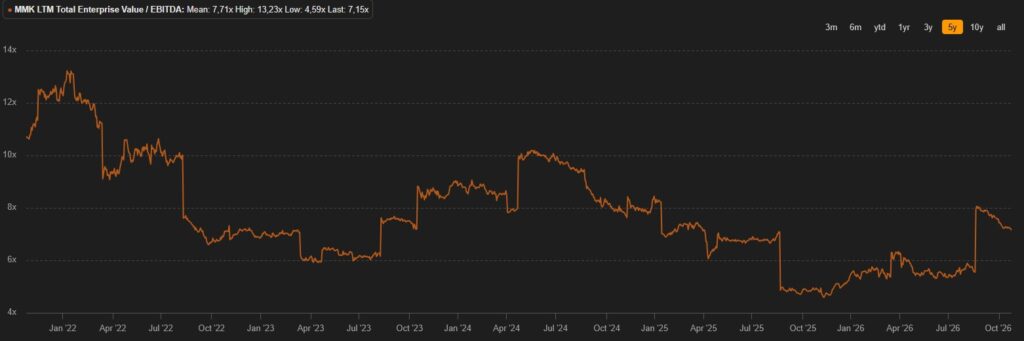
For the valuation of companies, I use the so-called Enterprise Value (EV) earnings. The EV indicates the amount (i.e., the market value) needed to purchase the working capital asset, after deducting the non-working capital assets. I compare this figure to operating income before interest, taxes, and amortization (EBITDA). The consensus and prevailing opinion is that a value below 10 indicates a „healthy“ valuation – as always with generic Rules of thumb The context specific to the company must be taken into account in the analysis by the careful investor. In the case of Mayr-Melnhof, it is clear that a EV/EBITDA of 7.2 In the context of the last five years, it does not represent an immediate buying opportunity. In the past twelve months, the Mayr-Melnhof share could be purchased for a multiple of less than 5, with the included sale gain from TANN still included here:
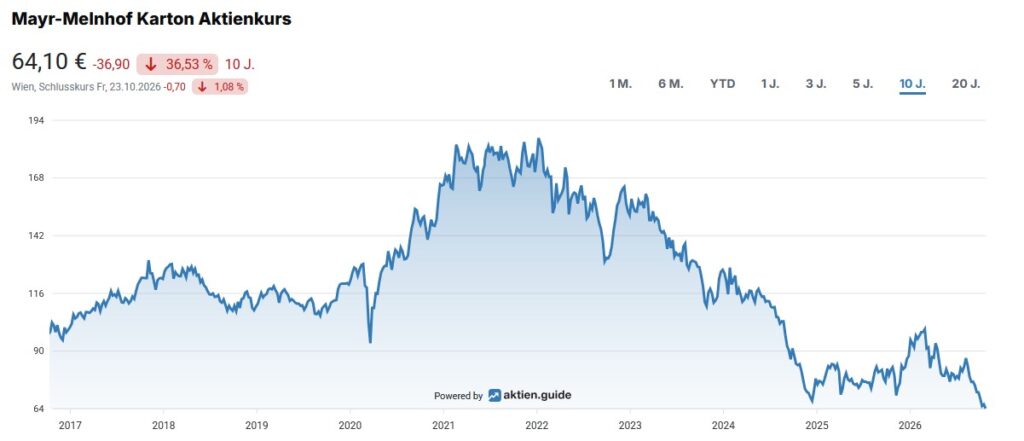
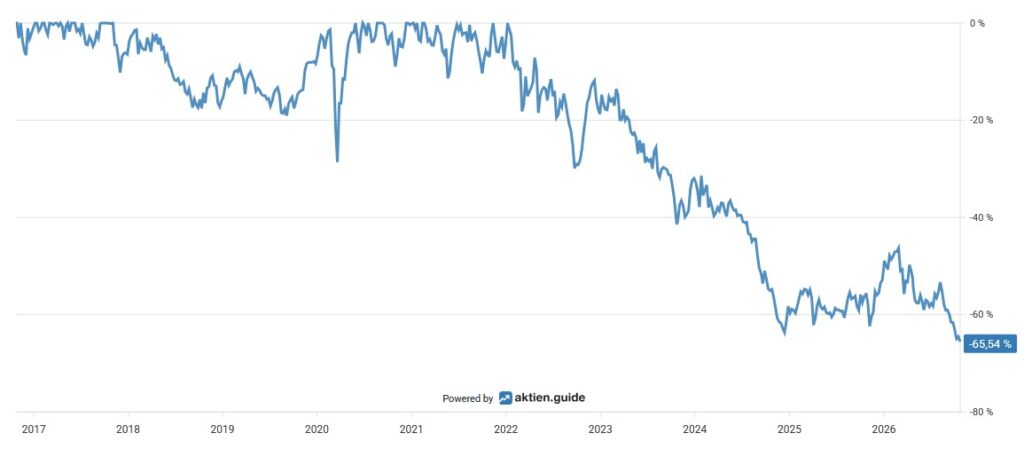
The Maximum drawdown In the past ten years, around 2026 reached 66 percent:
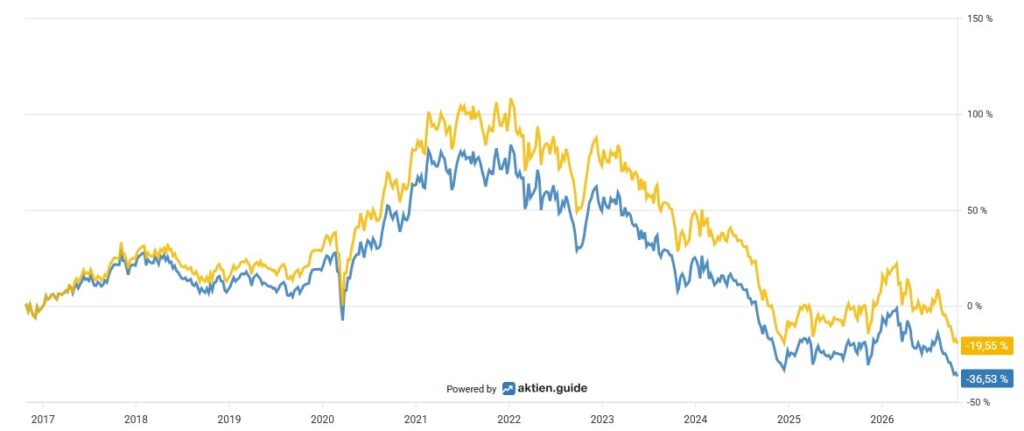
Over the ten-year period, an investment in the Mayr-Melnhof stock brought investors a return of 10%. Total Return from around minus 20 percent:
The capital allocation of Mayr-Melnhof
Mayr-Melnhof’s capital allocation follows a clear framework that the company itself describes as growth through its own efforts and through acquisitions, but within a solid financial policy. The anchor is debt: in the long term, Mayr-Melnhof aims for a ratio of net debt to adjusted EBITDA of between 2 and 2.5.
For many years, the rule was to allocate about a third of the annual surplus and to increase the dividend as continuously as possible. In March 2026, Mayr-Melnhof revised this policy: In the future, 40 to 60 percent of the annual surplus will be distributed. Where within this range the dividend ends up depends primarily on the indebtedness.
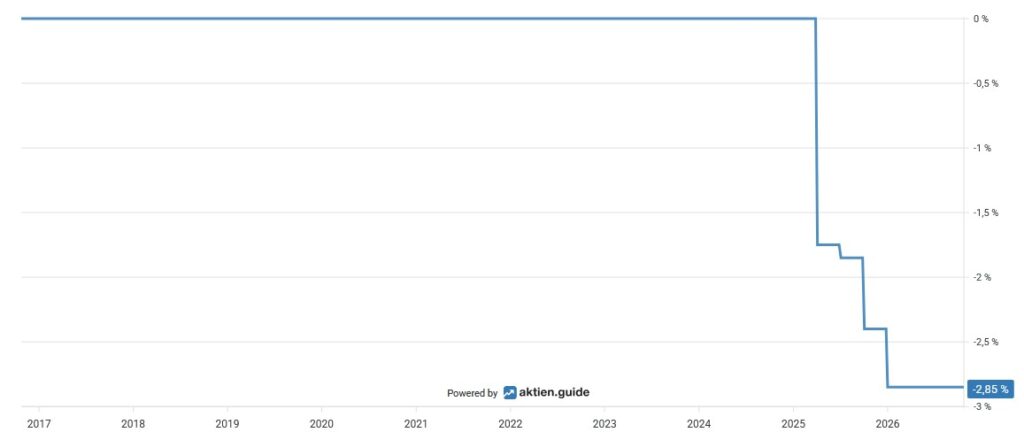
Mayr-Melnhof has revived share buybacks after a long hiatus. At the end of December 2024, the board decided for the first time in 15 years to launch a buyback program. It ran from January 3 to December 23, 2025, allowing the repurchase of up to one million shares (approximately 5 percent of the share capital) for a maximum of 80 euros per share. In fact, 2.85 percent of the share capital was repurchased at an average price of 72.45 euros. The April 2026 general meeting approved a new authorization for up to 10 percent of share buybacks. The board may also acquire the shares without further approval from the supervisory board.
If we assign the instruments according to my assessment based on the weight given by management, the following order emerges:
- Balance discipline and investments in cost leadership stand at the top of the list.
- The dividend is the central instrument for distribution, also in the interests of the family syndicate.
- Selective acquisitions follow in third place.
- Share buybacks are an opportunistic addition.
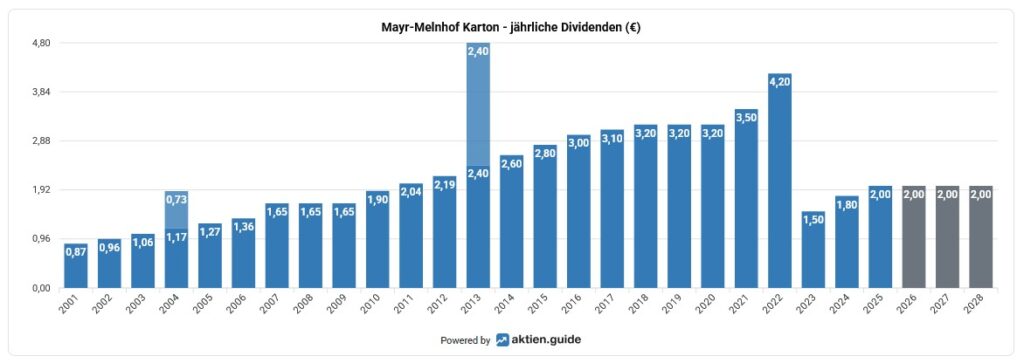
Bei der Betrachtung der Dividendenhistorie It is striking that Mayr-Melnhof’s management has made a drastic cut in the dividend for the 2023 financial year. Because the dividend is linked to earnings, it fluctuates significantly with the cycle. Continuity at Mayr-Melnhof therefore means that dividends are paid reliably; it does not mean that the dividend increases steadily.
At a current price of 64.10 euros, an amount of Dividend yield from 3.1 percent based on the dividend paid recently. Finally, an overview of the dividend payouts over the past years:
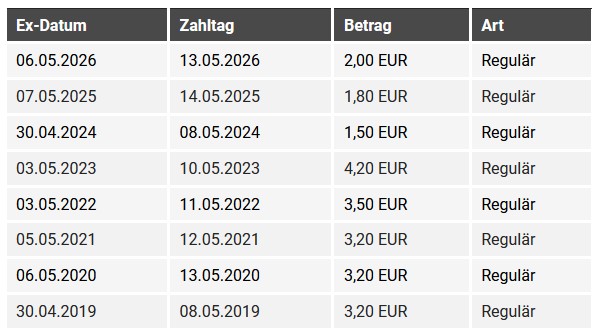
The annual dividend beträgt aktuell 2.00 euros per share and was paid out in May 2026. Based on the average free cash flow over the last three years, this results in: Payout ratio from 35 percent. However, the free cash flow was negative in individual years; the dividend had to be financed from the company's own resources. In 2025, the free cash flow of €11.1 million did not cover the dividend payment.
Haftungserklärung
When compiling this article, we obtained the actual information from generally considered reliable sources available to us. We cannot claim any accuracy or completeness of this information. Our assessments based on these actual information represent non-binding value judgments at the time of compiling this article. Subsequent changes cannot be taken into account. We cannot accept any liability for the completeness or accuracy of this article. This article does not constitute an offer or solicitation to purchase shares of the issuer. This article in no way replaces client- and objective-appropriate advice. We cannot verify whether the recommendations match your personal investment strategies and objectives. For client- and objective-appropriate advice, we recommend that you seek the advice of an investment advisor. An analysis publication can and should not replace a securities prospectus required for an investment and/or expert investment advice. Therefore, it cannot be the sole basis for deciding on an investment.