


Das neue CapTrader DGI-Musterdepot
Im Rahmen des neues Musterdepots von und mit Clemens Faustenhammer steht das Investieren in Einzelwerte in Kombination mit (bevorzugt hohem) Dividendenwachstum im Mittelpunkt. Der aus Österreich stammende Privatinvestor mit dem Fokus auf Dividendenwachstumswerte investiert seit zwei Jahrzehnten am Kapitalmarkt.
On its Blog and Instagram channel The Dividend Post lässt Clemens Faustenhammer an seiner Leidenschaft für das Investieren teilhaben. Als Verfechter des eigenverantwortlichen Vermögensaufbaus partizipiert er mit Dividendenwachstumswerten an steigenden Cashflows seiner ausgewählten Unternehmen in Form kontinuierlich wachsender Ausschüttungen und ansprechender Gesamtrendite.
In diesem Beitrag wird einerseits die Grundlagen für eine auf Dividendenwachstum und Total Return fokussierte Investmentstrategie anhand typischer Merkmale abgesteckt. Diese Eckpfeiler eines Grundkonzepts umfassen relevante Punkte wie den Investment-Prozess/-Fokus, das Risikomanagement und dahinter liegende Regelwerk, die Bewertung sowie den Zeithorizont und damit verknüpften Zielen. Andererseits werden der aktuelle Status des im Aufbau begriffenen Musterdepots und die weitere Vorgehensweise erklärt.
The Investmentstrategie
Als Ausgangspunkt und sozusagen übergeordnete Leitlinie für die Definition einer Strategie lassen sich die einzelnen Elemente aus einer höheren Flughöhe wie in der unteren Grafik vereinfacht darstellen:
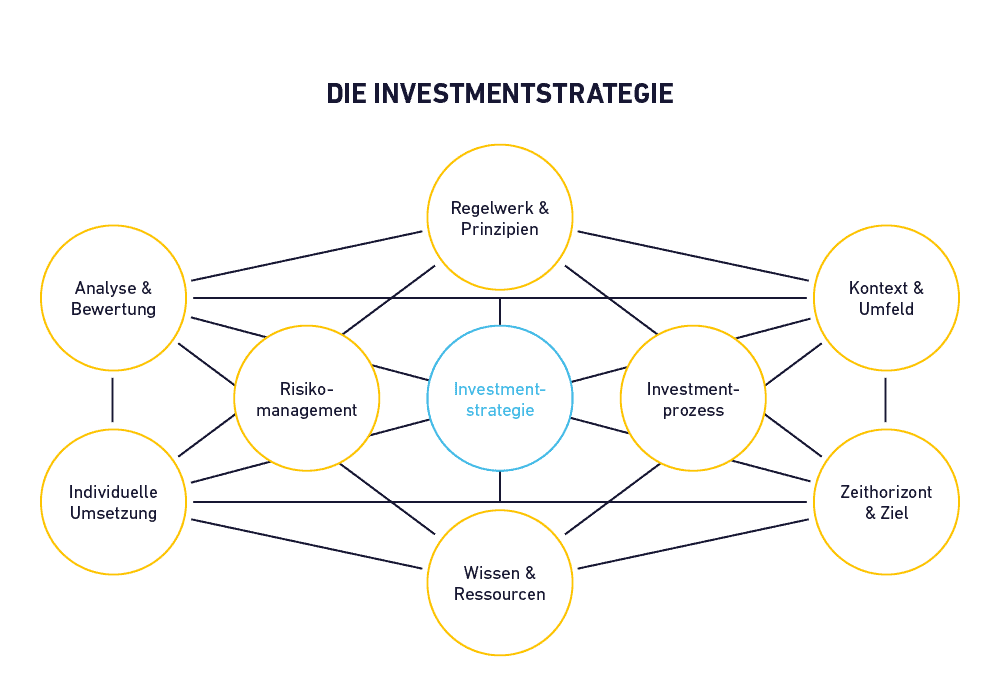
Analog zu einer Unternehmensstrategie versteht sich eine Investmentstrategie als Kompass, welcher die grundsätzliche Ausrichtung der im Portfolio befindlichen Investments einnordet. Gleichzeitig steht sie in Verbindung mit dem Festhalten an einer langfristigen Investmentstrategie sowie deren Anwendung auf operativer Ebene, das Regelwerk und daraus abgeleiteter Handlungsmaßnahmen zur Verwirklichung der zu erwartetenn Ziele.
Beginnen wir mit dem ersten Kernpunkt einer (Dividend Growth) Investmentstrategie, wobei sich aus der Reihenfolge der einzelnen Punkte keine Rückschlüsse auf eine spezielle Gewichtung dieser ziehen lässt.
You are currently viewing placeholder content from Youtube. To access the actual content, click the button below. Please note that doing so will share data with third-party providers.
More InformationFokus beim Investieren
Im Rahmen eines festgelegten Investmentprozesses, dazu mehr im nächsten Kapitel, sind die ausschlaggebenden Parameter für das Spektrum an investitionswürdigen Unternehmen konkret definiert. Am Beispiel der im Vordergrund stehenden Dividend Growth Investing Strategie sind die (steigenden) Dividenden nur eine, doch gleichfalls sehr erfreuliche abgeleitete Konsequenz von langfristigen und nachhaltig steigenden Unternehmensgewinnen.
Ein nicht irrelevanter Grund für die Bedeutung des Dividendenwachstums: steigende Ausschüttungen können die wirtschaftliche Gesundheit und Zuversicht des Managements eines Unternehmens als Indikator zum Ausdruck bringen. Diese wirtschaftliche Korrelation ist nicht von der Hand zu weisen. Profitable Unternehmen zeichnen sich in der Regel durch funktionierende Geschäftsmodelle aus, verfügen über langfristig erarbeitete Wettbewerbsvorteile in ihrer Branche und führen eine solide Bilanz.
Der Fokus dieses Musterdepots liegt auf das Investieren in Einzelwerte, die ihren Aktionären am unternehmerischen Erfolg in Form von – bevorzugt wachsenden – Cash Flows beteiligen und durch den erwirtschafteten Total Return überzeugen.
Investmentprozess und Bewertung von Unternehmen
Die Frage der Analyse und Bewertung von potentiell ins Beuteschema passenden Unternehmen kann mithilfe eines strukturierten Investmentprozess beantwortet werden. Da sich der Fokus ausschließlich auf börsengelistete Einzelunternehmen bezieht, lässt sich der Prozess in zwei unterschiedliche, aber komplementäre Aktivitäten unterteilen.
A price valuation of the company's traded shares is preceded by a gain in knowledge through the key question „Do I understand the company“. This analysis is based on aspects such as the operational business model (products, services, etc.), environmental factors (market situation, positioning, value drivers, trends, etc.) and decision-makers (including management, remuneration, strategy, owners, history). In addition, the fundamental analysis includes a detailed examination of the key figures derived from the balance sheet. Relevant aspects that need to be carefully examined may include the growth trend in sales, profit and free cash flow, corporate debt, capital structure, investment policy, profitability or the capital allocation strategy prioritized by management (share buybacks, dividends, inorganic growth through acquisitions).

Beim Blick auf die Dividendenpolitik rücken die Leistbarkeit (aktuelle Ausschüttungsquote), Nachhaltigkeit (schüttete das Unternehmen auch in wirtschaftlichen Krisen die Dividende aus) und Entwicklung (letzten Dividendensteigerungen) in den Mittelpunkt der Analyse.
In diesem ersten Teil spiegelt sich die Essenz des unternehmerischen Investierens wieder. Als strategische Grundausrichtung spielt die Beteiligung an solide wirtschaftenden Sachwerten dank kontinuierlich wachsenden Cash Flows eine zentrale Rolle.
The second part covers the wide range of different valuation models used to determine the „right“ - or „fair“ - price for the company's shares. Anyone who spends time on financial blogs or relevant portals will be familiar with the sheer variety of valuation techniques. Dividend discount models, home-made scoring models, sophisticated fair value methods... depending on personal taste, the analytical-quantitative aspect of determining a price worth buying can be pursued with varying degrees of intensity.
Für die für das Musterdepot infrage kommenden Unternehmen wird der Vergleich anhand von Sektor-spezifischen Fundamentaldaten und Multiples im Verhältnis zu den Branchenmitbewerbern bevorzugt. Verwendung bei der Bewertung von Unternehmen gleicher Branchen findet dabei der sogenannte Enterprise Value (EV).
Zu jedem Unternehmen sollen auf Basis der in der unteren Tabelle aufgelisteten Kriterien die entscheidenden Argumente in Form von Investmentthesen gesammelt und transparent in eigenen Beiträgen monatlich abgebildet werden.
Wann nun eine Aktie von Unternehmen A unterbewertet und bestenfalls mit einem Sicherheitsaufschlag, der legendären von Warren Buffett geprägten Margin of Safety, zu kaufen wäre, ist nüchtern betrachtet eine subjektive Investmententscheidung auf Basis selbstgemachter Gedanken und Preispräferenzen. Getroffene Annahmen zum Kaufzeitpunkt und fein kalkulierte Zukunftserwartungen verlieren zusehends an Halbwertszeit in einer global vernetzten Wirtschaft mit komplexen, geopolitischen Verflechtungen und kaum berechenbaren Einflussfaktoren. Je weiter in die Zukunft geblickt wird, desto stärker wirken die Beschränkungen in einem ohnehin prognose-feindlichen Gebiet wie dem Long-term Investing.
In Zeiten von Unsicherheit und drastischen Verwerfungen am Markt zeichnen sich jene Unternehmen aus, die – neben einem funktionierenden Geschäftsmodell und anderen oben genannten Faktoren – ein adäquates Management ihrer Risiken an den Tag legen. Als Investor spielen zwei zentrale Aspekte eine Rolle: die Kenntnis des eigenen Risikoappetits (vulgo: „was bin ich bereit zu riskieren“) und der Risikotragfähigkeit (vulgo: „was ertrage ich tatsächlich an Risiko mitten im Sturm“). Letzteres kann man ohne die selbst gemachten Erfahrungen einer Baisse nur ex ante erahnen, bis zu dem Zeitpunkt wenn die Märkte stetig gen Süden drehen.
Mit dem Fokus auf Einzelwerte existieren zwei signifikante Ansatzpunkte beim Managen der Risiken.
Zum einen ist die Festlegung der Positionsgröße bedeutend. Im Musterdepot wird ein mehrstufiger Ansatz gewählt. Was ist damit gemeint: bis eine Position voll investiert ist, wird zumindest zwei-, wohl aber mehrmals in ein Unternehmen in unterschiedlichen Tranchen investiert. Zudem wird zwischen unterschiedlichen Positionshöhen, abhängig davon, ob es sich um einen Kern- oder Satelliten-Wert handelt, differenziert. Das bedeutet, dass im Musterdepot die Werte unterschiedlich gewichtet werden.
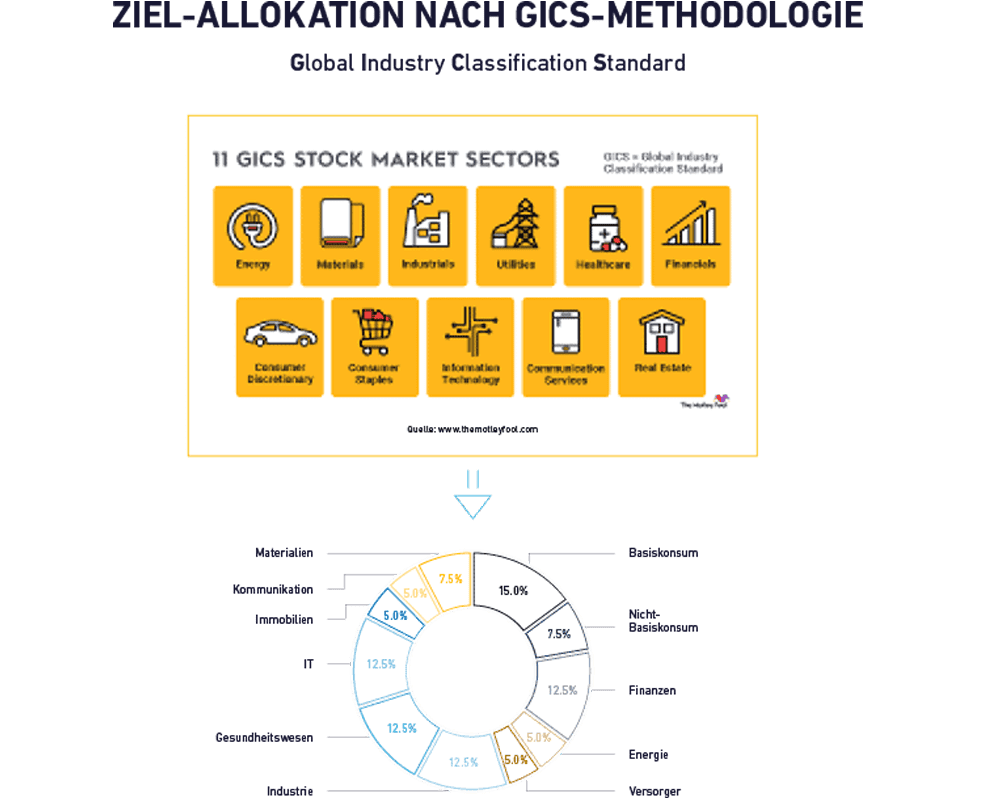
Zum anderen verfolgt das Musterdepot den Ansatz eines breit diversifizierten Welt-Portfolios. Die Anzahl von investitionswürdigen Unternehmen liegt zwischen 20 oder 30 Titel. Entlang unterschiedlicher Ausprägungen der Diversifikation wird in verschiedene Branchen, Länder, Währungen und manchmal Unternehmensgrößen investiert. Empirisch belegt ist die Portfolio-Diversifikation ein probater Weg um dem unsystematischen Risiken entgegenzuwirken.
Nun steht für die Dividendenwachstumsstrategie das Investieren in Unternehmen mit einem langzurückreichenden Track Record an gesteigerten Dividendenzahlungen an prominenter Stelle. Nichtsdestotrotz sind solche Dividendenwachstumssträhnen (Dividend Growth Streak) nicht als Selbstläufer zu werten oder als ein alleinentscheidendes Qualitätsmerkmal heranzuziehen, ohne beispielsweise die oben skizzierte Unternehmens- und Fundamentalanalyse in die Investitionsentscheidung zu berücksichtigen.
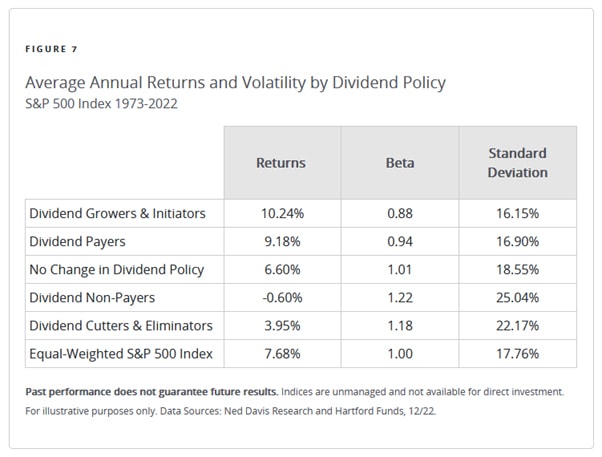
Der Survivorship Bias kann sich als Fallstrick für Dividend Growth Investoren erweisen. Der kritische Blick gilt der Zukunft, nicht der Vergangenheit, gleichwohl sie interessante Ansatzpunkte für Entscheidungen liefert und langfristig-orientierte Investoren maßgeblich beeinflusst. Einer auf Dividendenwachstum fokussierten Investmentstrategie bleibt ein nicht zu unterschätzendes Risiko inhärent: der Anlagehorizont. In einem möglichst prognosefreien Ansatz und dem Legen des Schwerpunkts auf Ist-Daten – gepaart mit einer ordentlichen Portion Demut – kann ein ausdiversifiziertes Portfolio der Grundstein dafür sein, dass die Volatilität über den Großteil der Anlagedauer unter Kontrolle gehalten wird.
Anlagehorizont & Ziel(e)
"Time in the market beats timing the market”. Alles gesagt, oder? Ganz so einfach ist es nicht, obgleich der wahre Kern dieses geflügelten Statements die Bedeutung des Anlagehorizonts gut auf den Punkt bringt. Als Dividend Growth Investor ist die Geduld eine unerlässliche Tugend für die langfristigen Vermögensaufbau und dennoch gleichzeitig eine der größten Herausforderungen. Über die Jahre den Fokus aufrechtzuerhalten, bis sich die Kraft des Zinseszinseffekts im Depot manifestiert, schreibt sich leichter als es in der Realität ist. Es braucht einen langen Atem und Zeithorizont, um den Erfolg seiner präferierten Investmentstrategie zu beurteilen.
Das führt uns auch zu einem Argument, welches manchmal gegen das Investieren in Dividendenwachstumswerte ins Treffen geführt wird und gleichzeitig die Brücke zur persönlichen Zielsetzung schlägt. In verschiedenen Lebenssituationen mag vielleicht ein anderes Anlagekonzept oder die akute Verfügbarkeit von Kapital wichtiger sein, wenn man nicht willens oder in der Lage ist, solch relativ langen Phasen des Investiert-Seins („Time in the market“) mit anfangs kleineren, doch konstant wachsenden Ausschüttungen zu durchschreiten. Das Musterdepot verfolgt das Ziel des generationsübergreifenden Vermögensaufbaus.
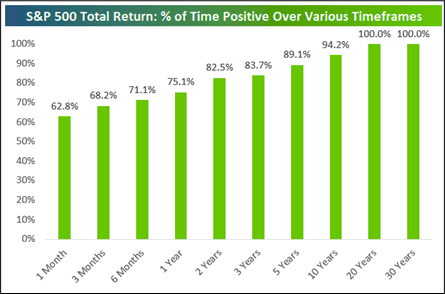
Für jeden Anleger ist es wichtig eine Haltung einzunehmen, die einem vor allem psychologisch die nötige Durchhaltefähigkeit verschafft, die getätigten Investitionen über Jahrzehnte hindurch zu halten. Langfristiger, risikobewusster Vermögensaufbau mit kontinuierlich wachsenden Ausschüttungen infolge von Investments in wirtschaftlich erfolgreichen Unternehmen klingt sehr vielversprechend. Partielle Korrektureingriffe sind im Interesse eines souveränen Portfolio-Managements über einen langem Anlagehorizont wohl aber unvermeidbar.
Regelwerk & Prinzipien
Ein Regelwerk mit festgehaltenen Prinzipien dient als Anker in hektischen Zeiten. Die Vorteile einer Verschriftlichung liegen auf der Hand, denn sie drückt die eigene Investmentstrategie, das Risikomanagement und den Selektionsprozess bei der Aktienwahl durch darin festgeschriebene „harte“ Kriterien aus. Der Investment-Fokus wird mit nötiger Disziplin aufrechterhalten und die Gefahr eines Strategieschwenks zu meist teuren Kosten kann vermieden werden. FOMO („Fear-of-missing-out“) lässt grüßen.
Anhand des Dividendenwachstumsportfolios den Prozess mit Bezug zur Praxis greifbarer machen. Schauen wir uns das nun genauer an:
Investment-Zeithorizont: unablässig von Sonderereignissen mindestens zehn Jahre (bevorzugt: Portfolio „vererbbar“ machen und halten)
Diversification: globale Grundausrichtung dank geographischer Streuung mit Fokus auf Nordamerika und Europa, unterschiedlicher Währungsräume und vorwiegend Large- und Mid-Caps als adäquate Unternehmensgröße (von Small bis Mega Caps)
Positionsgröße: kein Einzelwert über fünf Prozent des investierten Kapitals, wobei diese Regel für die Aufbauphase noch keine Rolle spielt
Sektoren: basierend auf den „Global Industry Classification Standard“ wird in den elf Sektoren entlang der diversen Wertschöpfungsketten investiert
Depot-Größe: an sich wird als Obergrenze für die mögliche Anzahl von investierten Unternehmen ein Zielkorridor von 20 bis 30 Unternehmen angestrebt
Investment-Scope: beinhaltet ausschließlich Einzelwerte mit einer Marktkapitalisierung von mindestens 500 Millionen Euro. Investitionen in Sammelanlagen wie ETFs sind nicht geplant
Investment-Rhythmus: opportunistische Vorgehensweise ohne zeitliche Vorgabe bis wann die 100.000 Euro investiert sind
Aufstocken des Bestands: eine solide Grundmenge von 10 bis 15 Unternehmen soll zunächst aufgebaut werden, bevor eine Aufstockung von Bestandspositionen ernsthaft in Erwägung gezogen wird
Im Falle von Dividendenkürzungen bzw. -reduzierungen kann das betroffene Unternehmen für zwölf Monate im Portfolio verweilen, um spätestens nach diesem Beobachtungszeitraum eine Entscheidung über den weiteren Verbleib der Aktie zu treffen. Gegebenenfalls wird ein Wechsel durch ein alternatives Unternehmen aus derselben Branche durchgeführt
Messgrößen für die Investmentstrategie:
- Positiver Total Return (Gesamtrendite) nach zumindest fünf Jahren (Inflations-bereinigt) auf Ebene der Einzelwerte
- Angestrebt wird ein durchschnittliches Dividendenwachstum wird im Zielkorridor von 5 bis 10 Prozent pro Jahr auf Ebene des Gesamtportfolios
Auf ein Punkte- oder Ratingsystem auf Basis vordefinierte Kriterien, die zur Ermittlung eines Gesamtscores beitragen, wird verzichtet
Die Höhe der Dividendenausschüttungen sollen keinen Substanzverzehr über mehrere Jahre bedingen, sprich das Unternehmen kann sich die Dividende leisten
Das Dividendenwachstum entspricht im Wesentlichen dem zugrunde liegenden Ertragswachstum des Unternehmens
The Rebalancierung erfolgt nicht durch Verkäufe der gut gelaufenen Werte, sondern durch das Aufstocken anderer Bestandspositionen
Antizyklisches Rebalancieren wird als Chance für antizyklisch agierende Investor unter der Voraussetzung einer bestimmten Mindestgröße von 10 bis 15 Einzelwerte im Musterdepot wahrgenommen
Aktionärsfreundliche KapitallokationShare buybacks are taken into account as part of an attractive capital allocation policy
Debt capital wird für dieses Portfolio nicht in Anspruch genommen
Ähnlich wie andere Kernpunkte sorgt eine sauber ausformulierte Sammlung der relevantesten Regeln für Nachvollziehbarkeit im Entscheidungsmuster. Dennoch gestalten sich von Zeit zu Zeit allfällige Nachschärfungen oder Präzisierungen dank neu gewonnener Erkenntnisse als ein dauerhafter Begleiter im Alltag eines Investors.
Individuelle Umsetzung: Aufbau des Musterdepots
Von der Theorie in die Praxis überzugehen ist unabhängig von der bevorzugten Investmentstrategie das Entscheidende. Basierend auf den geschilderten Parametern wollen wir uns ein auf Dividendenwachstum und Total Return ausgerichtetes Depot zusammenbauen.
Das mit 100.000 Euro ausgestattete Musterdepot ist für den Start zu gut einem Drittel investiert. Für die Aufbauphase bilden insgesamt 15 Unternehmen den initialen Kern für das Portfolio:
| Company | Sektor | Kaufkurs | Investment amount | Number of pieces |
|---|---|---|---|---|
| CME Group | Finances | 197,00 | 1970,00 | 10 |
| Toronto-Dominion | Finances | 54,75 | 2737,50 | 50 |
| Brenntag | Materials | 75,92 | 1890,50 | 25 |
| Diageo | Basic consumption | 32,35 | 3235,00 | 100 |
| Ahold Delhaize | Basic consumption | 27,83 | 2783,00 | 100 |
| Nike | Non-basic consumption | 88,32 | 2208,00 | 25 |
| UnitedHealth | Health | 449,45 | 2247,25 | 5 |
| Johnson & Johnson | Health | 138,54 | 3463,50 | 25 |
| Roche | Health | 225,25 | 2252,50 | 10 |
| American Water Works | Provider | 112,40 | 1686,00 | 15 |
| Brookfield Renewable | Provider | 21,96 | 2196,37 | 100 |
| BCE | Communication | 30,78 | 3078,00 | 100 |
| Deere | Industry | 362,10 | 3621,00 | 10 |
| Microchip Technology | IT | 85,50 | 2137,50 | 25 |
| Realty Income | Real estate | 50,07 | 2503,50 | 50 |
At present, there can be no question of balanced diversification measured against the target allocation. Provided the valuation level is right, further investments will follow in the future until the target figure is reached.
What happens next
In the following months, Clemens Faustenhammer will present a company from the model portfolio and share an insight into his reasons for investing in the share. Of course, the latest investments and how the portfolio is progressing will also be reported on every second Friday of the month. The current performance of the model portfolio can be tracked online at any time.
To accompany this, we publish on our Youtube channel In addition to the model portfolio update, he also comments on current stock market developments with regard to dividends in a monthly interview with Clemens.
You are currently viewing placeholder content from Youtube. To access the actual content, click the button below. Please note that doing so will share data with third-party providers.
More InformationDie bisherigen Titel des Musterportfolios in der Besprechung
 Dividenden Depot
DGI Model Repository: The report for the 3rd quarter of 2026
With the review of the DGI sample portfolio, I provide a transparent...Read more- Dividenden Depot
DGI SAMPLE PORTFOLIO: THE UNITEDHEALTH SHARE
Company profile and business model: Who is UnitedHealth and what does it do...Read more - Dividenden Depot
DGI MODEL PORTFOLIO: THE TRACTOR SUPPLY STOCK
Company profile and business model: Who is Tractor Supply and what does...Read more

Disclaimer
This is a marketing communication within the meaning of Section 63 (6) of the German Securities Trading Act and does not contain investment strategy recommendations, investment recommendations or financial analyses in accordance with Section 85 of the German Securities Trading Act and Article 20 of the Market Abuse Regulation. It therefore does not fulfill the legal requirements to guarantee the objectivity of investment strategy recommendations/investment recommendations/financial analyses. CapTrader GmbH or its employees are therefore not legally prohibited from trading or providing services in the securities products mentioned therein prior to publication of the information.
Past performance, simulations or forecasts are not a reliable indicator of future performance. Mandatory information and limitation of liability for CapTrader and any third-party content providers can be found at https://www.captrader.com/marketingmitteilung/angaben
Please note that investing in financial instruments involves high risks and take note of our disclaimer and the mandatory legal information at the locations indicated.- Mandatory information
Responsible: CapTrader GmbH, Elberfelder Straße 2, 40213 Düsseldorf; Commercial Register Number: HRB 86537 Düsseldorf Local Court; VAT ID DE323771603; Managing Directors Andreas Weiß, Christian Weiß, Michael Heyder; Tel: +49 211-740786-00, Fax: +49 211-740786-90.
Zuständige Aufsichtsbehörde: Bundesanstalt für Finanzdienstleistungsaufsicht, Graurheindorfer Straße 108, D – 53117 Bonn und Marie-Curie-Str. 24-28 D – 60439 Frankfurt am Main, Tel: 0228 4108 – 0 Fax: 0228 4108 1550 E-Mail: poststelle@bafin.de; Institutsnummer 10156708
Conflicts of interest CapTrader in marketing communications: CapTrader GmbH confirms that it does not hold any positions in the mentioned financial instruments beyond the positions mentioned in the marketing communication itself, if applicable. There are also no other conflicts of interest within the meaning of CapTrader GmbH's Financial Analysis and Marketing Communication Policy.
Conflicts of interest and mandatory disclosures by the third-party content provider for marketing communications with financial instrument recommendations: See under https://www.captrader.com/marketingmitteilung/angaben to creators of third-party content
The copyright to the marketing communication is reserved. Reprinting and distribution is only permitted with our consent.
- Disclaimer
By accepting the content, the recipient accepts the binding nature of the limitation of liability.
a) Disclaimer for third-party content
CapTrader GmbH offers authors - such as editors, guest commentators, agencies and companies - the opportunity to publish comments, analyses, news and company announcements. Their opinions do not necessarily reflect the opinions and views of CapTrader GmbH and its employees. CapTrader GmbH assumes neither liability nor guarantee for this content. This applies in particular to incomplete or incorrectly reproduced reports, incorrect price information and editorial errors. Liability claims relating to material or immaterial damage caused by the use or non-use of the published information or by the use of incorrect or incomplete information are fundamentally excluded.
b) Exclusion of liability for CapTrader's own content
CapTrader has taken its own information in this marketing communication from sources believed to be reliable, but has not verified all such information itself. Accordingly, CapTrader makes no warranties or representations as to the accuracy, completeness or correctness of the information or opinions contained herein. Subsequent changes cannot be taken into account. The marketing communication does not constitute an offer or solicitation to buy shares of the issuer and is in no way a substitute for advice appropriate to the investor and the property. We cannot verify whether the information in the marketing communication is in line with your personal investment strategies and objectives. We recommend that you consult an investment advisor for advice that is appropriate to the investor and the property. The marketing communication cannot and should not replace a securities prospectus and/or expert investment advice required for an investment. It can therefore never be the sole basis for an investment decision. By accepting the marketing communication, the recipient accepts the binding nature of the above limitation of liability.
CapTrader provides the information despite careful procurement and provision only without guarantee for the correctness / completeness, timeliness or accuracy and availability of the stock exchange and economic information, prices, rates, indices, general market data, valuations, assessments and other accessible content held and displayed for retrieval. This also applies to third-party content. Historical observations and forecasts are not a reliable indicator of future developments. The facts presented in particular in connection with product information are for illustrative purposes only and do not permit any statements to be made about future profits or losses. Any conditions stated are to be understood as non-binding indications and are dependent on market developments on the day of conclusion.
CapTrader accepts no liability for any direct or indirect damage caused by and/or related to the distribution and/or use of this marketing communication.
The information, opinions and statements correspond to the status at the time of preparation of the marketing communication. They may be outdated due to future developments without the publication being changed.
CapTrader is not obliged to update, amend or supplement the information in this marketing communication if a circumstance mentioned in this publication or a statement, estimate or forecast contained therein changes or becomes inaccurate. The presentation of the performance of financial instruments over previous periods does not provide a reliable indication of their future performance. No guarantee can therefore be given for the future price, value or income of any financial instrument mentioned in this publication.
Despite careful control of the content, we assume no liability for the content of external links. The operators of the linked pages are solely responsible for their content.
Distribution: This publication may only be distributed in accordance with the laws of the respective countries, and persons in possession of this publication should inform themselves about the applicable local regulations. The information contained herein is not intended for natural or legal persons who, due to their place of residence or business, are subject to a foreign legal system that imposes restrictions on the distribution of such information. The contents are therefore exclusively in German. In particular, this publication contains neither an offer nor an invitation to purchase securities to citizens of the USA, Great Britain and Australia.
Taxes: The tax treatment of financial instruments depends on the personal circumstances of the respective investor and may be subject to future changes, which may also have a retroactive effect.
Historical observations and forecasts are not a reliable indicator of future developments. The facts presented in particular in connection with product information are for illustrative purposes only and do not permit any statements to be made about future profits or losses. Any conditions stated are to be understood as non-binding indications and are dependent on market developments on the day of conclusion.
CapTrader accepts no liability for direct or indirect damage caused by and/or in connection with the distribution and/or use.
The information, opinions and statements correspond to the status at the time of preparation of the marketing communication. They may be outdated due to future developments without the publication being changed.
CapTrader is not obliged to update, amend or supplement the information if a circumstance mentioned in this publication or a statement, estimate or forecast contained therein changes or becomes inaccurate. The presentation of the performance of financial instruments over previous periods does not provide a reliable indication of their future performance. No guarantee can therefore be given for the future price, value or income of any financial instrument mentioned in this publication.
Despite careful control of the content, we assume no liability for the content of external links. The operators of the linked pages are solely responsible for their content.
Distribution: This publication may only be distributed in accordance with the laws of the respective countries, and persons in possession of this publication should inform themselves about the applicable local regulations. The information contained herein is not intended for natural or legal persons who, due to their place of residence or business, are subject to a foreign legal system that imposes restrictions on the distribution of such information. The contents are therefore exclusively in German. In particular, this publication contains neither an offer nor an invitation to purchase securities to citizens of the USA, Great Britain and Australia.
Taxes: The tax treatment of financial instruments depends on the personal circumstances of the respective investor and may be subject to future changes, which may also have a retroactive effect.