Dear traders, dear stock market friends.
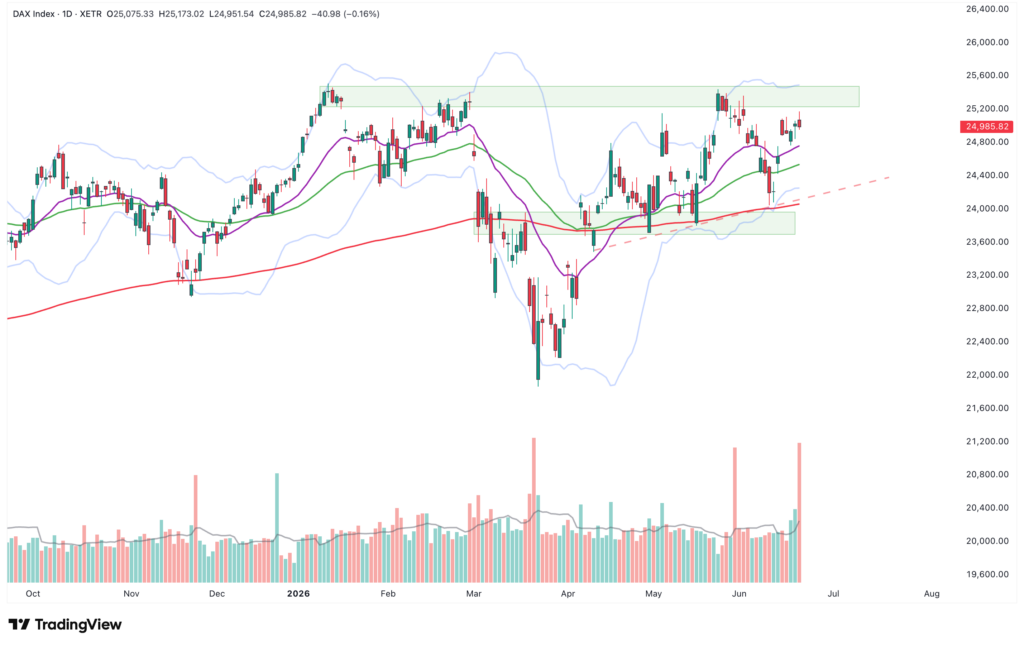
The DAX had a friendly, but by no means euphoric, trading week. After a strong start to the week last Monday, triggered by renewed hope for a de-escalation in the Middle East, the German leading index perceptibly lost momentum in the further course. On Friday, the DAX finally went into the weekend with a Xetra closing price of 24,986 points, thus remaining just below the psychologically important mark of 25,000 points.
On a weekly basis, however, there is still a plus of around 1.5 percent, despite a not very easy starting position: on the one hand, falling oil prices and the hope for a de-escalation in the Middle East conflict fueled buying sentiment. On the other hand, a rather hawkish outlook from the US Federal Reserve, rising US yields, and a stronger dollar curbed investors' risk appetite.
On Friday, the big expiration date was also in focus and caused some selling pressure before the weekend.
This leaves the distance to the previous all-time high of around 25,510 points manageable. From Friday's closing price, the DAX is just over 500 points, or a good two percent, short of its all-time high.
Even though the overall picture remains bullish, last week showed that the market needs new momentum and follow-up buying for a sustainable breakout.
Middle East détente and declining oil prices
The DAX's friendly start to the week last week was mainly due to developments in the Middle East. The prospect of a framework agreement between the US and Iran, as well as a preliminary ceasefire, triggered a risk-on movement at the start of the week. Stocks rose, safe havens came under pressure, and the oil price fell significantly.
This was a noticeable relief for the DAX, as lower energy prices dampen inflation and economic concerns. Cyclical stocks in particular benefit from this improved sentiment. Nevertheless, the situation remains fragile: it is not a permanent solution so far, but only a tentative agreement. New tensions could quickly drive oil prices up again and strain risk appetite.
First Fed meeting under Kevin Warsh
The second important event of last week was the first Fed meeting under new Chairman Kevin Warsh. Although interest rates remained unchanged, there was a rather hawkish undertone at the press conference.
The dot plot signaled that interest rate hikes could be back on the table later this year. At the same time, the inflation forecast for 2026 was raised. This made it clear that the Fed's top priority remains price stability, despite falling oil prices and initial signs of easing.
Warsh also hinted at winding down forward guidance in the future and consciously giving markets less direction.
The reaction was clear: The U.S. dollar strengthened noticeably, yields on two-year U.S. Treasury bonds climbed above four percent, and Wall Street slipped into negative territory midway through the week. For the European market, this hawkish stance created headwinds that countered the positive sentiment from the start of the week, slowing the DAX’s advance at the 25,000 mark and preventing the weekly gain from turning into a clear breakout rally.
Winners and losers of the week in the DAX
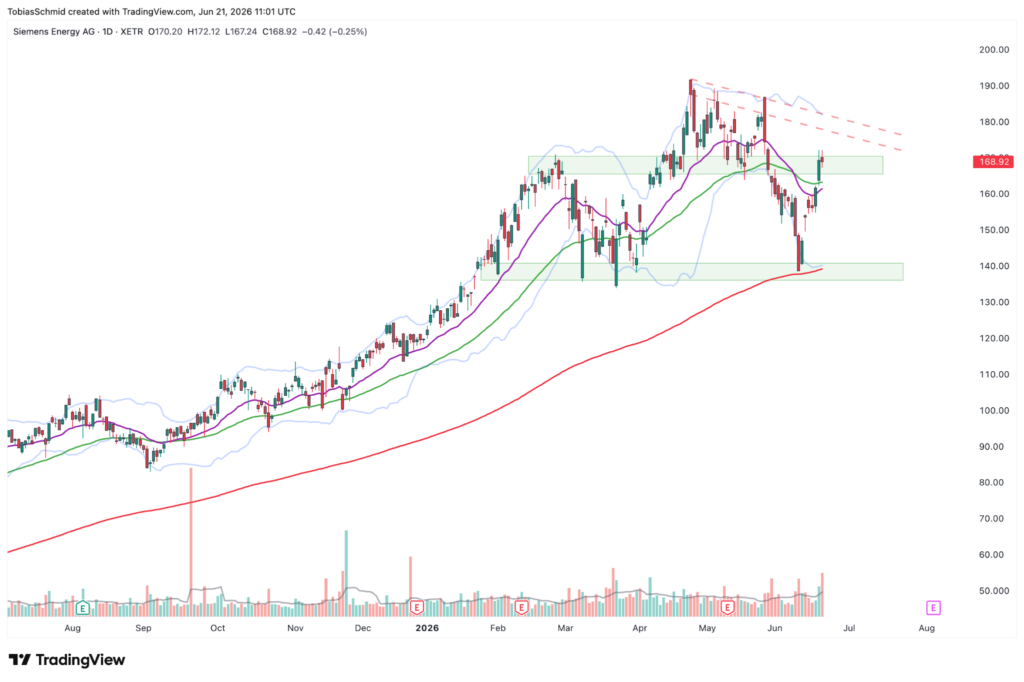
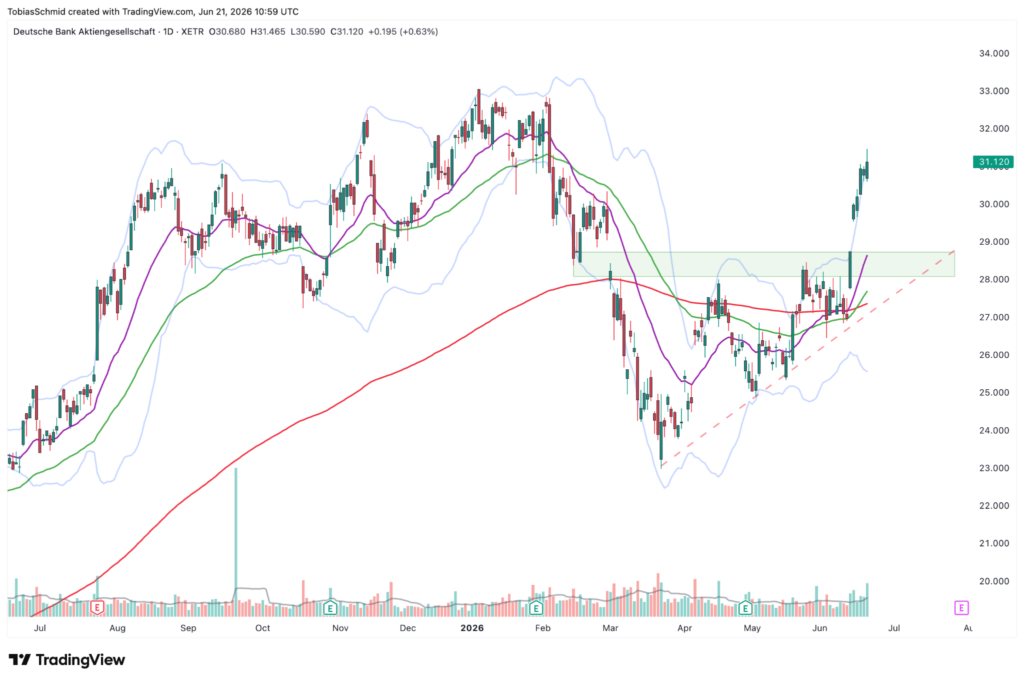
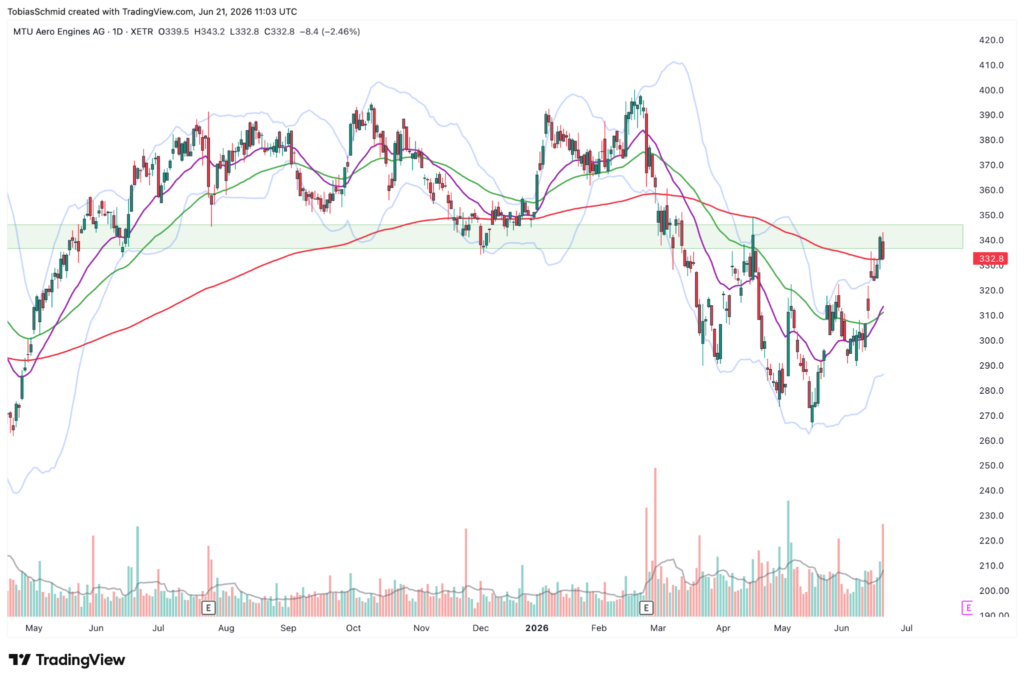
A look at the individual values shows a mixed picture: The strongest DAX stocks of the past trading week were Siemens Energy, Deutsche Bank, and MTU Aero Engines.
Siemens Energy rose by just under 10 percent, topping the list of gainers. The stock continued to benefit from optimism surrounding energy infrastructure, grid expansion, and the company’s overall revaluation.
Deutsche Bank shares rose more than 8 percent, buoyed by the prospect of persistently higher interest rates.
MTU Aero Engines was also among the clear winners, supported by the robust sentiment in the aviation and industrial sectors.
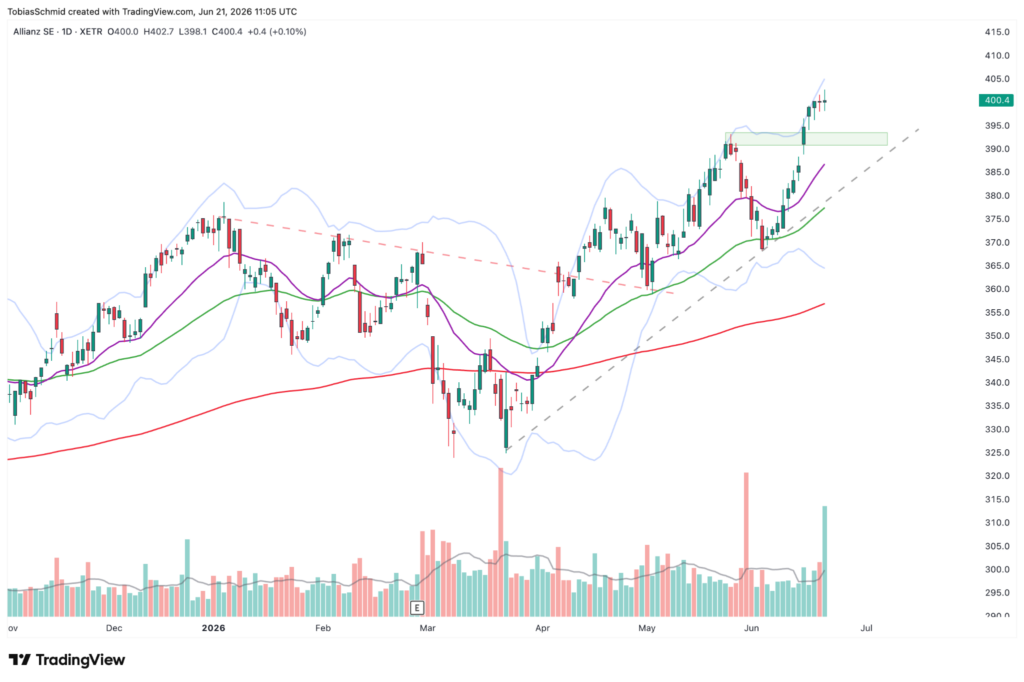
Allianz also remained strikingly strong. Last week, the stock managed to surpass the 400 Euro mark for the first time and hit a new record high. This once again showed that defensive quality stocks with stable earnings remain in demand in this market environment.
Infineon was also able to gain, but not as strongly as the week's winners at the top of the index. The semiconductor stock benefited from the temporarily improved mood in the technology sector but remained vulnerable to news from the global chip environment.
Leading the losers' side, automotive stocks were particularly under pressure. BMW lost double digits week-over-week, making it the weakest DAX component.
Volkswagen and Mercedes-Benz also fell significantly. Concerns about margins, profit warnings in the sector, and ongoing uncertainty surrounding China, tariffs, and demand development weighed on the stocks. Deutsche Telekom was also among the weaker performers of the week.
Author Tobias Schmid
Date: 06/22/2026