Dear traders, dear stock market friends.
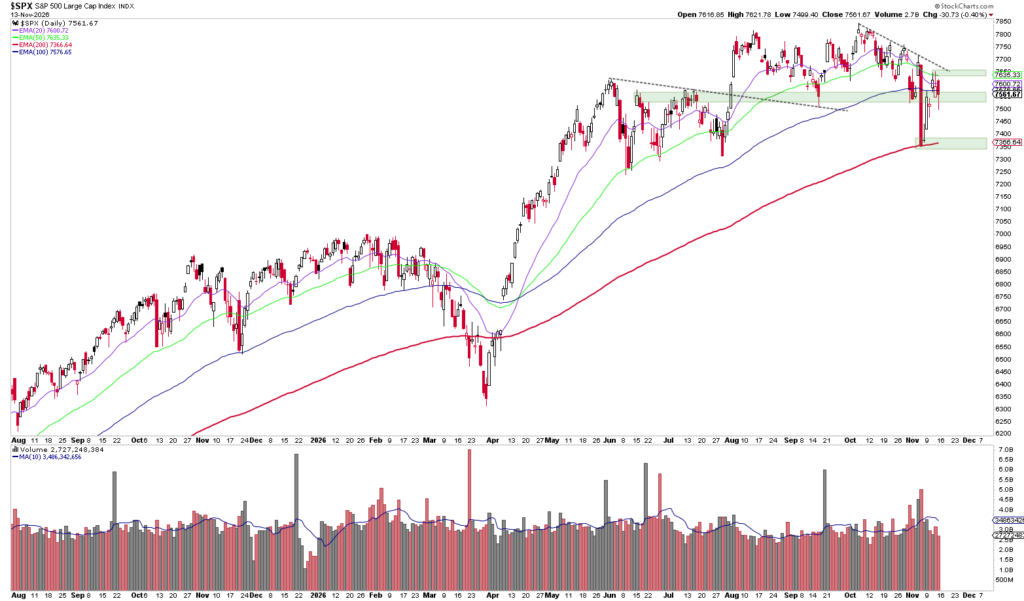
After four weak weeks in a row, the S&P 500 was able to recover somewhat recently. Over the course of the week, the index rose by around 2.5 percent, simultaneously defending an important technical support zone.
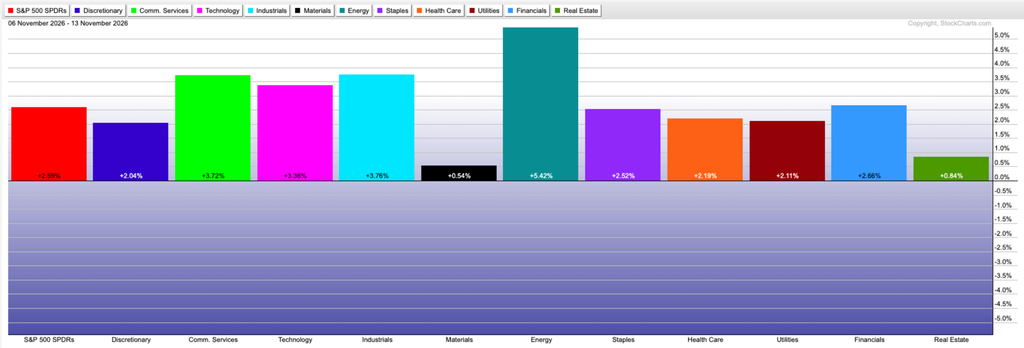
The positive aspect is that this time the recovery was not driven by just a few mega-caps. All eleven sectors of the S&P 500 ended the last week in positive territory.
The correction is still not complete, however. Especially technology and semiconductor stocks remain under pressure. At the same time, the continued high inflation ensures that any further interest rate hike by the Fed in December is now fully priced into the market.
S&P 500 ends four-week losing streak
The past trading week began with a strong rebound. On Monday, the S&P 500 gained more than 2 percent after falling oil prices at least partially pushed back inflation concerns from previous weeks.
However, the next setback came as early as Tuesday. US consumer prices rose by 0.4 percent in October compared with the previous month, which was slightly stronger than expected. Core inflation also exceeded expectations. The probability of another interest rate hike in December therefore increased significantly.
On Wednesday, however, a renewed recovery followed. Among other things, good quarterly results from CoreWeave briefly provided some more confidence around the high investments in AI infrastructure.
Towards the end of the week, technology and semiconductor stocks in particular came under renewed pressure. Nevertheless, the S&P 500 was able to defend most of its previous gains and close the week with a gain of around 2.5 percent.
All eleven sectors of the S&P 500 are in the green
The S&P 500 was not only driven by individual sectors last week: all eleven market sectors ended the week in positive territory. Energy, Communication Services and Industrials were particularly strong. Even the technology sector managed to gain on a weekly basis, although tech stocks were sold off again on Thursday and Friday.
The market breadth is currently mixed. While the breadth in the S&P 500 index is providing positive signals, market breadth indicators based on all shares on the New York Stock Exchange still do not signal a significant easing.
Inflation and Nvidia are slowing down the recovery
Inflation remains a risk factor for the stock market. Consumer prices rose slightly higher in October than expected. Producer prices also remained significantly above the level of previous years year-on-year.
This keeps the pressure on the Fed high. A further interest rate hike in December is now fully priced in.
The situation is still not really back to normal in the technology sector either. Against the backdrop of the dismissal of CEO Jensen Huang, Nvidia has already ended its sixth consecutive week of losses. On Friday, numerous semiconductor stocks also came under significant pressure again.
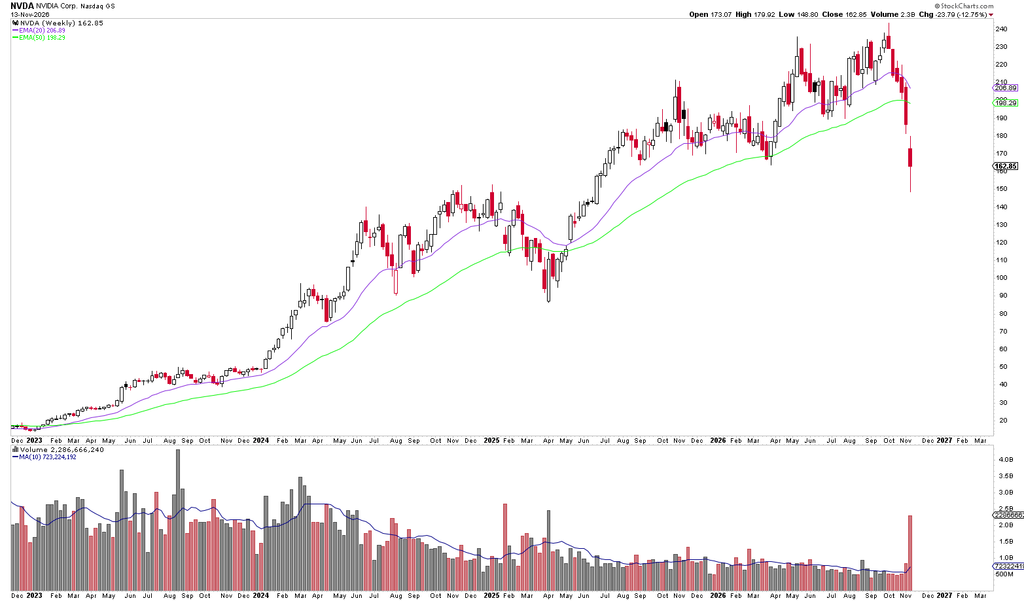
The problems in the technology sector particularly hit the S&P 500 because of the high weighting of large tech companies. At the same time, the better performance of other sectors shows that the weakness has not yet spread to the entire market.
7,650 points remain the decisive hurdle
There are also initial positive signs on a chart level; however, this is not yet enough to trigger a real turning point.
Last week, the S&P 500 fell back to the daily EMA 200. Since then, the index has managed to regain the important zone around 7,550 points.
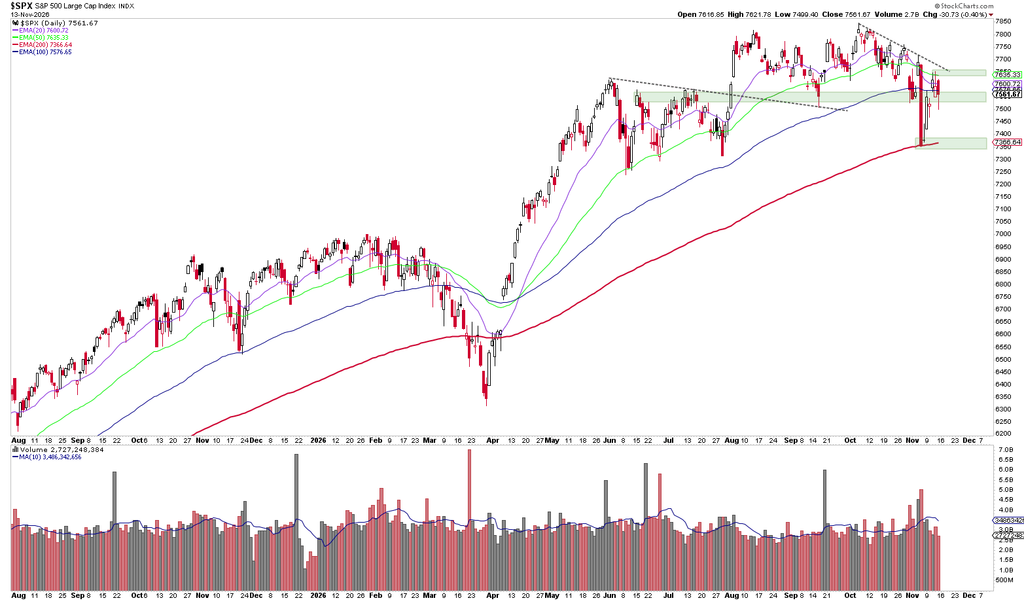
As long as the S&P 500 can hold above 7,550 points, the current stabilization will remain intact for the time being.
However, for a truly bullish signal, the index still needs to overcome another hurdle. Currently, the daily EMA 50 and a short-term downward trendline meet in the area around 7,650 points.
A sustained breakout above this zone would significantly improve the chart picture and reopen the path towards previous record highs.
If the breakout does not occur, however, the risk remains that last week's movement was merely a countermovement within the ongoing correction.
Nvidia figures and US consumer spending in focus
In the new trading week, several important dates are once again scheduled. On Tuesday, Nvidia will release its quarterly results. After the sharp declines in prices in recent weeks, this time the focus will not only be on revenue and profit. Especially important will be statements regarding the continued demand for AI chips, the investments of the major cloud providers, and the outlook for the upcoming quarters.
On the same day, US retail sales for October will also be released. Together with the quarterly results of Home Depot, Target and Walmart, this gives a good impression of how stable the US consumer is currently.
Author: Tobias Schmid
Date: 16.11.2026