Dear traders, dear stock market friends.
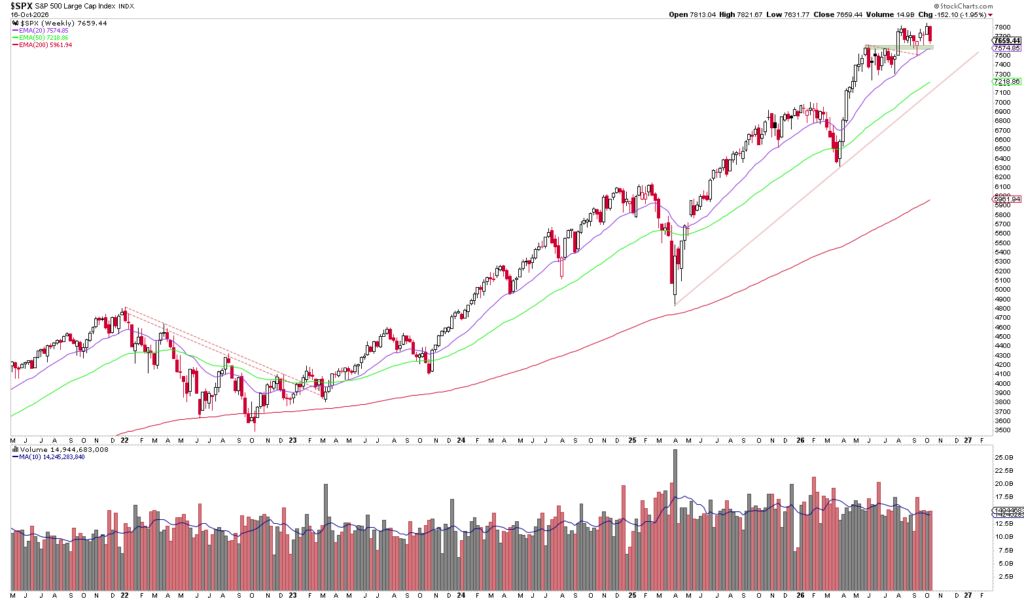
The S&P 500 ended the past trading week with a loss of around 1.9 percent. The Nasdaq 100 was hit even more severely, losing about 4.5 percent. The Dow Jones, on the other hand, managed to gain around 0.7 percent.
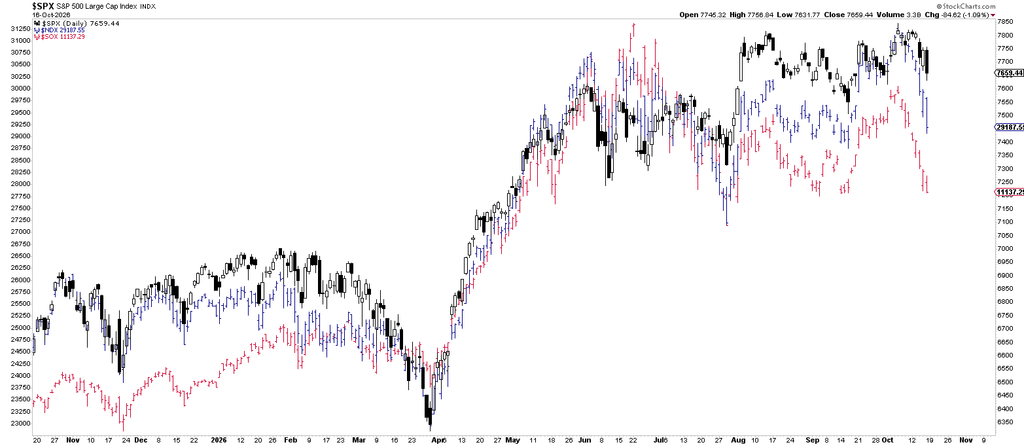
This has initially reversed the trend of the past few weeks. As early as the beginning of October, it was mainly the large technology and AI stocks that drove the market higher. In the past week, it was precisely these stocks that were sold.
The S&P 500 closed on Friday at around 7,659 points, remaining about 2 percent below its all-time high reached in early October.
Doubts about the AI boom trigger a drop in tech sales
The pressure to sell began as early as the beginning of the week. Reports of technological advances by the Chinese memory chip manufacturer CXMT raised new concerns that Chinese companies could overtake the Western chip industry faster than expected. At the same time, concerns regarding the enormous investments in AI infrastructure received renewed momentum.
Over the following weeks, the sales decline intensified. Companies that finance large data centers with a lot of external capital were particularly affected.
CoreWeave lost around 25 percent within a week. At the same time, the yields of some CoreWeave bonds rose to over 15 percent. This raises the increasingly question of whether the enormous AI investments are generating sufficient cash flow quickly enough to justify the high financing costs.
Oracle, Dell, Hewlett Packard Enterprise and numerous semiconductor stocks also saw significant sell-offs. The Philadelphia Semiconductor Index lost eight trading days in a row. The S&P 500 Technology sector lost about 6.4 percent over the entire week; this is the strongest weekly loss since April 2025.
Inflation and oil prices are causing additional pressure
The S&P 500 received further headwinds from the inflation front on Wednesday and Thursday. US consumer prices rose by 0.6 percent in September compared to the previous month, which was stronger than expected. Compared to the previous year, inflation stood at 3.7 percent. More than half of the monthly increase was attributed to gasoline, but price pressure also increased outside the energy sector.
On Thursday, even stronger producer prices followed. The PPI rose by 1.3 percent in September compared to the previous month and by 6.3 percent compared to the previous year. Energy prices were particularly strong again.
This also brought further Fed interest rate hikes back into the discussion. Immediately after the consumer price index, the implied probability of an interest rate hike in October rose from around 22 to 37 percent.
Additionally, the oil price remained high. Brent rose sharply on Friday due to renewed concerns about supply from the Middle East. High oil prices remain therefore one of the biggest risks to a sustained decline in inflation.
Defensive sectors benefit, market breadth improves
I find the strong rotation in defensive sectors less appealing at first. Capital flowed, among other things, into basic consumer goods, healthcare and utilities. On Thursday, for example, Eli Lilly, UnitedHealth and Walmart were among the major gainers. Eight of the eleven S&P 500 sectors rose that day.
A strong outperformance by defensive sectors such as consumer staples is usually not a sign that investors are particularly risk-averse.
Nevertheless, beneath the surface, not everything is negative.
Around 70 percent of all S&P 500 stocks even managed to rise throughout the week. The S&P 500 Equal Weight Index gained around 0.5 percent, although the normal S&P 500 lost almost 2 percent. The Dow Jones also closed the week in positive territory.
This shows quite clearly how strongly the high weighting of technology stocks has dragged the S&P 500, which is weighted by market capitalization, down.
Other breadth indicators have also improved somewhat recently. The ratio of new highs to new lows on the NYSE has recovered. At the same time, more than 50 percent of the stocks in the S&P 500 are again trading above their 200-SMA.
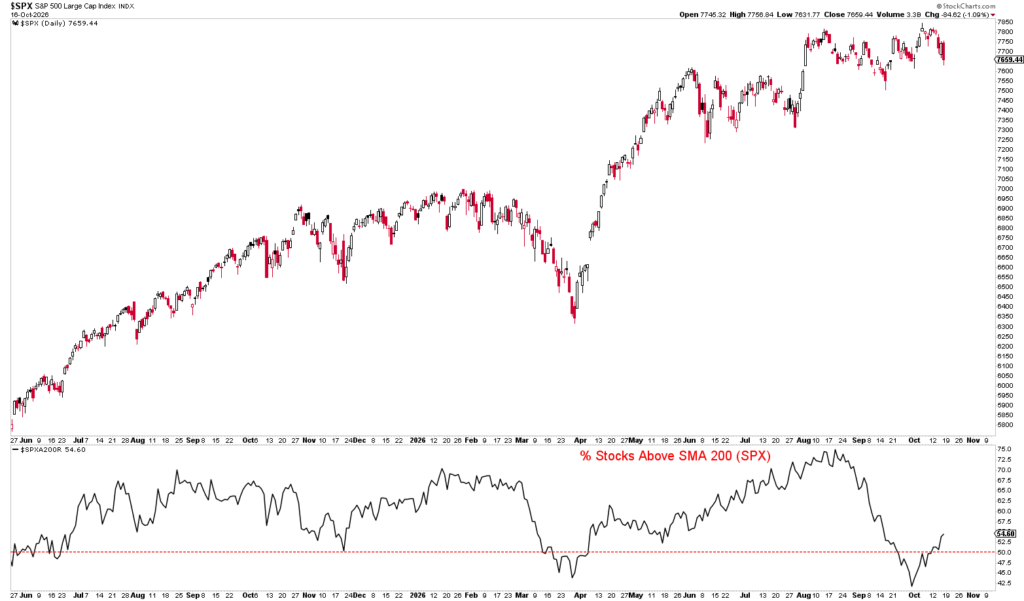
The development of the past week therefore currently looks more like a rotation of technology stocks than a broad sell-off of the entire market.
What is needed for the next upward push?
The next trading week will once again be very exciting. Although the reporting season has already begun with the big banks, companies that are significantly more important for the AI story will now follow. Among others, the following companies will release their quarterly results:
- Netflix: Tuesday, October 20, 2026, after the stock market closes
- Meta Platforms: Wednesday, October 21, 2026, after market close
- Tesla: Wednesday, October 21, 2026, after market close
- Lam Research: Wednesday, October 21, 2026, after market close
- Texas Instruments: Wednesday, October 21, 2026, after the closing of the stock exchange
- Procter & Gamble: Thursday, October 22, 2026, before the stock market opens
For the market, the question is primarily about one thing: Will companies make enough money with AI to justify the enormous investments?
Expectations are high. Analysts expect companies in the S&P 500 to see earnings grow by more than 30 percent compared to the previous year in the third quarter. However, a large part of this increase will be attributed to the large technology and AI companies.
In my opinion, three things must come together for a new attack on all-time highs:
- The oil price and inflation must not rise significantly further.,
- the bond yields should stabilize and
- The upcoming quarterly figures must show that the AI boom is actually leading to rising profits.
At the same time, it would be positive if the market breadth, which has improved recently, holds steady. A new upward momentum would be much healthier if this time not only a few mega-caps rise, but also the average S&P 500 stock follows suit.
The tech sell-off last week is therefore a warning sign. However, the development below the index level so far does not yet indicate that the entire bull market has already turned down.
Author: Tobias Schmid
Date: 19.10.2026