


Medical technology closely combines modern technology with medical care and encompasses a wide range of products. From pacemakers to customized prostheses, medical technology has saved numerous lives and noticeably improved the quality of life for millions of people.
In this article, we provide you with an overview of the medical technology stock industry as well as prosthesis stocks in general, and present selected companies in detail. You will also learn more about the market potential for the coming years and relevant risks that you should know before investing.

The most important facts in brief:
- The aging global population, rising chronic diseases, and higher healthcare expenditures will significantly drive the demand for medical technology through 2035.
- Prosthesis manufacturers can expect an annual growth rate of approximately 4 % through 2031.
- The global medical device market is expected to grow by approximately 6.5 % annually through 2032.
What are medical technology stocks?
Medical technology stocks are securities of companies that operate along the value chain of the medical technology industry. This includes firms that develop, produce, or distribute medical devices, or offer services to hospitals, clinics, and medical practices.
You are thus operating at the intersection of engineering, biotechnology, computer science, and healthcare.
Despite volatile markets, the medical technology sector remains relevant because it not only improves medical care, but is also considered by investors as a growth segment in an increasingly aging and technology-oriented healthcare market.
Medical technology stocks and prosthesis stocks are particularly attractive to investors who want to benefit from rising healthcare spending, medical progress, digitalization, and a globally growing demand for innovative therapies and diagnostic solutions.
Medical technology stocks can be broadly categorized according to various areas of the value chain. These segments react differently to medical trends, cost structures, and regulatory developments.
- Medical device manufacturersThis includes companies that manufacture and market medical devices and systems, such as for imaging, minimally invasive surgery, or patient monitoring. Their revenues depend heavily on healthcare demand, hospital investment cycles, and the regulatory approval situation.
- research and development companyThese companies focus on the development of new medical technologies, procedures, or combinations of devices and software. They carry a higher risk, but in the event of success, they offer significant growth potential through patents, product launches, and partnerships with larger players.
- Manufacturers of diagnostic and laboratory systemsThese companies develop and distribute devices and systems for laboratory and point-of-care diagnostics as well as molecular medicine analyses. Their revenues depend not only on the demand for fast and precise testing procedures, but also on the development of routine and specialized tests.
- All-inclusive service and solution providerThis includes companies that integrate, maintain, train on, or manage medical technology systems through service and maintenance contracts. They benefit from long-term service contracts, digitalization solutions, and the increasing networking of devices in healthcare.
- Software and Digital Health Providers: Another segment includes providers of software solutions for image processing, AI-based diagnostics, patient management, or networked devices. Their revenues depend on the acceptance of digital solutions, data protection frameworks, and the financing of healthcare systems.
- Service providers for the medical technology industryThis includes companies that offer components, production technologies, testing and approval services, or consulting for the industry. Their business development depends closely on the investments made by medical technology companies and, consequently, indirectly on innovation cycles and regulatory changes.
Many companies operate along multiple stages of the medical technology value chain. This allows them better to compensate for fluctuations in individual segments and make their overall earnings more stable.


The market potential of medical technology stocks in 2026
Demand for medical technology is expected to increase significantly by 2035. Several structural megatrends are interlocking and driving the market.
These include in particular:
- an aging global population with a rising demand for diagnostic and therapeutic solutions
- increased demand for prosthetics and innovations among prosthetic manufacturers
- the expansion and modernization of healthcare systems in emerging and developed countries
- continuous medical progress with new procedures and technologies
- a growing focus on prevention, early detection, and digital health applications.
Unlike many cyclical industries, the medical technology sector is closely linked to basic healthcare provision and benefits from higher healthcare spending as well as reform programs.
Industry analyses therefore expect that the global market for medical technology and related healthcare solutions will expand strongly in the coming years and that medical technology stocks will be able to benefit from this structurally supported growth.
1. Demographic change
Worldwide, life expectancy is rising while birth rates are declining in many regions. As a result, the proportion of older people is growing significantly faster than the total population.
This demographic shift is fundamentally changing demand in the healthcare sector over many decades, bringing a stronger focus to chronic illnesses, multimorbidity, and long-term care.
- higher prevalence of cardiovascular diseases, diabetes, dementia and other chronic conditions
- growing demand for long-term, rehabilitative, and home care
- growing pressure on the financing, personnel, and infrastructure of healthcare systems
In this environment, the importance of efficient and networked medical technology solutions is growing. The aging population is driving structurally higher demand for diagnostic and imaging equipment, implants and rehabilitation technology, durable medical equipment, and monitoring systems for hospitals and home use.
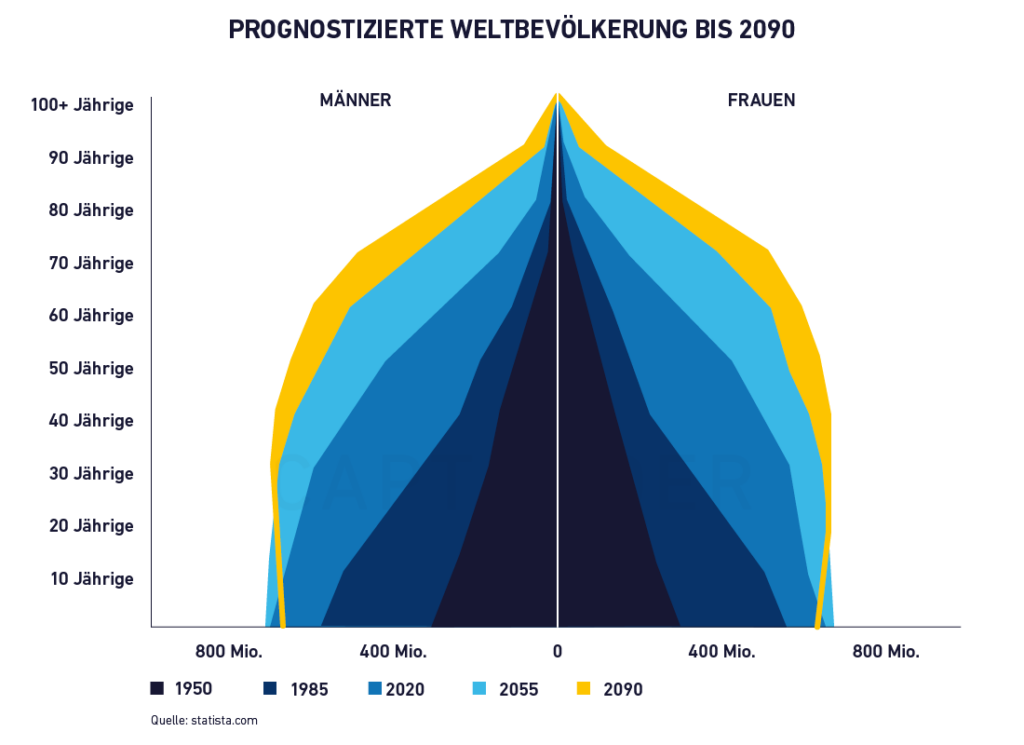
The graphic shows that in the coming decades the proportion of older people worldwide will increase significantly, as more and more people reach an advanced age and the number of people over 60 grows sharply. At the same time, with age, the need for medical care rises because older individuals suffer from chronic illnesses more frequently and use health services significantly more intensively than younger ones.
Market studies therefore expect long-term growth in the global medical device sector, which is driven not only by demographic trends but also by technical innovations and rising healthcare expenditure.
Overall, this means good growth opportunities for medical technology stocks. However, how much individual companies benefit from this depends on how innovative they are, how well positioned they are from a regulatory standpoint, and whether they can offer affordable solutions for the needs of an aging population.
2. Prosthetic manufacturer stocks
The market for prosthetics and orthotics is growing moderately, but is supported in the long term by demographic change, chronic diseases, and technological innovations.
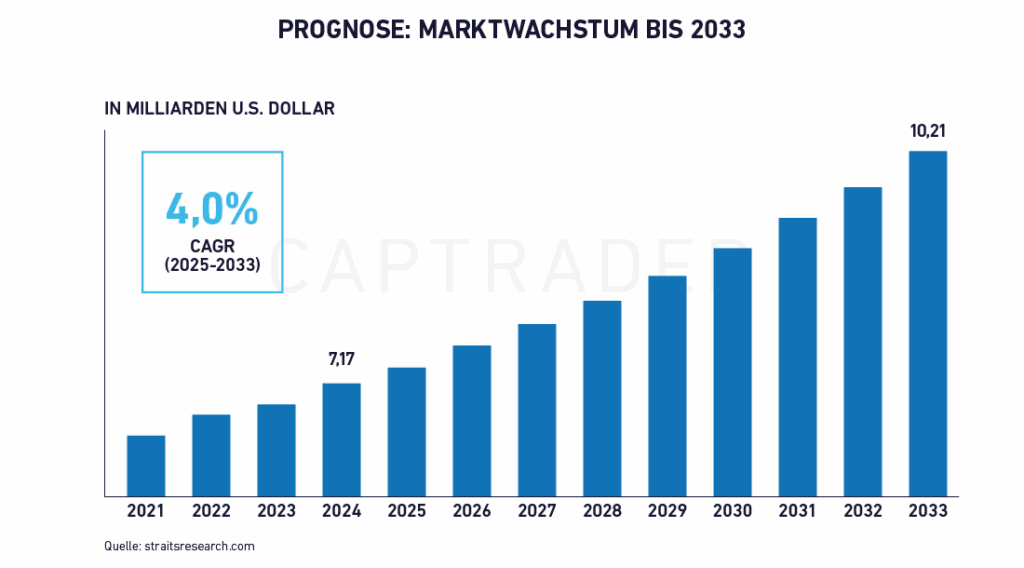
The volume was 6.63 billion US dollars in 2022 and, according to a Forecast rise to $9.43 billion by 2031, corresponding to an annual growth rate of approximately 4 %. The prosthetics sector is experiencing particularly strong growth, while North America currently holds the largest market share and Europe is considered the fastest-growing region.
- The rising demand due to aging, arthritis, and diabetes.
- Market size: USD 6.63 billion (2022) to USD 9.43 billion (2031).
- Technological drivers: bionic prosthetics, exoskeletons, 3D printing.
- Challenges: High costs and limited reimbursement in many countries.
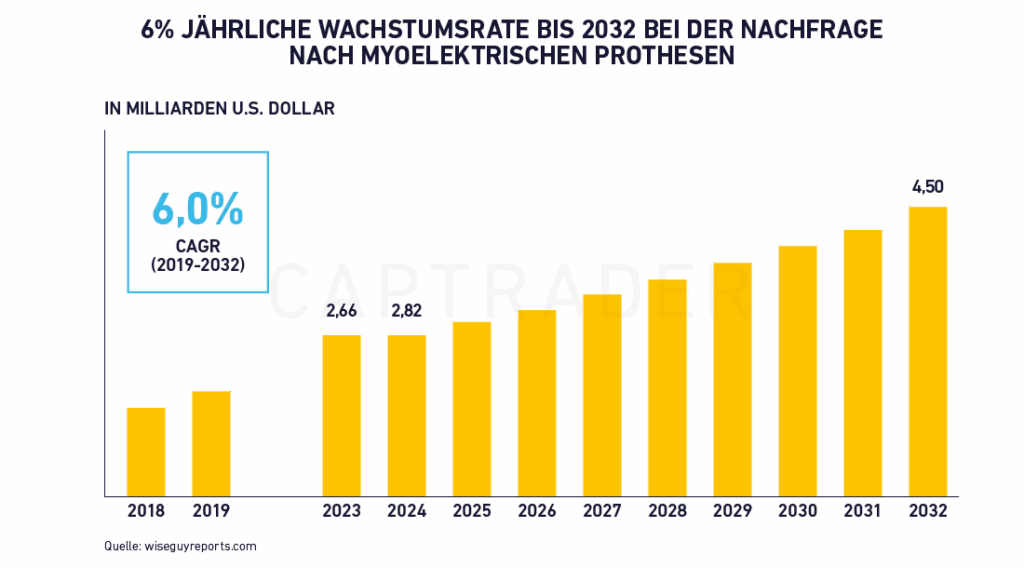
According to one Analysis growing from around 2.82 billion US dollars in 2024 to about 4.5 billion US dollars by 2032.
- Projected growth rate: approx. 6.04 % per year (2025–2032).
- Main driver: more amputations, better sensors, AI pattern recognition, lighter materials.
- Leading regionNorth America with strong infrastructure and high technology adoption.
Myoelectric prostheses are high-tech arm and leg prostheses that capture electrical muscle impulses via electrodes and convert them via microprocessor into motorized movements such as gripping or rotating.
3. Continuous progress in medical technology
Medical technology is currently undergoing a phase of major technological leaps that are noticeably increasing not only the quality of treatment, but also the industry's revenue.
Particularly newer inventions in the field of AI-supported diagnostics, robot-assisted surgery, smart implants, and connected wearables are driving the growth of the medical device market and are seen as key growth levers.
Key recent market-ready innovations include, for example:
- AI-based image analysis software for X-ray, CT, and MRI that assists radiologists in the early detection of tumors, bone fractures, or cardiovascular diseases and increases the utilization of diagnostic equipment.
- Latest-generation robotic surgery systems that perform minimally invasive procedures, reduce complications, and increase the number of patients per hospital, which significantly boosts the sales of surgical robots and accessories.
- Intelligent implants and pacemakers that transmit real-time data, automatically adapt to the heart rhythm, and are MRI-safe – products that justify higher device prices and drive demand in the cardiology sector.
- Portable and „smart patch“ systems, such as those used at home for monitoring heart rate, respiration, or blood sugar, which are driving sales of diabetes care devices, telemonitoring solutions, and networked diagnostic platforms.
These inventions are contributing to medical technology increasingly relying on data, connectivity, and automation while simultaneously introducing new, more expensive premium products to the market. As a result, both sales volumes and average prices per device are increasing.
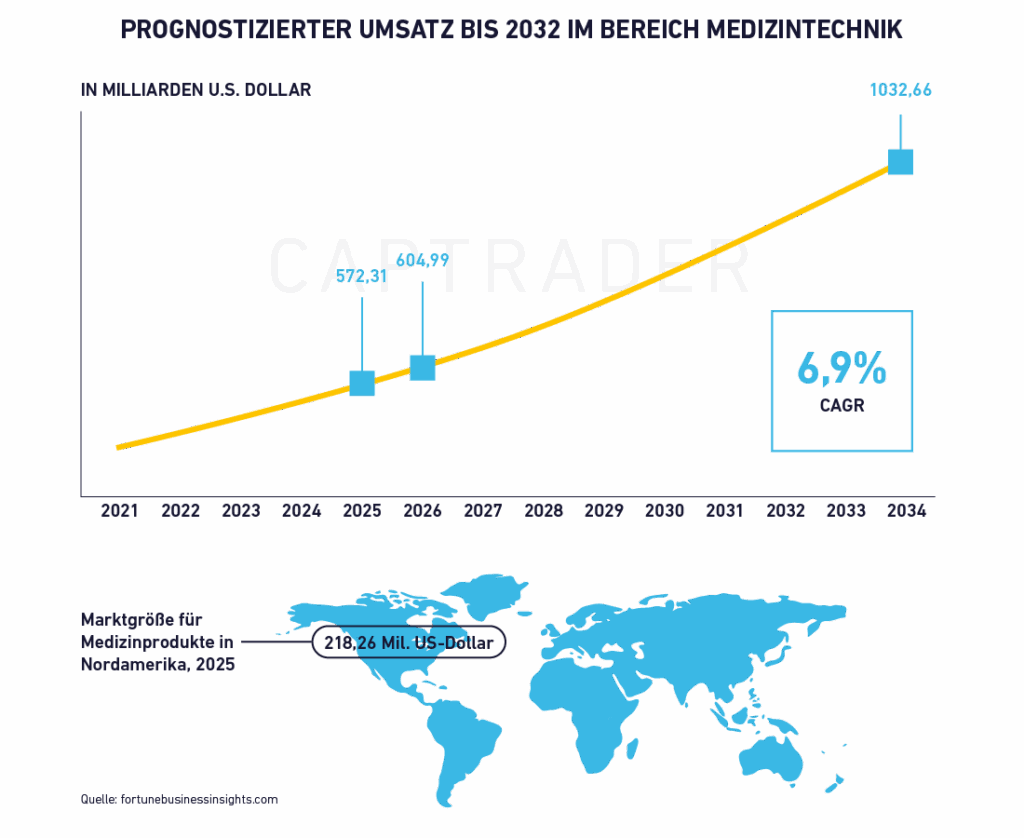
The global medical device market was valued at approximately $542.2 billion in 2024 and is projected to grow to about $886.7 billion by 2032, representing a compound annual growth rate (CAGR) of 6.5 % (CAGR 2025–2032).
In this scenario, medical technology sales will remain significantly above the previous year's level in the coming years and continue to rise, particularly in North America and Europe.
Medical Technology Stocks Overview: The Top Companies by Market Capitalization
The following overview provides a selection of the world's most important publicly traded medical technology companies.
| Company | ISIN | Country | Market capitalization in US dollars¹ |
| Intuitive Surgical Inc | US46120E6023 | USA | 159 billion |
| Abbott Laboratories | US0028241000 | USA | 147 billion |
| Stryker Corporation | US8636671013 | USA | 109 billion |
| Medtronic PLC | IE00BTN1Y115 | Irland | 98 billion |
| Boston Scientific Corp | US1011371077 | USA | 80 billion |
| Edwards Lifesciences Corp | US28176E1082 | USA | 46 billion |
| DexCom Inc | US2521311074 | USA | 23 billion |
| Sartorius AG | DE0007165607 | Germany | 16 billion |
| Zimmer Biomet Holdings Inc | US98956P1021 | USA | 14 billion |
| Carl Zeiss Meditec AG | DE0005313704 | Germany | 5 billion |
For a targeted investment in medical technology stocks and prosthetics manufacturer stocks, you need a broker. With CapTrader, you can open a brokerage account and trade stocks directly on more than 170 international exchanges. The trading fees are particularly low: for US stocks, you pay 1 cent per share, with a minimum of $2.00 per order.


1. Intuitive Surgical Inc
Intuitive Surgical (ISIN: US46120E6023) is the global pioneer and market leader in robotic-assisted minimally invasive surgery with the da Vinci surgical system for procedures ranging from cancer removal to bariatric surgery.
The company controls an exclusive technology platform with around 12,000 installed da Vinci systems worldwide and generates recurring revenue from instruments, consumables, and service contracts.
With da Vinci, Intuitive Surgical enjoys a unique competitive advantage: the system has been the gold standard in robotic-assisted surgery for over two decades, boasting high surgeon acceptance.
The razor-and-blade model ensures steady revenue after the system is sold. Continuous innovations such as AI integration and improved haptics maintain the leadership position, while international markets offer long-term growth.
| Tax year | estimated revenue (in millions USD)¹ | Change compared to previous year¹ |
| 2025 | 10.065 | 20,51 % |
| 2026 | 11.707 | 16,31 % |
| 2027 | 13.262 | 13,29 % |
2. Stryker Corporation
Stryker (ISIN: US8636671013) is a well-known Blue-chip stock one of the world's largest prosthetics manufacturer files with a focus on orthopedic implants (hip, knee, shoulder) and a leading provider of robotic-assisted surgery with the Mako system.
The company controls a diverse value chain with operations worldwide and over 3,000 installed Mako robots.
Stryker differentiates itself through the innovative Mako robotic-assisted surgery system, which enables more precise joint replacement procedures. The diversified portfolio in orthopedics, MedSurg, and neurotechnology minimizes concentration risk.
Technological leadership, strong sales, and strategic acquisitions shape the strategy. The aging population structurally drives the demand for joint replacements, while Mako transforms from a product vendor into a technological ecosystem provider.
| Tax year | estimated revenue (in millions USD)¹ | Change compared to previous year¹ |
| 2025 | 25.116 | 11,16 % |
| 2026 | 27.275 | 8,6 % |
| 2027 | 29.574 | 8,43 % |
3. Zimmer Biomet Holdings Inc
Zimmer Biomet (ISIN: US98956P1021) is a pure-play prosthesis manufacturer and specialist in orthopedic implants focusing on joint replacement (hip, knee, shoulder) and the fixation of bone fractures. The company controls a focused value chain with a direct sales model in the US and the ROSA robotics platform.
Zimmer Biomet is the purest prosthesis investment among the major medical technology stocks. This specialization allows for deep expertise, but also higher industry sensitivity. By spinning off ZimVie, the company is focusing exclusively on its core competencies in joint replacement.
ROSA robotics strengthens competitiveness against Stryker Mako, particularly by expanding from knee to hip and shoulder. Long-term rising demand for joint replacement, driven by an aging population, benefits Zimmer Biomet.
| Tax year | estimated revenue (in millions USD)¹ | Change compared to previous year¹ |
| 2025 | 8.232 | 7,2 % |
| 2026 | 8.545 | 3,8 % |
| 2027 | 8.845 | 3,51 % |
4. Abbott Laboratories
Abbott Laboratories (ISIN: US0028241000) is one of the most diversified medical technology companies in the world, with four business segments (medical devices, diagnostics, nutrition, pharmaceuticals) and the market-leading FreeStyle Libre CGM system for diabetes management. The company is a Dividend Aristocrat with 52 years of consecutive dividend increases.
Abbott offers maximum safety through extremely broad diversification, a solidified market leadership in rapidly growing diabetes management, and decades of dividend increases. FreeStyle Libre has revolutionized the CGM market and dominates globally.
The company combines strategic strength with continuous innovation in electrophysiology through new pulsed field ablation catheters and strong growth in structural heart diseases. Scale allows for economies of scale, while research and development costs are rising in AI-powered diagnostics and personalized medicine.
| Tax year | estimated revenue (in millions USD)¹ | Change compared to previous year¹ |
| 2025 | 44.328 | 5,67 % |
| 2026 | 50.298 | 13,47 % |
| 2027 | 54.818 | 8,99 % |
5. Boston Scientific Corp
Boston Scientific (ISIN: US1011371077) is a specialist in minimally invasive medical interventions with a focus on cardiology, endoscopy, electrophysiology, neurovascular, and urology. The company controls a global value chain with strong growth in all segments and a presence in 127 countries.
Boston Scientific is benefiting from the strongest growth megatrend: Minimally invasive procedures are increasingly replacing open surgeries. Electrophysiology with FARAPULSE utilizes a disruptive technological approach that could replace conventional methods.
The Penumbra acquisition strengthens the neurovascular sector and opens up the stroke market. Boston Scientific combines disruptive innovation potential with a broadly diversified portfolio and remains more agile than larger competitors due to a strong corporate culture.
| Tax year | estimated revenue (in millions USD)¹ | Change compared to previous year¹ |
| 2025 | 20.074 | 19,87 % |
| 2026 | 21.680 | 8,00 % |
| 2027 | 23.618 | 8,94 % |
CapTrader can do that:
At CapTrader, the trading fees are extremely low: you can trade US shares from as little as $ 0.01 per share (order minimum $ 2.00) and German shares from as little as 0.1 % of the order volume (order minimum €2.00), options from €2.00, futures from €1.00, ETFs from €2.00 and much more!
Risk factors in medical technology stocks: Key points for investors
Medical technology stocks allow you to participate in a structurally growing healthcare sector, but at the same time they depend on regulation, reimbursement, technology cycles, and cost trends. Before you invest, you should know the specific risk drivers of the industry in detail and not just look at revenue or profit forecasts.
1. Margin pressure and cost structures in medical technology companies
The profitability of medical technology companies depends significantly on the price level, production costs, R&D expenses (costs for research and development), and the utilization of their product lines. In recent years, several factors have increased cost pressure:
- rising labor and energy costs in production, service, and sales
- higher expenditures for research, clinical trials, and regulatory evidence
- increasing price pressure due to tenders, purchasing groups, and state cost containment.
Analyses show that while many medical technology manufacturers continue to achieve attractive margins, these can come under pressure due to aggressive purchasing policies by hospitals, price regulation, and competition.
Even moderately falling reimbursement prices or additional rebate requirements can reduce profitability. For your analysis of medical technology stocks, the cost structure, pricing power, product mix, and R&D efficiency are therefore key inspection points.
2. Reimbursement, demand and technology risks
Medical technology stocks are sensitive to reimbursement decisions by health insurance companies, changes in compensation systems, and the acceptance of new technologies in clinical practice. Studies show that reimbursement risk in particular is one of the biggest hurdles to the successful commercialization of new devices.
Typical risk drivers are:
- more restrictive reimbursement or slower inclusion of new procedures in catalogs and DRG systems
- delayed or rejected decisions by payers regarding innovative but expensive technologies
- lower demand when clinics postpone investments for budgetary reasons or prefer cheaper alternatives.
These factors can significantly influence revenue growth and margins, even if a product is technically convincing. For your investment decision, you should therefore not only evaluate the technology itself, but also consider reimbursement scenarios, clinical evidence, the competitive landscape, and positioning vis-à-vis payers.
3. Regulation, Policy, and Location Risks in Medical Technology
Medical technology companies operate globally and are therefore dependent on varying regulatory, trade policy, and location-specific frameworks. Changes in approval requirements, tariffs, or procurement rules can directly impact growth and cash flows.
Important risk factors are:
- stricter approval and monitoring rules, for example for AI-based systems or high-risk products
- trade policy tensions that affect supply chains, component sourcing, or market access
- Dependency on individual production sites or key suppliers, for example for electronics or special materials.
Disruptions due to stricter AI regulation (especially regarding AI shares, sanctions, natural events, or logistical bottlenecks can lead to delivery delays, additional costs, and loss of market share. Therefore, examine how diversified a company is in terms of regions, approval pipelines, and supply chains.
Conclusion: Are medical technology and prosthesis stocks worth it in 2026?
Medical technology stocks and prosthetics manufacturer stocks offer an attractive risk-reward profile for long-term investors in 2026. The sector benefits from structurally growing megatrends: an aging global population, increasing chronic diseases, and rising healthcare expenditures worldwide.
The global medical device market is projected to grow at an annual rate of 6.5 % through 2032, reaching nearly 887 billion USD, while the prosthetics market is expanding steadily at a rate of 4 %.
With an account at CapTrader, it is particularly worthwhile to trade these medical technology stocks and prosthesis manufacturer stocks on international exchanges with low trading fees and to benefit long-term from this structurally underpinned growth sector.
If you are more interested in regular wealth accumulation with stocks, a passive Aktiensparplan be a suitable solution. With this, you invest a fixed amount month after month, for example in Dividend shares, Oil stocks, Automotive stocks, Crypto shares or Gold Stocks.
List of sources:
(1) Source: Marketscreener from 05/09/26
