For thousands of years, gold has been a symbol of wealth, economic stability and an anchor in turbulent times. In market phases characterized by economic uncertainty, the precious metal has become increasingly important as a supposed „safe haven“. But which countries actually have the largest gold reserves around the world? Get an overview of the nations with the highest gold reserves.

The most important in a nutshell
- With a total of 8,133.5 tons, the USA is the leader in terms of gold reserves
- Economies are mainly trying to hedge against inflation risks, currency fluctuations and geopolitical uncertainties
- Countries such as Russia and China have increasingly tried to decouple themselves from the US dollar over the past decade
Worth knowing: The price of gold is generally quoted in US dollars per troy ounce measured. The standardized weight is 31.1034768 grams.
Gold (XAU/USD)
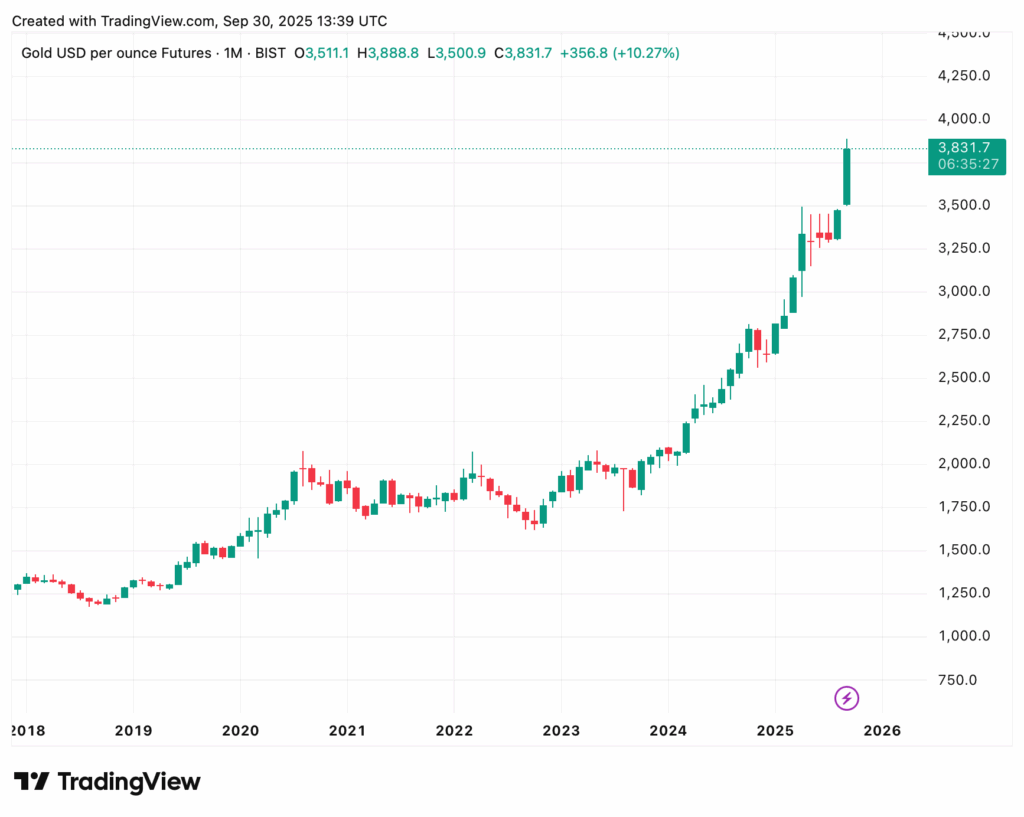
(Note: The following information relates to the 2nd quarter of 2024, source: Trading Economics)
1. the USA (gold reserves: 8,133 tons)
With a total of 8,133.5 tons, the USA is the leader in gold reserves. A large proportion of US gold is stored in Fort Knox in the US state of Kentucky. Owning the precious metal is not only a sign of economic strength, but is also likely to be an important factor in the US currency strategy. Holding on to physical gold could be seen as classic crisis protection.
2. Germany (gold reserves: 3,350 tons)
The Federal Republic of Germany has the second largest gold reserves in the world. The precious metal is considered part of the official currency reserves. Gold plays an important role in terms of Confidence and stability for the currency awarded.
German gold assets are stored in the USA, the UK and France, among other places. A significant portion of the reserve is now held in Frankfurt in Main stored.
3. Italy (gold reserves: 2,452 tons)
In third place in the ranking of countries with the largest gold reserves is Italy with 2,451.8 tons.
According to the Italian central bank (Banca d'Italia), the official reserves are intended to safeguard the credibility of the EU system of central banks and also act as a means of intervention in the currency market. The importance of gold therefore lies in its role as a „security reserve“ in the event of financial instability.
4th France (gold reserves: 2,437 tons)
France is the country with the fourth largest gold reserves in the world (2,437 tons). The French gold reserves are mainly parked at the central bank in Paris (Banque de France). The country considered The possession of gold primarily as a strategic hedge in times of political crisis.
5. Russia (gold reserves: 2,330 tons)
Russia is in fifth place in the ranking of countries with the largest gold reserves (2,335.9 tons).
In the wake of the Ukraine-Russia conflict and the associated Western sanctions, the country has increased gold purchased, to make itself less dependent on the US dollar. The gold itself is largely mined and stored in the country itself. Gold ownership should strengthen financial sovereignty.
6 China (gold reserves: 2,299 tons)
With 2,264.3 tons, China ranks sixth, just behind the Russians (2,335.9 tons).
The Middle Kingdom is likely to try to make itself more independent by owning gold. Gold producer the world.
7th Switzerland (gold reserves: 1,040 tons)
The Swiss National Bank (SNB) holds gold reserves amounting to 1,040 tons. With 9.034 million inhabitants (2024), Switzerland also has the highest stock of gold per inhabitant.
Around 70 percent of the Gold holdings is stored in Switzerland, around 20 percent in the British central bank and around 10 percent in Canada
8th India (gold reserves: 880 tons)
India's gold reserves amount to 880 tons and are classified as Symbol of prosperity, However, other nations also see it as an instrument for stabilizing their own currency.
Worth knowing: In addition to being a traditional investment, gold also has a social significance in Indian culture and is found in many families as an item of jewelry, for example.
9th Japan (gold reserves: 846 tons)
Japan is in 9th place with a gold reserve of 846 tons.
It is worth noting that despite a strangely low proportion of gold in Japan's own Currency reserves (around 7 percent) is nevertheless reflected in the top 10 ranking of countries with the largest gold reserves.
10th Turkey (gold reserves: 635 tons)
The ranking of countries with the ten largest gold reserves is rounded off by Turkey (635 tons).
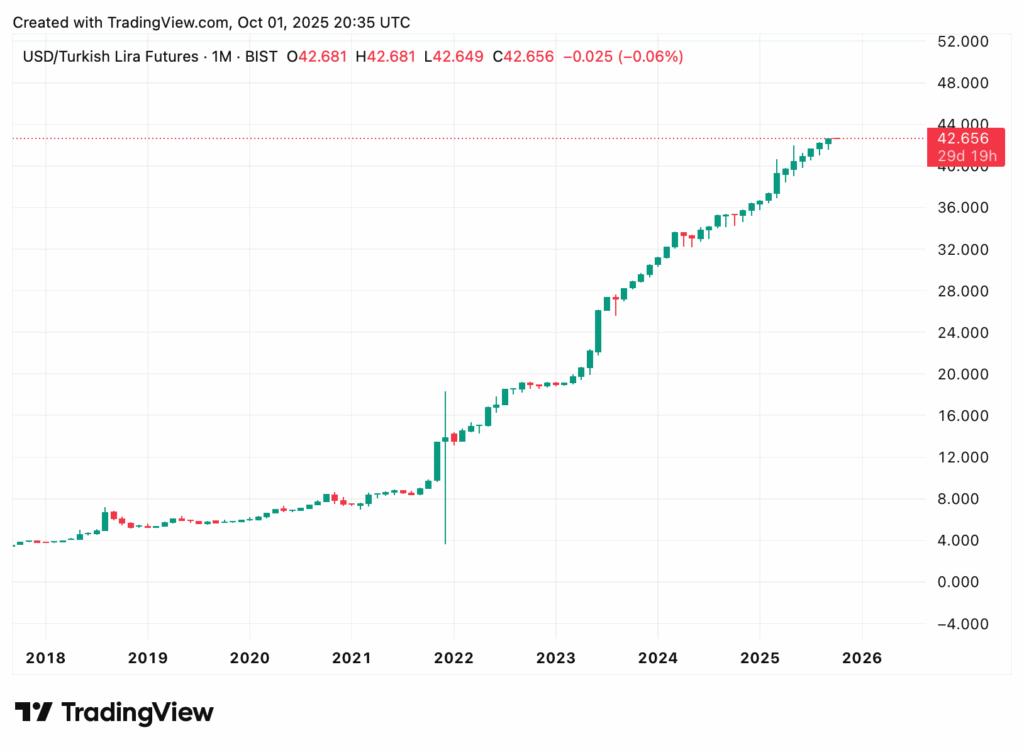
Due to the weak domestic currency, the lira, the Turkey gold as a strategic asset and to gradually decouple from the US dollar.
USD/TRY
Conclusion: USA is the leader in gold ownership - between strategic investment and expression of national sovereignty
The USA is the nation with the largest gold reserves in the world (8,133.5 tons), followed by Germany (3,351.5 tons) and Italy (2,451.8 tons).
Countries such as Switzerland (1,040 tons), India (880 tons), Japan (846 tons) and Turkey (635 tons) are clearly lagging behind, rounding off the ranking. The economies are mainly trying to hedge against inflation, currency fluctuations and geopolitical uncertainties. Countries such as Russia and China have increasingly tried to decouple themselves from the US dollar over the past decade.
However, it should be noted that the share of precious metals in the total Japanese currency reserve is in the single-digit percentage range. This illustrates that Japan, for example, is increasingly relying on liquid and therefore short-term forms of reserves.
The ranking of the countries with the largest gold reserves shows in an impressive way that gold is not only regarded as a commodity, but can also be seen as an expression of national sovereignty.