


The Limit Buy Order (buy limit) is one of the most frequently used order types when buying shares, ETFs, futures, etc. and is also used by many private investors and private traders. This allows a buy order to be executed automatically as soon as the price falls below a previously defined price. The Cash Secured Put is an option strategy that can also be used as a type of buy limit, offering the advantage that an additional income is generated, regardless of whether the buy order is eventually executed or not.
Definition Cash Secured Put
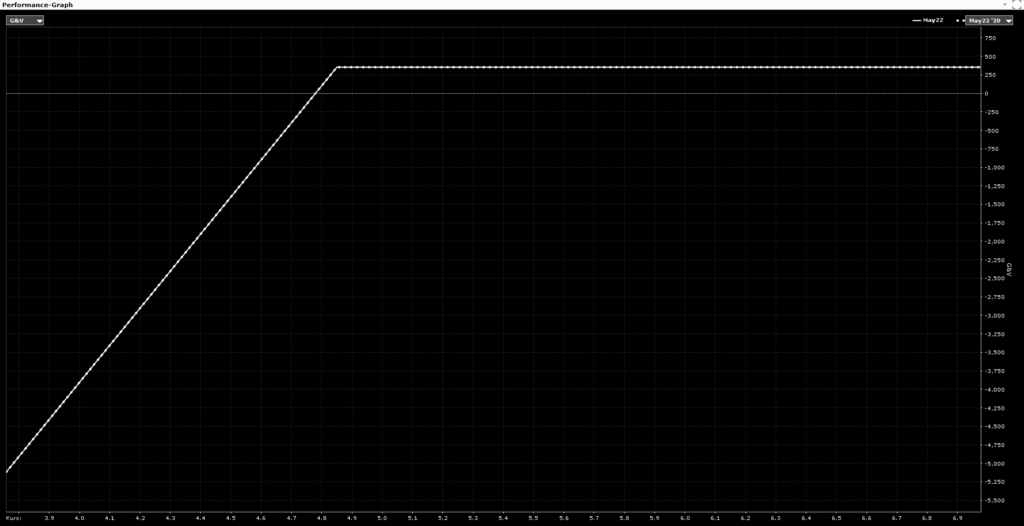
A cash secured put is the sale of a put option (short put) that is covered by sufficient equity capital (cash secured) with the aim of buying the underlying if its price on the expiration date is quoted below the strike price of the option sold. The option seller (cash secured put position) receives a premium from the option buyer, regardless of whether the option is exercised or not.
Difference between Cash Secured Put & Short Put
Technically, the Cash Secured Put is nothing other than an ordinary short put. Only the intention of the trade (and possibly the expected price development) is different.
While one usually speaks of a short put when the option is sold because one speculates that the option will expire worthless and thus a profit will be made by collecting the option premium, with a cash secured put one specifically accepts (or expects) that the market will fall below the strike price and the option will expire in the money, with the result that the underlying is booked long in the portfolio.
Excursus: Rights and obligations in options trading
The counterpart of the short put is the long put or: The counterpart of the option seller is the option buyer.
The option buyer (long put) acquires the right to sell the underlying. If he exercises this right, the option seller is obliged to buy the underlying.
Exercising the option on the expiration date only makes sense from the perspective of the option buyer (long put) if the option expires in the money (the price of the underlying is quoted below the strike price of the option). If this happens, the buyer of the put can sell the underlying at a better (higher) price than the current market price.
Exercise of option on expiry date
Due to the facts just described, the option buyer does not have to instruct his broker to exercise the option if it expires in the money; this is done automatically by the clearing house of the futures exchange. (However, the option buyer may indicate a contrary intention if he does not wish the option to be exercised).
This procedure is intended to serve the interests of the market participants in the best possible way and to prevent, for example, that an option is not exercised because the option buyer forgets to do so or is prevented from doing so.