


Gold has always been a very important underlying asset in the financial markets for both professional and private investors and traders. Consequently, it is not surprising that numerous products are available for trading gold. In addition to futures and options, ETFs that track the performance of gold are also tradable. The GVZ is the Volatility index of the most famous gold ETF, of the SPDR Gold Shares (GLD).
What is the GVZ?
The Cboe Gold ETF Volatility Index (briefly: GVZ, due to the ticker symbol) measures the short-term fluctuation range (implied volatility) of the gold price expected by the market. The same method is used to calculate the VIX and the option prices of the SPDR Gold Shares (GLD) are used to calculate the index.
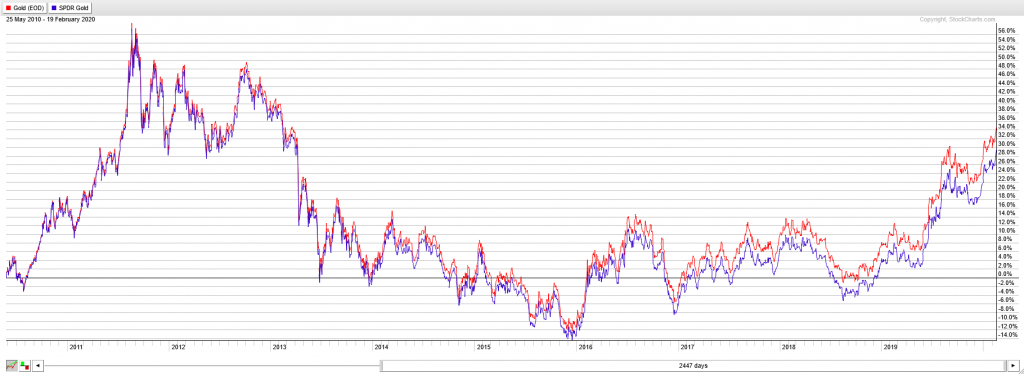
SPDR Gold Shares (GLD)
The SPDR Gold Shares ETF with the ticker symbol GLD is an ETF which, primarily through the purchase of gold bullion, is Gold price development is replicating. In contrast to e.g. the USO (the best known oil ETF), there are no rolling losses due to the rolling of futures contracts and the GLD is also suitable for long-term investments in gold, although the financing costs have a slightly negative impact in the long term.
Interpretation and analysis of the GVZ
The GVZ allows conclusions to be drawn about the expected or the Fluctuation range of the gold price expected by market participants to. A high index level signals a high expected fluctuation range, while a low index level indicates a low fluctuation range.
In addition, the GVZ is used in particular by Options traders is often used to analyze implied volatility, as its development plays an important role in the success of options trades.