


Natural gas is one of the most important energy commodities after crude oil. In North America, natural gas is mainly used for heating, which is why demand typically increases seasonally in the winter months. Power plants also use the raw material to generate electricity, which means that there is also demand in the summer months due to the high energy requirements for generating electricity for air conditioning systems. Among traders, natural gas Futures (full name: Henry Hub Natural Gas Futures), which are traded on the NYMEX in New York, are known as a highly volatile underlying.
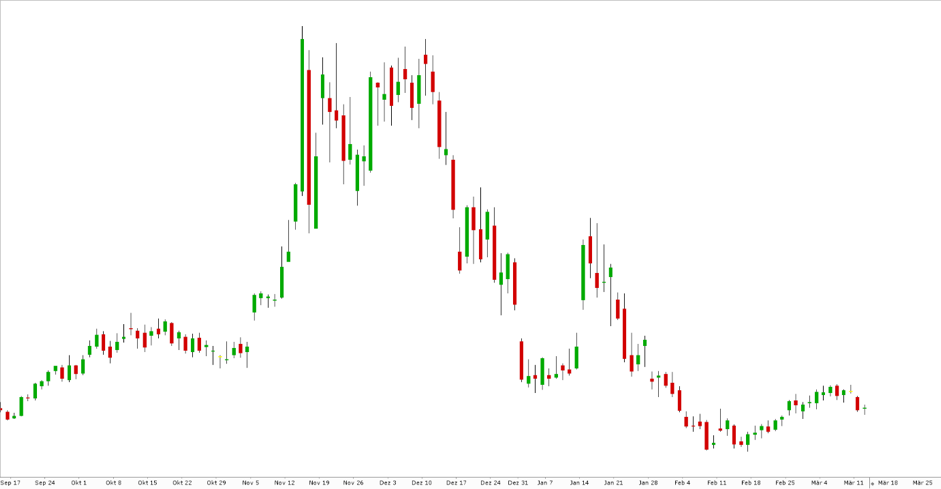
Contract specifications
| Designation | Henry Hub Natural Gas |
| Abbreviation | NG |
| Contract size | 10 000 MMBtu (million British thermal units ) |
| Price quote | USD per MMBtu |
| Tick size | 0.001 USD |
| Tick value | 10 USD |
| Daily price limit | none |
| Stock Exchange | NYMEX |
| Trading hours (DE) | 0 o'clock - 23 o'clock |
| Contract months | All months (current year and next 12 years) |
Interesting facts about the natural gas futures
- According to the CME Group (NYMEX has been part of the CME Group since 2008), natural gas futures are the world's third-largest futures contract on a physical commodity in terms of volume.
- The natural gas futures are therefore very liquid tradable.
- The name Henry Hub Natural Gas is due to the delivery location, the distribution hub for the Henry Hub natural gas pipeline system in Louisiana.
- Natural gas trading still takes place "on the floor" of NYMEX in New York. Electronic trading is handled via the CME's electronic trading system (Globex).
- Natural gas prices can be extremely volatile at times.
- Natural gas prices exhibit some typical seasonal patterns.
- Options on the natural gas futures are tradable.