


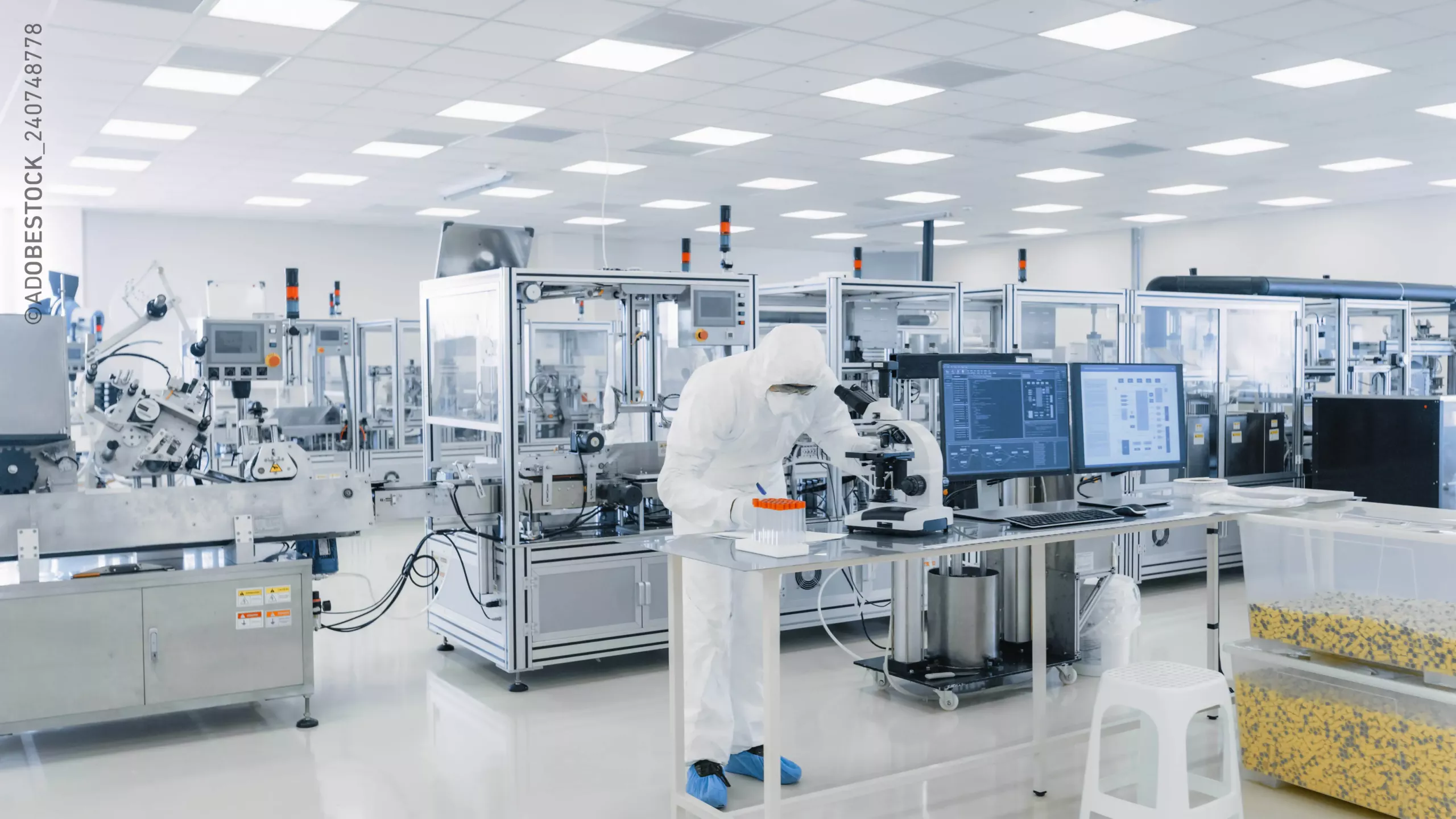
Medical technology, often referred to as MedTech, is an important interface between technology and healthcare and encompasses many different products. From simple plasters to pacemakers to sophisticated imaging devices, medical technology has constantly pushed the boundaries of what is possible in medical practice, helping to save lives and improve the quality of life for millions of people. In this article, we introduce you to the medical technology industry in general and a selection of medical technology stocks in detail.
WHAT IS MEDICAL TECHNOLOGY?
Medical technology is an interdisciplinary field that combines the principles of engineering and medical knowledge to develop devices, systems and methods that contribute to the diagnosis, monitoring and treatment of diseases and physical impairments.
Some of the main areas of medical technology are
- Imaging procedures: This includes technologies such as magnetic resonance imaging (MRI), computed tomography (CT), ultrasound and X-ray.
- Biomaterials: These are often used for implants or replacements of body tissue. Examples include artificial joints or heart valves.
- Biomedical signal processing: This area deals with the analysis of biomedical signals such as ECG or EEG.
- Orthopaedic and rehabilitation technologyDevelopment of prostheses, orthoses and devices for rehabilitation.
- Telemedicine: Use of communication technologies to provide medical information and services over long distances.
- Therapeutic devices and systems: These include pacemakers, dialysis machines and lasers for eye operations.
- Micro- and nanotechnology in medicine: Development of microdevices or nanoparticles for medical applications, e.g. for targeted drug delivery.
ADVANTAGES AND BENEFITS OF MEDICAL TECHNOLOGY
Medical technology has not only expanded the possibilities in the medical field, but has also increased efficiency and accuracy in healthcare. By using the latest technologies, doctors can make more precise diagnoses, leading to more effective and targeted treatments. This has not only reduced mortality from many diseases, but has also helped to improve patients' quality of life and shorten their recovery time. In addition, technologies such as e-health and telemedicine provide patients with better access to healthcare, especially in remote or underserved areas.
FUTURE PROSPECTS FOR THE MEDICAL TECHNOLOGY SECTOR
Advancing digitalization and the Internet of Things are enabling improved communication between medical devices, allowing for more efficient patient care. At the same time, wearables that monitor vital signs are becoming increasingly important, particularly in areas such as cardiovascular monitoring and diabetes care. These advances will be further enhanced by the use of artificial intelligence in diagnostic and imaging procedures, which will increase precision in medicine.
At the same time, the industry is driving the trend towards personalized medicine, whereby therapies and solutions are increasingly tailored to the individual needs of patients. In an environment of growing global environmental concerns, sustainability is also becoming a focus for medical technology companies, which are now striving to develop more environmentally friendly production methods and products.
Another important aspect is expansion in emerging markets, where healthcare infrastructures are developing and there is growing demand for medical technology products. However, all these developments go hand in hand with stricter regulatory requirements, particularly in relation to data security and the introduction of new technologies. This represents both a challenge and an opportunity for companies that are able to adapt to the changing environment.
Growth prospects
The medical technology industry will record a turnover of € 536.10 billion in 2023. A large part of this turnover, namely € 443.10 billion, comes from the market for medical devices. An annual growth rate of 5.38% is expected over the next five years, leading to a market volume of € 696.60 billion in 2028. In a global context, the USA is forecast to make the largest contribution to sales in 2023 with € 185.00 billion.
OVERVIEW OF THE LARGEST AND BEST-KNOWN MEDICAL TECHNOLOGY SHARES
In the table below you will find a selection of some of the best-known and largest medical technology stocks. Many of the leading companies are based in the USA, which underlines the country's dominant position in the medical technology sector. With regard to Germany, Sartorius and Carl Zeiss Meditec are well-known companies in the medical technology sector.
Top 10 medical technology stocks, sorted by market capitalization
| Company | Symbol | Country | Market capitalization |
| Abbott Laboratories | ABT | USA | 165.62 billion USD |
| Stryker Corporation | SYK | USA | USD 101.94 billion |
| Medtronic PLC | MDT | Stock exchange: USA / Head office: Ireland | USD 96.26 billion |
| Intuitive Surgical Inc | ISRG | USA | USD 96.08 billion |
| Boston Scientific Corp | BSX | USA | 74.02 billion USD |
| Edwards Lifesciences Corp | EW | USA | 41.99 billion USD |
| DexCom Inc | DXCM | USA | USD 33.37 billion |
| Zimmer Biomet Holdings Inc | ZBH | USA | USD 21.9 billion |
| Sartorius AG VZO O.N. | SRT | Germany | USD 16.49 billion |
| Carl Zeiss Meditec AG | AFX | Germany | USD 7.37 billion |
ABBOTT LABORATORIES
- Company: Abbott Laboratories
- Symbol (TWS): ABT
- ISIN: US0028241000
- Stock Exchange: New York Stock Exchange
- Country: USA
- Currency: US Dollar (USD)
- Market capitalization: USD 165.62 billion
- Turnover (TTM) in USD: 40.23 billion
Abbott Laboratories is an Illinois-based healthcare company that provides medical devices, diagnostic products, pharmaceutical products, and pediatric and adult nutritional products. Abbott Laboratories is an established company in the medical device industry and continues to evolve by bringing new and innovative products to market. With a presence in over 160 countries and a market capitalization of approximately $190 billion, Abbott is one of the leading medical stocks. The company has demonstrated its expertise in various therapeutic areas over the years, with the diabetes care sector standing out in recent times.
Brief analysis & outlook
Abbott Laboratories has recently shown remarkable developments in its diabetes care business despite some challenges, such as the recall of its baby food products. Its continuous glucose monitoring system, the FreeStyle Libre, has proven to be a revolutionary product for diabetics. The recent acquisition of Bigfoot Biomedical, a company known for its innovative insulin pen, underscores Abbott's commitment to the diabetes care space. This move promises not only to expand the product portfolio, but also to better integrate and advance existing technologies. In addition to its focus on diabetes, Abbott is well positioned through its diversified businesses and geographic footprint, which provides the company with stability and growth potential. Abbott's consistent dividend growth over the last 51 years is also testament to the company's strength and consistency. With a dividend yield above the S&P 500 average, Abbott offers both income and growth potential for investors.
SARTORIUS
- Company: Sartorius AG VZO O.N.
- Symbol (TWS): SRT3
- ISIN: DE0007165607
- Stock exchange: XETRA
- Country: Germany
- Currency: Euro (EUR)
- Market capitalization: EUR 15.43 billion / USD 16.49 billion
- Turnover (TTM) in USD: 4.11 billion
Sartorius, based in Göttingen, Germany, is a globally recognized specialist in the fields of biotechnology and laboratory technology. Founded in the 19th century, the company has evolved over the years from a manufacturer of laboratory balances to a global technology leader in the life sciences. Its expertise spans a broad portfolio of products and services, ranging from laboratory tools to complex systems for biopharmaceutical production. The DAX-listed company is committed to the goal of increasing progress and efficiency in life science and pharmaceutical research and production processes.
Brief analysis & outlook
Sartorius suffered a significant drop in profits in the first nine months of the year, with net income falling by almost two thirds to just under 197 million euros. One reason for this is the reduced investment mood of its customers, which is attributable to the reduction in inventories in the customer industries. As a result of this development, the management had to revise its forecasts for the current year downwards. Nevertheless, there are initial signs of recovery, albeit with a certain time lag.
EDWARDS LIFESCIENCES
- Company: Edwards Lifesciences Corp
- Symbol (TWS): EW
- ISIN: US28176E1082
- Stock Exchange: New York Stock Exchange
- Country: USA
- Currency: US Dollar (USD)
- Market capitalization: USD 41.99 billion
- Turnover (TTM) in USD: 5.66 billion
Edwards Lifesciences is a California-based medical device company and one of the leading providers of heart valve replacement technologies. The company is known for products such as Carpentier-Edwards PERIMOUNT and Carpentier-Edwards PERIMOUNT MAGNA. These are artificial heart valves made from biological tissue. The Edwards SAPIEN products are heart valves implanted via a TAVI or TAVR procedure, i.e. with the use of a catheter that is advanced to the heart. The company also manufactures vascular therapy products and monitoring devices for operating rooms.
Brief analysis & outlook
Edwards Lifesciences has a positive outlook for the coming quarters, particularly thanks to growth in global TAVR sales and strong uptake of the SAPIEN product family. In the US in particular, the performance of TAVR sales is promising, supported by improved hospital staffing and the continued adoption of the SAPIEN 3Ultra RESILIA. Outside the US, expectations for TAVR sales are also high in countries such as Japan and Europe. Despite this outlook, the share price is trading around 50 % below its 2021 and 2022 highs at the time of writing this analysis.
CARL ZEISS MEDITEC
- Company: Carl Zeiss Meditec AG
- Symbol (TWS): AFX
- ISIN: DE0005313704
- Stock exchange: XETRA
- Country: Germany
- Currency: Euro (EUR)
- Market capitalization: EUR 6.9 billion / USD 7.37 billion
- Turnover (TTM) in USD: 2.22 billion
Carl Zeiss Meditec AG is a German MedTech company headquartered in Jena, which operates in two segments. The Ophthalmic Devices segment focuses on the diagnosis and treatment of eye diseases and supplies physicians and surgeons with laser and diagnostic systems, intraocular lenses and consumables. The Microsurgery business unit manufactures surgical microscopes for ENT surgery and neurosurgery.
Brief analysis & outlook
Due to demographic trends and the increase in age-related eye diseases, the growth prospects for Carl Zeiss Meditec are good. The market growth for medical technology in the field of ophthalmology is four to five percent annually. However, Carl Zeiss Meditec has achieved impressive growth of almost double this figure over the last ten years. The introduction of the SMILE procedure, which improved the safety of laser eye surgery and helped the company to increase its market share in this segment from 29% in 2017 to 35% in 2022, has played a key role in this.
Financially, the company has increased its profits far more than its turnover over the last ten years, with annual profit growth of around 15 percent. Over the last five years, Carl Zeiss has even recorded profit growth of almost 17 percent. Another advantage is the stable ownership structure. 59 percent of the shares are held by the ZEISS Group, which in turn is owned by the ZEISS Foundation, which speaks for stability and long-term planning.
The company also has a competitive advantage thanks to its technological developments and the associated patents, which make it a quasi-monopoly in some of its market segments. The biggest growth driver in the near future is the QUARTERA 700 technology platform for the treatment of cataracts. After eight years of development, this platform has recently received approval and is targeting a market that is four to five times larger than Carl Zeiss Meditec's previous market segments.
DEXCOM
- Company: DexCom Inc
- Symbol (TWS): DXCM
- ISIN: US2521311074
- Stock exchange: Nasdaq
- Country: USA
- Currency: US Dollar (USD)
- Market capitalization: USD 33.37 billion
- Turnover (TTM) in USD: 3.2 billion
Diabetes is known to be a disease that has been on the rise worldwide for many years. According to estimates by the International Diabetes Federation, around 500 million people around the world suffer from diabetes, and the number is rising. In recent years, more and more companies have therefore specialized in the research and treatment of diabetes. DexCom is one of the fastest growing companies specializing in the field of CGM (Continuous Glucose Monitoring) or glucose monitoring. This involves attaching a sensor to the patient's body that can wirelessly send real-time glucose values to devices such as smartphones and smartwatches. This eliminates the need for painful finger pricks and allows diabetes patients to detect changes quickly.
Brief analysis & outlook
Recently, there have been concerns about the long-term outlook for DexCom due to developments in diabetes medication. In particular, the release of Novo Nordisk's SELECT trial results has worried investors as drugs such as Wegovy and others in the same class could slow the progression of diabetes in prediabetics and reduce the need for insulin in type 2 diabetics. Some investors fear that these drugs, which have led to significant weight loss in some cases, could spell the end of the need for CGM and other related treatments.
Despite these concerns, Baron Health Care Fund emphasized in its Q3 2023 investor letter that it believes GLP-1 drugs will be used in conjunction with CGM technology and that CGM technology will remain a critical tool for diabetes management.
This view is supported by a recent analysis by Leerink analysts, who gave DexCom an Outperform rating with a price target of USD 110. According to them, recent concerns may be overblown and DexCom could continue to maintain a strong, double-digit growth rate. In addition, DexCom emphasizes that CGM usage is doubling among patients taking GLP-1 drugs, which supports the theory that fears are overblown.