
The most important in a nutshell
- The Canadian banking market is dominated by a small number of national institutions. As the second largest bank, Toronto-Dominion (TD) benefits from this oligopolistic competitive structure and its strong market position.
- TD offers the entire spectrum of financial services for all customer segments - from private clients to corporate clients and multinational corporations - including a strong capital market and investment banking business. A key differentiator compared to competitors is the high proportion of US business, even if this area is currently presenting challenges.
- Strict lending guidelines and solid collateralization ensured that Canadian banks survived the 2008/09 financial crisis largely without major damage. Today, TD's balance sheet, equity base and credit quality are characterized by a high degree of stability.
- TD pursues a disciplined capital allocation with a focus on sustainable dividend growth and continuous share buybacks.
- Further information can be found in the DGI model portfolio and in the overview of the series The dividend custody account.
Company profile and business model: Who is the Toronto Dominion and what does it do?
The current company name of Toronto-Dominion Bank leads directly to the two original banks that formed what is now Canada's second-largest banking group. The Bank of Toronto was founded in 1855 as an association of regional grain merchants and millers. Conservatively managed in its expansion, its core clientele consisted of farmers, merchants and processors of agricultural products (especially millers, breweries and distilleries). The Dominion Bank was founded in the same town in 1869. In the course of Canada's economic prosperity, both banks grew westward within the country.
After surviving two world wars, including the issue of war bonds, as well as the economic crisis in the interwar period, both banks were confronted with a similar starting position. Their size was no longer sufficient for further growth. A merger of competitors from the same city seemed to be a satisfactory solution to the problem for all sides. After lengthy negotiations between the two banks and the Canadian Ministry of Finance, February 1, 1955 marked the day when the Toronto-Dominion Bank officially continued the banking operations of the now merged banks.
In the decades that followed, TD grew in its Canadian home market until the 1990s. On the one hand, smaller banks were acquired, and on the other, the financial company established itself in other business segments (e.g. the securities business with TD Securities or cooperations with Visa, among others).
In 2004, TD Bank entered the US retail banking business by announcing an agreement to acquire a majority stake in New England-based Banknorth for a total of USD 3.8 billion. In January 2006, the company sold its US brokerage business under the TD Waterhouse brand, which it had acquired in 1984, to Ameritrade. The business was renamed TD Ameritrade and TD held over 40 percent of it. When TD Ameritrade was in turn acquired by Charles Schwab in 2020, TD Bank's post-acquisition stake in the merged company was initially reduced to 13 percent.
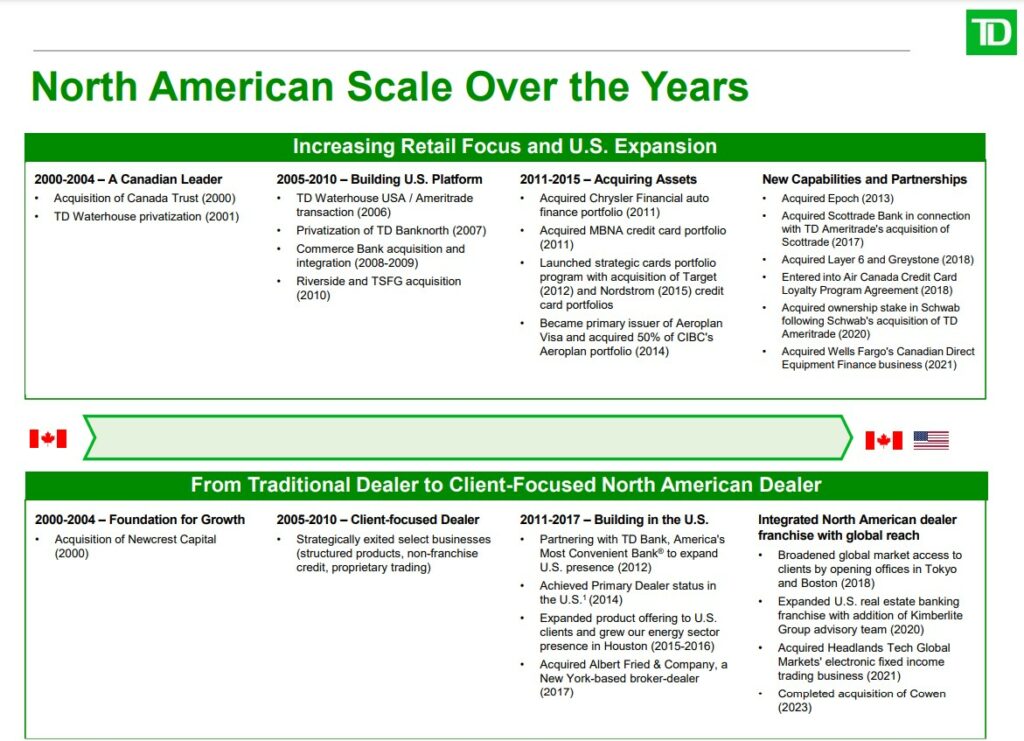
Today, Toronto-Dominion is an all-financial services provider, built on the two strong pillars of Canada and the United States. In terms of total assets, it is the sixth largest universal bank in North America.
When we start analyzing the Geschäftsmodells the first question that arises is what type of bank we are talking about. While the universal banking system, which basically offers all banking transactions to all customer segments, is widespread in Europe, the segregated banking system prevailed in the United States for many decades. Following the banking crisis in the wake of the "Great Depression" in the early 1930s, state banking regulators wanted to separate the traditional deposit and lending business from the securities business, i.e. investment banking, by introducing new regulatory provisions. This Glass-Steagall Act was only finally repealed under the US presidency of Bill Clinton in 1999.
With a market share of over 90 percent, the Canadian banking market is shared by the so-called "Big Six". In addition to TD, these include the Royal Bank of Canada, Bank of Montreal, Bank of Nova Scotia, Canadian Imperial Bank of Commerce and National Bank of Canada.
Toronto-Dominion is undoubtedly a universal bank. This fact is also reflected in the Structure of the business model account, which can be divided into four segments:
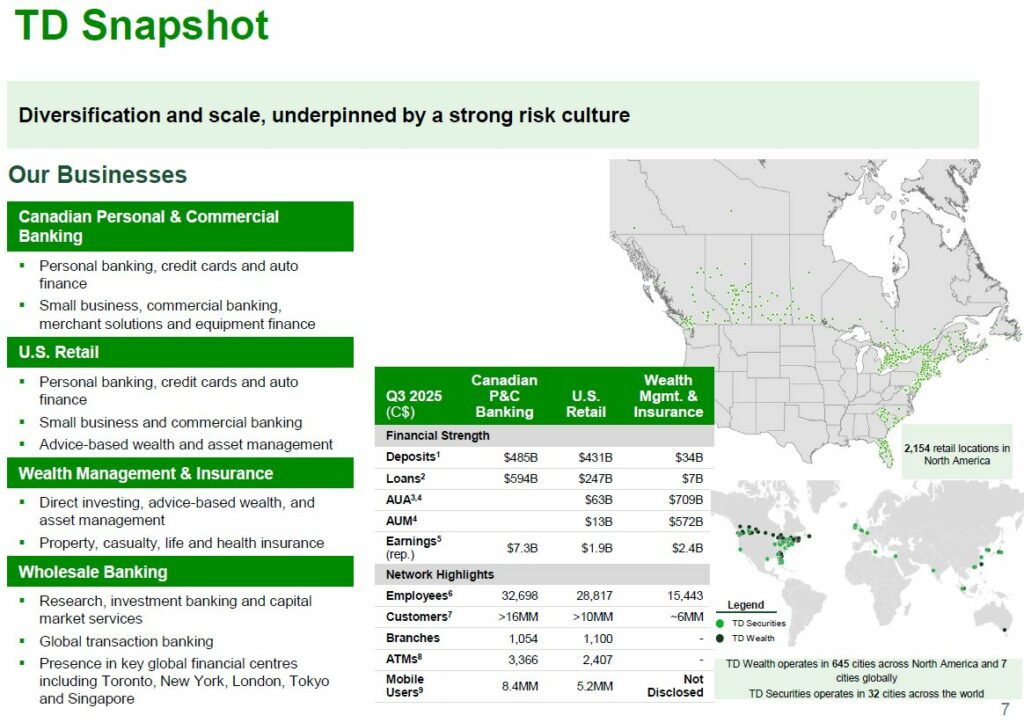
- Canadian Personal & Commercial: Within this area, TD offers a wide range of banking services for private individuals, small and medium-sized enterprises in Canada. This includes serving over 15 million customers. Personal Banking offers a full range of deposit, savings, payment and lending products and advice through a network of approximately 1,060 branches and approximately 3,400 ATMs
- U.S. RetailU.S. Retail comprises the bank's retail, commercial and wealth management business in the USA. Under the TD Bank brand, the bank serves approximately ten million customers in branches from Maine to Florida, as well as through automobile dealerships and credit card partners nationwide. Personal Banking operates through a network of approximately 1,170 branches and approximately 2,700 ATMs
- Wholesale BankingWholesale Banking serves over 12,000 corporate, government and institutional clients in the global financial markets. Under the TD Securities brand, Wholesale Banking offers capital markets, corporate and investment banking services and provides market access and wholesale banking solutions for the bank's wealth management and private client businesses and their clients
- Wealth Management & InsuranceWealth Management and Insurance serves around six million customers in the areas of wealth and insurance in Canada. This includes life insurance, health insurance, as well as property and liability insurance. The company provides comprehensive insurance solutions for individuals and businesses
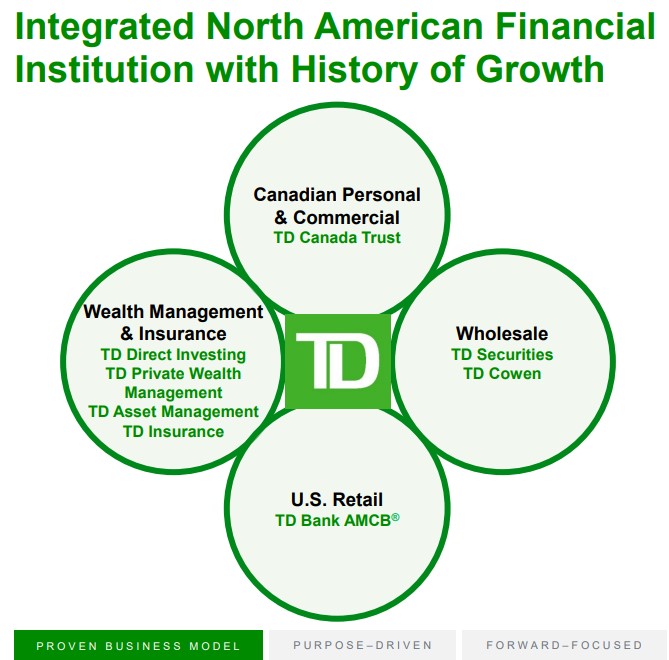
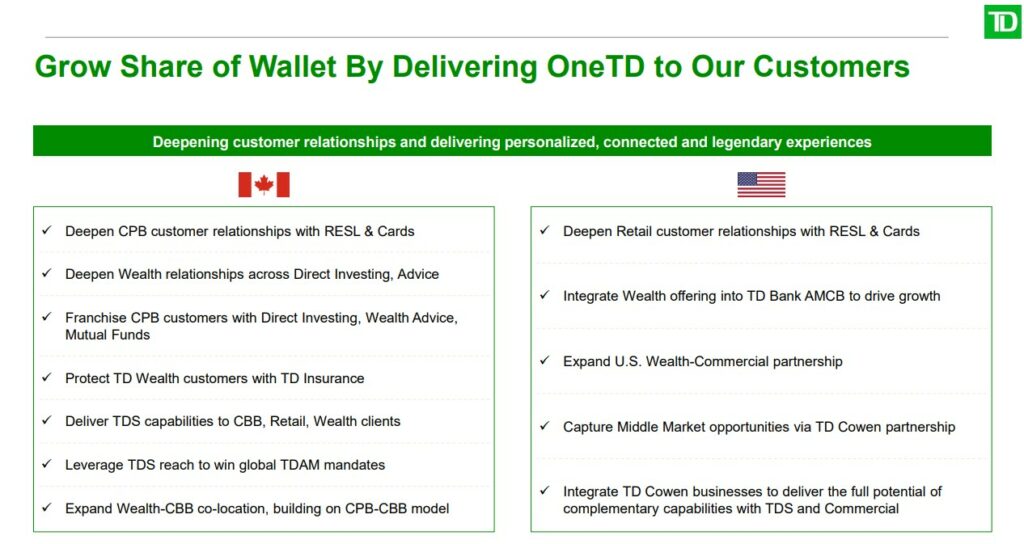
One of the central points of the Corporate strategy is the initiative with the striking title "OneTD". This involves exploiting the potential of the entire product portfolio in the two core markets of Canada and the USA. This can include benefiting from economies of scale through the use of a central product platform or bundling different products and consulting services for the same target group ("cross-selling").
Although the conservative Risk appetite is emphasized quite prominently in the strategy, a recent inglorious incident in the USA is likely to have undermined one of the three core principles called "Do not risk harming the TD brand" run counter to this. In August 2023, the bank announced that some US authorities, in cooperation with the US Department of Justice, were investigating the Canadian company for its anti-money laundering program. Specifically, TD is accused, Chinese drug traffickers in the laundering of more than USD 650 million from illegal drug sales. The focus is on the synthetic opioid fentanyl, the abuse of which kills tens of thousands of people in the USA every year.
The bank has now submitted declarations of consent to the US authorities and reached an agreement with the US Department of Justice and the US Attorney's Office for the District of New Jersey. Comparison closed, the TD in total USD 3.1 billion will cost. In addition, the bank had to pay a Asset cap for the US retail business, which represents a severe setback for further expansion in the short to medium term. The entire restructuring of the US portfolio could cost the bank up to USD 1.5 billion. Finally, a higher increase in costs for additional staff and necessary investments in IT for the compliance area must be taken into account.
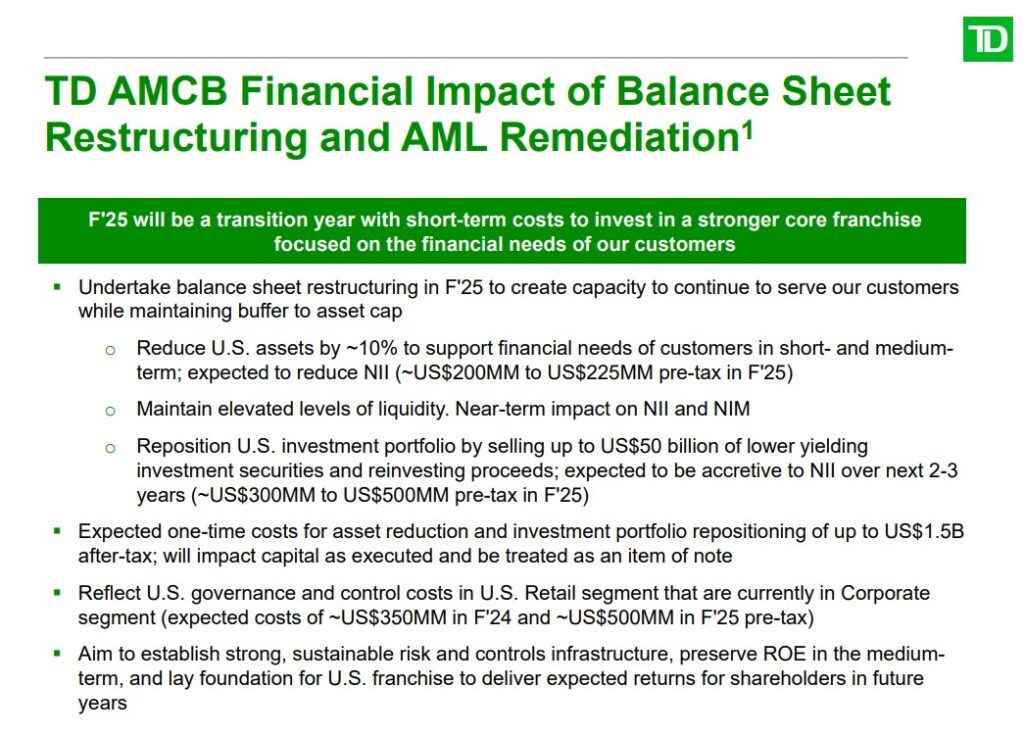
This means that the ambitious growth plans for the US business, particularly for the regions in the south-east of the country, are on hold for the time being. Since the takeover of First Horizon ultimately failed, TD's management chose the path of organic growth. Now the designated CEO has to shift into reverse gear. For the next few years, the focus will inevitably shift to the Canadian domestic marketwhich accounts for almost two thirds of total sales. After the competitor National Bank the Canadian Western Bank will be integrated over the course of the next year, only Laurentian Bank and Equitable Bank remain as potential takeover targets alongside small regional banks. However, the chances of this happening are extremely low, as the Canadian competition authorities are very critical of further concentration in the oligopoly-like banking market.

The current Chief Executive Officer of Toronto-Dominion Bank is Raymond Chun. He assumed the position on February 1, 2025, following the retirement of his predecessor Bharat Masrani after eleven years at the helm. Chun has more than 30 years of banking experience and prior to his appointment as CEO, he held various senior positions at TD, including Chief Operating Officer and Group Head of Canadian Personal Banking.
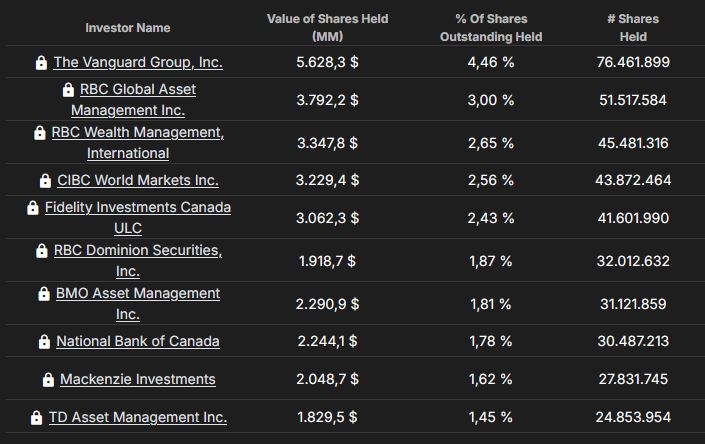
In the ownership structure of Toronto-Dominion, the usual major shareholders from asset management set the tone. The composition of the 'Big Six' owners clearly shows that the Canadian banks and their investment companies are closely intertwined.
Industry profile and competitive situation
The characteristics of banks' business models make it easy to compare the key figures between the various competitors. Differentiating features in the weighting of the individual business segments, such as the capital market business or key account business, must of course be taken into account and the relevant figures placed in the appropriate context.
In the case of Canadian banks, the question arises as to which sample to choose for the comparison group. I have decided to compare the two leading institutions in Canada: the Toronto-Dominion Bank and the Royal Bank of Canada. As I am using some industry-specific key figures for this comparison, please refer to the following chapter "Financial position". Here I briefly discuss the significance and meaning of these key figures.
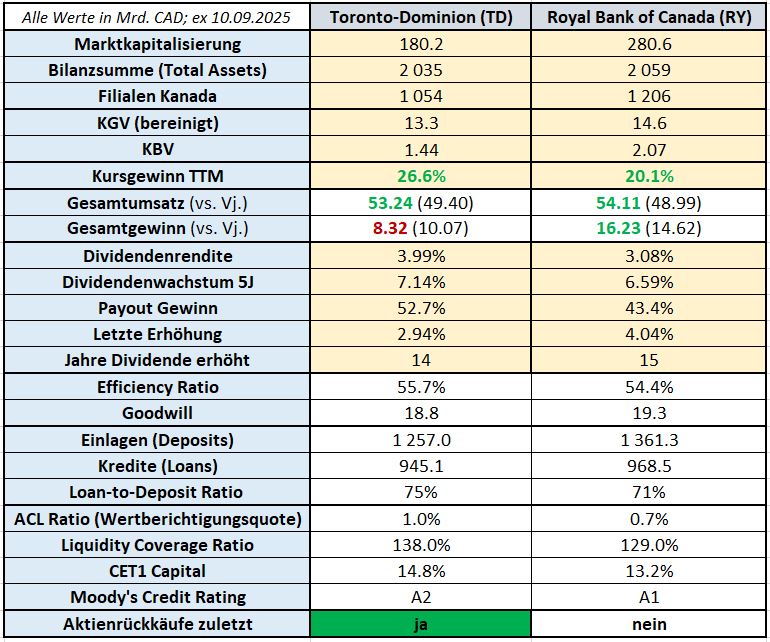
Notes on the values contained in the table:
- Green or red coloring of the figures indicates growth or decline compared to the previous year
- All values are given in CAD
The financial situation of the Toronto Dominion
After gaining an overview of the industry in general and taking a closer look at the company, the management and the competition as factors that influence decisions, let's take a look at the Bilanz und den daraus abgeleiteten Finanzkennzahlen of Toronto-Dominion. The focus here is on the following aspects Growth, profitability, cost efficiency and Loan portfolio and quality.
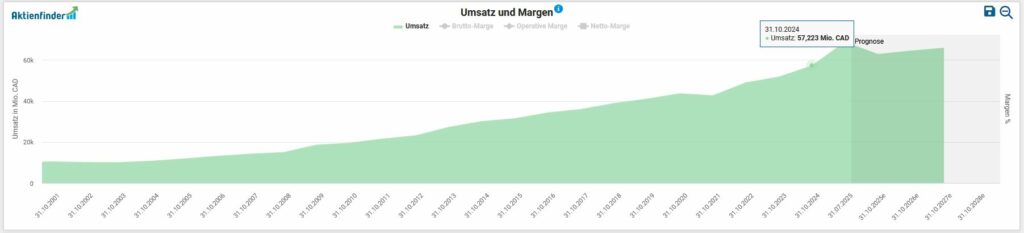
To analyze the financial situation, the first step is to look at the development of sales and profit. I have already discussed the internal distribution of sales per segment in the chapter on the business model above. On average, the Top Line has grown in the last five years by 10 percent p.a. an.
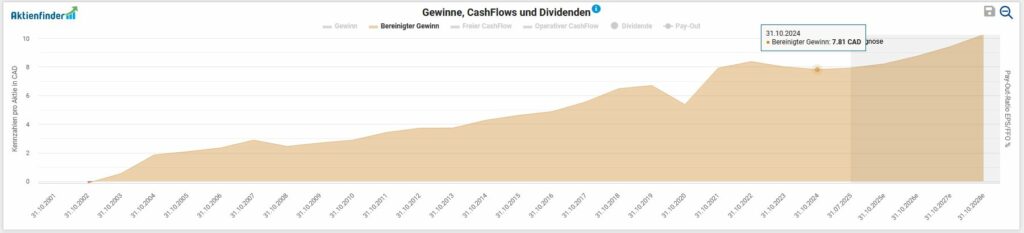
At Earnings per share we have seen a dynamic upward trend for ten years. However, if we take the past financial year 2024 as a basis, the Adjusted earnings per share at 2.2 percent (7.81 vs. 7.99 CAD). In the past financial year, Toronto-Dominion generated a Net profit from 8,8 CAD billion.
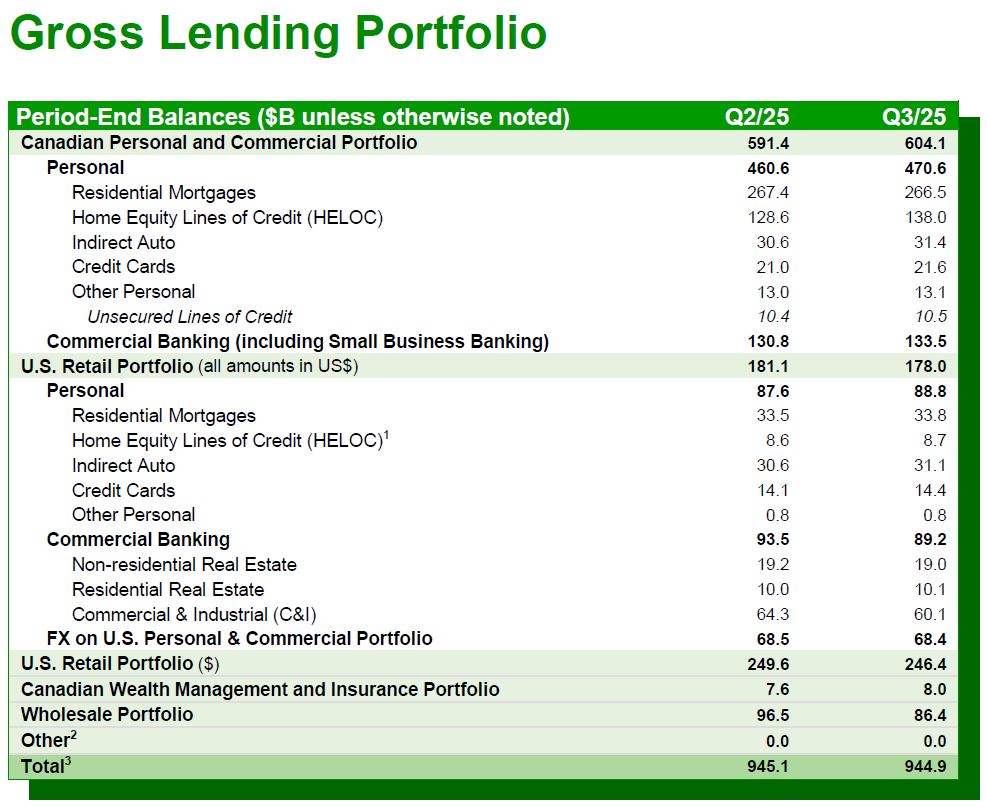
The The core task of banks is their Managing risks. This allows the risk exposure to be assessed in terms of the share of individual industries (commercial real estate, private residential construction, etc.) in the total credit volume or the weighting of individual customer groups (private customers, small businesses, real estate developers, etc.), which indicate a considerable concentration risk.
The bank currently has CAD 300 billion in residential mortgage loans, with the majority of this segment, around CAD 267 billion, located in Canada. In total, Toronto-Dominion Bank's exposure to the Canadian real estate sector amounts to over CAD 400 billion. The office real estate segment, which has recently been viewed with concern, accounts for only one percent of the bank's total gross loans.
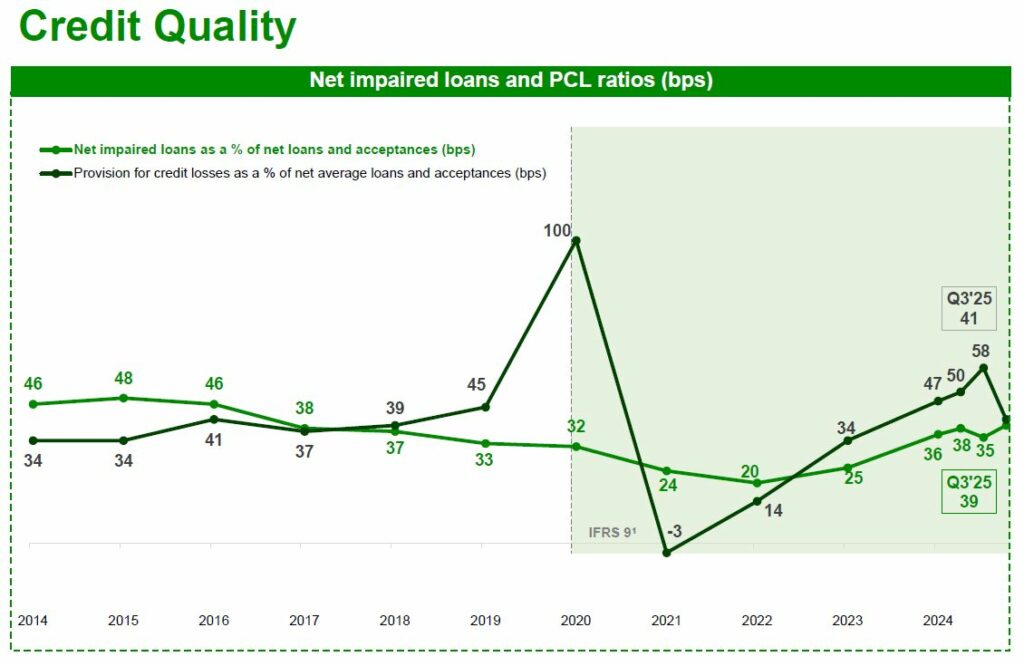
I also look at the extent of the Value adjustments and the provisions recognized for potential loan defaults in recent quarters. At TD, the negative trend in provisions appears to have stabilized again in the last quarter, while the risks are having a greater impact on the bank in terms of effective value adjustments.
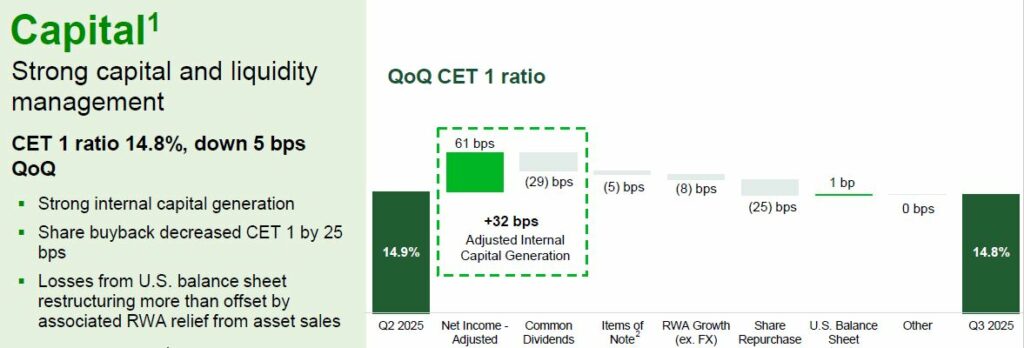
The equity ratio plays a key role in determining which Capital buffer or which Core capital the bank (common equity tier (CET)-1 ratio) in order to continue to operate profitably or at least maintain financial stability in the event of above-average loan defaults. Another question is the extent to which these capital ratios exceed the regulatory minimum values, which are tested for impairment as part of regular stress tests. Currently, the CET1 ratio at 14.8%, well above the regulatory minimum of 11.5%.
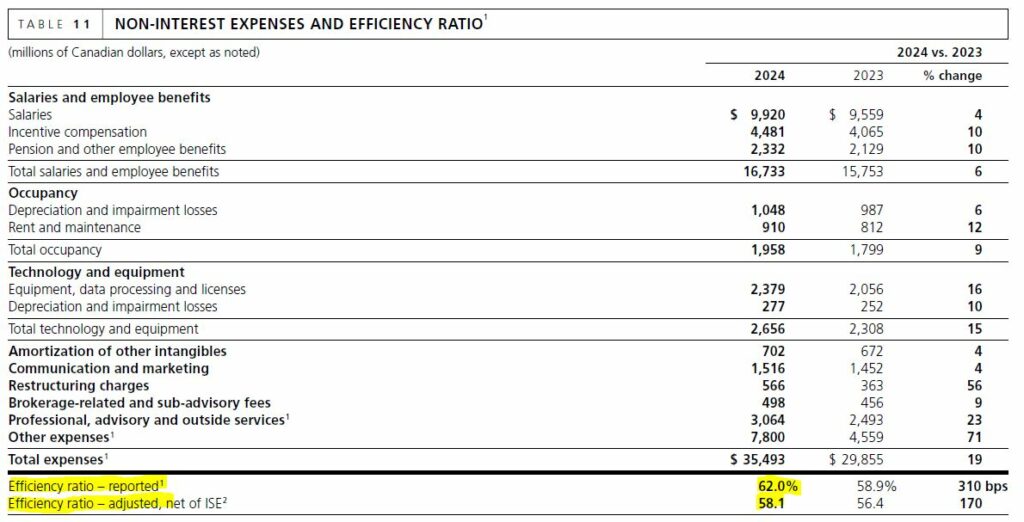
The question of how much effort the bank can put into achieving the declared gross profit is answered by the Efficiency Ratio (also known as the cost-income ratio). Rule of thumb: the lower the value, the more efficiently the bank is operating. Special effects must be taken into account here if a value is significantly higher or lower. For a universal bank, this efficiency ratio is typically around 60%. In the 2024 financial year, TD's efficiency ratio was 58.1%.
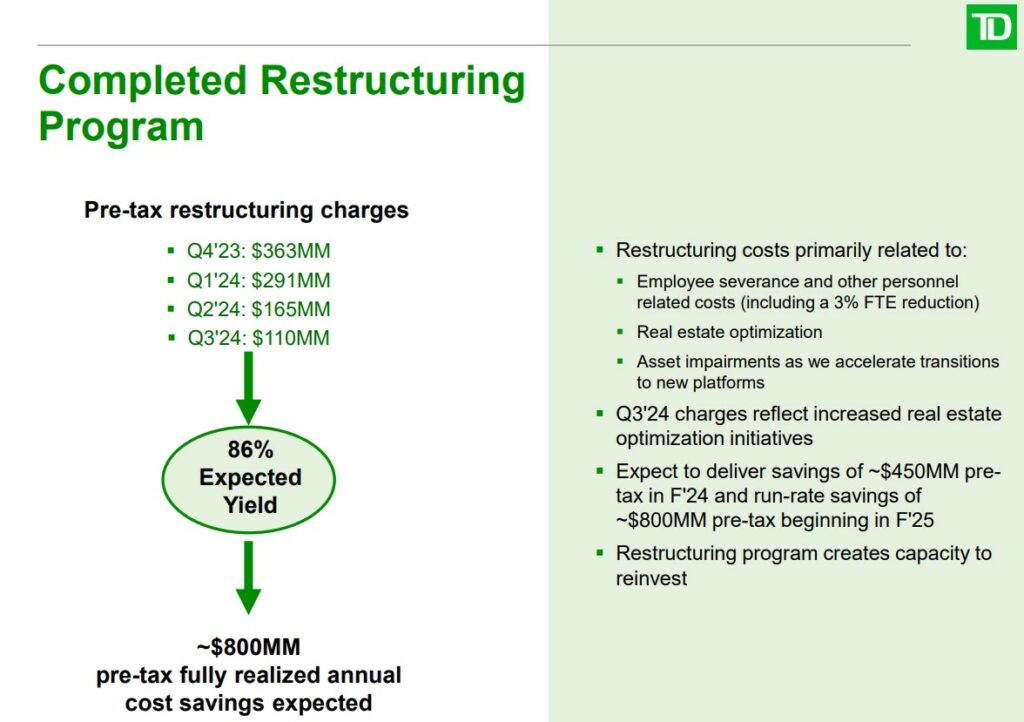
As part of the recently concluded Cost savings programwhich included a headcount reduction of three percent of full-time equivalents and the optimization of the real estate portfolio, the cost base has been reduced by CAD 800 million (before taxes) since the 2025 financial year.
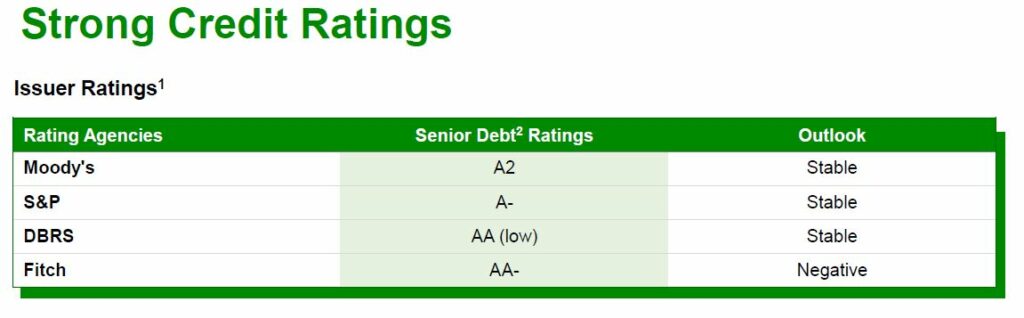
The evaluation of the Bonität of TD is shown by ratings from the four relevant agencies. Credit ratings have an impact on the bank's borrowing costs and its ability to raise funds. A downgrade of the rating could lead to higher financing costs, higher requirements for pledging collateral and restricted access to the capital markets and could also affect the bank's ability to enter into derivative transactions.
Opportunities & risks
Toronto-Dominion is characterized by a highly diversified business model that covers various business areas and thus represents a broad value chain of a universal bank. This diversification enables the bank to generate stable and varied income streams. Unlike many of its national competitors, TD is also represented in the top 10 banks in the USA, which underlines its cross-border significance.
TD is in a particularly stable financial position, which is also due to its classification as a Global Systemically Important Bank (G-SIB) category. This category requires the bank to meet higher regulatory capital requirements than most other Canadian banks - with the exception of the Royal Bank of Canada. To further strengthen its capital position, TD has also implemented a CAD 800 million cost reduction program.
A key factor for TD is the high barriers to market entry in the heavily regulated banking sector. These include strict requirements for risk management, capital adequacy and the suitability of management personnel, compliance and anti-fraud measures, which pose major challenges for potential new competitors.
In addition to its strategic focus, TD benefits from an infrastructure that has grown over decades. The broadly diversified service portfolio is offered via an extensive branch network in Canada and the USA as well as via a modern, modular e-banking platform. This combination of offline and digital offerings is a valuable asset that meets the requirements of different customer groups. In addition, the protected and stable critical infrastructure underlines TD's national and transnational importance in the financial sector.
As a result of the money laundering scandal, the bank reached a settlement with the US authorities and the public prosecutor's office in New Jersey, which will cost it a total of USD 3.1 billion. In addition, TD had to accept an asset ceiling for its US retail business, which will severely restrict growth in this area in the short to medium term. The restructuring of the US portfolio could cost up to USD 1.5 billion. In addition, increased personnel costs and IT expenses in the compliance area are to be expected.
In general, regulatory requirements in the financial sector have been rising steadily for decades and are taking up an increasingly large part of the investment budget, particularly in the IT sector. In addition to the international Basel III regulations, major Canadian banks such as TD are subject to supervision by several institutions such as the Office of the Superintendent of Financial Institutions (OFSI), the Canada Deposit Insurance Corporation (CDIC) and the Financial Consumer Agency of Canada (FCAC). The US regulatory authorities also play an important role for TD, particularly with regard to minimum capital buffers and leverage ratios.
As the bank's core business is lending money, economic developments have a direct impact on profit development. Falling interest rates typically lead to lower profits, while higher unemployment in recessions can lead to more defaults on loans. In accordance with the principle of prudence, TD must form provisions for these risks, which puts a strain on equity. The consumer business in particular is highly cyclical, especially for riskier forms of credit such as credit cards.
Another risk factor is the large exposure to the real estate market. Canada is one of the most expensive real estate markets in the world, which means a high mortgage burden, especially for lower income groups. The lending business is characterized by special features such as short-term fixed interest rates of a maximum of five years and mandatory credit insurance for low down payments. Canadian lenders also usually have full recourse to the borrower's assets (with the exception of the province of Alberta).
Finally, the increasing digitalization of the business model poses cyber risks that can cause damage that is difficult to assess due to new and complex types of attack and the increased frequency of attacks by professional criminal groups. Cyber attacks will therefore remain one of the greatest challenges for the bank in the future.
Current valuation of the Toronto-Dominion share
Although I like to use the so-called Enterprise Value (EV), this step does not make sense for banks due to the high liabilities to their customers (essentially their deposits). After all, the business model of banks is based on the use of high leverage and careful risk management. Equally useless are any ratios that are used in conjunction with the Free Cash-Flow (FCF). The cash flow generated by banks is not as easy to determine as that of manufacturing or service companies. Cash inflows and outflows can be enormously influenced by changes in interest rates, credit demand and customer behavior, which makes it difficult to apply FCF in a meaningful way.
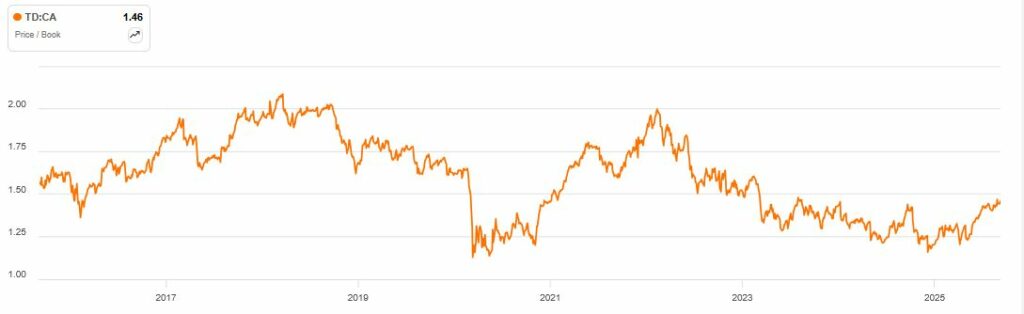
Therefore, for the valuation analysis of banks, I would like to refer to the Price/book multiple (price-to-book value). Basically, a price-to-book ratio of less than 1 means that the company is worth less on the stock market than its book value. In contrast, a P/B ratio of more than 1 indicates that the market values the company above its book value. As always with generic Rules of thumb the company-specific context must be taken into account in the analysis by the careful investor. There is no doubt that the P/B ratio does not serve as a central criterion for a purchase decision because the ratio does not correctly reflect the true economic value of many companies. European banks in particular, but also some North American banks, have been trading below their book value for a long time, regardless of the fact that these companies generate solid profits and are well capitalized.
In the use case of Toronto-Dominion, we have to pay for a Valuation result of 1.5 only look back a short distance. In the first half of 2025, the company was cheaper than it is now.
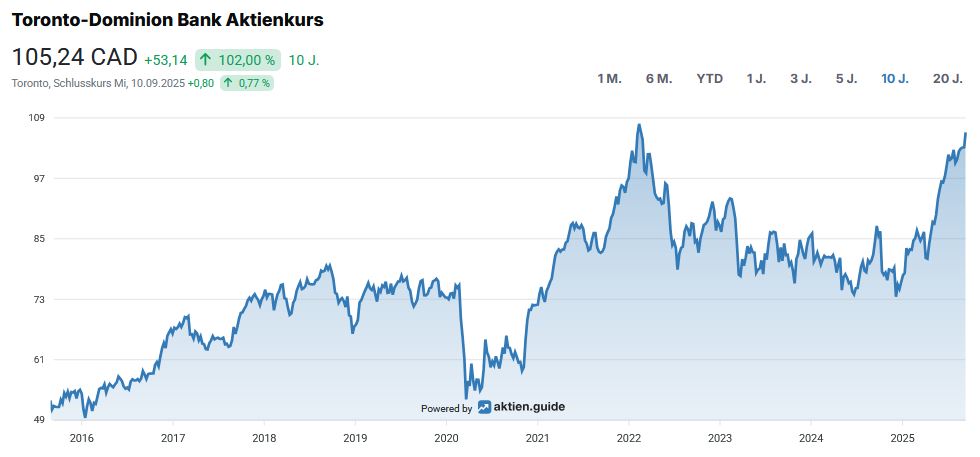
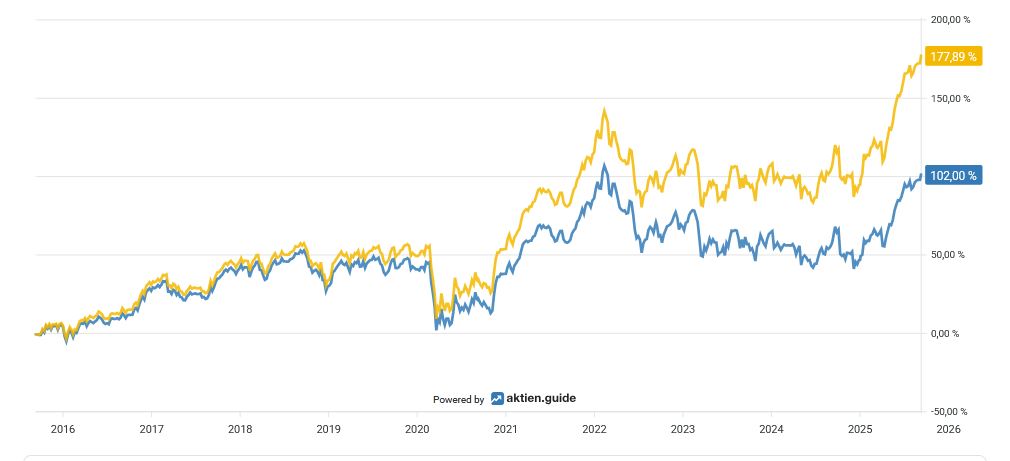
A look at the current chart shows us a Price performance from 102 percent over the past few years:
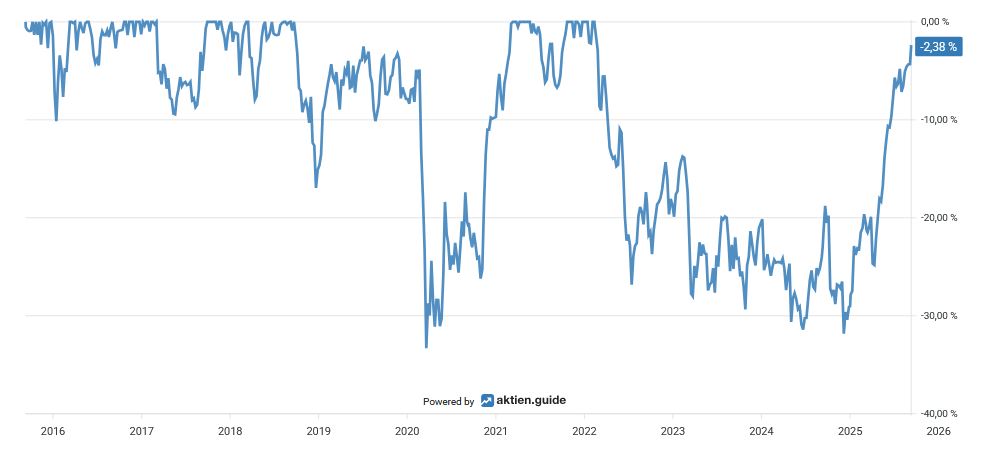
The Maximum decrease in the last ten years amounted to approx. 32 Prozent in the past December:
Over the ten-year period, an investment in Toronto-Dominion, measured by the Total Return, including dividends received, a Overall performance from 178 percent for the investor:
Capital allocation of Toronto-Dominion
Looking at the immaculate Dividendenhistorie of Toronto-Dominion, it is striking that the Canadian bank has been distributing an annually growing dividend for 14 years. What's more, when I look at the official dividend history, which can be found on the Company website The reduction is not known to date back to 1973.
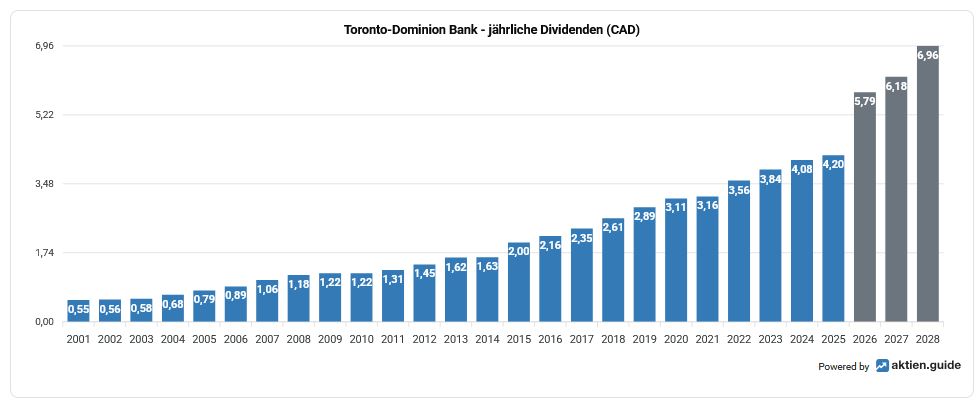
With a current share price of CAD 105.24, this results in a Dividend yield from 4 percent. The Five-year dividend growth rate amounts to 7.1 percent p.a. or 8.3 percent p.a. in the Ten-year period. The company last increased its share price in November last year by 2.9 percent the dividend. To round things off, here is an overview of the last five dividend increases:
- 2024: +2,9 %
- 2023: +6,3 %
- 2022: +7,9 %
- 2021: +12,7 %
- 2020: +6,8 %
The quartalsweise ausgeschüttete Dividende beträgt aktuell CAD 1.05 per share and is paid out at the beginning of each quarter (January, April, July, October).
If we take the average value of the Profit of the last three years as the basis for determining the Payout ratio we end up with a comfortable result of 39.9 percent for the payout ratio of Toronto-Dominion. In the coming years, I would in principle see sufficient scope for dividend increases on a similar scale as in recent years, i.e. at least in the mid-single-digit percentage range. However, bank profits are subject to very strong fluctuations.
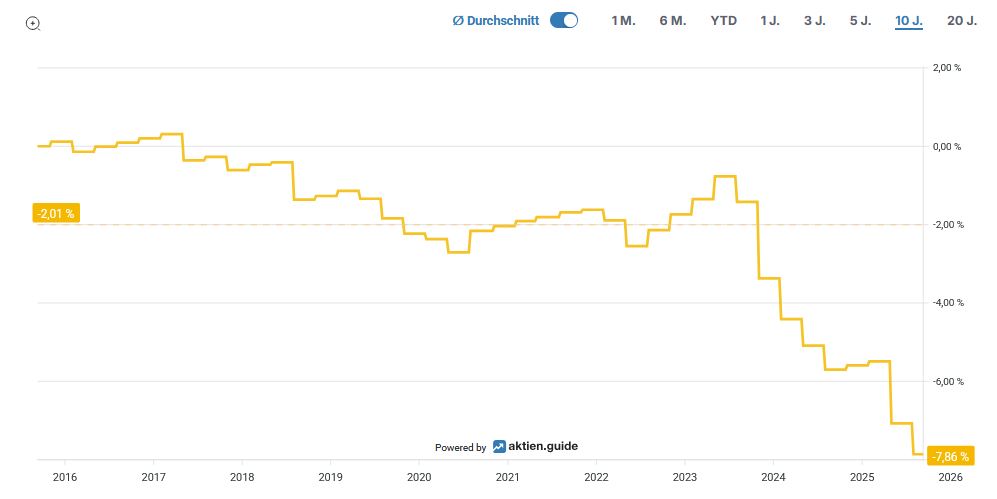
The Number of shares outstanding decreased by a total of 7.9 percent in the past ten years.
Conclusion: Considerations for my decision to invest in Toronto-Dominion
Toronto-Dominion Bank benefits from high barriers to market entry due to strict regulatory requirements for risk management, capital requirements and compliance measures. These barriers protect the established Canadian banks, which is why TD and its competitors dominate the local market. As the second largest bank in the country, TD has a strong competitive position.
The bank's broadly diversified business model covers all customer segments - from retail banking to business with major clients and the capital market business. A unique selling point is the significant share of US business, which is currently presenting challenges. Nevertheless, TD has a solid financial basis: its cautious lending policy and high credit quality enabled the bank to weather the 2008/09 financial crisis well. The balance sheet is currently robust, supported by the sale of the stake of over ten percent in the US broker Charles Schwab.
Overall, TD shows strong competitiveness, high stability, attractive capital allocation and promising growth prospects despite existing challenges, especially in the US business, accompanied by clear strategic leadership under the new CEO Raymond Chun.