
The most important facts in brief
- Munich Re is the world's largest reinsurer, impressing with a robust business model and keeping its risks under control.
- In the context of current business development, a company is emerging that is reorganizing from a position of strength and consistently avoiding low-margin business.
- The new strategy plan, „Ambition 2030," aims to shift the mix towards more stable sources of income. The group wants to diversify and reduce its dependence on traditional property and casualty reinsurance.
- Munich Re places a high value on shareholder return. Capital allocation is clearly oriented towards shareholders through an impressive track record of dividend growth and opportunistic share buybacks.
- Click here for the DGI model portfolio and here to the overview of this series The dividend custody account
Company Profile and Business Model: Who is Munich Re and What Do They Do
The company was founded in 1880 in Munich by Carl von Thieme as Munich Re founded - ten years before the second major urban insurance company named Allianz. Thieme's idea of establishing a reinsurer independent of primary insurers was controversial at the time but proved to be viable: By the third year of business, the company was the leading reinsurer in Germany. In 1888, it was converted into a stock corporation.
In the following decades, the business rapidly internationalized. From Munich, as well as through branches in Hamburg, Vienna, and Paris, the company expanded worldwide, especially into the significant markets of Great Britain and the USA. The reinsurer gained a certain mythical status in the wake of the 1906 San Francisco earthquake, as the German company was the only insurer to remain solvent after settling all claims. The claims amount at the time of 11 million marks was equivalent to approximately 7 percent of the annual gross premium income.
After World War II, Munich Re rebuilt its international position and solidified its role as the „insurer of insurers." Since the 1970s, it has systematically engaged in the research of storm and earthquake risks and is considered a pioneer in natural catastrophe research within the industry to this day. Since 2009, the company has operated under the international label Munich Re, with „Re“ standing for „reinsurance.“ Through various company mergers where Munich Re held majority stakes, the reinsurer functions as the parent company of the Ergo Insurance Group. The latter formerly comprised D.A.S., Hamburg-Mannheimer, DKV, and Victoria. Both the Fukushima nuclear accident as a consequence of the 2011 Tohoku earthquake in Japan and the economic damages from the Corona pandemic are reflected in billions of dollars in losses on the balance sheet.
Before we take a closer look at Munich Re's business model, let's take a big step back from the corporate level and look at how the insurance industry works in general. Here, we will focus on the main areas of primary insurers and reinsurers. While the primary insurer embodies an insurance company that enters into an insurance contract with the customer directly or through an broker, the reinsurer is the insurer of the primary insurer. The latter by no means does this at a social price. In return for paying a reinsurance premium, the primary insurer can thus cede risks from its portfolio to the reinsurance company.
Furthermore, it makes sense to consider the different sectors in the insurance industry. The separation of business lines is a fundamental principle of the insurance industry, which simply means that life, health, and property and casualty insurance are operated in separate, legally independent companies. This principle applies to both the primary insurance and reinsurance business.
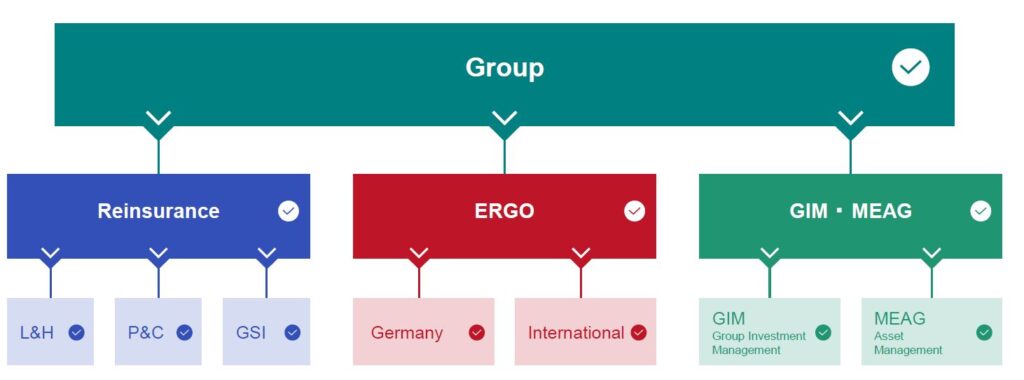
Specifically, Munich Re has been active in the two outlined business areas for many decades. In reinsurance, which accounts for almost two-thirds of gross premiums earned, it assumes risks from the primary insurance business of other companies. In the ERGO Insurance Group, the company bundles all businesses concluded with end consumers. Furthermore, Munich ERGO Asset Management GmbH (MEAG) encompasses the management of worldwide capital investments within the company. MEAG manages all significant asset classes such as interest-bearing securities, stocks, and real estate, as well as infrastructure investments (including renewable energies).
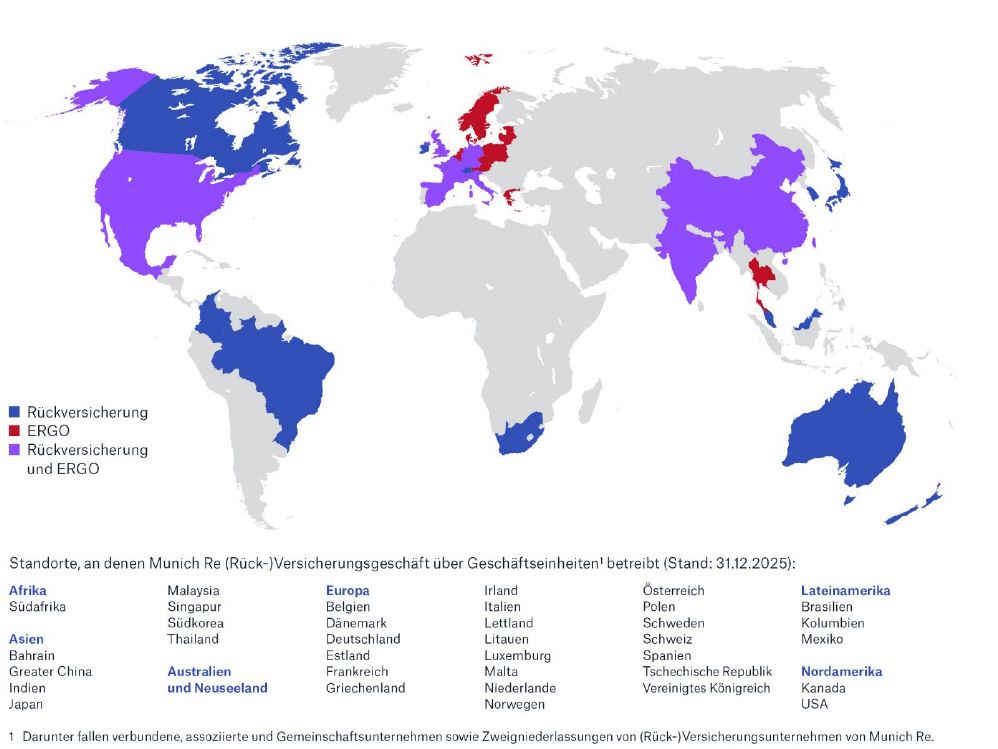
The geographic presence of Munich Re as a „Global Player“ is highlighted by the visualization below from the current annual report:
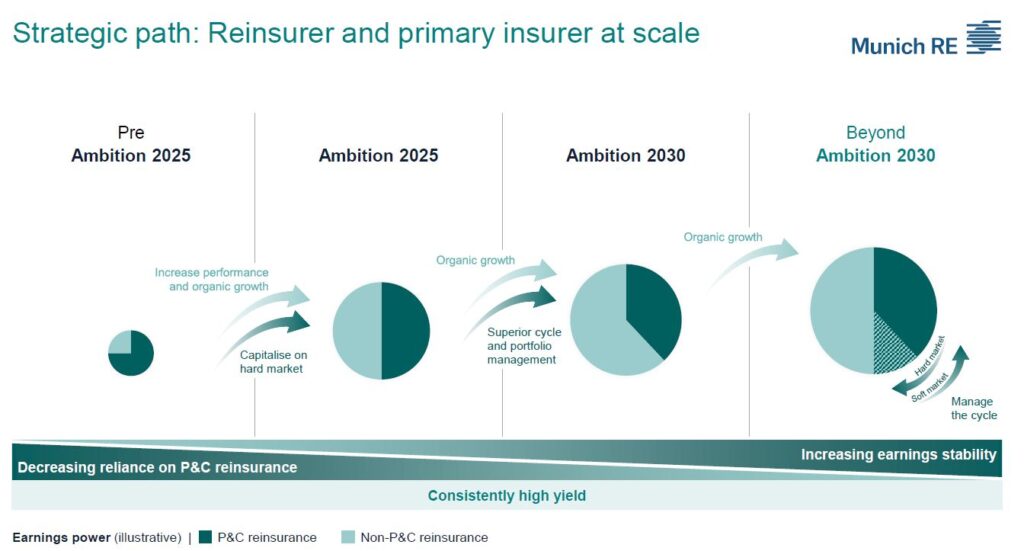
At Investor Day 2025, Munich Re presented its new Strategic Plan „Ambition 2030" presented. The core message: The Group wants to broaden its focus and reduce its dependence on traditional property and casualty reinsurance. Areas with stronger growth – including Life & Health, the primary insurance business, and especially a significantly expanded consulting and services division – are intended to contribute more to revenue and profit.
The exciting question from an investor's perspective is: does this shift the risk profile towards „higher margins with simultaneous higher risk"? Munich Re's motivation is certainly understandable: in Property & Casualty reinsurance, competition and price pressure are high, especially because alternative capital sources like „catastrophe bonds“ and competitors with a higher risk appetite are entering the market. Those who detach themselves from pure price wars and broaden their scope can achieve more stable results – but only if the new segments actually deliver their promised margins.
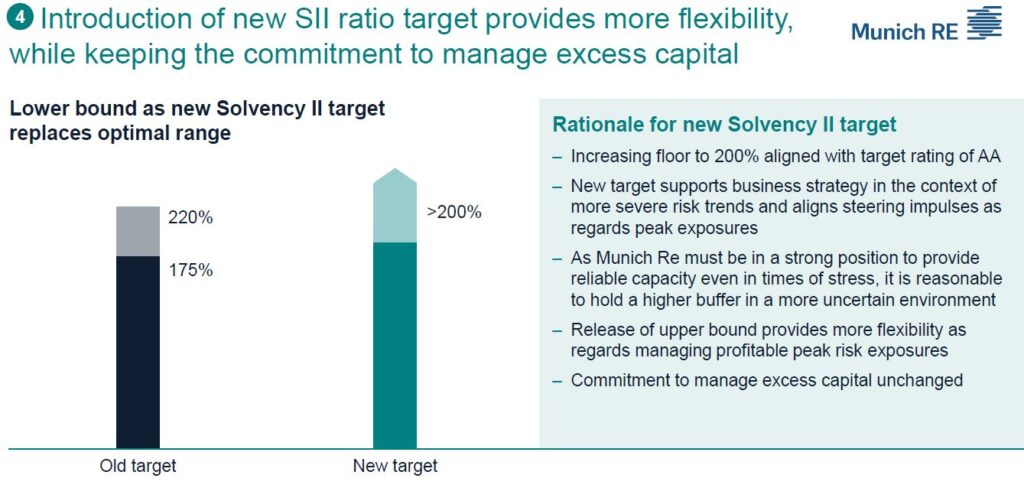
Let's get to the heart of every reinsurer's analysis: the quality of underwriting. Munich Re continues to report a very high Solvency II ratio, which is significantly above regulatory requirements and also above its own target corridor. This key figure measures the ratio of eligible own funds to the solvency capital required by regulation and is a classic indicator of capital strength.
Nevertheless, a high Solvency II ratio alone is no guarantee of underwriting quality. On the contrary, it can indicate that not enough attractive business could be underwritten: capital is „lying around" because prices or risk-return ratios do not meet the company's own quality standards and margin requirements. This is precisely what is currently an issue: Munich Re is withdrawing from low-margin business rather than defending market share at any cost. The capacity would be there – but not at any price.
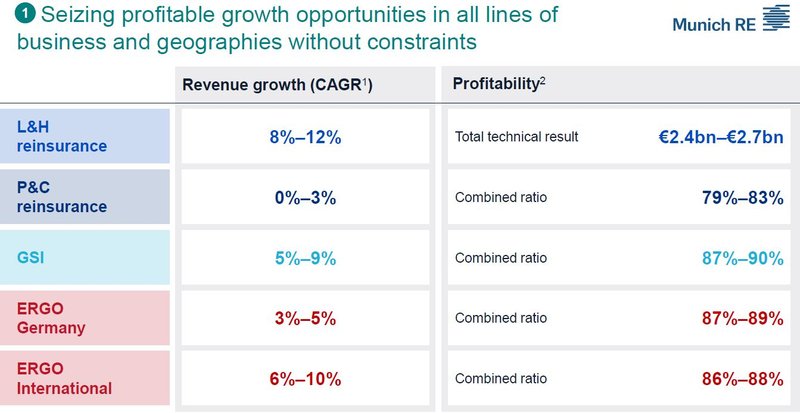
The combined ratio, as the second key performance indicator, is also not trivial to read. Aggregated across all segments, it says relatively little because segments heavily impacted by natural catastrophes structurally carry different ratios than Life & Health or Specialty. A meaningful picture only emerges when the combined ratio is considered segment by segment and intersected with the capital intensity of the respective business.
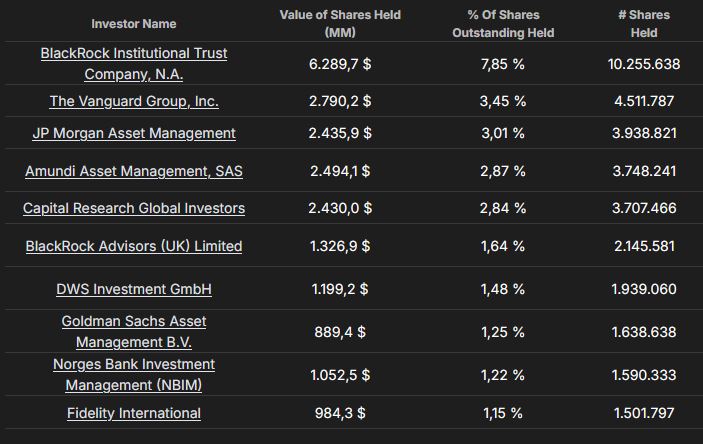
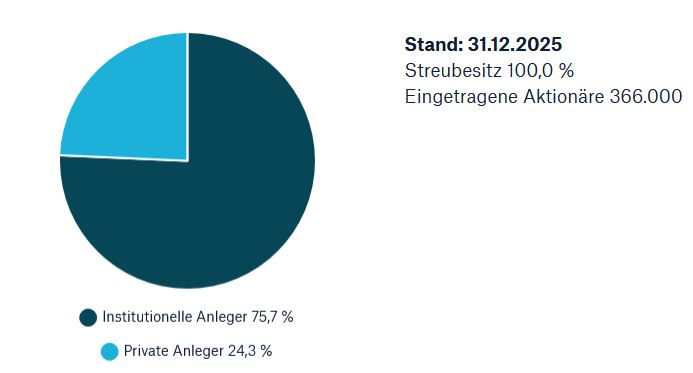
Looking at the ownership structure The Munich Re's share is initially high Institutional investors without dominant individual shareholders or insider majorities. This amounts to over 70 percent of the outstanding shares and is comprised of the „usual suspects“ among asset managers such as BlackRock, Vanguard, or the Norwegian sovereign wealth fund, which is not unusual for large caps like Munich Re.
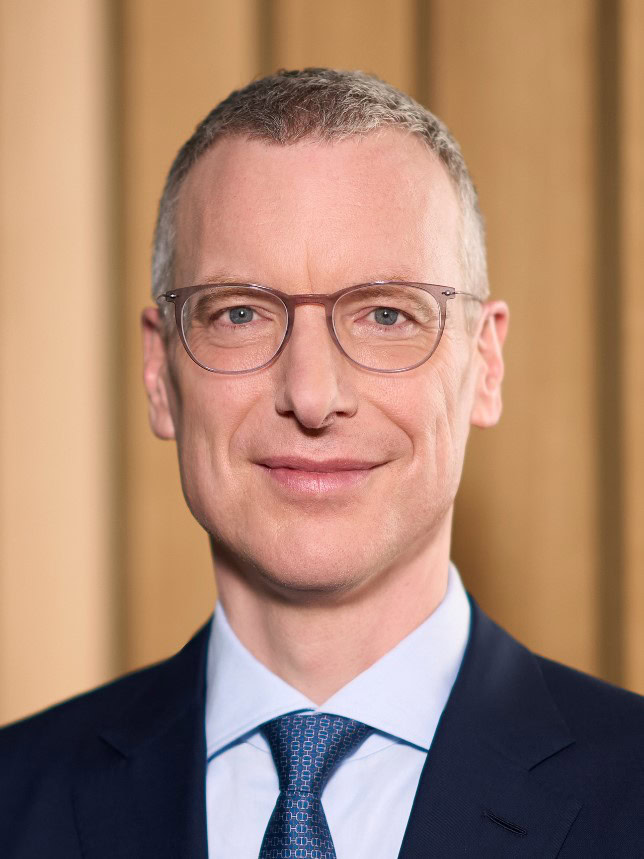
The previous CFO Christoph Jurecka He took over the leadership of the group at the beginning of 2026, succeeding Joachim Wenning as CEO. In short: an internal successor with in-depth knowledge of accounting mechanics, capital management, and the strategic agenda. Munich Re has demonstrated over decades that it manages leadership changes in an orderly fashion and does not jeopardize its continuity with external „visionaries." Strategic breaks are unlikely under Jurecka; however, a consistent continuation of the path already taken, including the shifts in the business mix formulated in „Ambition 2030," is to be expected.
Industry profile and competitive situation
The characteristics of Munich Re's business model, with its different segments in the reinsurance and primary insurance business, make a simple comparison with listed competitors only possible under certain limitations.
The global reinsurance market is a capital-intensive, highly concentrated oligopoly. The top 10 companies in the industry account for a significant portion of the world's gross written premiums, with the remainder distributed among numerous smaller and specialized providers as well as the Lloyd's syndicates in London. This concentration is no accident, but rather a reflection of the extreme capital requirements: those who want to underwrite large global risks need a balance sheet that only a few companies worldwide can provide.
Within this oligopoly, however, the market is less homogeneous than the concentration figures suggest. The supposed peers differ substantially in at least five dimensions: in their business mix (pure-play reinsurers vs. integrated groups with primary insurance), in their geographic focus, in their use of retrocessions, in the ratio between traditional insurance business and capital market integration, and in the degree of specialization in specific risk classes (Life & Health, NatCat, Specialty). Munich Re, through its ERGO subsidiary, is an integrated insurance group with a substantial share of primary insurance business. Comparisons with pure reinsurers like Hannover Re or Swiss Re are therefore lacking in at least one aspect, as the group figures are structurally composed differently. Furthermore, Munich Re is more involved in Life & Health and Specialty Lines than some competitors. This increases diversification but also changes the basis for comparison.
As the table below shows, for the sake of operational comparability, I have chosen the European competitors Hannover Re and Swiss Re decided. Swiss Re is the closest peer because it is the only competitor that offers a similarly broad portfolio of reinsurance, life & health, specialty, and a strong balance sheet. Hannover Re provides an important counterpoint as a leaner competitor with a stronger focus on retrocession and a lower cost ratio.
Finally, an aspect that is often discussed in comparison to Hannover Re: Munich Re is a pronounced net writer, meaning it keeps a large portion of the risks it assumes on its own books and cedes relatively little business as retrocession. This is no coincidence, but an expression of its capital strength. Munich Re has an adequate buffer to hold risks on its balance sheet rather than having to pass them on. Hannover Re operates a different model: more retrocession, leaner staffing, less depth in research and consulting. In return, it shows a significantly lower cost ratio. Both are internally consistent business models that lead to different risk-reward profiles. Munich Re is the „actuary with deep pockets." For the investor, this is a question of portfolio construction and personal preference profile.
I am aware that the peer group I have selected is not a perfect comparison and in part compares apples to oranges. It primarily serves for easier, general classification of the key figures with a rather „illustrative character.“ Depending on the question, additionally a extended peer group to complement other international competitors. In any case, form your own opinion based on the fundamental data analyzed:
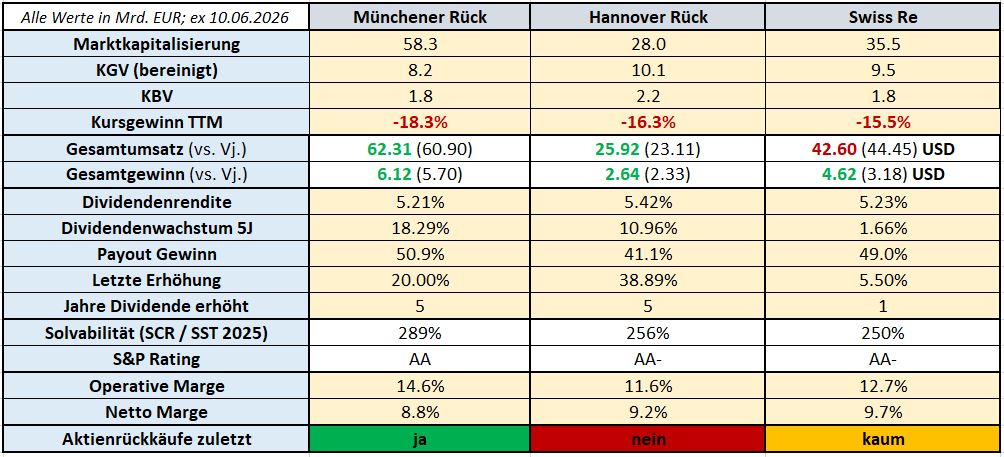
Notes on the values contained in the table:
- Green or red coloring of the numbers indicates growth or a decline compared to the previous year.
- All values are stated in Euros or USD at Swiss Re
The Financial Situation of Munich Re
Having gained an overview of the industry in general and taken a closer look at the company, management, and competition as factors relevant to decision-making, I will now turn my attention to Bilanz and the resulting Finanzkennzahlen Munich Re. The focus here is on the aspects Growth, profitability and Solvency.
To analyze the financial situation, in the first step I look at the development of revenue and profit. On average, the top line has increased by around 1 percent per annum., which can be explained by the company’s conservative business strategy, which prioritizes margins over volume. Munich Re is actively withdrawing from low-margin business rather than defending volume at any cost. While written premium volume is declining, net income is rising nonetheless.
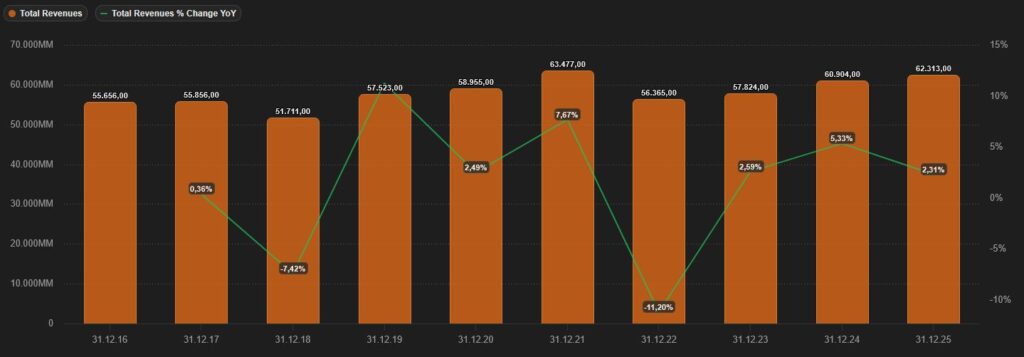
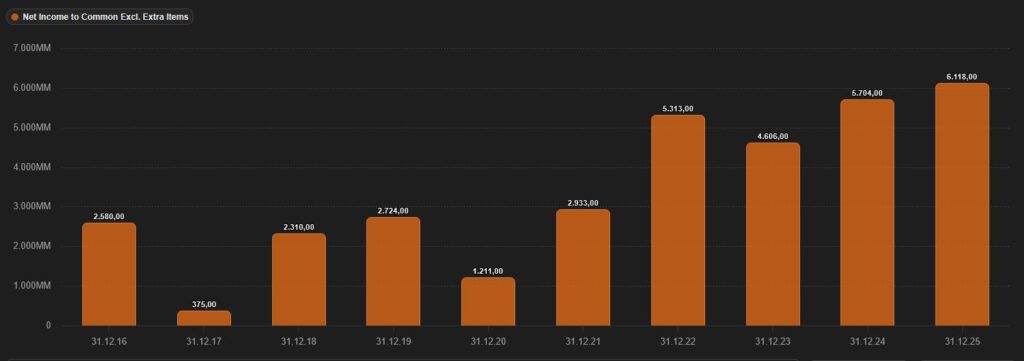
Looking at the 2025 fiscal year, adjusted profit rose by 7.3 percent. Munich Re generated a Net profit from 6.12 billion euros (2024: 5.70 billion euros).
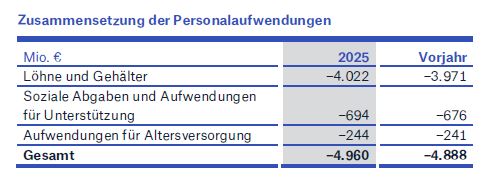
The Cost structure The majority of operating expenses are attributable to personnel costs (accounting for approximately 75 percent of total expenses). Wages and salaries rose by 1.3 percent in 2025 compared with the previous year.
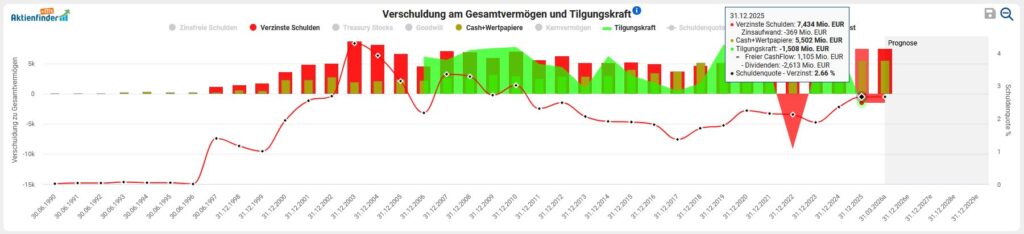
A critical look at the Debt situation shows that interest-bearing financial liabilities amount to €8.3 billion, offset by cash and marketable securities of €5.5 billion at the end of the 2025 fiscal year. This results in a very low net debt of €2.8 billion.
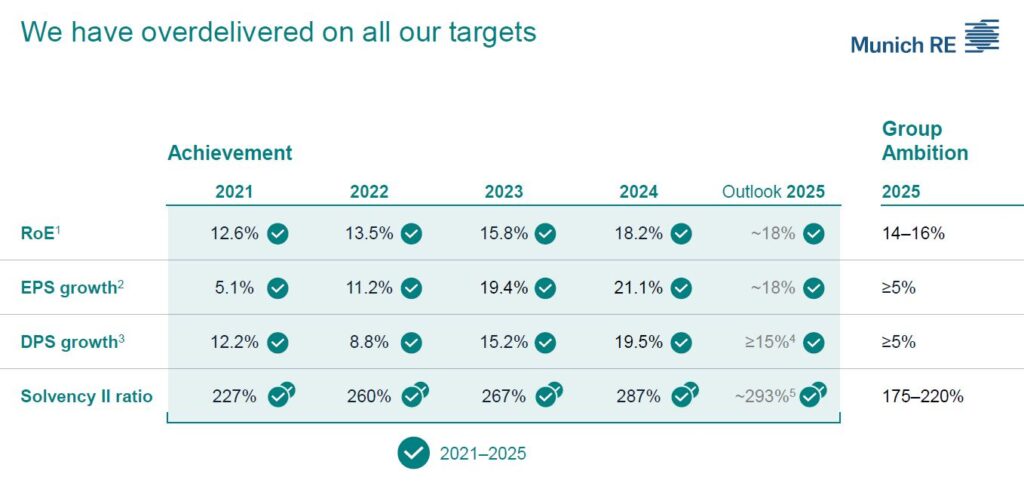
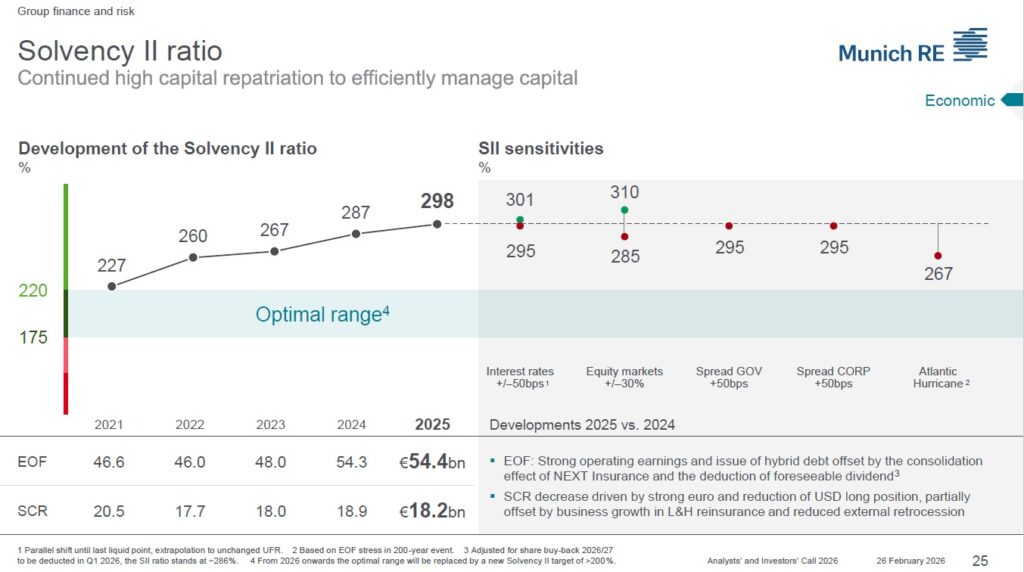
Munich Re’s solvency has remained at a consistently high level for years and is even on track to reach record levels in 2024/2025. Since the standard’s introduction in 2016, the so-called Solvency II ratio has consistently remained above the target range the company set for itself of 175–220 percent. In recent years, it has consistently remained well above 250 percent:
- 2025: 289 %
- 2024: 287 %
- 2023: 267 %
- 2022: 227 %
Munich Re thus exceeds its own target ceiling by more than 60 basis points—an exceptionally comfortable capital buffer. This reflects a conservative balance sheet policy, but it also indicates that the company is unable to find sufficient high-margin new business to allocate capital to. Neither the interest rate turnaround in 2022, nor the NatCat years 2023–2025, nor the disruptions surrounding wildfires and hurricanes in the U.S. have significantly impacted the ratio. This can be cited as practical evidence that the internal capital models and risk management are functioning effectively.
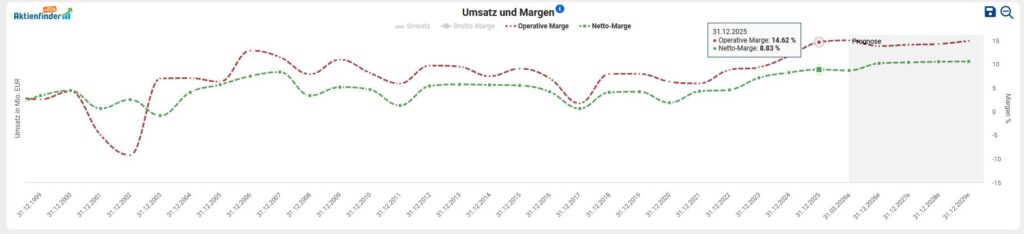
Finally, we look at the Profitability Munich Re based on the development of operating and net margins. Since the 2022 fiscal year, we have observed a dynamic upward trend in the reinsurer’s margin profile. Margins have doubled over the past four fiscal years.
Opportunities & risks
Munich Re has several stable growth drivers: Organic growth is underpinned by consistent growth rates across all relevant business segments, with strategic ambitions being implemented consistently and, in some cases, ahead of schedule. This is underpinned by broad business diversification, which extends both geographically and along the value chain in the primary and reinsurance businesses and has been structurally strengthened by the NEXT Insurance acquisition, the ERGO turnaround, and the growing consulting division. The foundation of this positioning is a solid balance sheet with a robust capital base and a comfortable buffer, as well as an upgraded credit rating that is firmly in the AA range with a stable outlook. Added to this is the proven management execution: The leadership team has a decades-long track record in the reinsurance business and implements strategic goals in a disciplined manner and demonstrably ahead of schedule. Particularly compelling is the capital allocation, which is consistently geared toward shareholder returns rather than merely hoarding balance sheet strength—the significantly expanded share buyback programs and a progressive dividend policy, which has been increased multiple times and substantially, underscore this capital discipline.
On the risk side, the picture remains challenging. Demographic change is manifesting as longevity risks in the UK life/health reinsurance business and at ERGO Germany, as well as mortality and disability risks primarily in life/health reinsurance in North America and Asia-Pacific. Pandemic-related excess mortality effects, however, have largely been accounted for on balance sheets. Climate-specific risks are structurally intensifying, with peak scenarios of €8.2 billion for „Atlantic Hurricane" and €6.9 billion for „North America Earthquake" (retention before tax in each case). Furthermore, cyber risks remain one of the most difficult dangers to assess, as unknown or poorly calculable attack vectors create a dynamic and intensifying threat landscape. This is exacerbated by the general danger of large-scale loss events, in which rising natural catastrophe risks combine with increasingly complex man-made risks. Additionally, the reinsurance price cycle is entering a softer phase, which could lead to pressure on margins in new business. Finally, interest rate risk is a double-edged sword: on the one hand, there are negative valuation effects on the book value of interest-sensitive investments, particularly bonds, as well as on the formation of technical provisions; on the other hand, the higher interest rate level has proven to be a substantial opportunity, as reinvestment yields have risen significantly above portfolio yields.
Overall, the impression is dominated by realized opportunities with largely managed risks. Proven capital discipline, strengthened diversification, an upgraded rating, and strategically achieved ambitions ahead of schedule are contrasted with a risk landscape that remains challenging. The cyber front, structurally intensifying climate risks, and a softening price cycle continue to require vigilance.
Current valuation of Munich Re stock
Although I like to use the so-called Enterprise Value (EV), this approach makes no sense for insurance companies due to the high liabilities they typically owe to their existing customers under this business model. Any key figures related to the Free Cashflow. The cash flow generated by insurance companies is not as easy to determine as that of manufacturing or service companies.
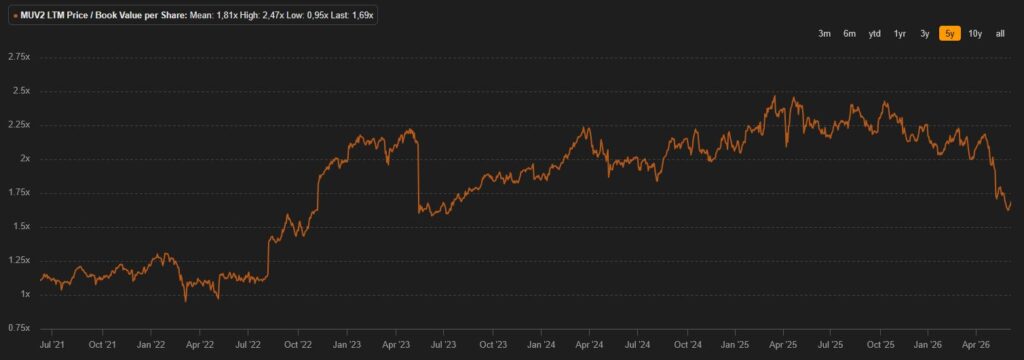
In conjunction with the adjusted P/E ratio, I would like to refer to the Price/book multiple (Price-to-Book Value). Generally, a price-to-book ratio of less than 1 means that the company is worth less on the stock market than its book value. In contrast, a P/B ratio of more than 1 indicates that the market values the company above its book value. As with all generic Rules of thumb However, a diligent investor must take the company-specific context into account in the analysis. Undoubtedly, the P/B ratio does not serve as the sole determining factor for a purchase decision, because the ratio does not accurately reflect the true economic value of many companies. Insurance companies and banks can trade well below their book value for long periods, even though the companies generate solid profits and are well capitalized.
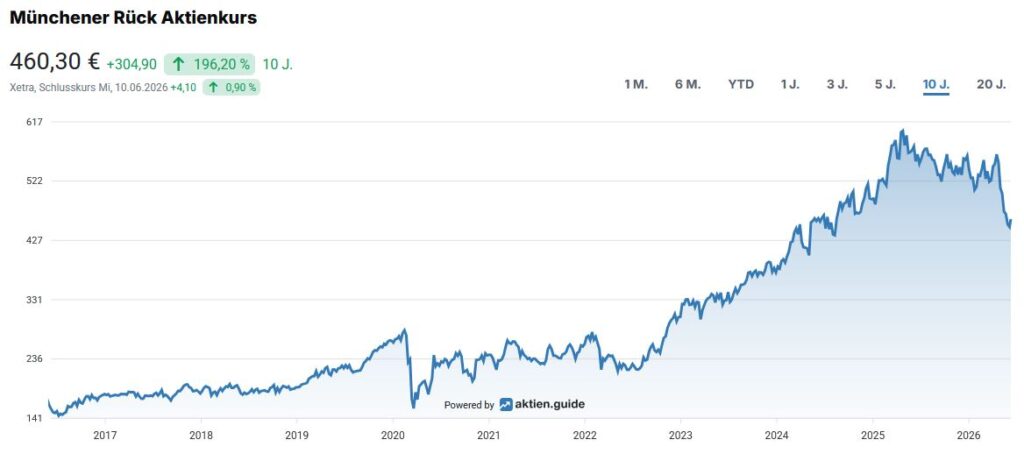
In the Munich Re use case, we need to Rating of 1.7 looking back as far as 2023. In 2020, the company was trading at an even lower price than it is now.
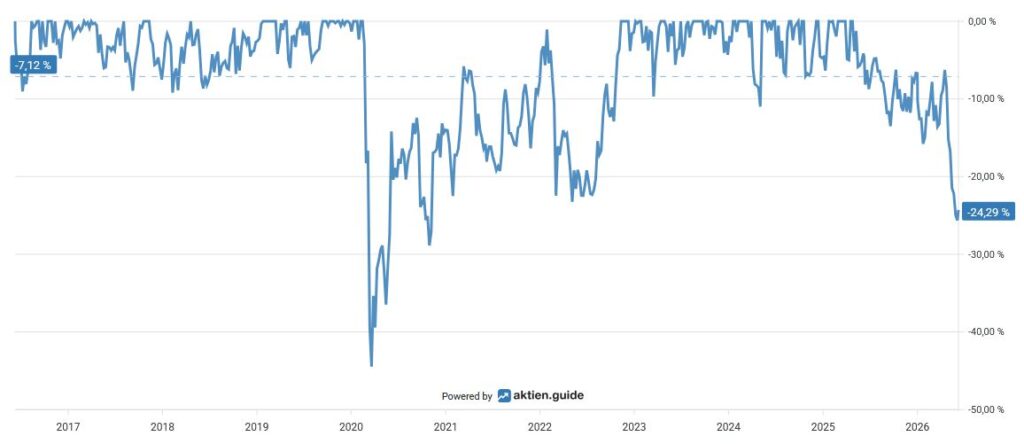
The Maximum decrease in the last ten years amounted to approx. 45 percent In the spring of 2020, at the start of the COVID-19 pandemic:
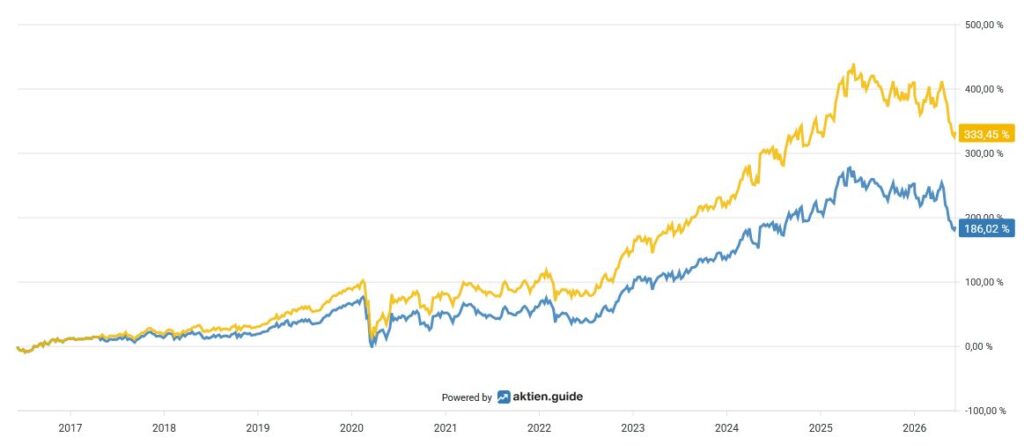
Over a ten-year period, an investment in Munich Re, measured by Total Return including accrued dividends, a Overall performance in euros from around 334 percent for the investor:
Capital allocation of Munich Re
Bei der Betrachtung der Dividendenhistorie It is noticeable that Munich Re is among the leading dividend-paying companies in the German stock index DAX. The basic principle has been stable for years: dividend payouts are to continuously increase, and in years with losses or large claims, they are to be kept at least stable. With the strategy plan „Ambition 2030" the previous policy was formulated much more ambitiously. new goal It foresees a total payout of over 80 percent per year with the previous year's dividend per share as the lower limit. Dividend growth per share is to remain the top priority in line with earnings growth per share, while share buybacks will continue to be used as a flexible instrument. The total payout ratio is comprised of announced dividend and share buybacks, divided by the consolidated IFRS profit.
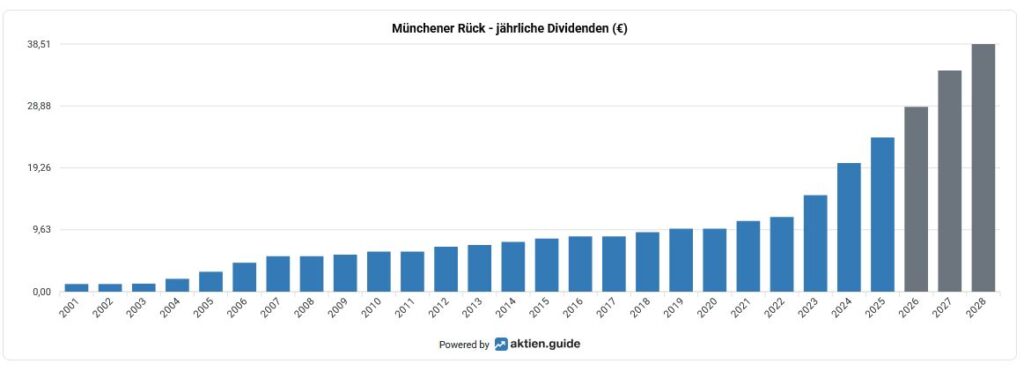
At a current price of 460.70 euros, a Dividend yield from 5.2 percent. The Five-year dividend growth rate amounts to 18.3 percent p.a. or 10 Prozent p.a. in the Ten-year period. The company last increased its dividend in February by 20 percent. To round it off, here's an overview of the most recent dividend increases over the last five years:
- 2025: +33,3 %
- 2024: +29,3 %
- 2023: +5,5 %
- 2022: +12,2 %
- 2021constant
The Dividend paid once a year beträgt aktuell 24 Euros per share and will be paid out in early May.
If we take the average value of the Profit of the last three years as the basis for determining the Payout ratio we end up with a comfortable result of 35.6 percent for Munich Re's payout ratio.
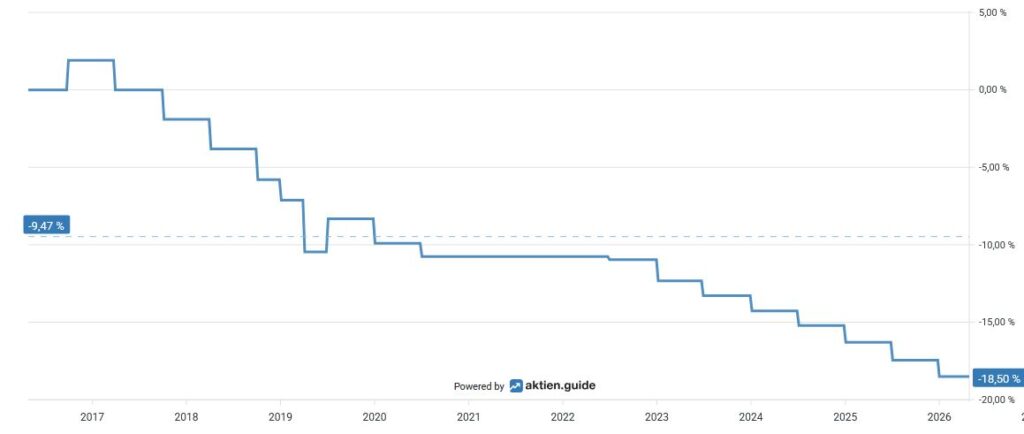
The Number of shares outstanding reduced through its own repurchase programs for a total of 18.5 percent in the past ten years.
Conclusion: Considerations for my decision to invest in Munich Re
The overall reinsurance market is in a downturn phase after its peak in 2024. The 2025 renewal rounds and indications for 2026 clearly point towards declining margins in property and specialty insurance. High solvency ratios in the industry, the rise of alternative risk carriers like cat bonds, and the regained negotiating power of primary insurers are structurally pressuring reinsurers' pricing power.
Munich Re is positioning itself remarkably well in this environment. Despite industry-wide difficulties, the group is delivering increasing net profits and has achieved its strategic goals ahead of schedule. The top line is being reduced with foresight to protect the bottom line – discipline rather than growth at all costs. A critical comparison with other reinsurers is worthwhile here: if competitors show similar results despite a soft market phase, the question arises whether they have increased their risk profile due to short-term attractive but structurally less stable earnings. Munich Re's current business development shows a company that is reorganizing itself from a position of strength. The „Ambition 2030" strategy plan aims to shift the mix towards more stable, less cyclical sources of income. The CEO change underscores continuity rather than disruption. Underwriting remains disciplined, while the investment portfolio plays its role as a solid anchor of stability.
For an investor focused on entrepreneurial quality, this is the interesting mix: A global market leader that plays its opportunities cleanly and has kept its risks well under control so far. All this in a market environment that is becoming more demanding. It is precisely this constellation that makes Munich Re, in my opinion, a promising investment within the scope of critical portfolio considerations.