
The most important facts in brief
- Wienerberger is the world's largest brick manufacturer, the market leader in roof tiles in Europe, and one of the leading suppliers of plastic pipes.
- External growth through acquisitions is a core pillar of the strategy to become the global market leader and has shaped the company since the late 1980s.
- CEO Heimo Scheuch took the helm in the midst of the financial crisis and is considered the architect of the transformation from a pure brick manufacturer to a system supplier. His realignment towards profitability and efficiency is bearing fruit – Wienerberger has been sustainably profitable since 2015.
- The company pursues a disciplined, free cash flow-oriented capital allocation with a clear hierarchy: organic growth and value-creating acquisitions, a stable dividend, and opportunistic share buybacks.
- If you want to read more from Clemens Faustenhammer, then click here DGI model portfolio
Who is Wienerberger?
The southern part of Vienna and its adjacent commuter belt are not only known for astronomically high land prices and Austria's largest shopping mall, but also home to Wienerberger AG, the world's largest brick producer. For over 200 eventful years, the company, listed on Austria's leading ATX index, has been supplying its international clientele with various building materials.
The history of Wienerberger began in 1819 when the Lower Austrian civil engineer Alois Miesbach acquired the state-owned brickworks at Wienerberg in the south of Vienna – the region's rich clay-rich loam deposits formed the basis of raw materials. After Miesbach's death in 1857, his nephew Heinrich von Drasche-Wartinberg took over the company, increasing its workforce to nearly 10,000 employees. As early as 1860, the first ring kiln was installed, whose circular design allowed for energy-saving, almost continuous production; over the years, Wienerberger developed into the largest brick factory in Europe.
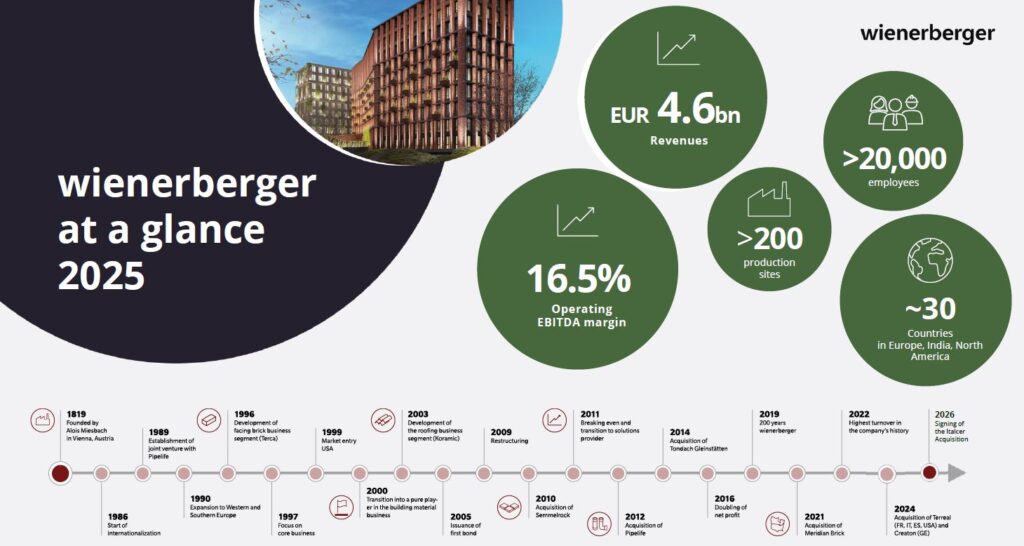
The company has been listed on the Vienna Stock Exchange since 1869. As PORR AG, which is also active in the construction business, was listed on the stock exchange a week earlier, Wienerberger remains the second oldest publicly traded company in Austria to this day. After its IPO, the focus was on Austria for more than 100 years. During the construction boom of the so-called Gründerzeit (founding period) and accompanied by social conflicts due to the often catastrophic working conditions in the brick factories, the company flourished, and new plants were established in what is now Hungary and Croatia. With the disintegration of the Austro-Hungarian Monarchy as a result of World War I, the original sales area was lost. Accordingly, brick sales in 1924 were only a third of the pre-war level. Further turning points were World War II and a brief period of state administration after 1945. Then came the reconstruction, in which extensive lending laid the foundation for a successful upturn. In the 1950s, Wienerberger installed state-of-the-art tunnel kilns, thereby pioneering new methods.
New product innovations and diversification, the sale of part of the large real estate holdings (partly to the municipality of Vienna for the development of new urban development areas), and a profound reorganization towards becoming a total solutions provider sharpened the company's profile. Since the end of the 1980s, Wienerberger has focused primarily on internationalization through inorganic growth (acquisitions) and evolved from a local industry leader in the brick sector to a leading global player. In 1986, Wienerberger began building international locations and initially acquired German manufacturers, including Oltmanns, the then leading Poroton brick producer in Europe. Following the opening of Eastern Europe, expansion into the former Eastern Bloc countries began immediately after 1990 (initially Hungary). At the same time, the portfolio broadened considerably: the founding of the Pipelife joint venture (plastic pipes) in 1989, the establishment of the facing brick business (Terca) in 1996, and entry into concrete paving stones (Semmelrock). With the acquisition of General Shale, a leading US brick producer, at the end of the 1990s, Wienerberger became the world market leader.
In the first two decades of the 21st century, the company navigated a path between acquisitions in Europe and the USA, and self-imposed restructuring programs, including the closure of unprofitable plants. In the midst of the financial crisis, the current CEO, Heimo Scheuch, took the helm. He initiated a reorientation of the business model with a clear growth strategy to increase profitability and efficiency. Since 2015, Wienerberger has consistently generated profits.
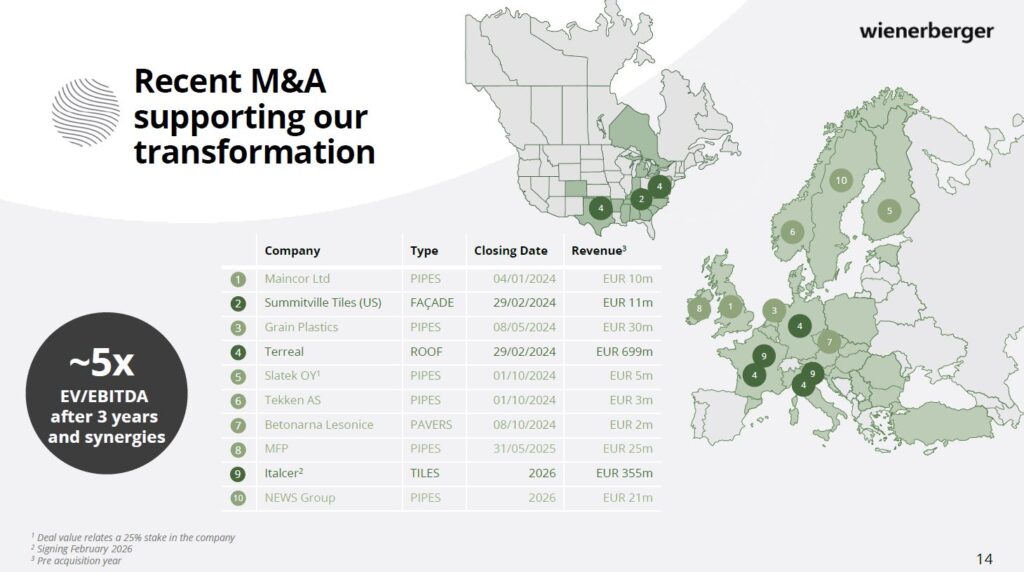
In March 2024, Wienerberger finally completed the largest acquisition in its history: the takeover of Terreal's business in France, Italy, Spain, and the USA, as well as Creaton in Germany. This added 28 production sites and around 3,000 employees; the company massively strengthened its pitched roof, solar, and renovation business. Wienerberger thereby became the leading European specialist in pitched roofs, with expected additional annual revenue of around 740 million euros.
Today, Wienerberger is an international Austrian building materials group headquartered in Vienna with over 200 plants in 28 countries. In fiscal year 2025, the company generated revenue of approximately 4.6 million Euros with more than 20,000 employees.
Business Model and Strategy of Wienerberger
At its core, Wienerberger is an internationally active provider of building materials and infrastructure solutions that has transformed from a pure brick manufacturer into a full-range provider of system solutions. The company is the world's largest brick producer and the market leader in roofing tiles in Europe. It is among the leading suppliers of plastic pipes in Europe.
The business model is based on two product worlds: on the one hand, solutions for the entire building envelope - meaning wall, facade, roof, and surface fastening solutions made of clay and concrete, ranging from load-bearing backing bricks to facing bricks, roof tiles, and paving stones. On the other hand, there is the infrastructure business with pipe systems made of plastic and ceramic for water and energy management, covering everything from fresh water and irrigation to wastewater, and in the future, hydrogen and biogas pipelines. Operationally, Wienerberger traditionally bundles this into the Building Solutions and Piping Solutions divisions, as well as its North American business, with the originally strongly product-centric structure increasingly managed by regional affiliation. The Building Solutions segment is the largest in terms of revenue and also the most profitable, contributing disproportionately to EBITDA. Geographically, the focus is on Europe and North America, complemented by a location in India.
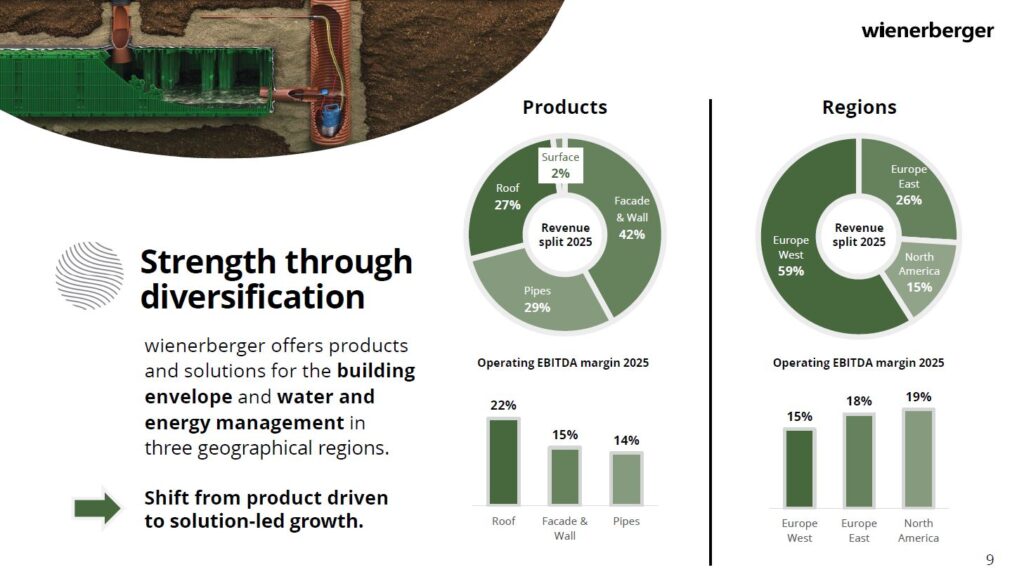
Wienerberger is strategically pursuing its core business objectives, as it states itself, of increasing value creation within the Group and developing into a complete provider of system solutions for energy and water management. In the end markets of Europe and North America, the company is focusing on expanding its three core segments: new construction, renovation, and infrastructure. The shift towards renovation and infrastructure is particularly strategically significant because it makes the business less cyclical and links it to structural drivers such as energy-efficient building renovation, adaptation to climate change, and the energy transition.
To achieve this, the company has defined three growth pillars. First, organic growth through innovation: Since 2010, Wienerberger has grown organically by an average of more than 6 percent per year. Management is driving the transformation into a system provider through a continuously improved product range and digital services. Second, operational excellence, meaning efficiency improvements in production, sales, supply chain, and administration. Third, external growth through acquisitions and portfolio optimization, supported by an acquisition pipeline and regular review of the portfolio for growth and profitability prospects. This M&A pillar significantly shapes the profile – visible, for example, in the full takeover of Pipelife, the acquisition of Tondach Gleinstätten, and most recently the 2024 Terreal/Creaton acquisition, which significantly expanded the pitched roof, solar, and renovation business.
Wienerberger Owners and Management
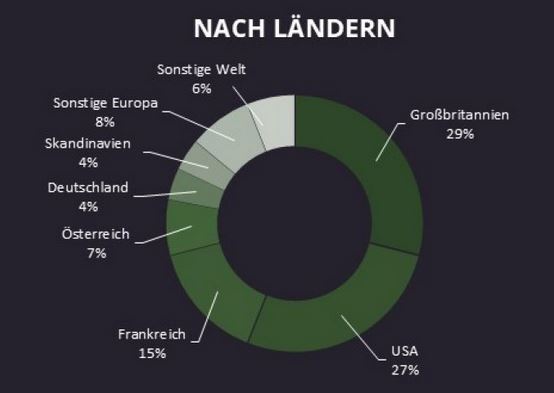
When looking at the ownership structure, the most striking feature is that Wienerberger has no anchor shareholder. The company is a pure public company whose shares are 100 percent free float. Around 109.5 million bearer shares are traded on the Prime Market according to the „one share – one vote“ principle, without preference shares or registered shares. According to the shareholder structure survey from November 2025, private investors hold around 14 percent of the shares, while the vast majority are held by predominantly foreign institutional investors. The largest disclosed individual holdings accordingly come from international asset managers such as BlackRock and Amundi.
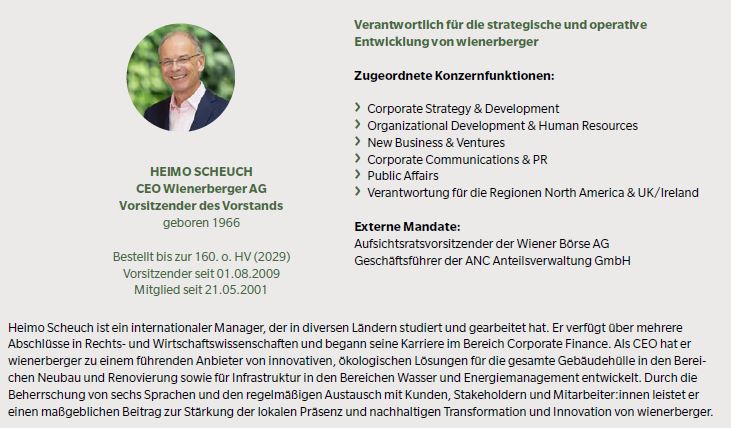
The management team is led by its long-serving CEO. Heimo Scheuch has been at the helm of the company since 2009 and is regarded as the architect of its transformation from a brick manufacturer to a systems provider. A native of Carinthia, he is responsible for the group’s strategic and operational development and has been appointed to serve until the 2029 annual shareholders’ meeting. The rest of the Executive Board has recently undergone a significant reshuffle: Dagmar Steinert was appointed Chief Financial Officer (CFO), succeeding Gerhard Hanke effective March 1, 2025. Hanke, in turn, moved to the position of Chief Operating Officer (COO) for the Central & East region after Solveig Menard-Galli stepped down from that role at her own request at the end of the year. Rounding out the four-member Executive Board is Harald Schwarzmayr as COO for the West region.
Industry profile and competitive situation
Wienerberger does not operate in a homogeneous market, but rather competes in several distinct product and regional markets, each with different rivals. In the wall and facade segment, the most direct publicly traded competitors are British brick manufacturers: In the UK brick market, Ibstock, Forterra, and Wienerberger essentially share the market volume. In the roofing tile and pitched-roof segments, however, the relevant competitors are predominantly unlisted (such as Etex or the BMI Group/Standard Industries), and with the acquisition of Terreal/Creaton, Wienerberger has already consolidated a significant portion of this competition within its own organization. In the pipe and water/energy management business, Wienerberger faces other competitors—such as the Swiss company Geberit, the European market leader in the sanitary sector; the UK plastic pipe specialist Genuit; and the privately held industry leader Aliaxis.
When it comes to large, diversified conglomerates, Holcim, Saint-Gobain, and CRH are often cited as the main competitors. However, their operations only partially overlap: Holcim, CRH, and Heidelberg Materials are cement-heavy and have a strong presence in infrastructure and non-residential construction, while Saint-Gobain is closer to the finished building (glass, insulation, interior finishing) and thus most closely aligns with Wienerberger’s building envelope strategy. Geographically, Wienerberger is Europe-centric with a strong position in Central and Eastern Europe, complemented by North America and India. Crucial to understanding the competitive landscape is the wave of consolidation in recent years, which has significantly thinned out the universe of publicly traded peers. One example among many is Saint-Gobain’s acquisition of CSR.
This structure gives rise to several distinctive features that must be noted. First, Wienerberger cannot be represented by a single, homogeneous peer group; the only meaningful approach is a basket of peers stratified by product segment and end use. Second, there is a significant scale issue: CRH, Holcim, and Heidelberg Materials are many times larger than Wienerberger and are not suitable for direct multiple comparisons. Third, end-market exposure must align, because, as explained, Wienerberger is increasingly shifting toward renovation and water/energy infrastructure and is therefore less cyclical than companies focused purely on new construction or cement.
Based on these factors, a reputable competitive analysis faces several methodological challenges, meaning that even the most direct operational competitors rarely provide a one-to-one basis for comparison; similarly to the article on the Andritz AG a thorough analysis based on publicly traded companies does not seem appropriate.
Opportunities & risks
The greatest opportunity is also the answer to the company’s greatest risk: the inherent cyclical nature of its business model. More than half of revenue and earnings now come from roofing solutions and pipe systems, shifting the focus away from traditional new-construction business toward markets that benefit from long-term trends—energy and water infrastructure as well as building renovation. Even amid a decline in new construction activity, Wienerberger maintained robust margins. The higher-margin renovation business is the explicit focus of management’s most recent M&A activities. With the acquisition of the Italcer Group – a leading manufacturer of high-quality ceramic solutions with locations in Italy and Spain – Wienerberger is expanding its renovation business and its product offerings for the entire building envelope, particularly in the market for facing brick solutions. This expansion is driven by the structural trend toward energy-efficient building retrofits in the wake of the EU Green Deal.
The infrastructure segment is the most stable pillar and, at the same time, a growth area. With the acquisition of the Northern Environmental and Water Solutions Group (NEWS Group) Wienerberger expanded its expertise in water management by acquiring a leading provider of sustainable wastewater solutions in Scandinavia. Management pointed to the growing demand for sustainable, decentralized wastewater solutions, driven by new regulatory requirements and the need to modernize aging infrastructure. Added to this are climate adaptation (rainwater management) and the energy transition, including pipelines compatible with hydrogen and biogas.
With its modernized, nearly CO₂-neutral brick plant in Uttendorf—which houses the world’s largest electric industrial kiln—Wienerberger enables the most sustainable brick production in Europe. This is strategically supported by the goal of generating three-quarters of revenue by the end of 2026 from products that contribute to net-zero buildings. Value-creating M&A is a core pillar of the strategy. The fragmented market offers opportunities that Wienerberger is capitalizing on by actively participating in industry consolidation to strengthen its competitive position.
With plants in Poland, Slovakia, Hungary, and Romania, as well as spare capacity for bricks, roof tiles, and plastic pipes, Wienerberger is particularly well-positioned to support a potential reconstruction effort in Ukraine. After a weak start to the year due to weather, demand picked up significantly in the spring, which is why Wienerberger is confirming its forecast and expects a sequential recovery from the second quarter.
On the risk side, the cyclical economic cycle, developing in waves, remains the dominant theme. Historically, Wienerberger has been highly dependent on new residential construction, and in 2025, this was weak across the board in almost all end markets. In North America, existing home sales fell to a 30-year low due to high mortgage rates and affordability constraints, with Canada also lagging. Exacerbating this is the fact that management itself expects no structural recovery in new residential construction in 2026 and anticipates stagnant infrastructure and renovation markets.
In addition, ceramic production is energy-intensive. In fiscal year 2025, energy costs totaled over 380 million euros, or 8.5 percent of revenue. More than 80 percent of energy costs are hedged. The transition to low-emission production (such as electric kilns) requires significant capital expenditure. CO₂ pricing, as well as stricter building codes and reporting requirements, are driving up operating costs. Also having a noticeable impact are sharply rising plastic prices, which are weighing on the water and energy management business, as well as higher transportation and labor costs—which Wienerberger is countering with price increases. However, in weak markets, such costs can only be passed on to a limited extent.
The geopolitical situation is an independent risk factor – after the one-time decline in profit due to the sale of the Russia business, this currently primarily affects the Middle East conflict: The company acknowledges limited visibility regarding the full-year effects, as this harbors inflation risks for resins, energy, and transport costs, as well as potential supply chain disruptions.
The aggressive acquisition strategy entails integration and debt risks. The Italcer acquisition will increase net debt by approximately €400 million to about €2 billion. Management plans to reduce the leverage ratio again by the end of 2026 through working capital reduction, reduced capital expenditures, and property sales. Additionally, integration costs could partially offset the short-term benefits of the acquisitions.
Wienerberger's Finances
After getting an overview of the industry in general and looking closer at the company, management, and competition, I'll turn my attention to Wienerberger's balance sheet and the resulting financial key figures. The focus here will be on the aspects Growth, profitability and the Financing.
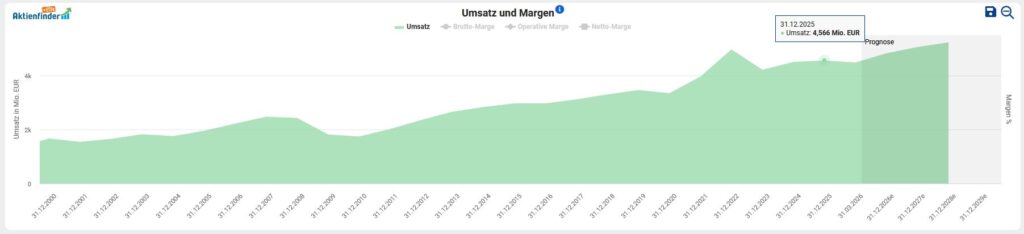
To analyze the financial situation, I first look at the development of sales, profit, and free cash flow. On average, the top line grew by 3 percent per annum over the last five years.
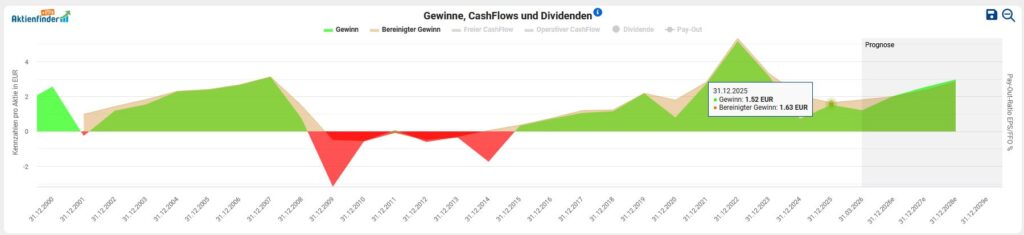
At Earnings per share For five years, we have recognized a very dynamic development overall, both upwards and downwards. However, if we consider the past fiscal year 2025, the Adjusted earnings per share around 20.5 percent (1.63 vs. 2.05 Euro). Wienerberger achieved in 2025 a Net profit from 166 million Euros.
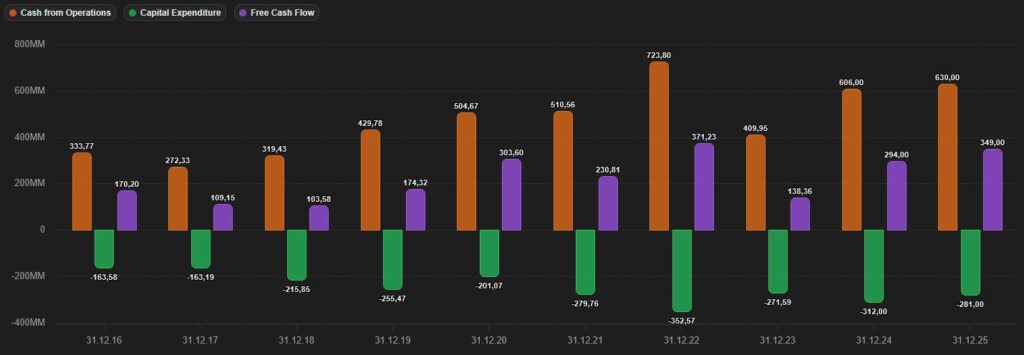
The amount available to the company Free Cashflow can be used for capital investments in organic growth, research and development, debt repayment, expansion through acquisitions, distributions of (increasing) dividends, or share buybacks. In absolute terms, the interplay of operating cash flow, free cash flow, and capital expenditures (CapEx) in the period 2016 to 2025 is as follows:
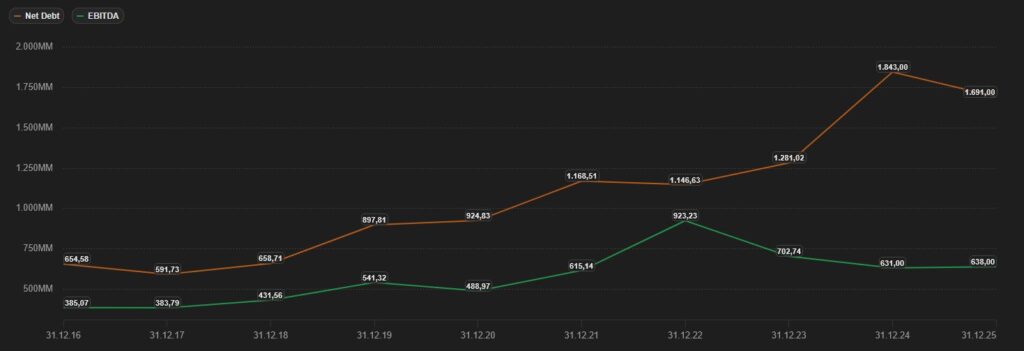
A look at the Debt situation shows that based on the last fiscal year, Wienerberger has interest-bearing financial liabilities of 1.92 billion euros, offset by liquid assets and securities totaling 0.23 billion euros. This results in a net debt of 1.69 billion euros. In relation to the EBITDA of 0.64 billion euros, this calculates to a ratio of 2.6. This industry-dependent value is below the threshold of 3, which is considered critical.
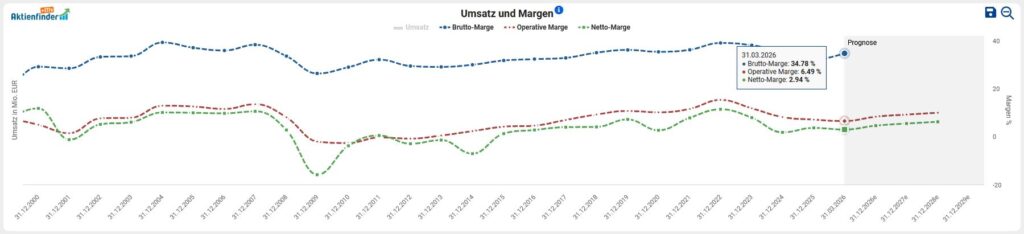
Finally, I am considering Profitability by Wienerberger, based on the development of gross, operating, and net margins. The cyclical business model is accompanied by a margin profile characterized by volatility, depending on economic sentiment. Based on the data from the past five years, Wienerberger was able to partially expand the net margin to over 10 percent before the figure fell to below 3 percent in recent years.
Current valuation of Wienerberger stock
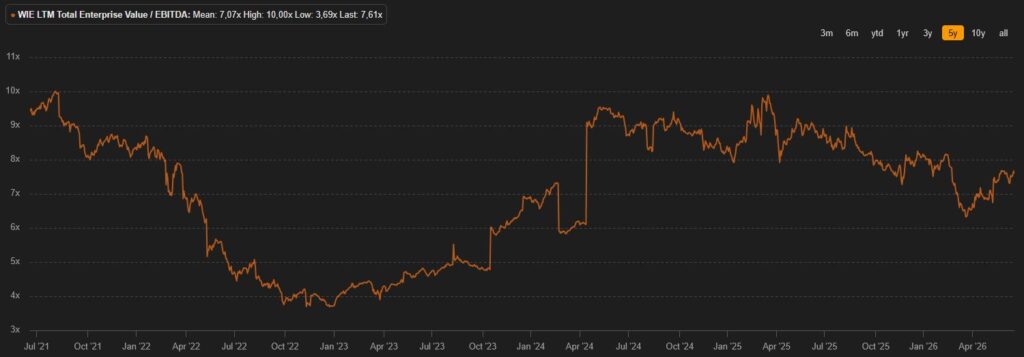
For the valuation of companies, I use the so-called Enterprise Value (EV) Enterprise Value. The EV in an acquisition denotes the amount (i.e., the market value) required to purchase business-critical assets, while excluding non-business-critical assets. I compare this metric to Earnings Before Interest, Taxes, Depreciation, and Amortization (EBITDA). The prevailing heuristic and opinion suggest that a value below 10 signals a „healthy“ valuation – as is always the case with generic Rules of thumb must the company-specific context be considered in the analysis by the careful investor. In the case of Wienerberger, we see that a EV/EBITDA of 7.6 does not represent a favorable buying opportunity in the context of the last five years. In 2023, Wienerberger stock could be acquired for a multiple below 4:
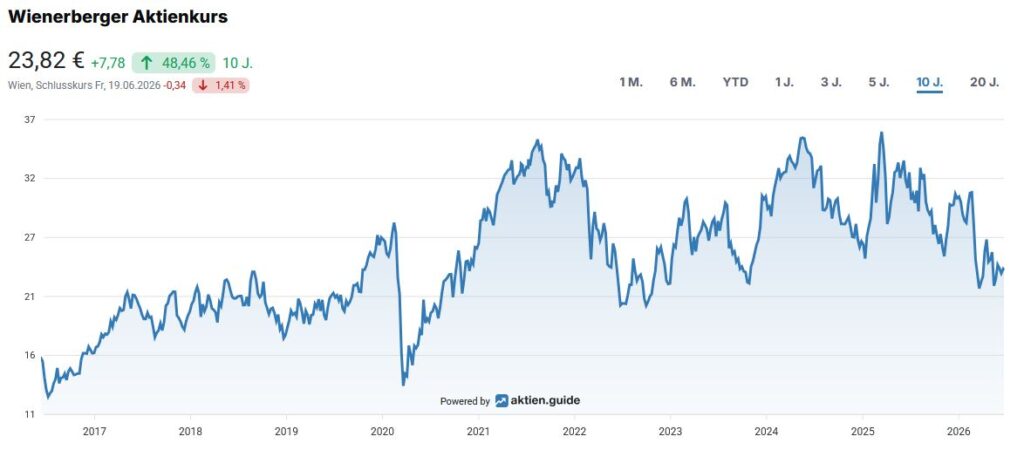
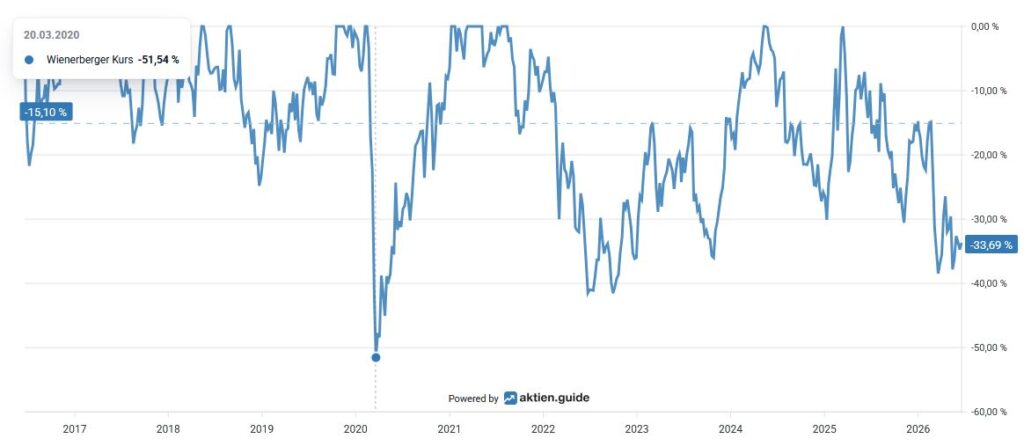
The Maximum decrease in the last ten years amounted to approx. 52 percent in the year 2020:
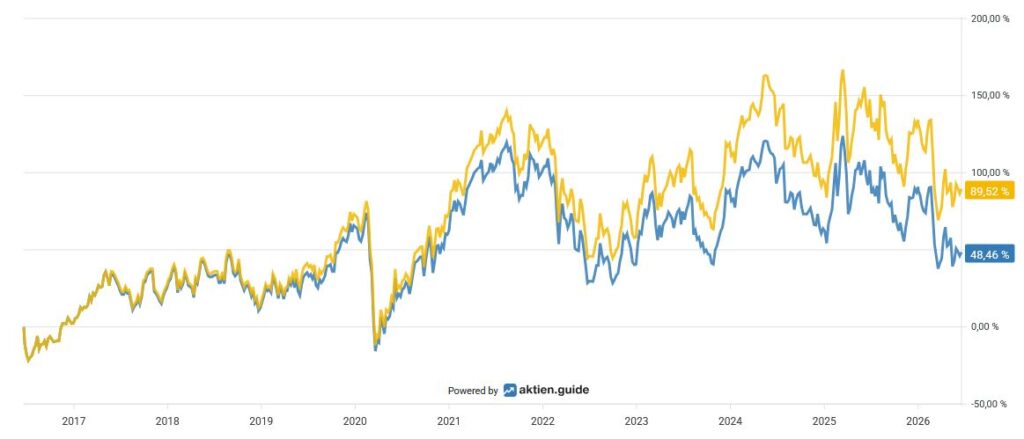
over the ten-year period, an investment in Wienerberger shares, measured by Total Return including accrued dividends, a Overall performance from around 90 percent for the investor:
Wienerberger's Capital Allocation
Wienerberger follows a disciplined capital allocation focused on free cash flow with a clear hierarchy. Capital is first directed into profitable organic growth (investments in innovation and an efficient production network) as well as value-creating acquisitions and active portfolio optimization. The company adheres to a leverage target of approximately 2.0x Net Debt/OPERATING EBITDA. Wienerberger returns the remaining scope to shareholders through a clearly defined dividend policy: The plan is to use 20 to 40 percent of free cash flow, combining dividends and share buybacks. Specifically, this means at least a stable dividend, supplemented by share buybacks as a permanent part of the strategy.
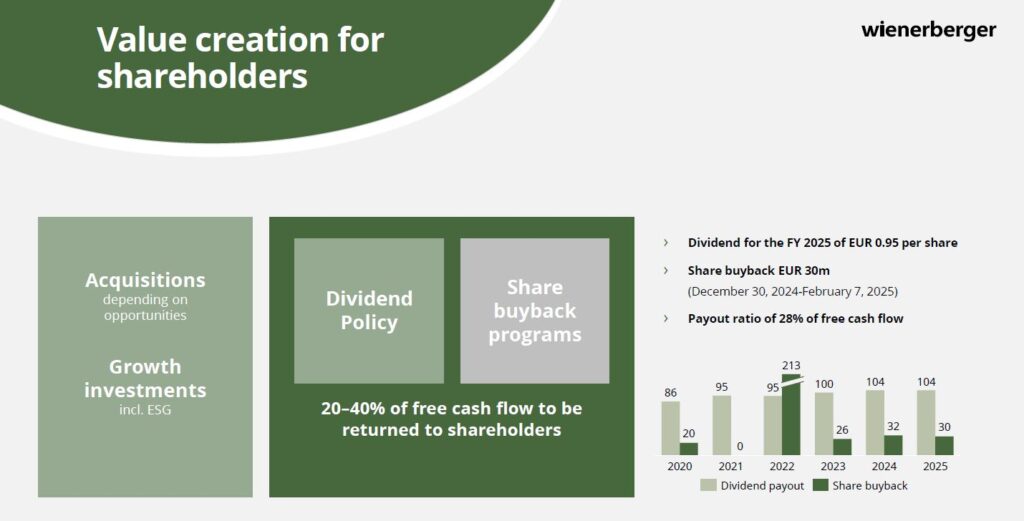
Despite the capital-intensive business model, Wienerberger pursues a shareholder-friendly dividend policy. When considering the Dividendenhistorie It is noteworthy that Wienerberger has not lowered its dividend since the 2008/09 financial crisis.
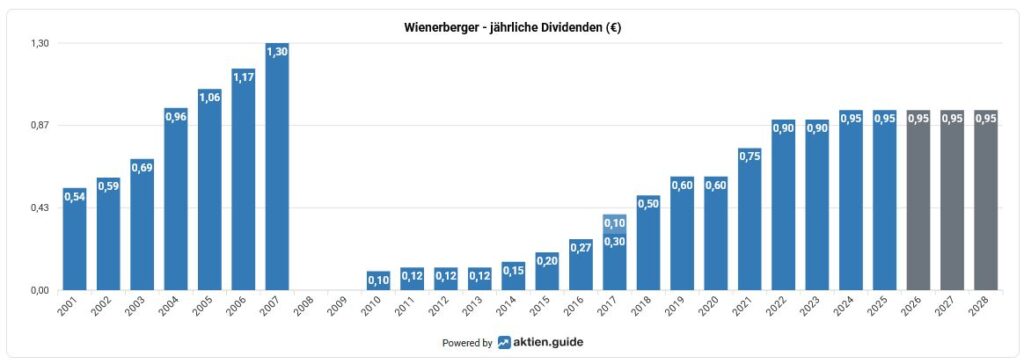
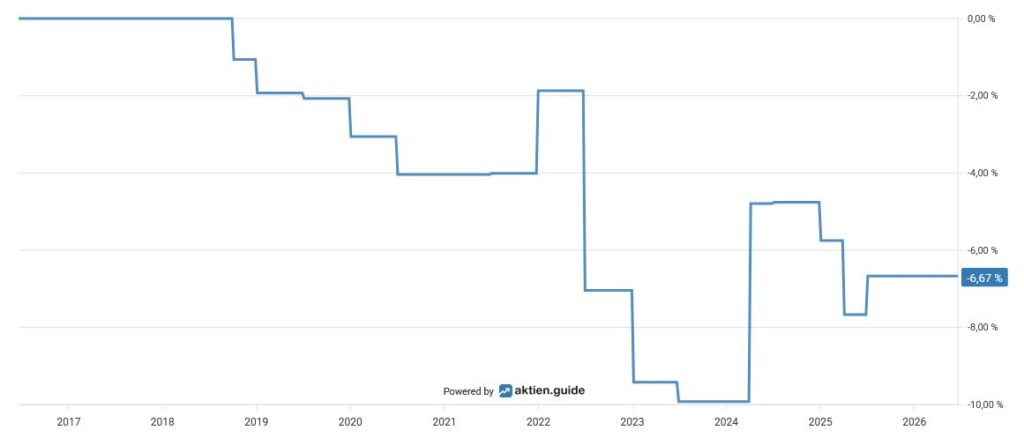
At the current price of 23.62 Euros, this results in a Dividend yield from 4 percent based on the regular dividend. Finally, an overview of dividend distributions in recent years:
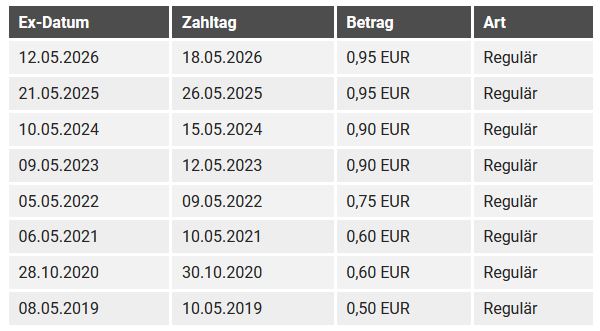
The annual dividend beträgt aktuell 0.95 Euro per share and was paid out in May. If we use the average free cash flow of the last three years as the basis for determining the payout ratio, we arrive at a moderate result of 33 percent for the Payout ratio.