
The most important facts in brief
- With over 2,400 stores, Tractor Supply pursues a profitable business model and serves a deliberately narrow niche in a fragmented domestic market.
- As the largest rural lifestyle retailer in the US, the company has no publicly traded direct competitor and boasts a wide moat.
- Under the „Life Out Here 2030” program, management is shifting its focus away from pure space expansion toward store remodels, delivery infrastructure, and entering the pet healthcare business.
- Tractor Supply places great emphasis on shareholder return. Capital allocation is clearly focused on the shareholder – proven by an impressive track record of dividend growth and generous share buybacks.
- Click here for the DGI-Musterdepot and here is an overview of this series: The dividend custody account
Company profile and business model: Who is Tractor Supply and what does the company do?
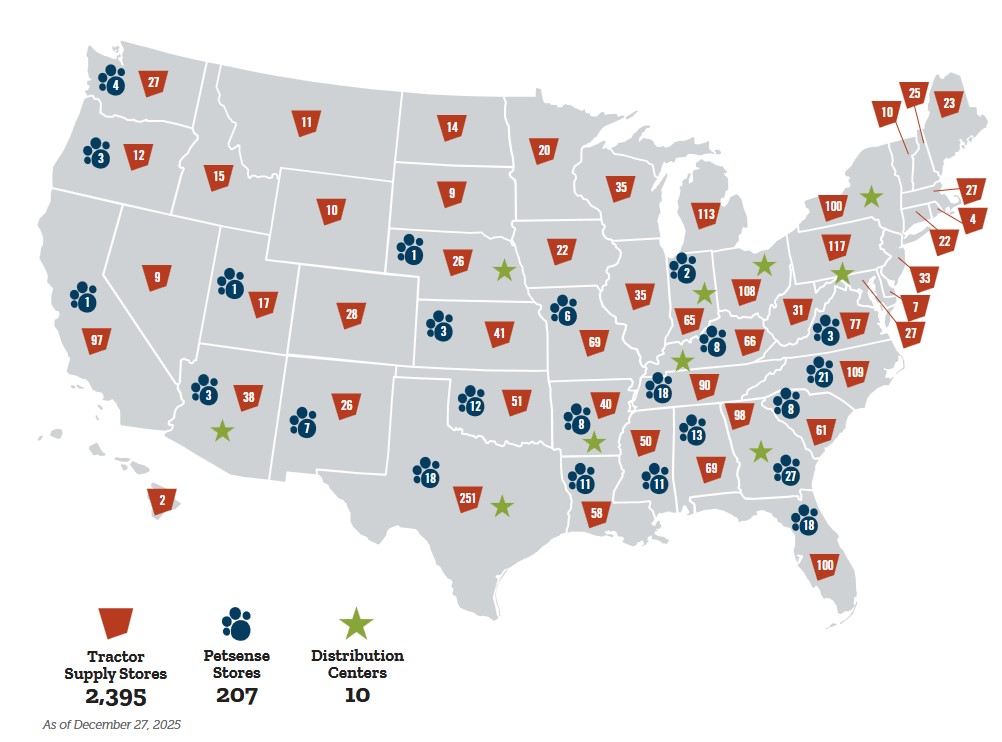
Tractor Supply Company, based in the U.S. state of Tennessee, describes itself as the largest rural lifestyle retailer in the United States – „the largest rural lifestyle retailer"At the end of the second quarter of 2026, the company operated over 2,400 stores under its main brand across 49 states, as well as around 200 locations of the pet chain Petsense by Tractor Supply in 23 states. Occasionally, the retailer is referred to as the „warehouse of the United States.“.
The The story begins in 1938 with an idea born out of necessity. Charles E. Schmidt, born in Chicago in 1912 and with no agricultural background whatsoever, had completed his economics degree at the University of Chicago at the age of twenty—in the midst of the Great Depression—and could not find a job that matched his qualifications. He initially worked at a stockbrokerage firm before founding a mail-order business for tractor replacement parts. The business idea was intended as an affordable alternative for farmers, who until then had been reliant on expensive dealers or manufacturer workshops. His first catalog was 24 pages long and featured around 2,000 items. In the first year, he generated approximately $50,000 in sales. To this day, one of the company’s own brands of workwear bears his name.
As early as the following year, Schmidt opened his first retail store in rural Minot, North Dakota, and the chain quickly became the core of the company. After World War II, many full-time farmers were drawn to better-paying industrial jobs. The company followed its customer base to the suburbs and was known for a time as TSC, standing for „Town, Suburb & Country." It went public for the first time in the late 1950s, and its first branches in Canada were established in 1967.
This was followed by most difficult phase in the company's history. In 1969, Schmidt sold his majority stake to the conglomerate National Industries; in 1978, the company changed hands again and was acquired by Fuqua Industries. Under a series of changing corporate leaderships, it lost its strategic focus, and by 1980, it had posted a loss of approximately $13 million. It was only a return to its original niche that brought about the turnaround: In 1980, Thomas Hennesy took the helm, and in 1982, five executives—including Joseph H. Scarlett Jr., who would later serve as CEO for many years—spun the company off from the corporate group through a debt-financed management buyout. At that time, 135 stores generated approximately $125 million in revenue. In the years that followed, the company reduced its debt, relocated its headquarters to Nashville, and reverted to its original name; a merger with ConAgra considered in 1990 did not materialize.
This was followed in 1994 by the Return to the Stock Market: Tractor Supply has been listed on the Nasdaq under the ticker symbol TSCO ever since. That milestone marked the beginning of an extraordinary period of growth. In 2002, revenue surpassed the billion mark for the first time, and in 2004, the company’s headquarters were moved to Brentwood, near Nashville. In 2011, the 1,000th store opened; in 2014, the company made it onto the Fortune 500 list; and in 2018—marking its 80th anniversary—the 1,700th location opened.
Over the past ten years, the Growth Increasingly Driven by Acquisitions and shifted to adjacent business areas. In 2016, Tractor Supply acquired the pet chain Petsense and the regional supplier Del's Feed & Farm Supply. The corona years brought a surge in demand because home, garden, and pet care gained importance and the company remained open continuously as a systemically relevant business. In February 2021, the acquisition of the Midwest chain Orscheln Farm and Home was announced for approximately USD 297 million. The closing dragged on until October 2022 because the US antitrust authority, the FTC, demanded the divestment of 85 of the 166 locations to competitors, which reduced the net purchase price for the remaining 81 stores to USD 238 million. This was followed by Allivet in late 2024 and VIP Petcare in May 2026. At the same time, the company is withdrawing from weak positions: around 75 unprofitable Petsense stores are being closed.
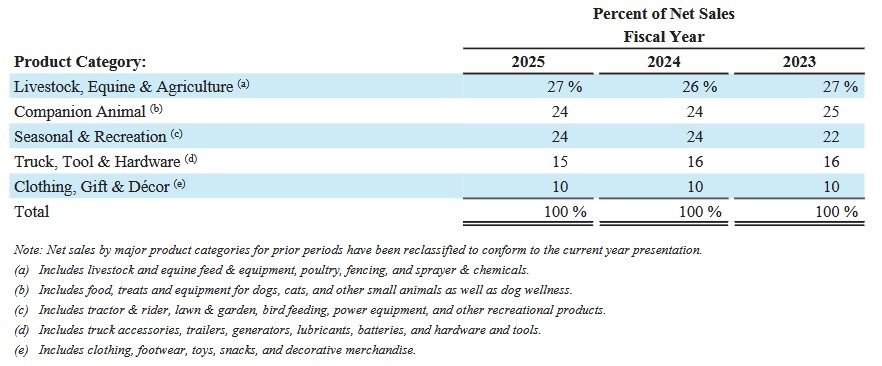
The business model is based on the deliberate focus on a narrowly defined target group. The addressees are not large-scale farmers, but hobby farmers, small animal and horse owners, homeowners with larger plots of land, homesteaders, and gardening enthusiasts – customers that the company groups together under the „Life Out Here" brand umbrella. The product range follows this logic across all categories: feed for livestock and pets, fencing, tools, trailers, lawn and garden equipment, propane gas, workwear, boots, and trough and stable equipment. Taken together, the animal-related categories account for a good half of total sales. Based on the figures for the 2025 fiscal year, revenue is broken down as follows Business Segments on:
- Live animals. Livestock and horses: 27 percent
- Pets: 24 percent
- Seasonal products, garden: 24 percent
- Tools and hardware for commercial vehicle accessories: 15 percent
- Work and casual clothing and gear: 10 percent
Economically, the model relies less on individual large purchases and more on the repurchase rate. At its core are so-called C.U.E. items—consumable, usable, edible—that is, consumer goods that must be repurchased regularly and drive foot traffic to the store. Discretionary big-ticket items such as lawn tractors or chicken coops are the higher-margin but cyclically sensitive category. This is complemented by a broad private-label portfolio that offers price-sensitive customers a more affordable alternative right on the store shelves: Producer’s Pride and DuMOR in the pet food category, 4health and Retriever in pet food, Ridgecut, Bit & Bridle, and C.E. Schmidt in apparel, and Countyline and Groundwork in hardware and gardening.
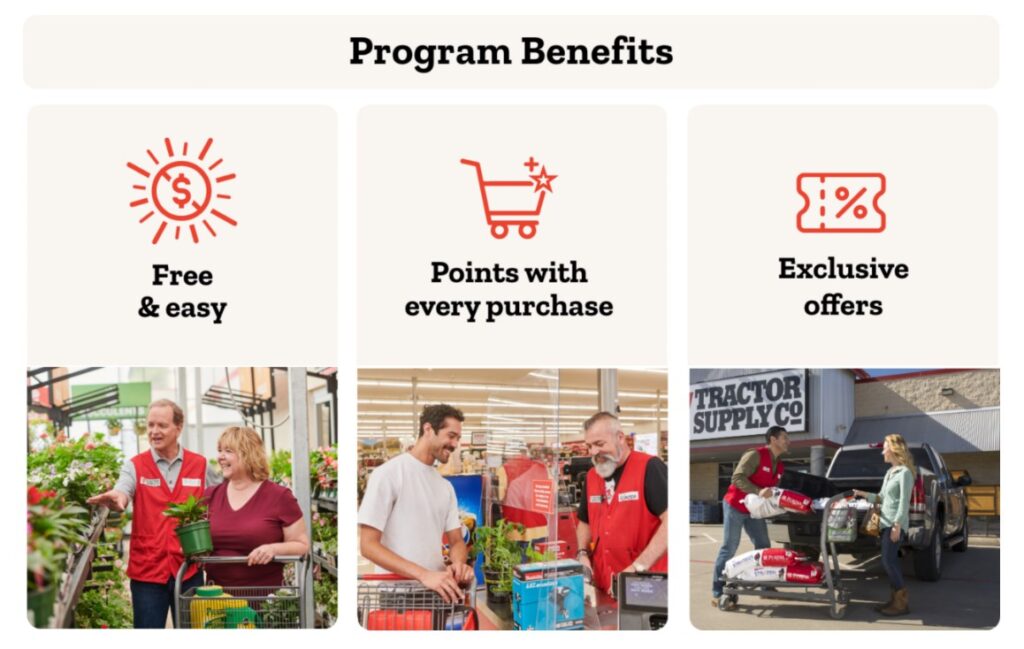
The actual Competitive advantage is geographical, however. Over 80 percent of the stores are located outside the 200 largest metropolitan areas, in small and very small towns that often only support a single provider of this format. In addition, there is a logistical barrier: feed sacks, fencing material, and propane gas are heavy, bulky, and have a low value density. These are goods whose shipping is hardly profitable for pure online retailers. Customers are tied to the company through the Neighbor's Club loyalty program, which has more than 40 million members and accounts for over 80 percent of sales.
The Growth strategy Historically, the company’s management strategy has been based on two pillars: opening about 100 new stores per year and increasing productivity at existing locations. The framework for this is an addressable market, which the company most recently estimated at approximately $225 billion—a figure that the acquisition of Allivet has increased by $15 billion. The most recent medium-term store target was 2,900 locations by the end of 2029.
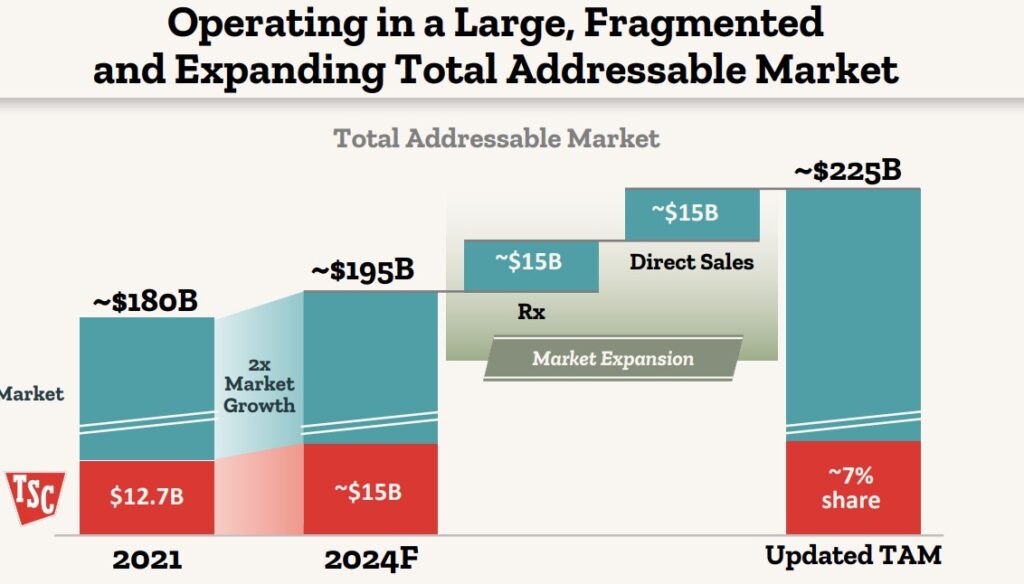
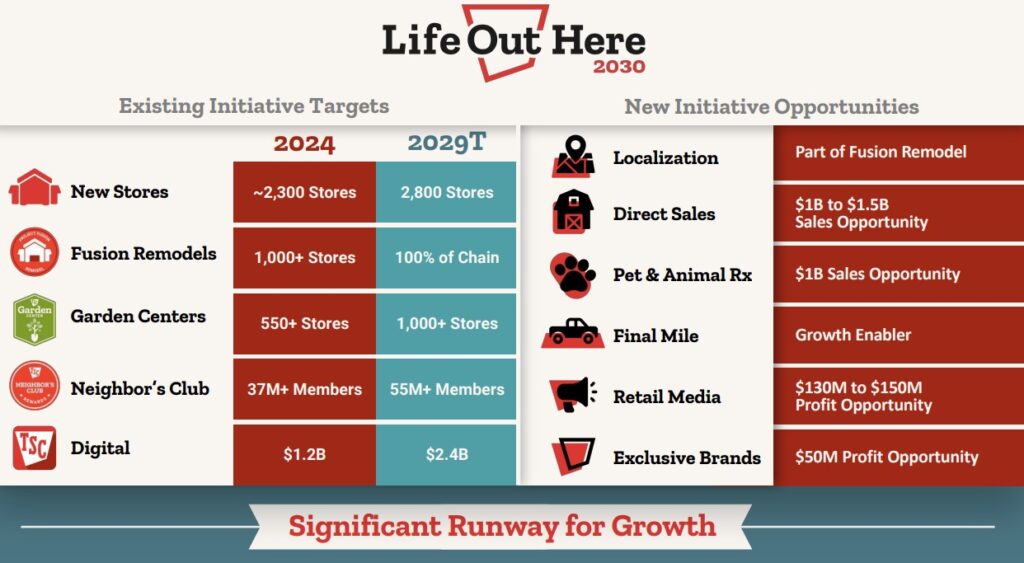
As part of the „Life Out Here 2030""CEO Hal Lawton is bringing together several initiatives. The restructuring program "„Project Fusion"" is modernizing its existing stores and, in particular, expanding its garden centers as drivers of foot traffic and sales. Under the banner of "localization," the company is tailoring its product assortments to regional needs. More than 200 stores have already been converted and, according to the company, are experiencing above-average growth. In direct sales, Tractor Supply targets larger customers in the higher-price segment with its own sales team. For the „last mile," the company is expanding a network of delivery hubs, which is expected to grow to around 375 locations by the end of 2026, covering more than half of all stores. In addition, the company is further expanding its private-label brands and its omnichannel platform, which integrates stores, the online store, and the app under the name ONETractor. At the same time, logistics operations are growing: The eleventh distribution center in Nampa, Idaho, is scheduled to begin operations in the fourth quarter of 2026.
The most notable strategic shift of the past two years has been the move into the services business centered on Animal Health. With Allivet, an online veterinary pharmacy licensed in all 50 states was acquired in late 2024, whose revenue potential the company estimates at around $1 billion at full scale; in 2025, the contribution was roughly $100 million. This was followed in late May 2026 by VIP Petcare, the largest US provider of mobile veterinary care with clinics in around 2,700 locations and more than one million animals treated per year, at prices significantly below the level of a traditional veterinary practice. Both target the same gap: the veterinary under-supply of rural regions coupled with sharply increased treatment costs.
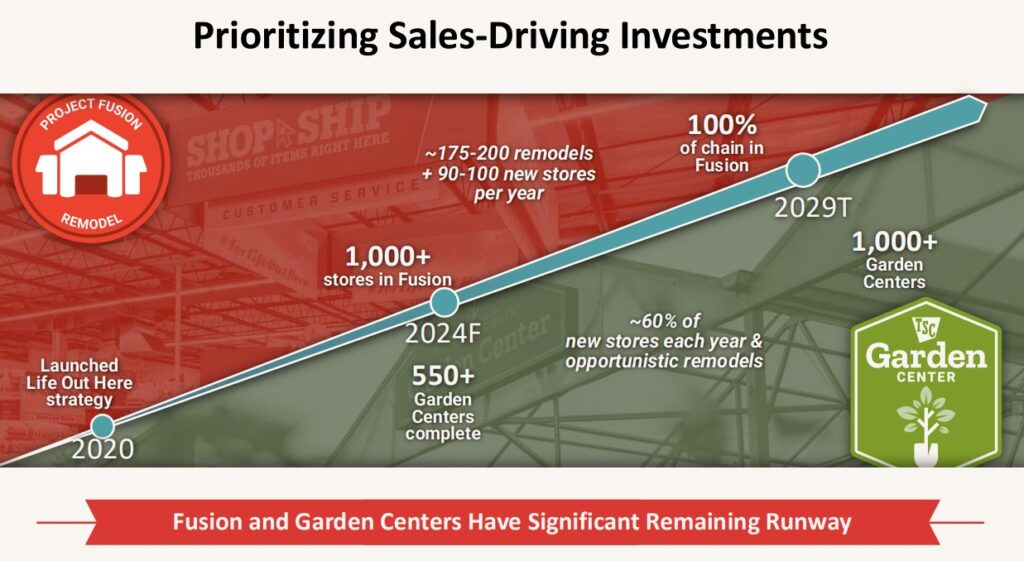
Crucial for the context is that this strategic framework is currently subject to change. With the second-quarter 2026 figures, management withdrew its long-term financial framework from the December 2024 investor day and announced that a new one would not be presented until the full-year figures. At the same time, the number of planned new openings for 2027 was reduced from around 100 to 85 to 90, and capital was redirected toward remodeling and delivery infrastructure.
At the head of the company since January 2020 Hal Lawton, previously president of Macy's and before that in leadership roles at eBay and Home Depot. He is thus the first CEO in the company's recent history who is not continuing the previous growth story, but rather has to re-establish it right now.
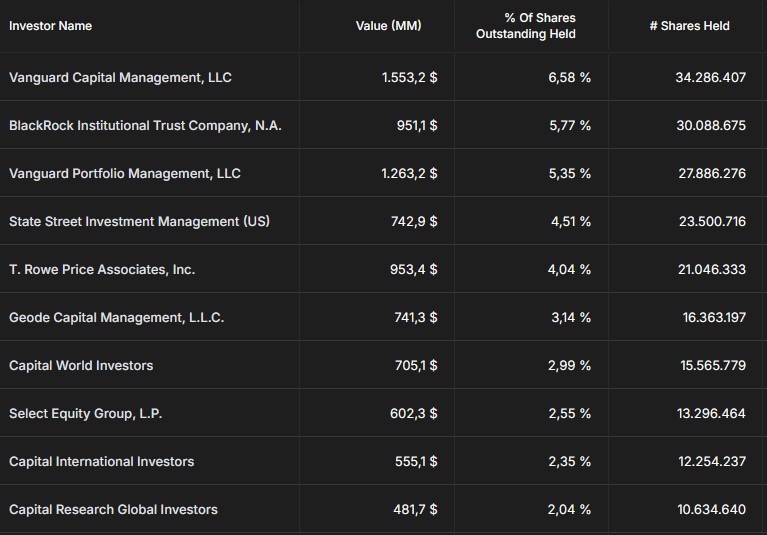
On the Owner's page institutional investors clearly dominate: over 90 percent of the shares are held by funds and other institutions. Among the largest shareholders are BlackRock, Vanguard, Capital Group, T. Rowe Price, and State Street.
Industry profile and competitive situation
Anyone who wants to compare Tractor Supply with its competitors encounters a methodological problem: there is no publicly traded direct competitor. The competitive environment is fragmented by categories; not a single company competes across the entire product range. In the farm-and-ranch segment, Tractor Supply faces regional chains—mostly family- or cooperatively owned—such as Rural King, Blain's Farm & Fleet, Fleet Farm, Bomgaars, Runnings, Wilco, or Atwoods, alongside agricultural cooperatives and independent feed dealers. All of them are privately held. Tractor Supply itself has recently acted as a consolidator in this field, for instance with the acquisition of Orscheln Farm & Home in 2022.
In the pet supply business, where the pressure currently lies, the company competes against Chewy, Petco, the privately held PetSmart, as well as Walmart and Amazon. In home improvement, lawn and garden, and tools, it is Home Depot and Lowe's, along with the privately held Northern Tool and Harbor Freight, and finally the Ace Hardware cooperative. And in basic goods, where price and shopping frequency are key, Walmart and Dollar General are effectively the alternatives in rural America.
Therefore, a performance comparison that defines the operating model rather than the product range as the criterion would make sense: branch-based, demand-oriented, space growth as a growth driver, low online penetration, rural or value-oriented positioning.
If you have to narrow down the selection to specific names, you are well-served with O'Reilly, Casey's, Dick's, Boot Barn, and Chewy; this covers economics, rural customer profile, format, lifestyle positioning, and risk exposure. For a well-founded assessment, however, it still seems more sensible to me to analyze Tractor Supply primarily as an independent investment case—with selective references to other companies for the qualitative classification of the strategy—rather than attempting to construct a formal peer group that would anyway do inadequate justice to the company's idiosyncratic profile.
The financial situation of Tractor Supply
After getting an overview of the industry in general and taking a closer look at the company, management, and competition, I am now examining the balance sheet of Tractor Supply and the financial ratios derived from it. The focus here is on the aspects Growth, profitability and Financing.
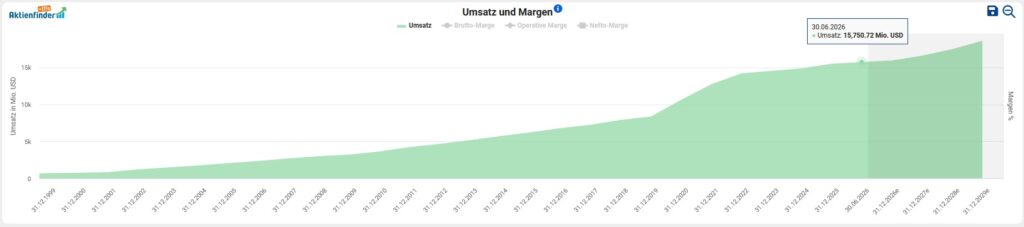
To analyze the financial situation, the first step I take is to look at the development of revenue, profit, and free cash flow. The Turnover grew by an average over the past five years 4.8 percent per year.
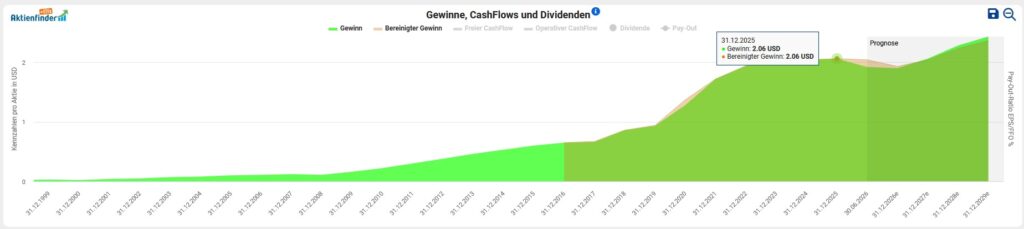
At Earnings per share I have seen an upward trend for ten years. If I take the past fiscal year 2025, adjusted earnings per share grew marginally by 1 percent ($2.06 vs. $2.04). In the past fiscal year, Tractor Supply generated Net profit of USD 1.1 billion.
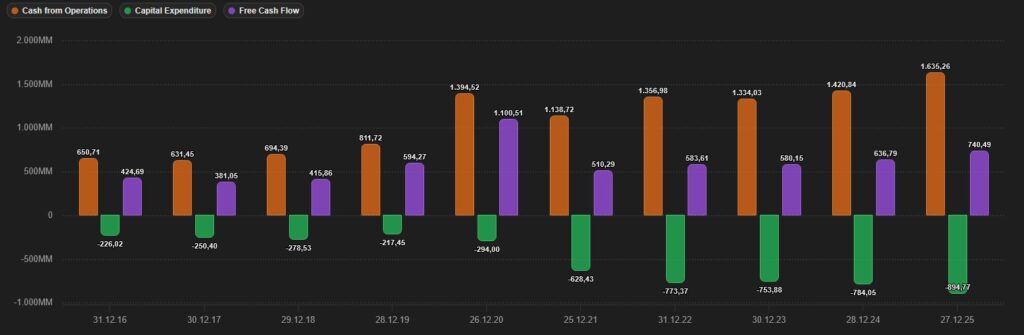
The amount available to the company Free Cashflow can be used for capital investments in organic growth, research and development, debt repayment, expansion through acquisitions, distributions of (increasing) dividends, or share buybacks. In absolute terms, the interplay of operating cash flow, free cash flow, and capital expenditures (CapEx) in the period 2016 to 2025 is as follows:
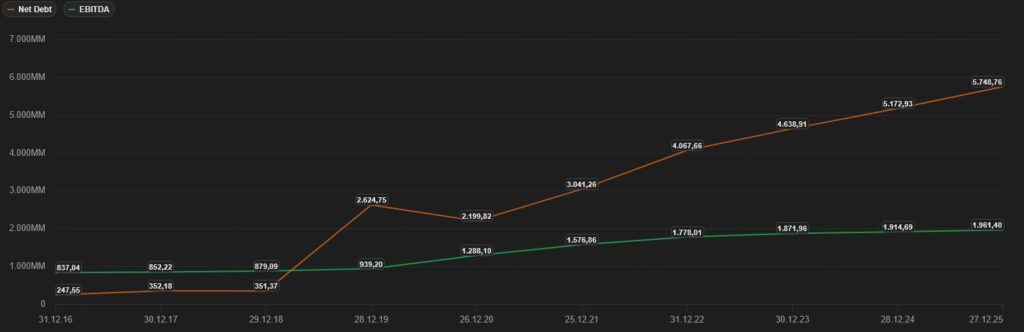
A critical look at the Debt situation shows that interest-bearing financial liabilities, including lease liabilities, amount to $5.9 billion, which are offset by cash and cash equivalents and securities of $0.2 billion at the end of fiscal year 2025. This results in net debt of $5.7 billion. Relative to the EBITDA of $2 billion, this yields a leverage ratio of 2.9. This industry-dependent figure is just below the threshold of 3 considered critical. In particular, debt-financed share buybacks are under scrutiny to ensure the dividend is not funded at the expense of the company's substance in the future.
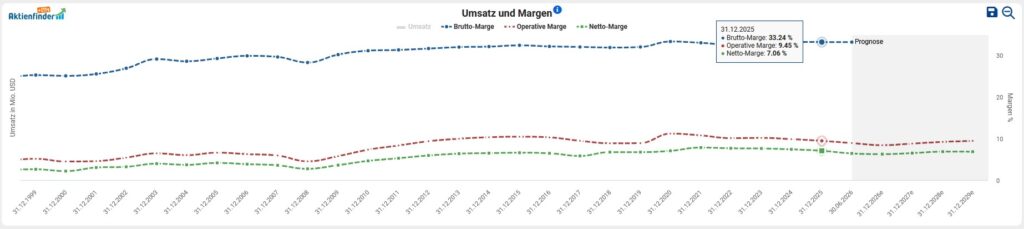
Finally, I am considering Profitability of Tractor Supply based on the development of gross margin, operating margin, and net margin. Through the 2025 fiscal year, I see remarkable stability in the margin profile despite the more challenging market environment. In the current year, however, this stability has broken. According to management, the gross margin is expected to improve in the second half of 2026 once the comparison basis becomes more favorable and the new eleventh distribution center begins to take effect as an efficiency gain starting at the beginning of the fourth quarter.
Opportunities & risks
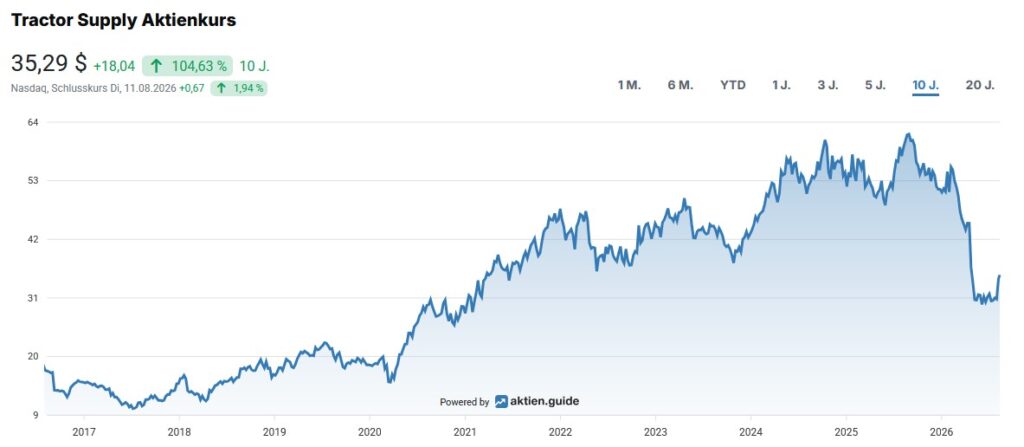
The most obvious opportunity lies in the valuation. Following the price drop from nearly 64 to recently around 35 USD, the stock is trading at a price-to-earnings ratio in the mid-to-upper teens—in the summer of 2025 it was still around 30. The premium that the market paid for years for a reliable store growth model has thus largely been eliminated. Analyst expectations have become sober, which lowers the risk of further disappointments and increases the room for positive surprises. Even in the reduced forecast scenario, Tractor Supply is earning between 930 and 990 million USD net. In the second quarter, the gross margin was even slightly higher than the previous year's figure at 37 percent, and the return on equity was over 40 percent.
Operationally, there is much to suggest that part of the weakness is cyclical. April and June delivered positive comparable store sales; the negative quarter was driven solely by May with weak seasonal and big-ticket merchandise. The demand-driven categories – livestock, equine and poultry feed, consumables, propane – remained resilient. Precisely these categories are the actual traffic drivers of the business model, not the discretionary lawnmower.
Most interesting is the strategic pivot into the service business, because it does not circumvent the core problem, but monetizes it. With VIP Petcare, Tractor Supply acquired the largest US provider of mobile veterinary care at the end of May: clinics in around 2,700 locations, of which about 1,700 are in its own stores, spread across 39 states, with over a million animals treated per year. If it is the affordability of veterinary medicine that is stalling the pet market, then Tractor Supply is positioning itself as part of the solution rather than a victim – and in rural regions with sparse veterinary care, of all places. Combined with the online pet pharmacy Allivet, this creates a recurring, traffic-driving business.
Added to this are the classic cost-management levers. The eleventh distribution center in Nampa, Idaho, will become operational in the fourth quarter of 2026 and is expected to contribute approximately 20 basis points to the gross margin on its own. The „Project Fusion“ remodeling program, which includes the expansion of garden centers, is ongoing, and the delivery hub network is scheduled to grow to about 375 by the end of the year, thus covering more than half of all stores. The decision to close around 75 unprofitable Petsense stores and to curb new openings for 2027 from approximately 100 to between 85 and 90 can also be viewed positively. Available capital is shifting away from growth-driven space expansion toward higher-yielding remodels and logistics. In the current downturn, the retailer can emerge as a beneficiary—with private labels, bulk packaging, and an everyday-low-price positioning, Tractor Supply is better positioned than premium specialists to capture migrating customers from Petco or PetSmart. The Neighbor's Club, with over 40 million members and accounting for more than 80 percent of sales, remains one of the strongest loyalty programs in the industry.
The most serious risk lies in the open question of whether the current weakness is cyclical or structural. The evidence for „structural“ has recently increased. In the second quarter of 2026, customer traffic fell by 1.7 percent, while the average ticket size increased by only 0.2 percent. Tractor Supply is therefore not losing purchasing power per purchase, but rather customers. The annual forecast was cut in July: instead of 4 to 6 percent sales growth, 2.5 to 3.5 percent is now expected. Above all, however, the company withdrew its long-term financial framework from the December 2024 Investor Day and announced that a new target would only be set with the fourth-quarter figures. That is the actual break in the equity story: management is leaving it open whether the long-term target of 3 to 5 percent organic growth will hold.
The main drag remains the pet business, accounting for around a quarter of the group's revenue. With a ratio of about 80 percent dogs to 20 percent cats, Tractor Supply is positioned much more unbalanced here than the overall market, which sits at roughly 60 to 40. The dog population in the US, of all places, is shrinking: from about 96 million in 2023 to 94 million in 2024, and down to around 92 million in 2025. The cause is less demographic than economic: veterinary costs have risen by about 60 percent since 2020; depending on the estimate, keeping an average dog costs between $1,500 and $3,500 a year. The roughly 11 percent slump in the US companion animal business of Zoetis, the global market leader in animal health, is a warning sign from the value chain—anyone who skips preventive check-ups also buys less prescription food and fewer premium brands.
At the same time, the demographic assumption upon which store growth is built is crumbling. Population growth in non-metropolitan US counties was recently around 0.3 percent, compared to 1.1 percent in urban areas. For years, this modest growth has been driven entirely by migration, as the number of deaths has consistently exceeded births since 2017. Roughly one third of this migration came from abroad. With net migration at the national level turning negative in 2025 for the first time in decades, and with this trend expected to continue, the addressable market lacks a supporting pillar. Compounding this is the aging population: in rural counties, around 21 percent of the population was already over 65 years old in 2023, compared to 17 percent in urban regions. For Tractor Supply, this means fewer working hobby farmers with budgets for trailers and lawn mowers, and instead more retirees on fixed incomes who primarily purchase consumer goods. This development is entirely outside the company's control.
On the results page, the margin pressure is now clearly visible. The operating margin dropped from 13 to 10.3 percent in the second quarter, weighed down by a lack of fixed-cost degression and special expenses, including over $65 million for the Petsense restructuring. The comparatively solid gross margin was also supported by tariff refunds. For the third quarter, management explicitly expects higher margin pressure, triggered, among other things, by increased freight and fuel costs resulting from the rise in oil prices due to geopolitical disruptions.
Current rating of the Tractor Supply stock
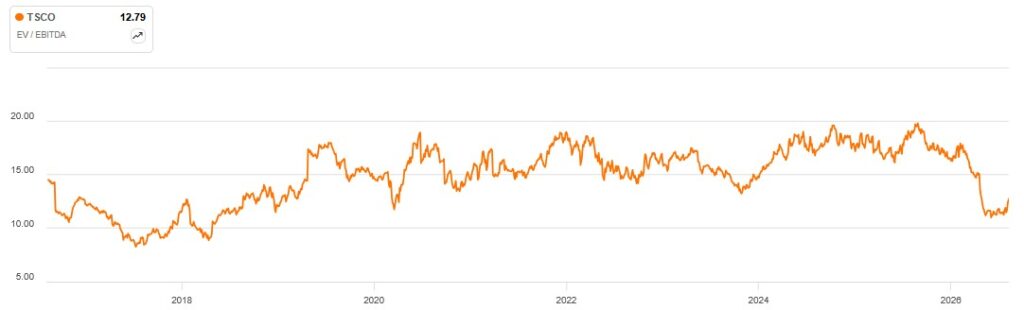
For the valuation of companies, I use the so-called Enterprise Value (EV) amazed. The Enterprise Value represents the amount that would have to be spent on operating assets in the event of a takeover; non-operating assets are excluded in the process. I put this metric in relation to earnings before interest, taxes, depreciation, and amortization (EBITDA). As a rule of thumb, a value of below 10 signals a „healthy“ valuation. However, as with all generic rules of thumb, the company-specific context must be considered by the careful investor in the analysis. In the case of Tractor Supply, an EV/EBITDA below 12 is at the lower end of the range of the past ten years—measured against its own valuation history, therefore, in the favorable range, even if the generic threshold of 10 is not reached:
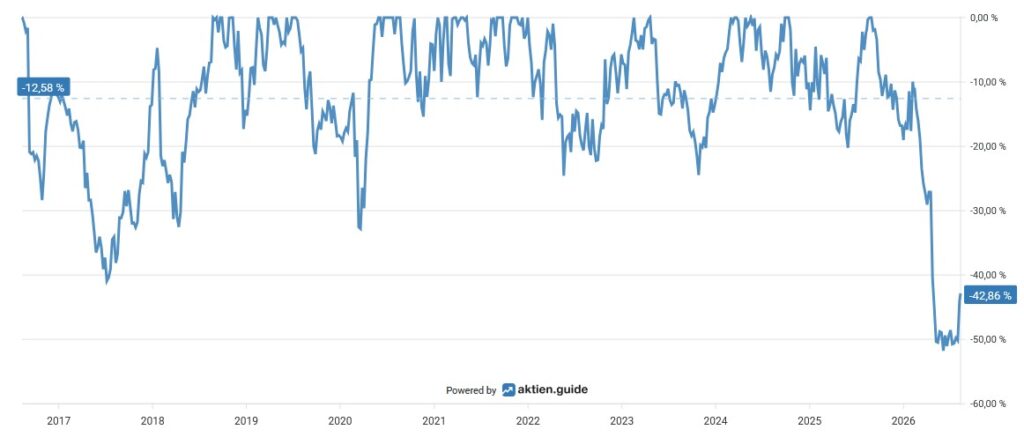
The Maximum decrease over the past ten years was around 50 Percent reached in the recent weakness phase since autumn 2025:
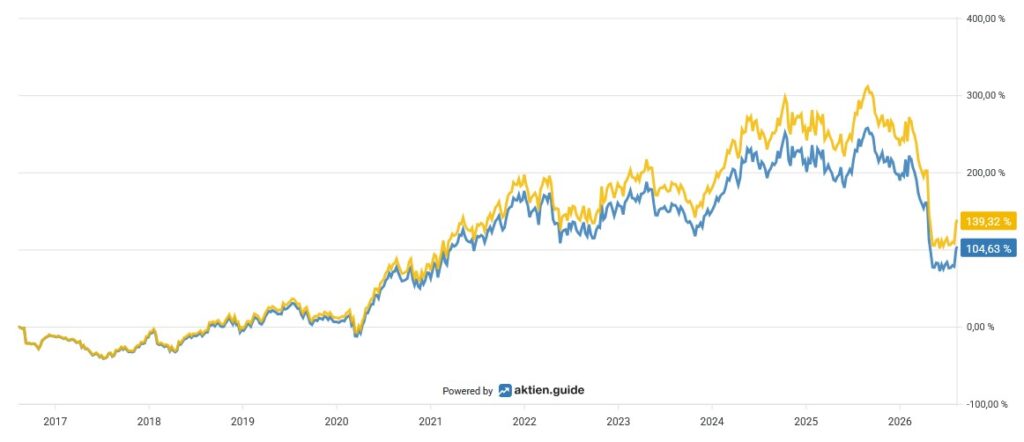
Over the ten-year period, an investment in Tractor Supply, measured by Total Returna Overall performance from around 139 percent for the investor:
Capital allocation of Tractor Supply
Tractor Supply boasts a track record of 16 years of growing dividends. Since the initial payout in 2010, the dividend has been increased every year. Thus, the US company is a dividend contender that has raised its payout annually for at least ten years.
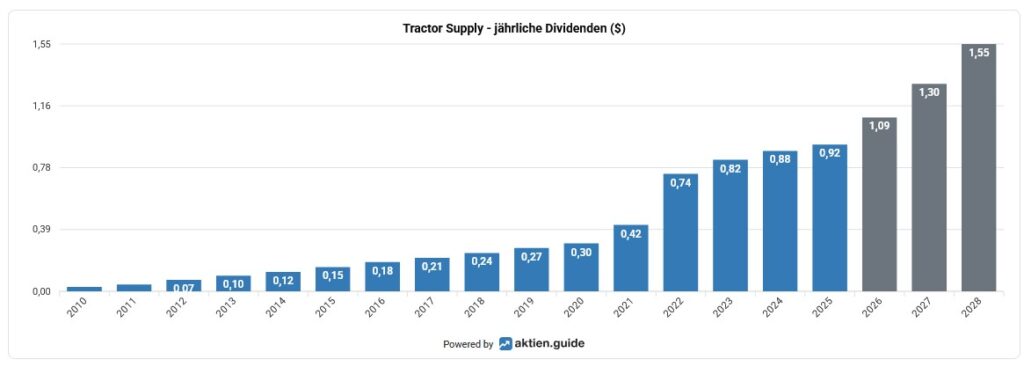
At a current price of USD 35.29, this results in a dividend yield of 2.7 percent. Die Fünfjahres-Dividendenwachstumsrate amounts to 25.1 percent p.a. or 19.7 percent p.a. in the Ten-year period. However, the five-year value is dominated by the one-off increase of 76.9 percent in 2022. The company most recently increased its dividend by 4.4 percent in February 2026. Finally, here is an overview of Tractor Supply's last five annual dividend increases:
- 2026: +4.4 percent
- 2025: +4.6 percent
- 2024+6.8 percent
- 2023+12.0 percent
- 2022+76.9 percent
The quartalsweise ausgeschüttete Dividende is currently $0.24 per share and is paid out in the months at the end of the quarter (March, June, September, December).
If I take the average value of the Free Cashflow of the last three years as the basis for determining the Payout ratio curiously, I end up with a result of 71.6 percent for Tractor Supply's payout ratio. This means that a good two-thirds of the free cash flow is tied up by the dividend alone. The share buybacks of most recently around USD 400 million per year are consequently predominantly not funded from current operating cash flow – which explains the increase in net debt and raises the question of how long both can be sustained in parallel.
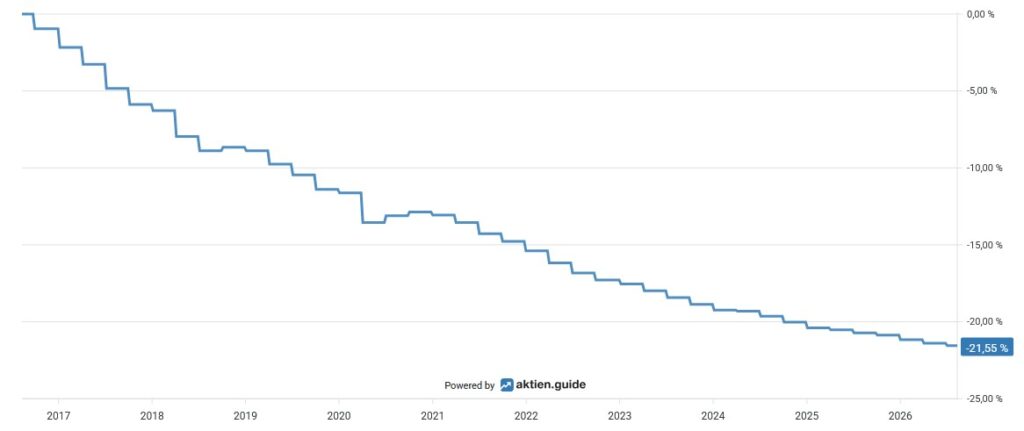
The Number of shares outstanding decreased over the past ten years by a total of 21.6 percent.
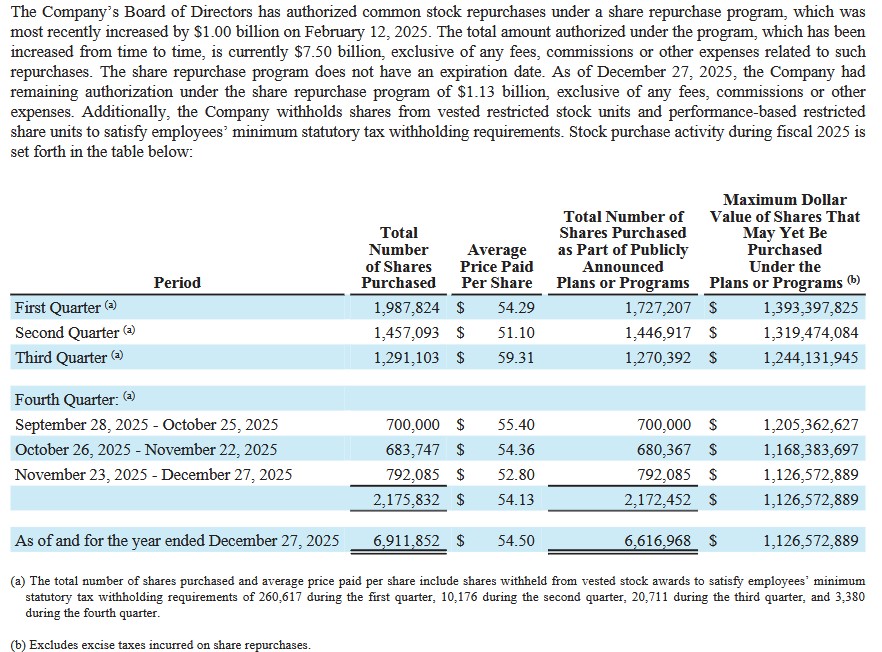
The cumulatively approved since 2007 Aktienrückkaufprogramm grants management the authority to repurchase its own shares worth USD 7.5 billion. In the first six months of fiscal year 2026, Tractor Supply repurchased approximately 6.2 million shares for about USD 255 million. According to management, repurchase activity is expected to be at the upper end of the initial target range of USD 375 to 450 million:
Conclusion: Considerations for my decision to invest in Tractor Supply
Tractor Supply is currently in an operational transition phase, but in my view, not in a structural crisis. The company continues to be well-managed, features a demand-driven business model, an established loyalty program, a value-oriented product assortment, and a long track record in capital allocation. The current headwinds, such as weakness in the companion animal segment, the nationwide debate on affordability in the US, and slowing rural population growth, are real, but in my opinion, already to a significant extent priced into the stock. Quarters with missed expectations and a wave of price target cuts have pushed a historically highly valued stock down to a level well below its long-term valuation average.
Precisely this constellation is the breeding ground from which counter-cyclical investment opportunities arise. Anyone who understands Tractor Supply not as a past growth model, but as a quality company in a cyclical downturn, can invest in a business that the market is currently granting a significant valuation discount. Cash generation is intact and the business model remains viable in the long term. The decisive advantage of the counter-cyclical approach lies in entering at the exact moment when sentiment is at rock bottom and the consensus is only hesitantly beginning to recognize a turnaround. Should management deliver initial signs of stabilization in the coming quarters, valuation multiples are likely to rise again quickly. For patient investors with an investment horizon of at least two to three years, this presents an opportunity to acquire a quality company during a phase when most market participants are hesitating.