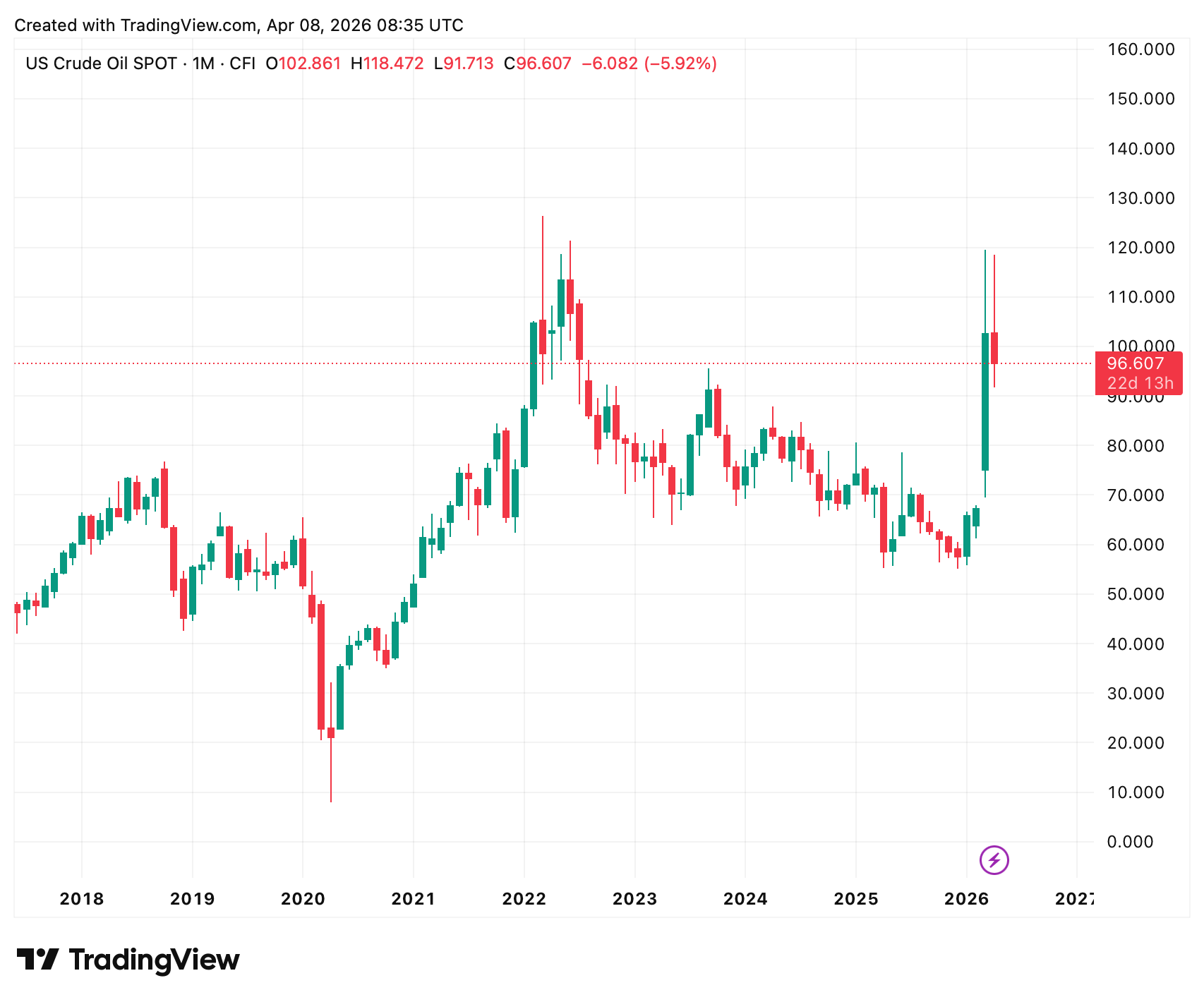

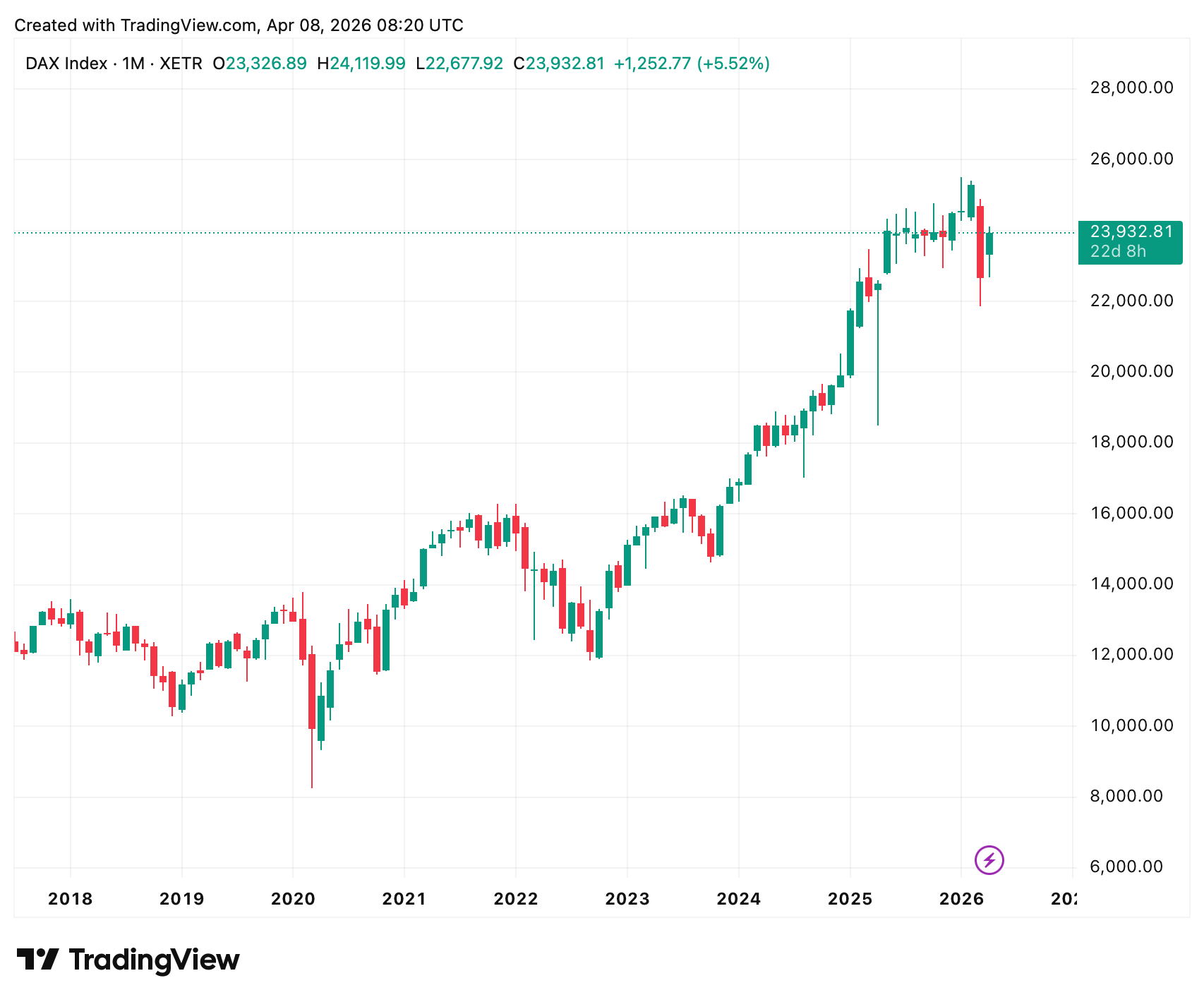
The Iran conflict is likely to continue to preoccupy investors in Frankfurt am Main. Following the announcement of a two-week ceasefire between the USA and Iran, there is initial relief. The Strait of Hormuz, effectively blocked by Iran, is to be reopened with certain restrictions on shipping traffic.
From the perspective of the economic calendar, investors' focus is particularly on US inflation data.
DAX
Just before the Trump ultimatum expires: US and Iran agree to a two-week ceasefire
Immediately before the expiration of the ultimatum issued by US President Donald Trump, the US and Iran were able to agree on a two-week ceasefire. According to Trump himself, he is prepared to suspend bombings and attacks on Iran for two weeks if Iran opens the Strait of Hormuz. Thus, it will be a mutual ceasefire, Trump said on his own platform „Truth Social“.
Pakistan's Prime Minister Shehbaz Sharif asked him not to attack power plants and infrastructure in Iran, it was stated.
In the run-up, Trump had threatened to attack Iranian power plants and bridges if the Tehran leadership did not agree to a deal or continue to block the Strait of Hormuz. Investors are likely to be primarily relieved in anticipation of possible peace talks between the parties to the conflict. The associated decline in oil prices should also help ease tensions.
„Fed Minutes“ in focus tonight – investors hope for monetary policy clues
The „Fed Minutes,“ which could send monetary policy signals, are in focus on Wednesday evening at 8:00 PM.
The US central bank (Federal Reserve) kept the key interest rate at a range of 3.50 to 3.75 percent at its meeting at the end of March, as expected. The minutes may provide important monetary policy clues about the future direction of monetary policy.
US inflation data on Thursday and Friday in focus
On Thursday, the core personal consumption expenditures rate and the GDP growth rate for the United States will be in focus (2:30 PM).
First, the final inflation rates for the Federal Republic of Germany will be in focus on Friday morning (8:00 AM). An inflation rate of 2.8 percent is expected for the month of March (compared to the same month last year), after 2 percent in February.
The effects of the Iran war may already be reflected in US inflation data. However, given the recent signs of de-escalation in the Iran conflict, investors may regain confidence in interest rate cuts by the US Federal Reserve (Fed), and thus may adjust their expectations regarding the future path of interest rates. Nevertheless, uncertainty regarding the Iran war is unlikely to be completely off the table. Should the ceasefire fail or the geopolitical situation escalate again, this could drive oil prices up once more and put pressure on stock markets.
The trading week concludes at 4:00 PM with the consumer sentiment index from the University of Michigan.
Oil price (West Texas Intermediate)