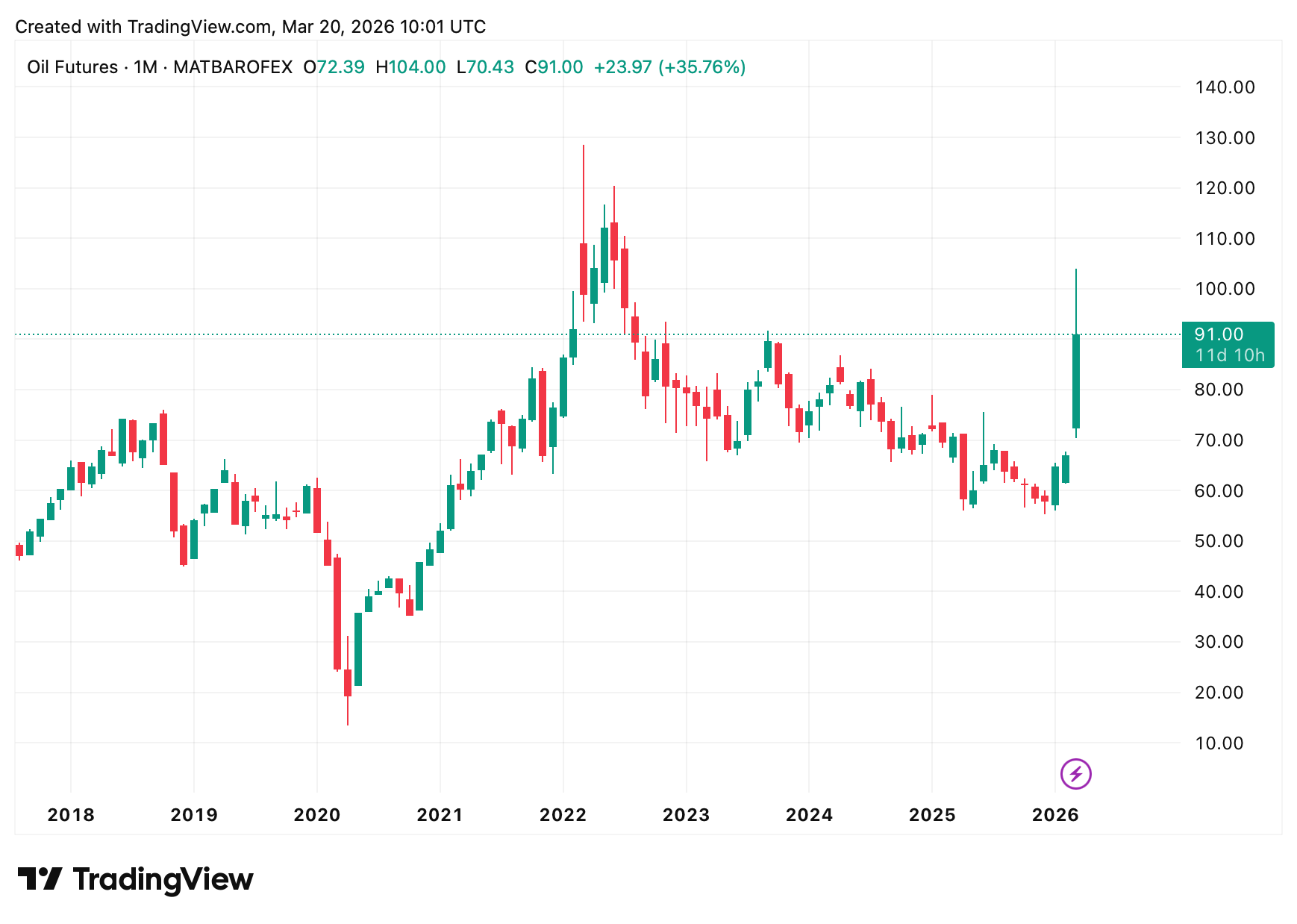

The stock markets on both sides of the Atlantic continue to be dominated by a mixture of uncertainty, consisting of geopolitical risks and growing interest rate concerns. The military escalation in the Iran conflict and the resulting turbulence on the oil market continue to keep investors on tenterhooks. At the same time, rising energy prices are stoking new fears of inflation and fueling concerns that monetary policy headwinds could now pick up significantly.
The expectation of a rapid easing of tensions has once again proven to be too optimistic. Every new escalation report calls this scenario into question. What is currently still a fragile hope on the market could turn into even greater disillusionment at any time.
Even if the economic data calendar today (Friday) is manageable, the big expiry day could lead to potentially unconventional movements, as many options and futures expire.
DAX
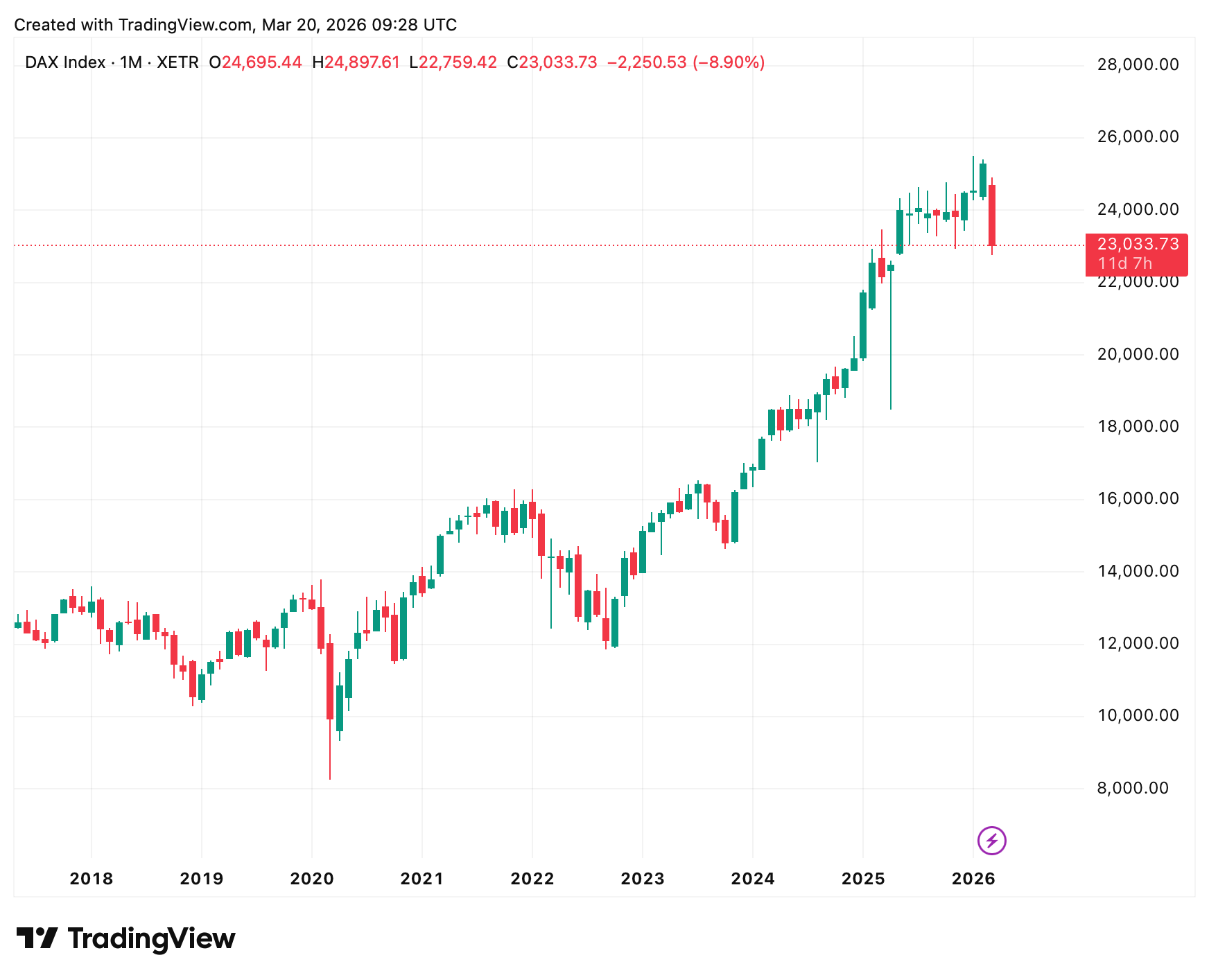
ZEW Index collapses - economic uncertainty due to Iran war
In view of the Iran war, experts have become much more pessimistic about the German economy. The barometer of economic expectations (ZEW index) for the next six months fell by 58.8 points to minus 0.5 points in March. Economists surveyed by Reuters had previously expected a fall to 39 units. For the month of March, the barometer climbed by 3 points to a total of minus 62.9 points (expectation: -67.3 points).
Fed leaves key interest rate unchanged as expected - uncertainty due to Middle East conflict
As expected, the US Federal Reserve (Fed) left its key interest rate unchanged at a range of 3.50% to 3.75% late on Wednesday evening. At its January meeting, the Fed had already kept interest rates unchanged.
„Uncertainty about the economic outlook remains high,“ said the central bank. For example, the impact of developments in the Middle East on the US economy is uncertain.
Only Stephen Miran had voted in favor of an interest rate cut of a quarter of a percentage point in the monetary policy committee. In total, the Fed's Open Market Committee consists of twelve voting members.
„In the short term, higher energy prices will drive up overall inflation,“ Powell said. However, it is too early to estimate the extent and duration of the potential impact on the economy, he said.
ECB and other monetary authorities keep interest rates constant
Despite high oil prices and potential inflation risks, the European Central Bank (ECB) has kept its key interest rate constant for the sixth time in a row. The so-called deposit rate thus remains at 2.0 percent.
For the current year, the ECB expects the average inflation rate to rise to 2.6%, which corresponds to a total of 0.7 percentage points compared to the last projection. The ECB could possibly respond to the as yet unforeseeable effects of the Iran conflict on inflation by raising interest rates.
In addition to the ECB, the Bank of Japan (BoJ) and the Bank of England (BoE) also met on Thursday to decide on monetary policy, both of which also kept their key interest rates stable.
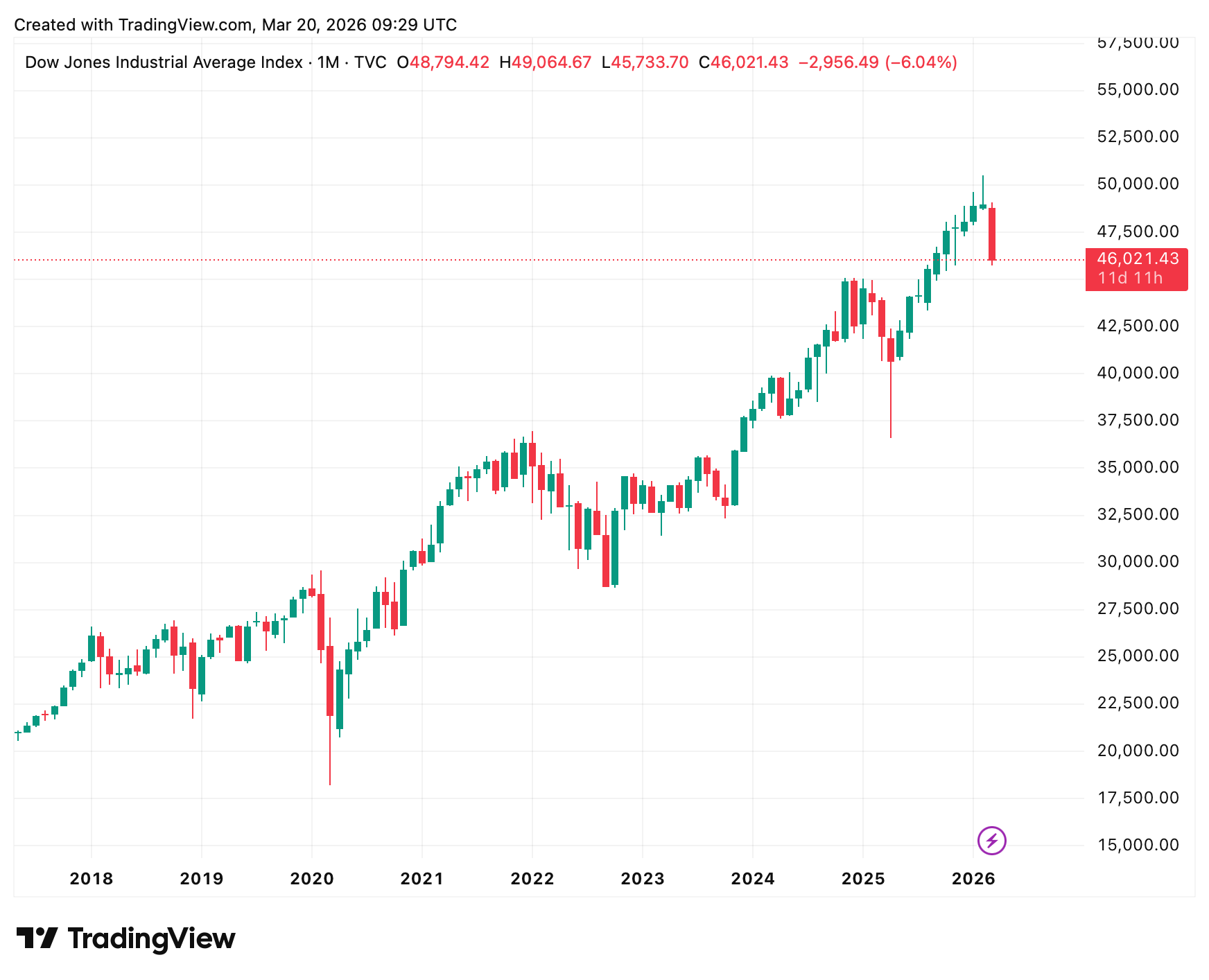
Dow Jones Industrial Average Index
Oil price (West Texas Intermediate)