
Investors on both sides of the Atlantic have had an eventful trading week. In addition to the central bank meetings of the Fed and ECB, investors were initially confronted with an AI shock from China. The ongoing reporting season also continued to provide important impetus.
DAX Chart
Source: TradingView
DeepSeek thunderstorm causes temporary sell-off in the tech sector
Fears of a growing AI competitor called DeepSeek from China caused problems for the tech industry at the start of the week. Investors were concerned that the Chinese company could outperform established companies in the sector. As the week progressed, however, it became clear that the fears were perhaps somewhat exaggerated. Nevertheless, it is likely to continue to hang over investors' heads like a classic sword of Damocles.
China data and ifo index disappoint
There was also negative data from China. At 49.1 points, the Purchasing Managers' Index (PMI) for the manufacturing sector fell below the growth threshold of 50 points, compared with 50.1 points in the previous month.
Surprisingly, the widely observed ifo business climate index rose against expectations (84.7 points) to 85.1 points. However, the German economy remains pessimistic, according to the report.
Incoming orders for durable goods in the US fell by 2.2% compared to the same month last year, contrary to forecasts (0.6%). These goods are significant in that they are generally associated with higher expenditure.
At midweek, Gfk consumer confidence in Germany was initially disappointing, deteriorating further to -22.40 points after -21.30 points in the previous month.
Fed leaves key interest rate unchanged as expected
Wednesday, however, was dominated by the Fed's first meeting of 2025. As expected, the US monetary authority paused interest rates, with the interest rate band remaining in the range of 4.25 to 4.50 percent.
In December, inflation (compared to the same month of the previous year) was 2.9%, after 2.7% in November. Jerome Powell had already emphasized last month that the Fed would be cautious with regard to further interest rate cuts. However, the new US President Donald Trump is pushing for further cuts in return, as he recently made clear at the World Economic Forum in Davos.
German GDP falls more sharply than expected - USA also showing signs of weakness
The development of gross domestic product also caused a stir on Thursday morning. According to initial estimates, GDP in Germany fell by a further 0.2 percent compared to the previous quarter, which was more than expected (-0.1 percent). In the third quarter, the German economy had still grown by 0.1 percent.
However, there were no further surprises in the ranks of the ECB. As expected, the euro guardian lowered the deposit rate, which is decisive for the financial market, by 0.25 percentage points to 2.75%.
In the US, annualized GDP was also weaker (3.10% vs. 2.30%). The weakness in growth may have tended to fuel interest rate cut fantasies.
German inflation and PCE data in focus on Friday
On Friday, the focus will be on German consumer price data (14:00) and in particular on the PCE core deflator for personal consumption expenditure (14:30). The latter is likely to be of particular interest as it could send out important US inflation signals.
SAP exceeds targets - Deutsche Bank with profit decline - Apple with record quarter
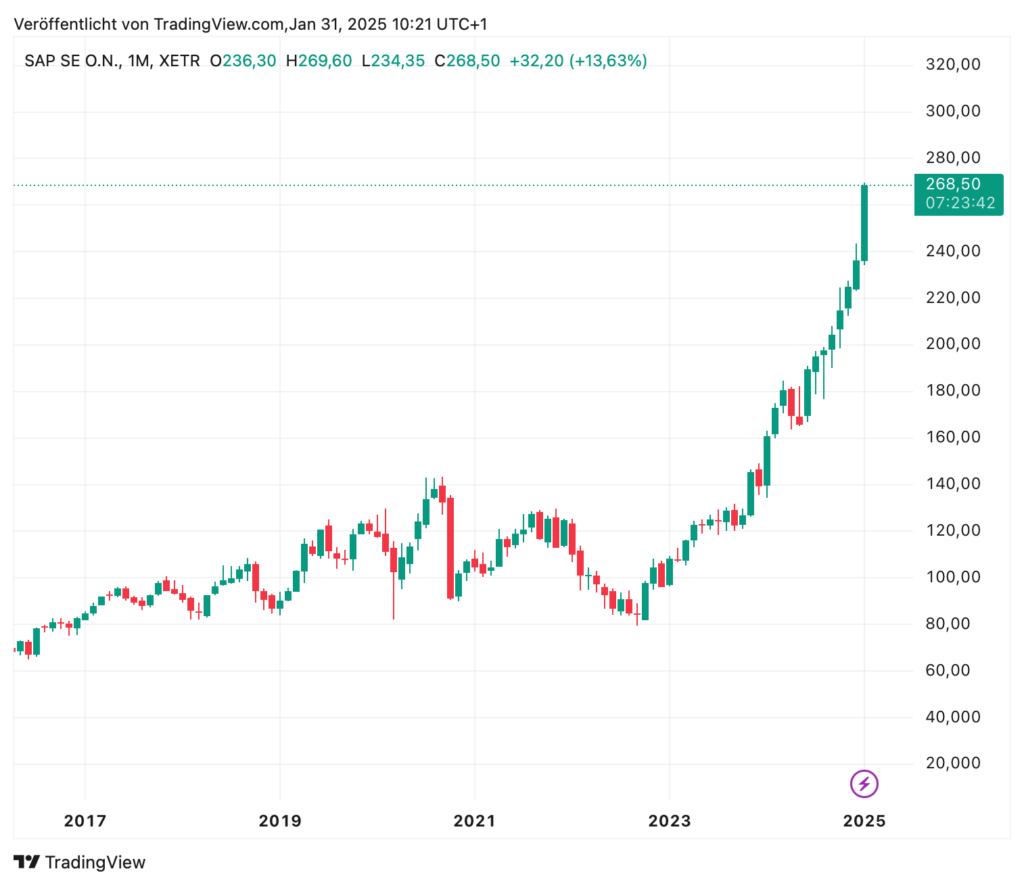
The reporting season also repeatedly provided important impetus. SAP, for example, was able to exceed its targets thanks to its success in the field of artificial intelligence (AI).
SAP Chart
Source: Tradingview
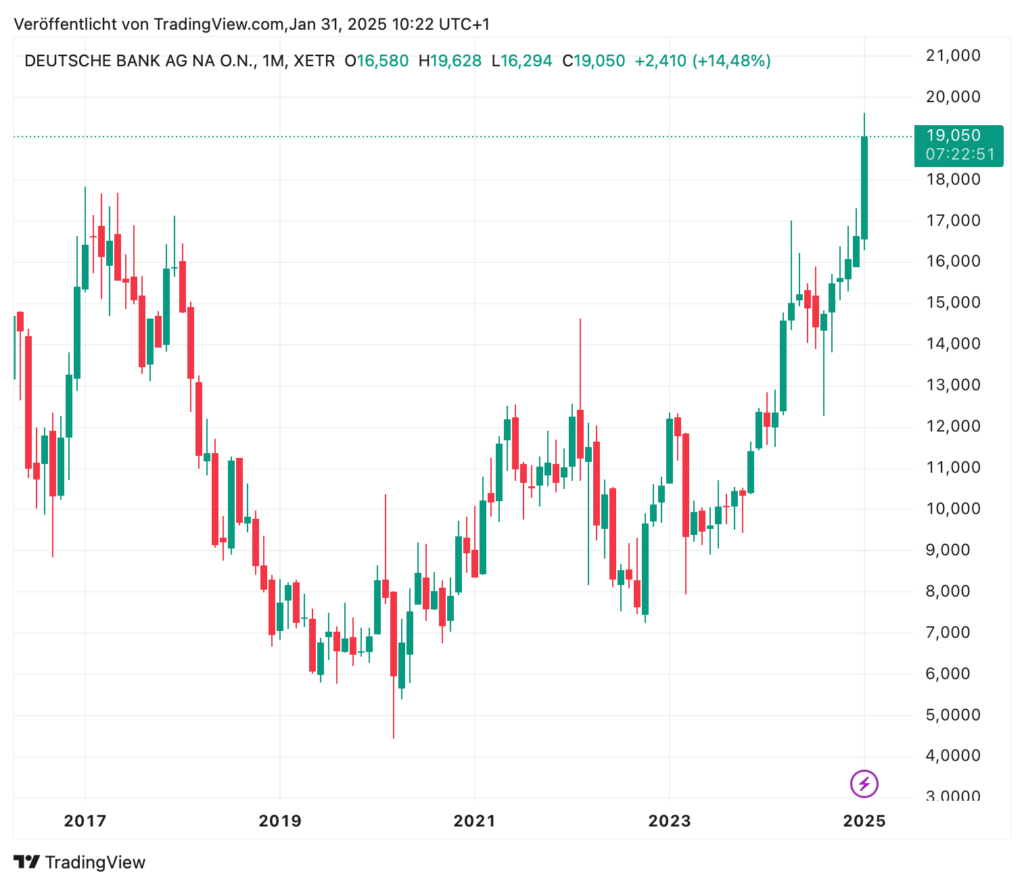
Deutsche Bank, however, referred to high costs for the settlement of legal disputes and thus to a decline in profits.
Deutsche Bank Chart
Source: TradingView
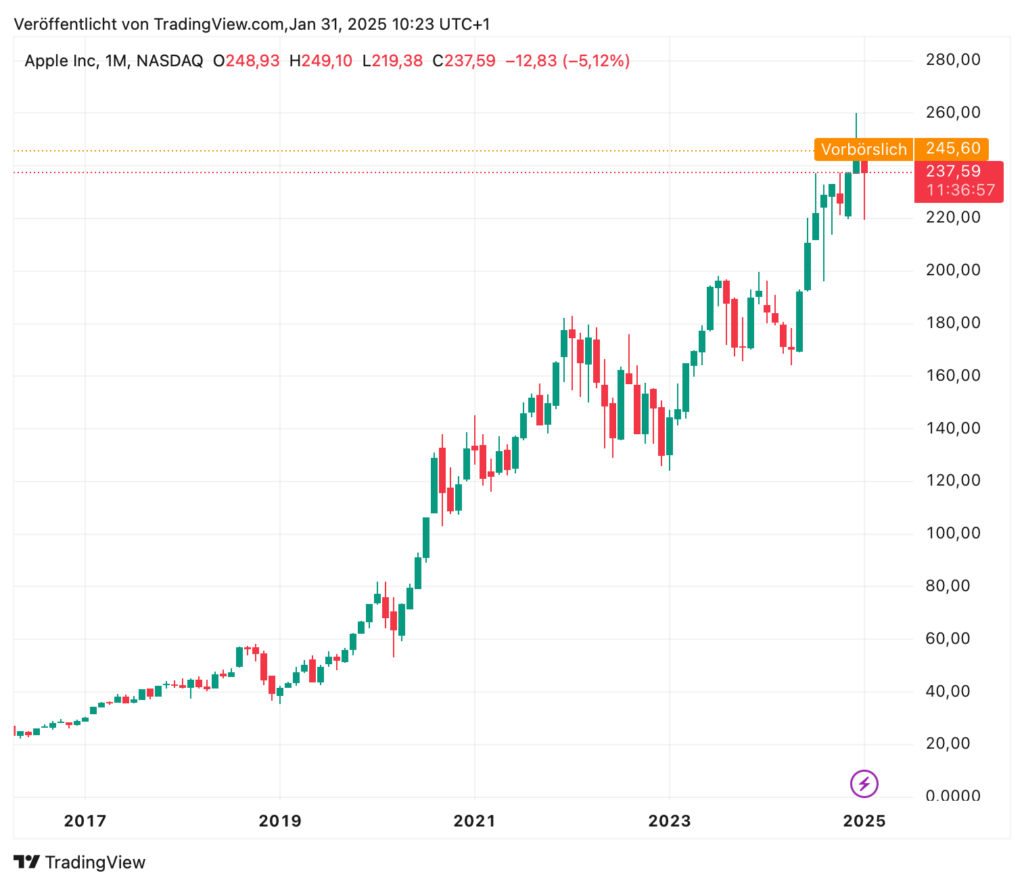
The iPhone manufacturer Apple reported a record quarter and a positive outlook on Thursday. The success of the new iPad and Mac computer generations ensured a record result, it said.
Apple Chart
Source: TradingView