
The most important facts in brief
- By combining the two pillars UnitedHealthcare and Optum, the company brings together health insurance, its own physician practices, pharmacy management, and data services under one roof, thereby earning revenue at multiple levels of the care chain at the same time.
- As the largest U.S. health insurer with approximately 48.5 million enrollees, 26 percent market share in Medicare Advantage, and over tens of thousands of salaried or contractually bound physicians, UnitedHealth has a market position that few competitors can replicate at this scale.
- The turnaround under the return of CEO Stephen Hemsley puts profitability ahead of growth and is already showing results – the Medical Care Ratio has fallen to about 84 percent within two quarters, and growth is expected to resume starting in 2027.
- The capital allocation is clearly geared towards shareholders – evidenced by 17 years of rising dividends, a comfortable dividend payout ratio of around one-third of free cash flow, and opportunistic share buybacks.
- Click here for the DGI-Musterdepot and here is an overview of this series: The dividend custody account
Company profile and business model: Who is UnitedHealth and what does the company do?
The UnitedHealth Group It is one of the largest companies in the world and at the same time one of the most influential players in the US healthcare industry. The Minnesota-based company is, measured by revenue and number of insured people, the leading health insurer in the United States and ranked third on the 2025 Fortune 500 list, surpassed only by Walmart and Amazon.
UnitedHealth’s roots date back to the 1970s. Richard Taylor Burke founded the company in 1974 as Charter Med Incorporated, and in 1977 it was reorganized as United HealthCare Corporation. Initially, the company processed medical billing for doctors of the Hennepin County Medical Society in Minnesota. Soon, it became the leading provider of health care services in the state of Minnesota. Health Maintenance Organizations (HMOs) came into focus, a novel healthcare delivery model focused on prevention. As early as 1984, the company operated eleven HMOs in ten states.
A crucial milestone was the IPO. United HealthCare went public in 1984, initially on the NASDAQ, and later on the New York Stock Exchange. The additional capital enabled an aggressive acquisition strategy in the late 1980s and 1990s. During this period, numerous acquisitions followed, including the 1995 acquisition of MetraHealth, which propelled United HealthCare into one of the largest insurers in the country. In 1998, the company was restructured into a holding company with independently operating subsidiaries and renamed UnitedHealth Group.
The 2000s were marked by major acquisitions. These included the purchases of AmeriChoice in 2002 (530 million USD), Mid Atlantic Medical Services in 2003 (2.7 billion USD), Oxford Health Plans in 2004 (4.9 billion USD), and PacifiCare Health Systems in 2005 (8.1 billion USD). This phase was overshadowed by a scandal involving backdated stock options, which led to the resignation of the then CEO William McGuire in 2006. His successor was Stephen Hemsley, who led the company until 2017.
The year 2011 marked a strategic turning point as the company consolidated its healthcare services under the new brand Optum. With Optum, UnitedHealth evolved from a pure insurer into a comprehensive healthcare platform. In subsequent years, Optum expanded through further acquisitions, most recently in 2015 with Pharmacy Benefit Manager Catamaran (a provider that manages insurance and employer benefits and negotiates prices with manufacturers), in 2019 through DaVita Medical Group and in 2022 through the billing service provider Change Healthcare. Following Hemsley, David Wichmann took over as CEO in 2017 and Andrew Witty in 2021.
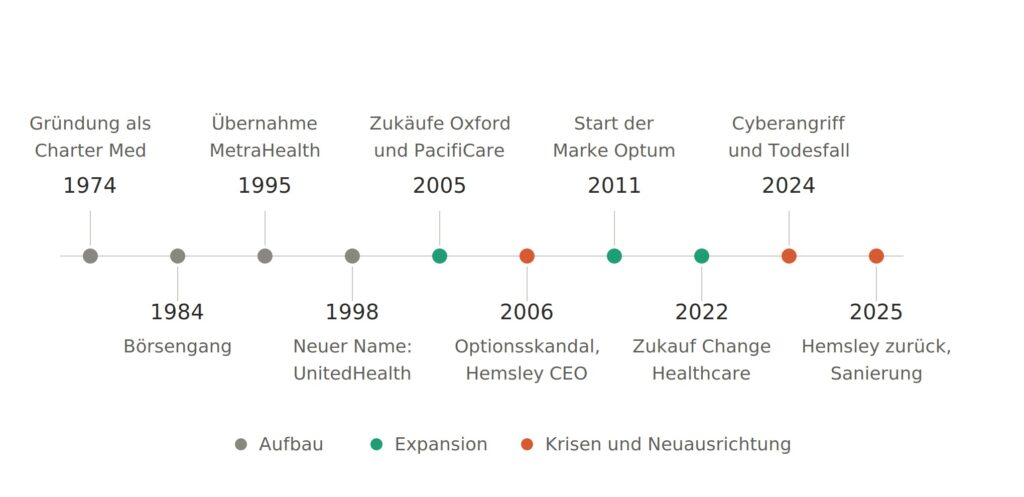
The recent past was marked by severe crises. In February 2024, a cyberattack on Change Healthcare crippled the processing and payment of prescriptions for practices and hospitals nationwide, highlighting the central role UnitedHealth plays in the U.S. healthcare system. In December 2024, Brian Thompson, the head of the UnitedHealthcare insurance division, was shot dead in New York, sparking a wide public debate about the practices of health insurers.
What makes UnitedHealth special is the combination of two business sectors that are traditionally separate in the healthcare industry. The company is divided into two pillars: UnitedHealthcare, which offers health insurance, and Optum, which, in addition to the PBM business, focuses on non-insurance-related healthcare services.
UnitedHealthcare is the classic insurance business and generates more than three-quarters of the company’s revenue. Its segments include Employer & Individual, which offers group insurance for employers, as well as individual and family plans, including policies on the Affordable Care Act marketplaces. Additionally, there is the Medicare Advantage business, which is a privately managed insurance plan for seniors under the federal Medicare program, as well as the Community & State segment, which manages Medicaid benefits for low-income people on behalf of the states. In the second quarter of 2026, UnitedHealthcare had approximately 48.5 million insureds. Revenues come primarily from insurance premiums, from which the cost of medical care is paid. Therefore, a key metric is the so-called Medical Care Ratio, which is the proportion of premiums spent on medical services.
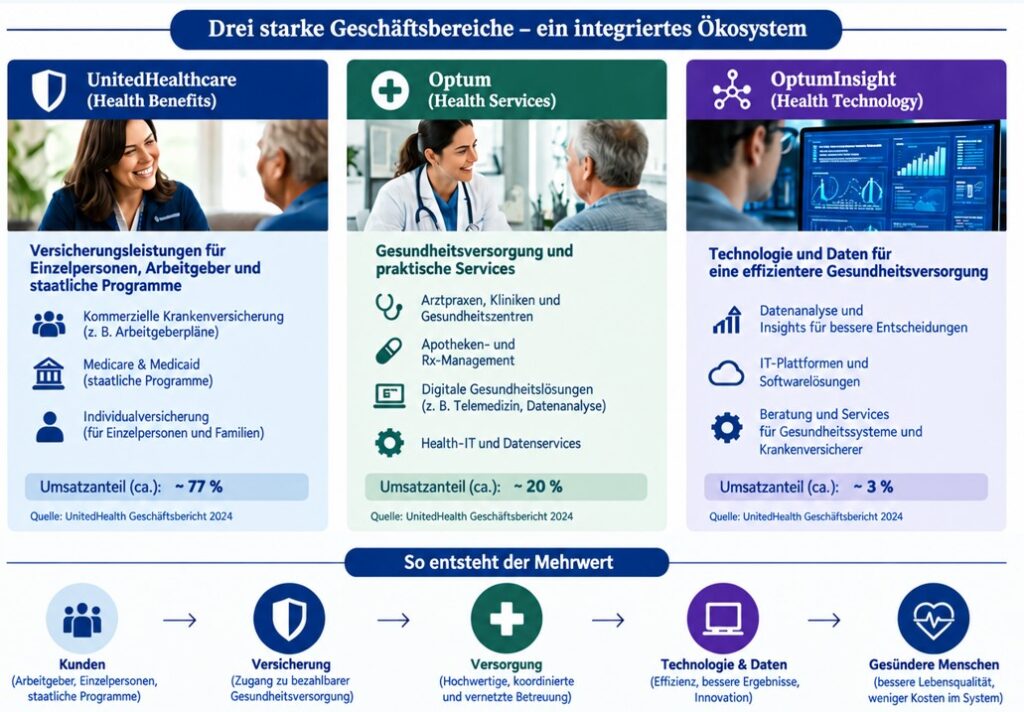
Optum is the second, increasingly important strategic pillar. The Optum division serves stakeholders across the entire healthcare system, including payers, providers, employers, government agencies, life sciences companies, and consumers, using data, analytics, and technology to make care more efficient. Optum consists of three business segments: Optum Health operates physician practices, outpatient care centers, and home care services; Optum Rx is one of the largest pharmacy benefit managers in the United States, which handles prescription drug benefits for insurers and employers; Optum Insight provides software, data analytics, and billing services for hospitals and insurers. The scale of what Optum Health has achieved so far is illustrated by a figure from 2025: UnitedHealth employed or contracted with more than 90,000 doctors, which is approximately 10 percent of all physicians in the United States.
The core of the Geschäftsmodells This vertical integration is based on this. UnitedHealth not only earns money from insurance premiums, but also from the care itself, the drug management process, and data and technology services, sometimes even for competing insurers. An important concept is value-based care: Optum Health receives a fixed fee for many patients and, in return, bears the financial risk of the treatment. If it succeeds in avoiding expensive hospital stays through preventive care and coordinated care, part of the fee remains as profit. However, critics also see conflicts of interest in this intertwining, as the company operates on several fronts in the healthcare market at the same time.
For decades, UnitedHealth followed a clear Growth strategy, This acquisition-driven growth, however, repeatedly drew the attention of antitrust authorities. The logic behind it is that the more links in the company’s supply chain that are controlled, the better it is to control costs and utilize data. However, since 2025, UnitedHealth has been undergoing a profound transformation. Rising medical costs, particularly in the Medicare Advantage business, have significantly burdened the results.
Another focus is Optum Health’s refocusing on its core business. According to management, the division deviated from its original focus due to too rapid expansion, and it is now to be focused again on its value-based care model. The affiliated physician network was reduced by almost 20 percent within a year, and the number of patients in risk-based care contracts was reduced by around 15 percent.
In May 2025 he returned Stephen Hemsley Returning as CEO after Andrew Witty stepped down for personal reasons. At the same time, UnitedHealth revised its forecast for 2025, as higher medical expenses were expected. Since then, the company has been guided by the above-described realignment, the success of which in the coming years will determine whether UnitedHealth can regain its former strength.
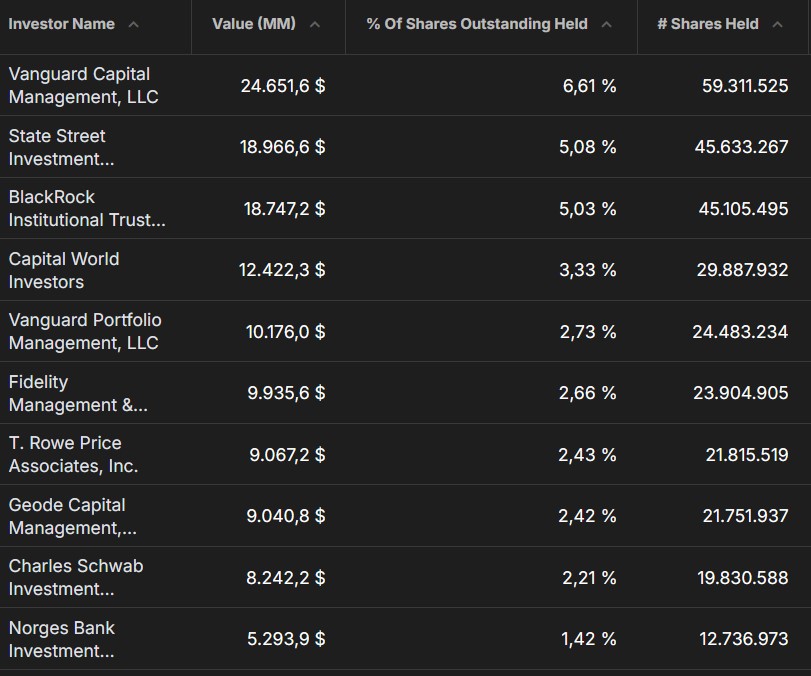
On the Owner's page Institutional investors dominate significantly: Over 90 percent of the shares are held by funds and other institutions. The largest shareholders include BlackRock, Vanguard, Fidelity, T. Rowe Price, and State Street.
Industry profile and competitive situation
The US health insurance market is nationally dominated by a few large corporations and is often even more concentrated regionally. According to data from the umbrella association of state-level health insurance companies, Insurance Inspector NAIC Almost 60 percent of the market falls to the ten largest health and accident insurance companies. According to an analysis by the American Medical Association, around 71 percent of the regional markets were considered highly concentrated in 2022 under the federal merger guidelines of that time. The environment can therefore be described as Oligopoly described by strong regional providers.
This is particularly evident in the Medicare Advantage market, the most important growth area. UnitedHealth holds 26 percent share there (up from 29 percent last year), while Humana has 20 percent. Together, the two account for almost half of all insureds, and in 28 percent of all counties, they collectively achieve at least 75 percent market share. CVS Health follows closely behind with over 4.1 million insureds.
A second characteristic is the convergence of business models. The major players are no longer just insurers; they also control pharmacies, physician practices, and data services through subsidiaries. This is particularly evident in the pharmacy business: CVS Caremark, Optum Rx, and Express Scripts together handle nearly 80 percent of all prescriptions; five of the six largest Pharmacy Benefit Managers are affiliated with a health insurer. UnitedHealth therefore competes not only with other insurers but, depending on the business segment, also with pharmacy chains, clinic operators, and technology providers.
A third characteristic is strong regulation. Fee rates for Medicare Advantage and Medicaid, quality ratings, and rules for Pharmacy Benefit Managers significantly determine the profitability of all providers. In addition, the cost pressure of recent years has been a factor that the industry has largely reacted to in a uniform manner: UnitedHealth, Humana, CVS, and Elevance have each reduced their presence outside the Special Needs Plans (SNPs), and have retreated from numerous counties. Finally, not all major competitors are publicly traded. Among the ten largest insurers, in addition to the well-known publicly traded companies, are Kaiser Permanente, HCSC, and GuideWell.
The core of the publicly traded peer group is made up of four companies that are most comparable in size, diversification, and vertical integration to UnitedHealth. Elevance Health is the largest publicly traded Blue Cross Blue Shield licensee with a strong presence in the corporate client, Medicare, and Medicaid businesses, as well as with the Carelon service division, which according to company reports reaches one in every three Americans through partnerships. CVS Health is the company whose integrated model is most similar to UnitedHealth with its insurance division Aetna and the Pharmacy Benefit Manager Caremark. The Cigna Group, through Evernorth and Express Scripts, is primarily a direct competitor of Optum Rx and in UnitedHealthcare’s corporate client business, but after the sale of the Medicare business it no longer plays a role in the senior segment. Humana is the most important competitor in the Medicare Advantage market and, along with CenterWell, also operates its own healthcare offerings; however, it is significantly more focused on a single segment and is therefore more vulnerable to fluctuations.
The financial situation of UnitedHealth
After having gained an overview of the industry in general, as well as having taken a closer look at companies and competition, I take a look at UnitedHealth’s financial figures. The focus here is on the aspects Growth, profitability and Financing.
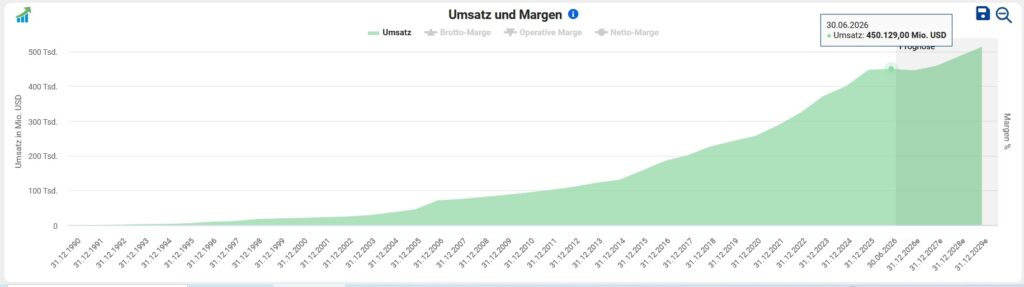
To analyze the financial situation, the first step I take is to look at the development of revenue, profit, and free cash flow. The Turnover grew by an average over the past five years 10.5 percent per year.
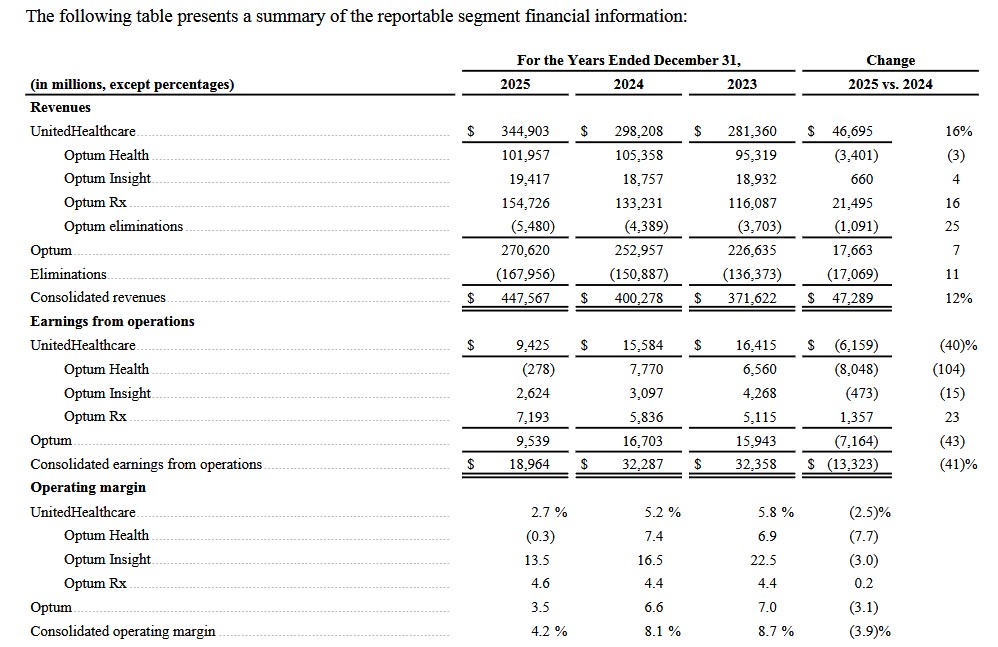
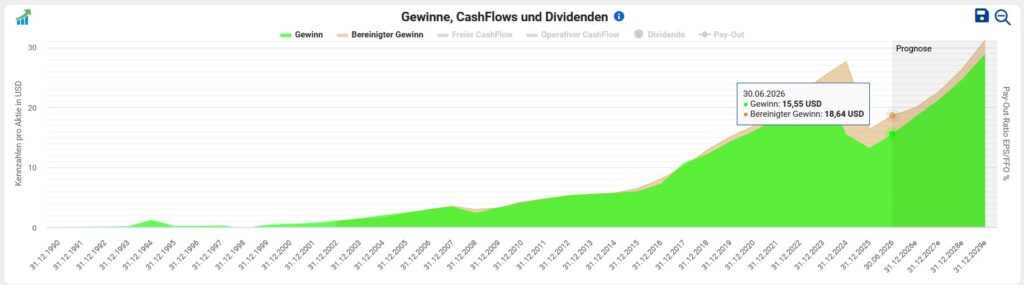
The Earnings per share Over the past ten years, there has been an upward trend, but that trend was interrupted last year by a drastic decline. If I extrapolate the 2025 fiscal year, adjusted earnings per share fell by about 41 percent (16.35 vs. 27.66 USD). UnitedHealth generated 2025 earnings of Net profit from 12.1 billion USD.
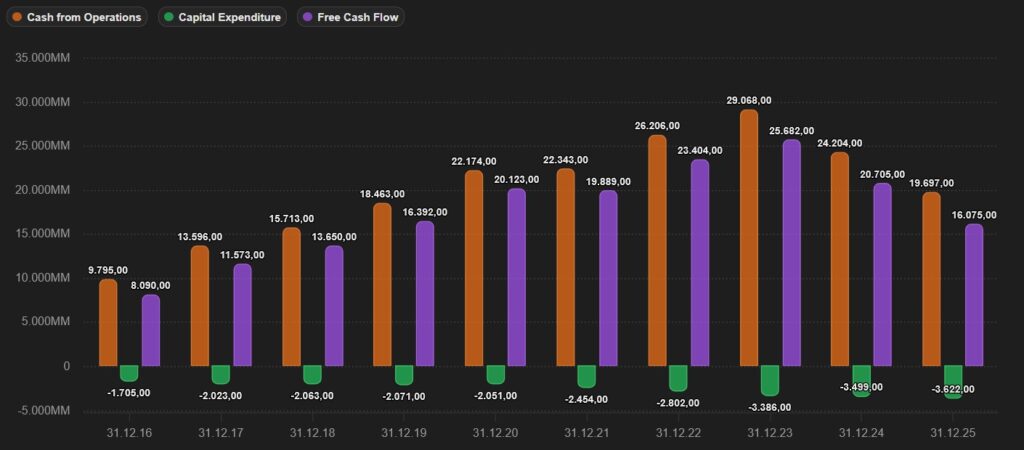
The amount available to the company Free Cashflow, Therefore, the operating cash flow after deducting investment expenditures can be used for research and development, debt repayment, expansion through acquisitions, dividend distributions (of rising dividends), or share buybacks. In absolute numbers, the interplay between operating and free cash flow, as well as capital expenditures (CapEx), over the period from 2016 to 2025 is as follows:
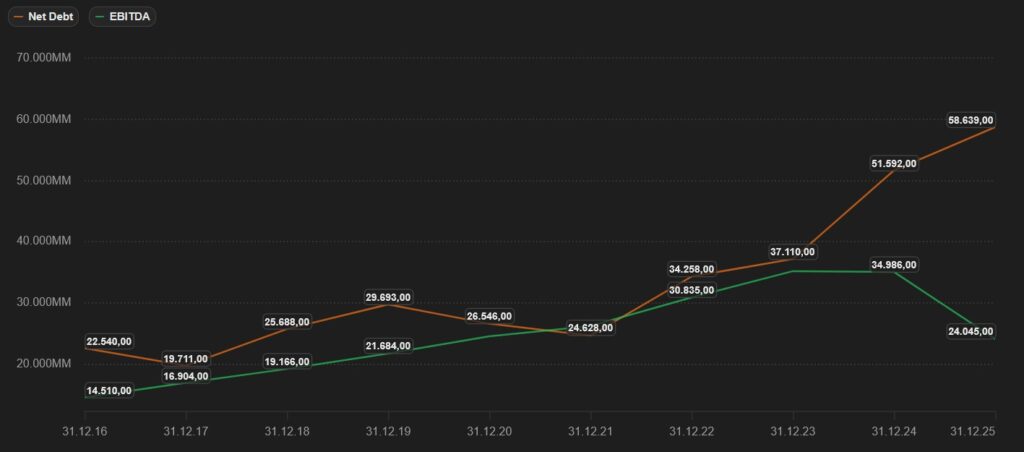
A critical look at the Debt situation shows that the interest-bearing financial liabilities amounted to 83 billion USD, against which liquid assets and securities of 24.4 billion USD were available at the end of the 2025 financial year. This results in a net debt of 58.6 billion USD. Compared to EBITDA of 24.1 billion USD, the debt ratio comes to 2.4. This is therefore below the critical threshold of 3, which varies depending on the industry.
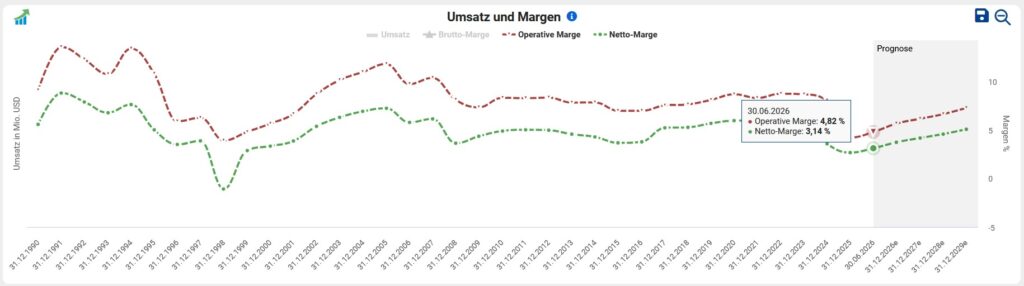
Finally, I am considering Profitability by UnitedHealth based on the development of gross margin, operating margin, and net margin. The margin development clearly shows the crisis and the recovery path. However, the recovery is not yet complete – costs continue to rise in the corporate banking business, so the pre-crisis level has yet to be achieved.
Opportunities & risks
The main focus is on the current transformation process, which is already showing initial successes. The Medical Care Ratio is particularly significant. After reaching a peak of 89.9 percent in the third quarter of 2025, it fell to 83.9 percent in the first quarter of 2026, due to cost discipline and price adjustments across all business areas. With the figures for the second quarter in July 2026, the company raised its annual forecast.
Another opportunity arises from the Medicare Advantage business, the traditionally most important growth engine. Here, the political environment has recently improved. The U.S. Health Care Administration (CMS) set an average pay increase of 2.48 percent for 2027, after initially only 0.09 percent had been proposed. This will flow over $13 billion in additional funding to providers of Medicare Advantage plans in 2027, instead of the originally planned $700 million. Taking into account the expected development of risk assessments, this corresponds to an increase of 4.98 percent. Long-term, demographic trends also favor the business model: the baby boomer generation is reaching Medicare age in large numbers, thereby further expanding the target group.
Thirdly, the realignment of Optum Health offers significant earnings potential. The healthcare division was the biggest concern in 2025, but the turnaround seems to have begun. In the second quarter of 2026, Optum Health’s operating margin recovered to 5.1 percent, after only 1.7 percent in the same quarter a year earlier, indicating that the measures taken are having an effect. The integrated structure of insurance, physician practices, pharmacy management, and data analysis remains a competitive advantage that few competitors can replicate on this scale.
A fourth opportunity lies in technology and artificial intelligence. With planned investments of around 1.5 billion USD annually, UnitedHealth aims to reduce administrative costs and simplify processes. Optum is also bringing AI-powered products to market for hospitals and other providers, such as a solution for billing multiple payers and predictive tools for surgical planning. For insureds, the company has introduced the AI chatbot Avery to improve the coordination of care.
Ultimately, UnitedHealth was well ahead of the regulatory changes in the pharmacy business. Optum Rx announced that it would replace the traditional fee model of Pharmacy Benefit Managers with a transparent, fee-based structure offered to all customers. These customers pay monthly, clearly defined fees per member, regardless of manufacturers’ list prices or prescription volumes. Those who anticipate the upcoming reforms can position themselves as a reliable partner, while competitors still need to adjust their model.
The biggest operational risk remains the rising medical costs. Although the situation in the Medicare business has eased, pressure is intensifying in the corporate client insurance business. UnitedHealthcare CEO Tim Noel explained that there are no signs of a slowdown in the cost trend; on the contrary, it is slightly above the previously observed level of 11 percent. Should costs rise faster than premiums can be adjusted, there is a threat of further margin erosion, which has hit the company hard in the 2025 fiscal year.
A second, potentially even more significant risk is the legal and regulatory investigations. The U.S. Department of Justice’s civil and criminal investigations focus on the handling of diagnoses that were intended to lead to higher payments from the federal government under Medicare Advantage. According to media reports, investigators are also examining billing practices at Optum Rx and the compensation of company-owned physicians. In January 2026, a report by the U.S. Senate Judiciary Committee accused UnitedHealth of aggressively exploiting Medicare Advantage to drive up government reimbursement, for example by home visits by nursing staff for health assessments and the use of coders to review medical records. The company denies the allegations, but an unfavorable outcome could lead to high fines, regulatory restrictions, and further reputational damage. Closely related to this is the fundamental dependence on state compensation decisions. The generous compensation adjustment for 2027 is not a guarantee for the future.
Thirdly, the pharmacy business is under increasing political pressure. The 2026 budget law decouples the remuneration of Pharmacy Benefit Managers in Medicare Part D from list prices and discounts, and instead imposes flat administrative fees. At the state level, some initiatives go even further: Arkansas In 2025, the first state in the country passed a law that would completely ban pharmacy benefit managers from owning pharmacies. Such regulations are aimed directly at the integrated model of UnitedHealth.
Fourthly, the reform course itself carries risks. The deliberate contraction costs market share. It is uncertain whether lost customers can be won back later. In the second quarter of 2026, UnitedHealthcare covered 48.5 million insureds, 1.6 million fewer than a year earlier, with the decline affecting Medicare Advantage, the employer business, and Medicaid alike. In the Affordable Care Act-supported business, the extended state premium subsidies have expired at the end of 2025. Critics also point out that the reform is driven primarily by insureds and doctors: remaining members must accept leaner services as well as higher premiums and co-payments. Such measures can permanently strain the trust of customers and partners. Coupled with this is the reputational risk, which has become particularly visible since the assassination of Brian Thompson in December 2024. The public debate over denial of benefits and prior authorization has damaged the image of the entire industry. UnitedHealth is particularly under scrutiny as the largest provider. For example, a class action lawsuit accuses the company of denying benefit claims in Medicare Advantage plans using an AI program instead of through medical professionals. Negative headlines also increase the likelihood of stricter regulation.
Finally, the Cyberattack on Change Healthcare It shows how vulnerable a company that operates the central infrastructure of the healthcare system is. In the first quarter of 2024 alone, UnitedHealth estimated the financial consequences at around 870 million USD, for the full year at over 2 billion USD. Another incident of this kind would not only cause financial pain but also shake the confidence of Optum Insight's customers.
Current valuation of the UnitedHealth stock
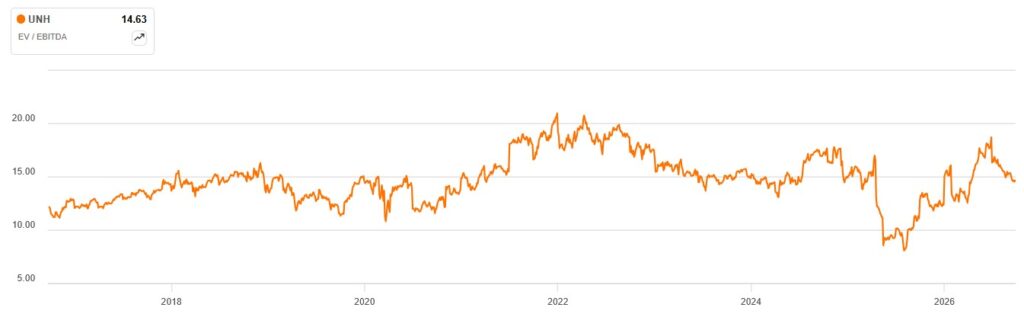
For the valuation of companies, I use the so-called Enterprise Value (EV) Earnings per share (EPS). The Enterprise Value quantifies the amount that would be spent on the necessary assets in the event of a takeover; non-necessary assets are excluded from this calculation. I use this figure in relation to earnings before interest, taxes, and amortization (EBITDA). As a rule of thumb, a value below 10 signals a „healthy“ valuation. However, as with all generic rules of thumb, the individual context of the company must be considered by the careful investor when analyzing it. In the case of UnitedHealth, the EV/EPS at 14.6 is in the upper range of the last ten years – not priced favorably by our own valuation history. The high multiplier is also a consequence of the broken EBITDA:
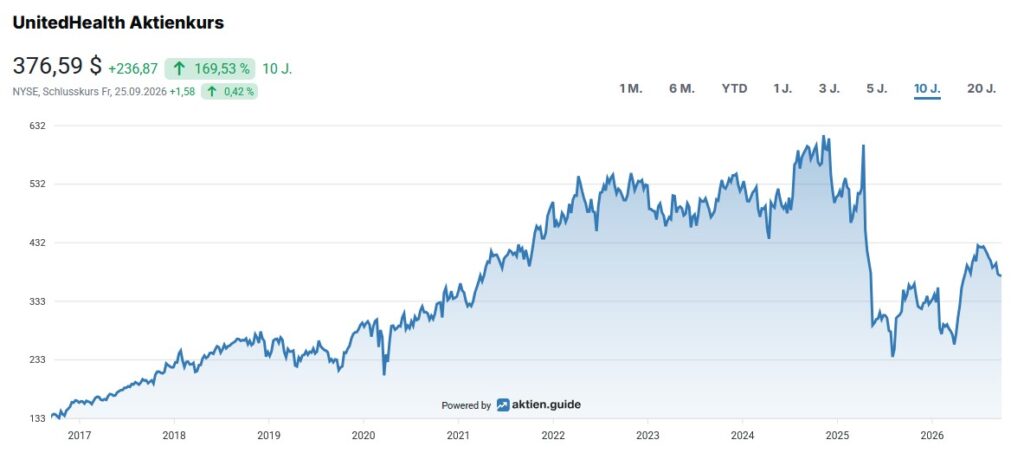
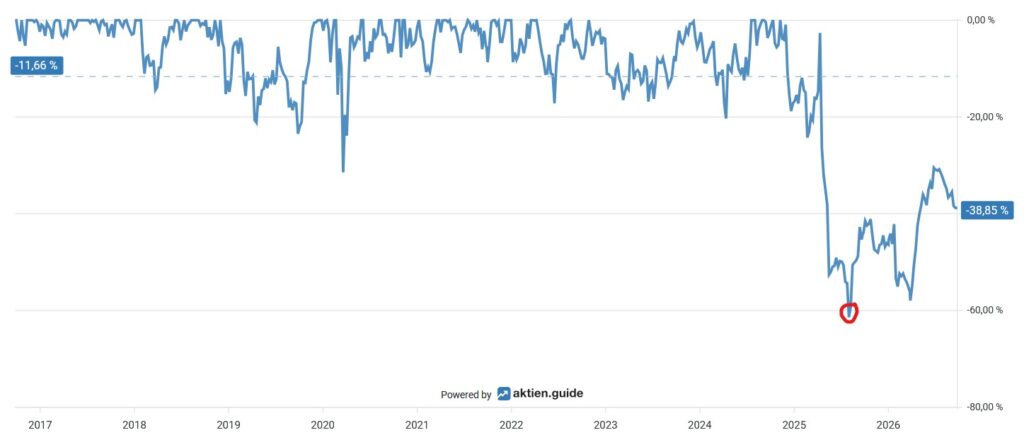
The Maximum decrease over the past ten years was around 61 Percent achieved in the most recent weakness phase in 2025:
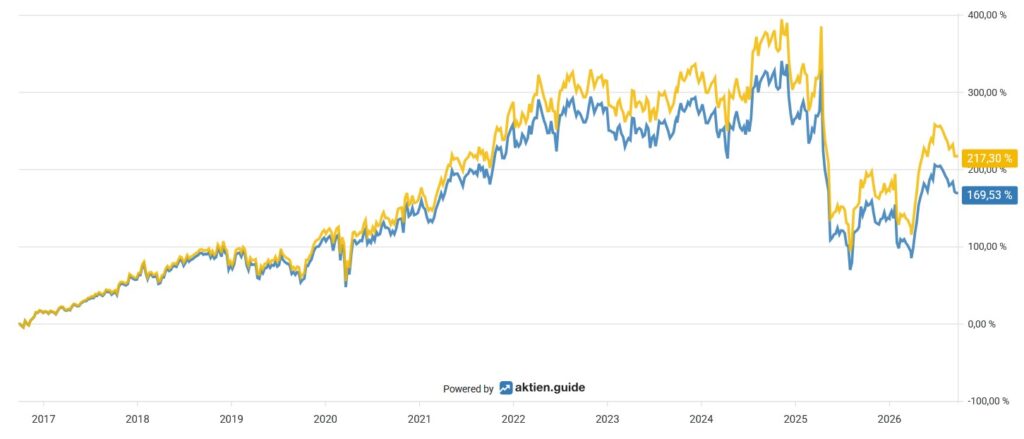
Over the ten-year period, an investment in UnitedHealth, measured by Total Returna Overall performance from around 217 percent for the investor:
Capital allocation by UnitedHealth
UnitedHealth can boast 17 years of proven success with growing dividends. Since its first payment in 2001, the dividend has never been reduced. Thus, the US company is a dividend contender that has been raising the dividend annually for at least ten years.
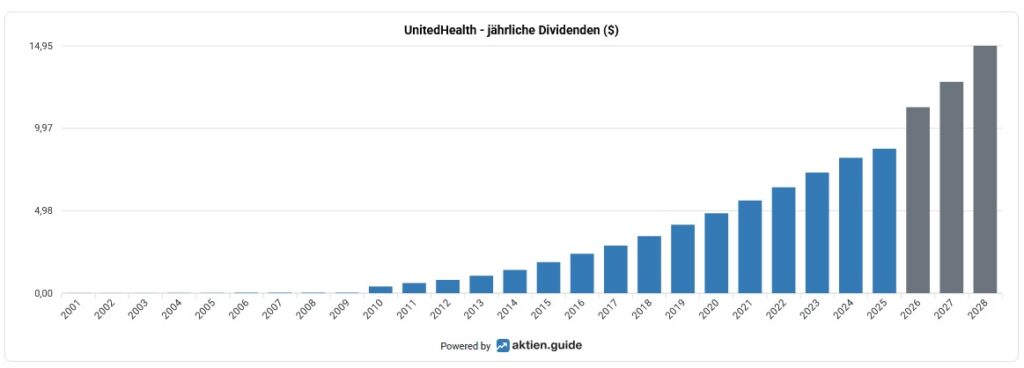
At a current price of $376.59, the calculation results in a Dividend yield of 2.5 percent. Die Fünfjahres-Dividendenwachstumsrate amounts to 12.6 percent p. a. or. 16.6 percent p. a. in Ten-year period. The company recently increased its dividend by 5 percent in February 2026. In summary, here are the last five dividend increases:
- 2026: +5 percent
- 2025: +5.2 percent
- 2024: +11.7 percent
- 2023: +13.9 percent
- 2022: +13.8 percent
The quartalsweise ausgeschüttete Dividende currently amounts to 2.32 USD per share and is paid out in the months before the end of the quarter (March, June, September, December).
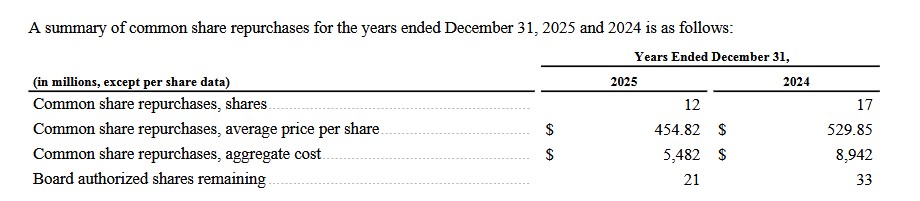
If the average free cash flow of the last three years is taken into account, the result is 32.8 percent for the UnitedHealth payout ratio. This means the dividend is comfortably covered by free cash flow. The share buybacks of around 5.5 billion USD last year were also funded from free cash flow.
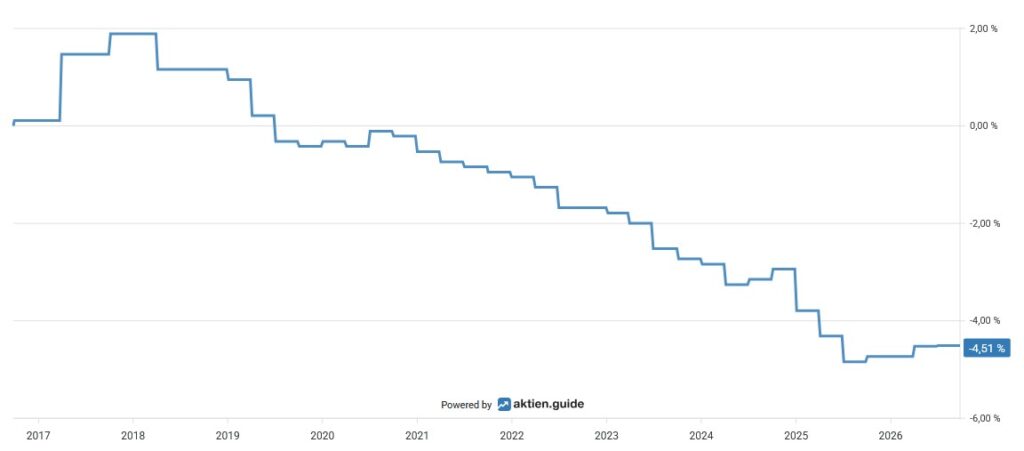
The Number of shares outstanding decreased over the past ten years by a total of 4.5 percent.
The program has existed since 1997 and was recently renewed in 2024. Aktienrückkaufprogramm Authorizes the management to repurchase its own shares in the amount of 35 million shares. As of December 31, 2025, the company still had 21 million shares available under its authorization to repurchase its own shares:
Conclusion: Considerations for my decision to invest in UnitedHealth
Alongside exceptionally strong market position, an integrated business model, and robust financial strength, a number of significant challenges lie ahead. The figures for the first two quarters of 2026 indicate that the turnaround is gaining momentum. Even the highly unpredictable political environment for Medicare Advantage has recently brightened. At the same time, the company is burdened by the investigations of the Ministry of Justice, the ongoing regulatory pressure in the pharmacy business, and the persistently high costs in the corporate client segment.
With my investment, I express the belief that UnitedHealth will regain its former strength. In the coming quarters, it will be clear whether the foundations for the growth targeted for 2027 have been laid and whether the legal proceedings will remain without serious consequences.