
The most important in a nutshell
-
Brenntag is the world's leading chemical distributor and supplies around 180,000 customers.
-
The strategy aims to further expand the company's market leadership through organizational realignment, portfolio optimization, digitalization and greater efficiency.
-
Since its IPO, Brenntag has completed over 100 M&A transactions.
-
In a highly fragmented market, the company acts as a global consolidator and benefits from economies of scale.
-
Further information can be found in the DGI model portfolio and in the overview of the series The dividend custody account.
Company profile and business model: Who Brenntag is and what it does
Brenntag goes for a Berlin egg wholesaler The company dates back to 1874 and was expanded under changing owners - in particular the Stinnes family and later Stinnes AG - to become the global market leader in chemical distribution.
In 1874, the Jewish merchant Philipp Mühsam in Berlin, whose most important product was eggs. As early as the end of the 19th century, pharmaceutical raw materials were added, and later chemicals and paints, marking the beginning of the gradual transition from agricultural to chemical trading. In 1923, the company was incorporated into Philipp Mühsam Aktiengesellschaft but remained essentially a trading and distribution business.
In the course of the Nazi persecution of Jewish entrepreneurs, the sale of all shares in Philipp Mühsam AG was forced in 1937; the majority owner Julius Herz, who, like his deceased business partner Mühsam, was Jewish, emigrated to the USA shortly afterwards. The industrialist family Stinnes took over the company, transformed it into „Brennstoff-, Chemikalien- und Transport-Aktiengesellschaft“ and shortly afterwards shortened the name to „Brenntag“ - the brand name that still exists today. The integration into the Stinnes Group laid the foundation for a systematic expansion of the transportation and chemical distribution business in the German Reich. After the Second World War, Brenntag, as part of the Stinnes Group, used the Group's network in transportation, raw materials and mineral oil trading to massively expand chemical distribution. Being part of Stinnes gave Brenntag access to industrial and logistics customers, which significantly accelerated growth in Europe and later internationally.
After the takeover of Stinnes AG by VEBA in 1965, Brenntag developed into the leading chemical distributor in Europe through acquisitions within this group. After the takeover of Holland Chemical International N.V. in 2000, the German company rose to become the world's largest industry leader. In 2003, the German Railways Stinnes AG and Brenntag as part of its acquisition strategy under CEO Hartmut Mehdorn. The focus was particularly on the takeover of the logistics service provider Schenker. DB therefore sold Brenntag shortly afterwards to Bain Capital. Three years later, the company was sold on to BC Partners. In retrospect, the phase under Stinnes - from „Aryanization“ in 1937 to post-war reconstruction and integration into Stinnes AG - is considered a formative stage because it shaped both the name and the logistics-driven distribution model of today's group.
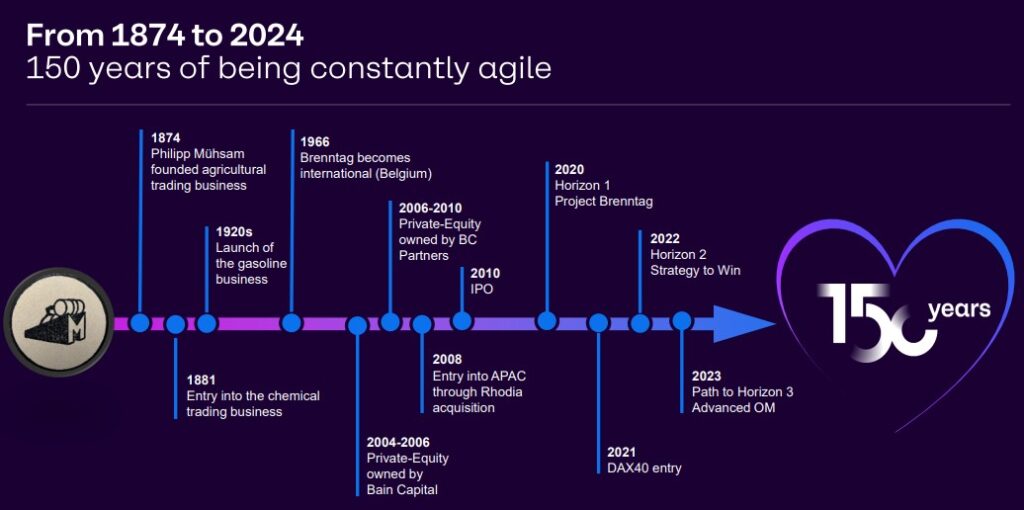
In the course of this private equity phase, the business model was sharpened and internationalized. Brenntag increasingly acted as a globally structured distributor of industrial and specialty chemicals, asserting itself in the market with an offensive strategy focusing on inorganic growth. Brenntag returned to the stock exchange in 2010 and today operates as Brenntag SE headquartered in Essen, Germany, with more than 600 locations in over 70 countries and a market-leading position in global chemical distribution. Brenntag has been a member of the German benchmark index DAX since September 20, 2021.
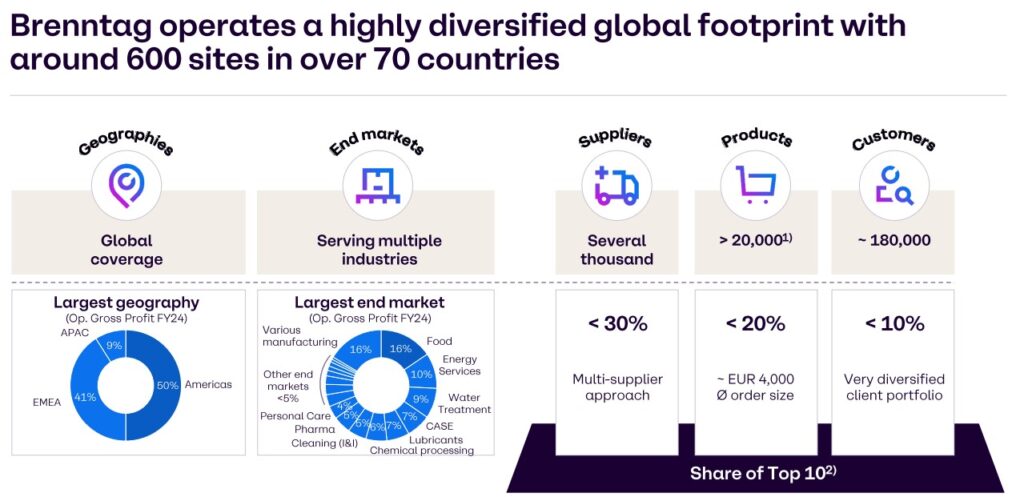
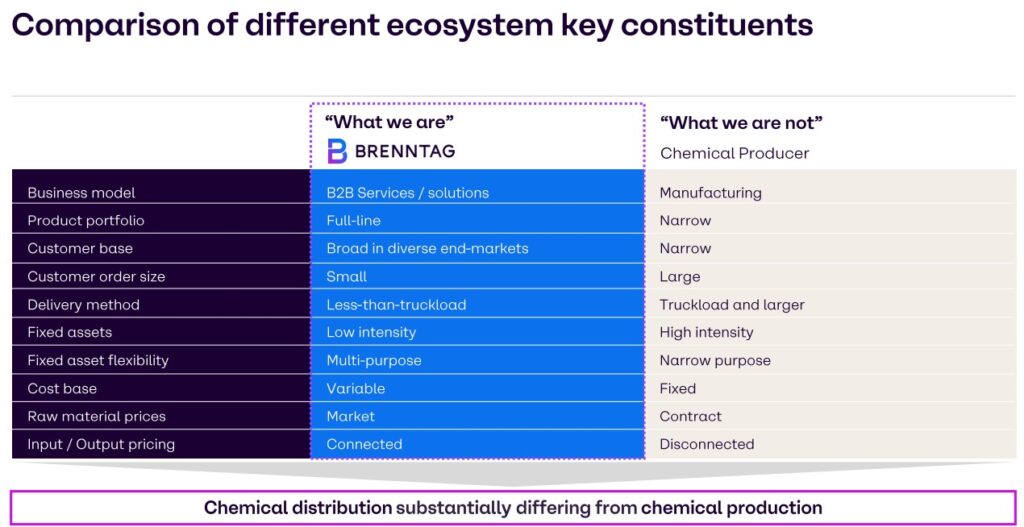
Im Zentrum des Geschäftsmodells Brenntag purchases large volumes of over 10,000 chemicals and ingredients from numerous suppliers, stores them in a global network of distribution centers and delivers them in customer-specific quantities - usually as part loads. Brenntag thus acts as an intermediary between chemical producers and the processing industries such as food, pharmaceuticals, cosmetics, drinking water treatment, oil and gas with the distribution of various chemicals. The model benefits from high diversification with around 180,000 customers from a wide range of industries, local proximity and includes complementary „value-added services“ such as filling, transferring and blending of chemical raw materials, inventory monitoring using telemetry systems, supply chain management, regulatory expertise and the provision of digital platforms. With more than 80 application laboratories worldwide, Brenntag supports customers with application technology issues.
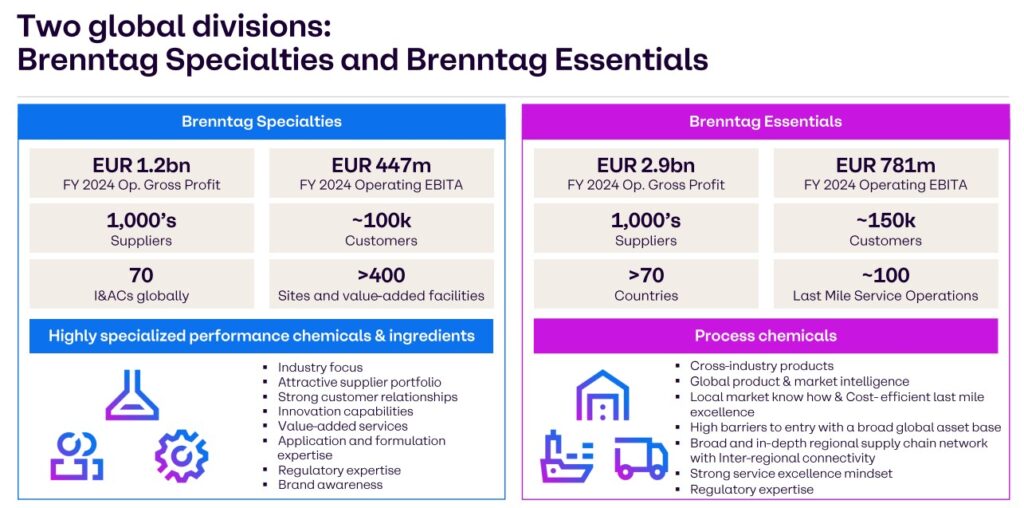
Two global Segments structure Brenntag's business:
- Brenntag Essentials (share of sales: 67.8 percent): Broad application of process chemicals (local focus)
- Brenntag Specialties (share of sales: 32.2%): Specialty chemicals in focus sectors such as pharmaceuticals, nutrition and materials science
Geographically, Brenntag is divided into four segments: North America, Latin America, Europe/Middle East/Africa (EMEA) and Asia-Pacific, with more sales generated in the EMEA region than in any other segment. In the past financial year 2024, the company generated external sales of around EUR 5.8 billion in the United States, while not quite EUR 1.2 billion was generated in the German market. The broad geographical diversification with over 33% of sales in the "Other" category underlines the global positioning.
The Corporate strategy of Brenntag aims to further expand its leading position in the global distribution of chemicals and ingredients through profitable growth, portfolio focus and efficiency improvements. Under the strategic framework „Strategy to Win“ and the roadmap extended to 2027, the Group is focusing on two clearly separate divisions - Essentials and Specialties - which each operate with their own growth logics, but should benefit from a common, lean corporate structure. This fundamental realignment is intended to master the increasing complexity of chemical distribution. The profitability of the two segments will now be reported separately. Although the management is not yet prepared to commit itself, a complete separation remains a distinct possibility.
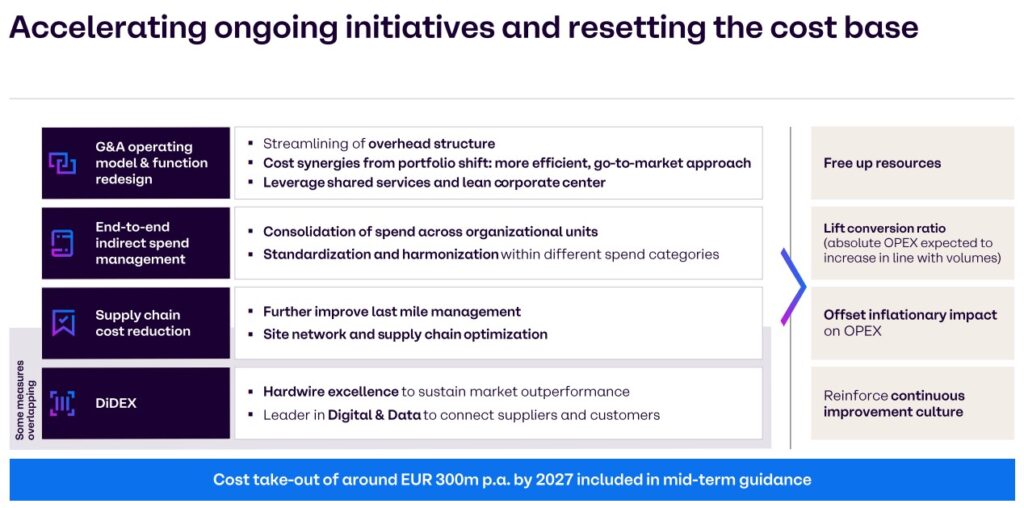
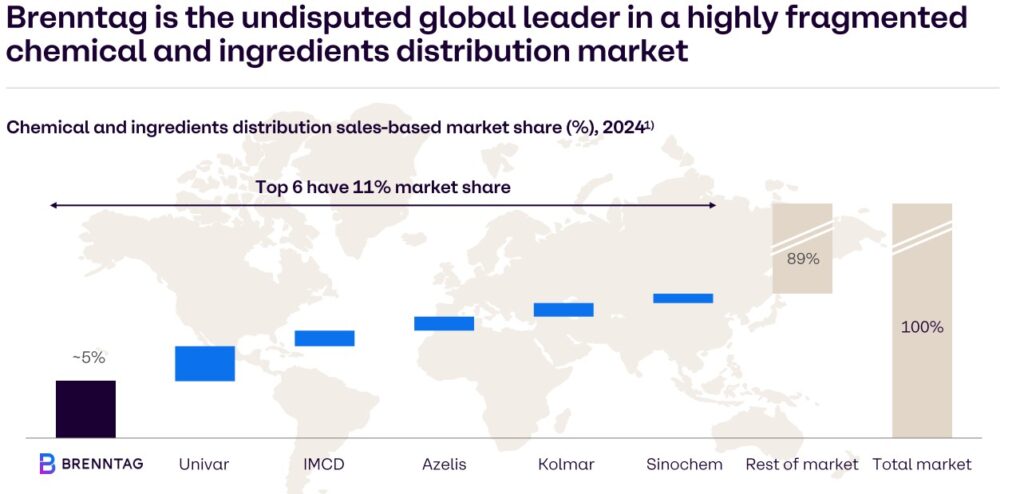
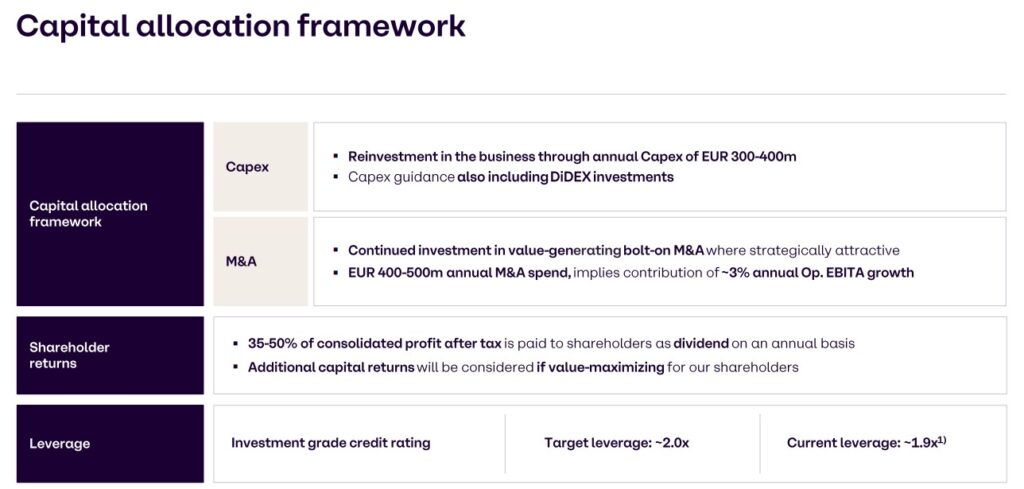
The core growth drivers are, firstly, organic growth through finer customer segmentation, the expansion of technical and formulation-specific services and the stronger cultivation of attractive end markets such as life sciences, nutrition, coatings, personal care and other specialty applications. Secondly, Brenntag is driving a offensive M&A strategy As a global consolidator, the company intends to invest EUR 400 to 500 million annually in acquisitions, with a focus on high-growth emerging markets and portfolio optimization to increase market share and margins. The chemical distribution industry is highly fragmented, with Brenntag having a market share of only 5 percent in terms of sales - a good indicator of great potential for further acquisitions.
Thirdly, the digital and data initiative „Digital.Data.Excellence (DiDEX)“ as a lever for additional EBITA growth by automating processes, establishing data-based price and margin management and expanding digital channels to become „the most straightforward business partner“ for customers and suppliers in the chemical distribution ecosystem. The e-commerce platform Brenntag Connect digitizes the customer experience and enables real-time access to product information and ordering processes.
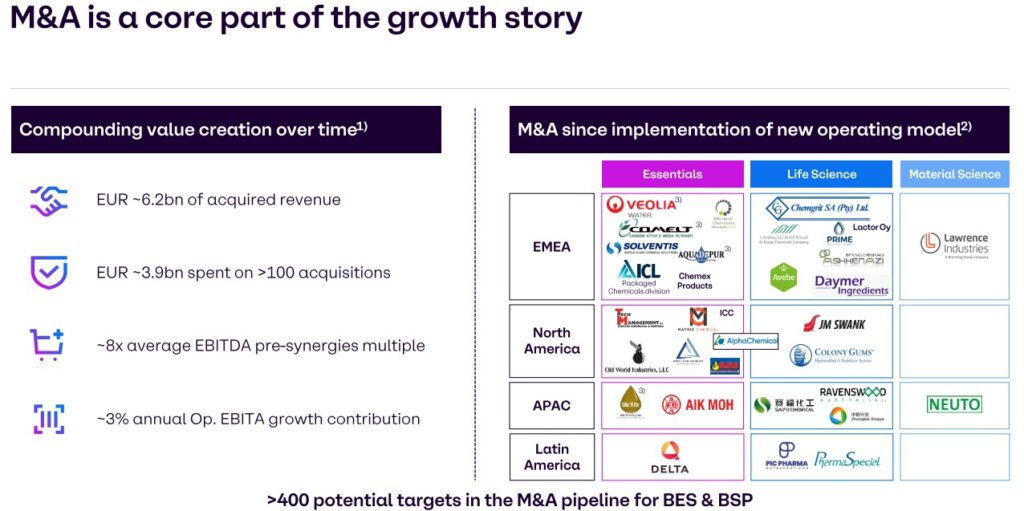
These are flanked by Growth driver of cost efficiency and excellence programmes that optimize logistics networks, simplify the organization and thus enable higher conversion rates from gross profit to EBITA. At the same time, Brenntag is anchoring sustainability - with targets to reduce emissions, improve safety and decarbonize logistics - as a strategic differentiating factor in order to grow as a preferred distribution partner, particularly in regulation-intensive industries and with major global customers.
Jens Birgersson has been the CEO of Brenntag SE since September 1, 2025. The Swedish manager has over 20 years of international management experience in various industries. Most recently, he has been CEO of the insulation specialist Rockwool Group from Denmark since 2015. Prior to that, he held various international management positions at ABB. The 59-year-old studied physical engineering and economics in Sweden and the USA.
The Shareholder structure Brenntag is characterized by a broad institutional base with a prominent anchor shareholder. Major shareholder Klaus-Michael Kühne had increased his stake in Brenntag Beginning of December from just over 15 per cent to just over 20 per cent, making it the company's largest shareholder once again. Brenntag's second largest shareholder is the US investor Artisan Partner Limited Partnership, which has also increased its stake from just over 10 percent to 15.9 percent. According to the latest voting rights announcements, other significant shareholders include Flossbach von Storch (>5 per cent), BlackRock (>5 per cent), Wellington Management Group (>3 per cent) and Harris Associates (>3 per cent). A special feature is that, according to Deutsche Börse's definition, 100 percent of Brenntag shares are in free float and over 93 percent of the identified shares are held by institutional investors. With Klaus-Michael Kühne as a strategic anchor shareholder, Brenntag has a long-term oriented major shareholder whose commitment is further underlined by the nomination of Dominik de Daniel, CEO of Kühne Holding AG, to the Supervisory Board.
| Shareholder | Share in % | Reporting date |
|---|---|---|
| Kühne Holding AG | >20 | 08.12.2026 |
| Artisan Partners Limited Partnership | >15 | 26.09.2025 |
| BlackRock, Inc. | >5 | 17.07.2024 |
| Flossbach von Storch AG | >5 | 01.06.2023 |
| Harris Associates L.P. | >5 | 04.04.2025 |
| Wellington Management Group LLP | >5 | 02.02.2026 |
Ownership structure of Brenntag (Source: Official website)
Industry profile and competitive situation
A competitive comparison of Brenntag with its peers makes sense in principle, but requires a differentiated view due to the specific nature of the business model. The peer group can be clearly defined, with IMCD, Azelis, Helm AG and Univar dominating the global market alongside Brenntag. As the latter two are not listed on the stock exchange, they are not eligible for comparison. In addition, Azelis' track record is still relatively short, as its IPO on Euronext in Brussels did not take place until 2021.
It should be noted that the business models of the individual distributors are different. Brenntag scores with its size, global logistics and broad base in the commodities segment, while IMCD focuses more strongly on specialties with a high level of vertical integration, which is reflected in higher margins than at Brenntag. Brenntag's higher cyclicality, especially in the Essentials segment, makes the company more susceptible to price pressure and weaker end markets than its more specialized competitors. Furthermore, IMCD's business model can be described as „asset-light“ with few own assets, while Brenntag serves both segments with different capital intensity. Therefore, I decided to consider IMCD for the competitive comparison.
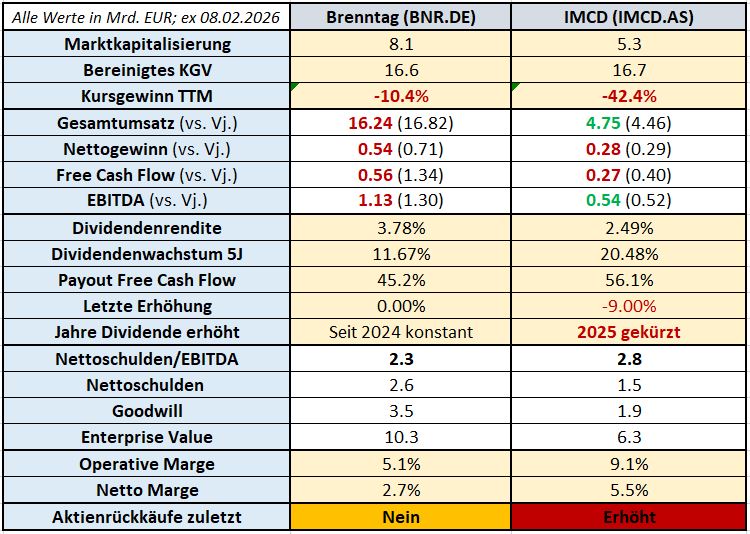
Notes on the values contained in the table:
- Green or red coloring of the figures indicates growth or decline compared to the previous year
- All values are stated in euros
Brenntag's financial situation
After gaining an overview of the industry in general and taking a closer look at the company, management and competition, we take a look at Canadian National's balance sheet and the key financial figures derived from it. The focus here is on the following aspects Growth, profitability and the Financing.
To analyze the financial situation, the first step is to look at the development of sales, profit and free cash flow. I have already discussed the internal distribution of sales per segment in the section on the business model above. On average, the Turnover in the last five years by 2.3 percent p.a.. an.
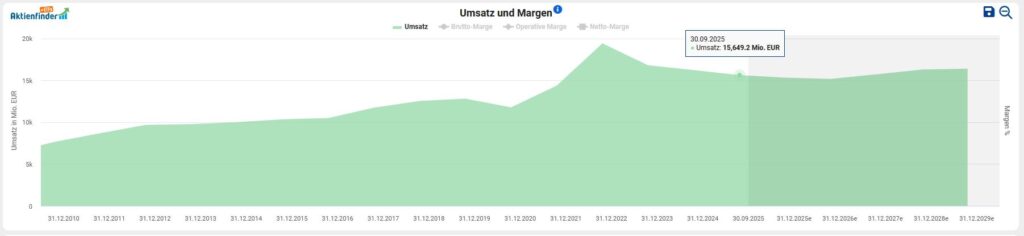
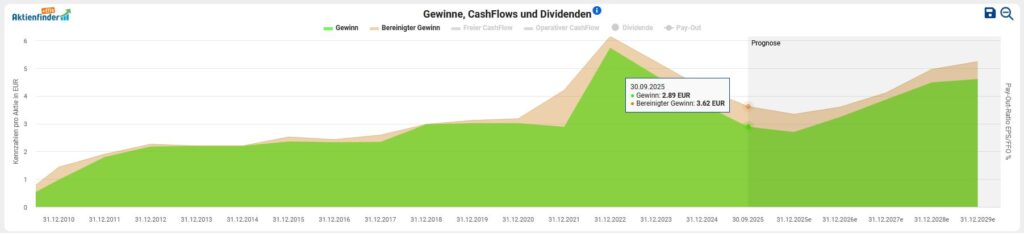
At Earnings per share we have seen a cyclical development for ten years due to the business model. If we look at the past financial year 2024, adjusted earnings per share fell by 18% (EUR 4.30 vs. EUR 5.23). In the past financial year, Brenntag generated a Net profit of EUR 0.54 billion.
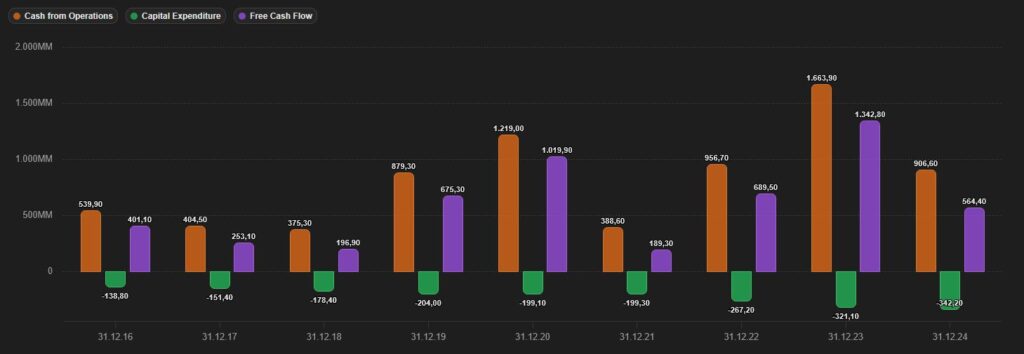
The amount available to the company Free Cashflow can be used for capital investments in organic growth, research and development, debt repayment, expansion via company acquisitions, dividend payouts or share buybacks. In absolute figures - which I primarily like to use - the picture of operating and free cash flow as well as capital expenditure (CapEx) for the period 2016 to 2024 is as follows:
A critical look at the Debt situation shows us that, based on the last financial year, Brenntag has a share of interest-bearing financial liabilities of EUR 3.56 billion, which in turn is offset by cash and cash equivalents and securities totaling EUR 0.77 billion. If we now divide the remaining net debt of EUR 2.79 billion by the most recent EBITDA of EUR 1.13 billion, the result is 2.4, which is below the critical threshold of 3.
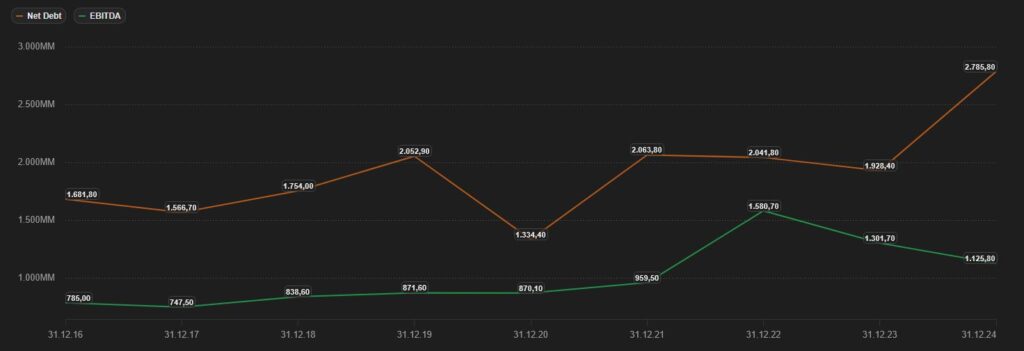
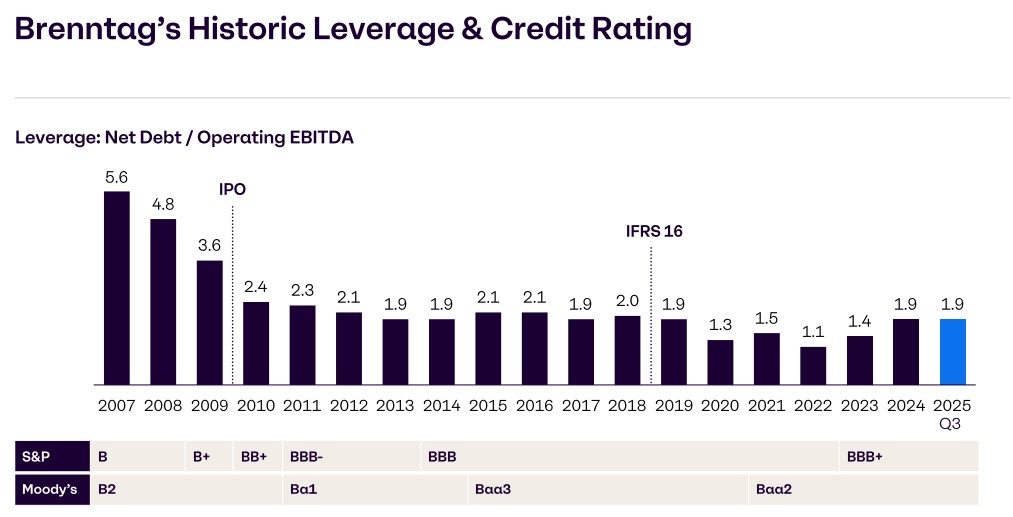
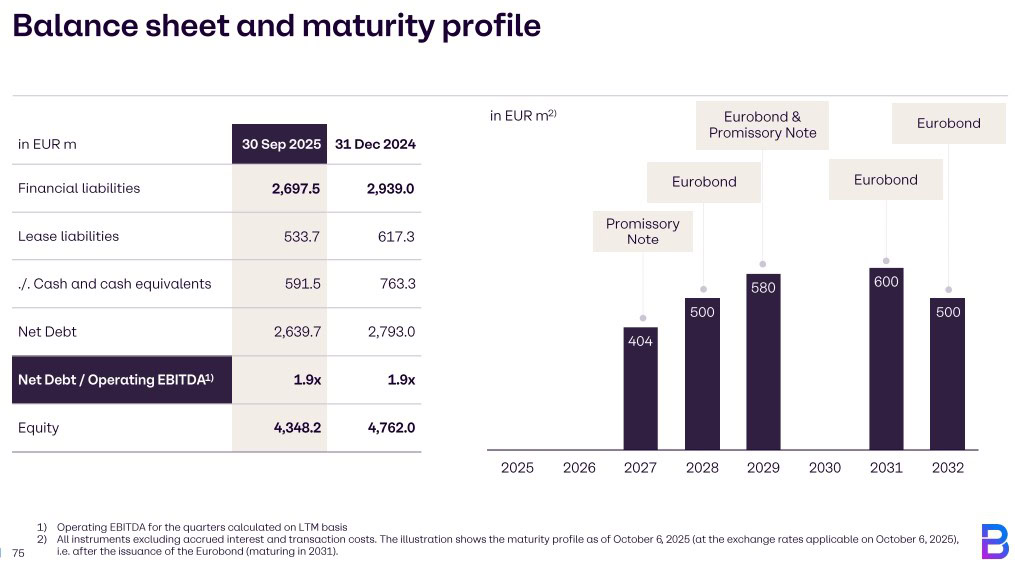
Around the topic Indebtedness and External financing it makes sense to look at the Interest profile and the Maturity structure of current liabilities. Finally, it is important to assess how vulnerable the company appears to be to higher key interest rates and to what extent new financing or rescheduling of existing debt will be necessary in the near future. Up to End of 2029 a total of EUR 1.48 billion of the non-current liabilities will fall due.
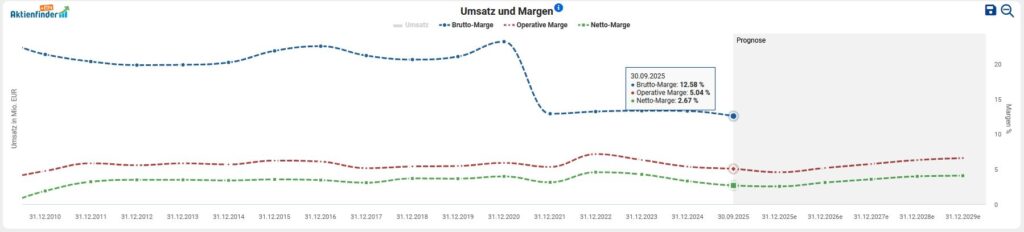
Finally, we look at the Profitability of Brenntag based on the development of gross, operating and net margins. The cyclical development in recent years is primarily reflected in the rapid decline in the gross margin in 2021. As the chemical distribution industry is characterized by low margins, a decline of just a few basis points in the net margin is reflected in significantly weaker net income.
Opportunities & risks
Brenntag acts as the global market leader in chemical distribution and serves around 180,000 customers. Compared to traditional chemical producers, the company benefits from a capital-efficient business model as an intermediary that is less cyclical than actual production. Based on the strategic realignment, Brenntag is focusing on separating the two business units Brenntag Basic Chemicals and Specialty Chemicals into independent divisions. The specialty business offers management higher margins and opportunities to differentiate itself from the competition.
The „Strategy to Win“ with the DiDEX initiative is expected to contribute 6 to 8 percent organic EBITA growth annually until 2027, supplemented by EUR 400 to 500 million for M&A per year in focus markets such as life sciences and emerging markets. The e-commerce platform Brenntag Connect digitizes the customer experience and enables real-time access to product information and ordering processes. A central pillar is the ongoing cost reduction program with a target volume of 300 million euros in annual savings - also by 2027.
In principle, the barriers to market entry are high, as it is virtually impossible to operate efficiently without existing expertise and a sophisticated trading network. Economies of scale in purchasing and logistics strengthen the position. Stricter environmental and safety requirements can give Brenntag, as a professionally positioned global player, a competitive advantage over smaller distributors, who can hardly cope with the administrative burden of these regulatory requirements.
The company's current strategy involves the acquisition of a number of competitors in high-growth countries. These acquisitions entail a number of challenges, including risks in connection with the valuation of the target companies, post-acquisition integration and the lack of synergy effects. In the worst case, impairment of the intangible asset (goodwill) must be expected. If the takeovers are not successful, analysts could lose confidence in the company's ability to grow inorganically.
Brenntag has a considerable level of debt. In the future, an increase in interest rates or changes in the debt capital markets could most likely affect the company's ability to finance its operations. There are many factors that could adversely affect the business environment in the distribution of chemicals and ingredients. Changes in the prices of certain raw materials and oil and gas prices, exchange rate fluctuations, geopolitical tensions and economic risks could affect the future growth of free cash flow. Customs duties are also a burden on the supply chain. The development of tariffs at international level is difficult to predict, as possible secondary and tertiary effects could impact Brenntag and the markets it serves.
The macroeconomic environment is very challenging due to increasing economic uncertainty. Brenntag expects EBITA in 2025 to be at the lower end of the forecast range. Despite market leadership, margins in chemicals trading are traditionally limited as pricing is largely transparent and differentiation remains difficult.
Current valuation of the Brenntag share
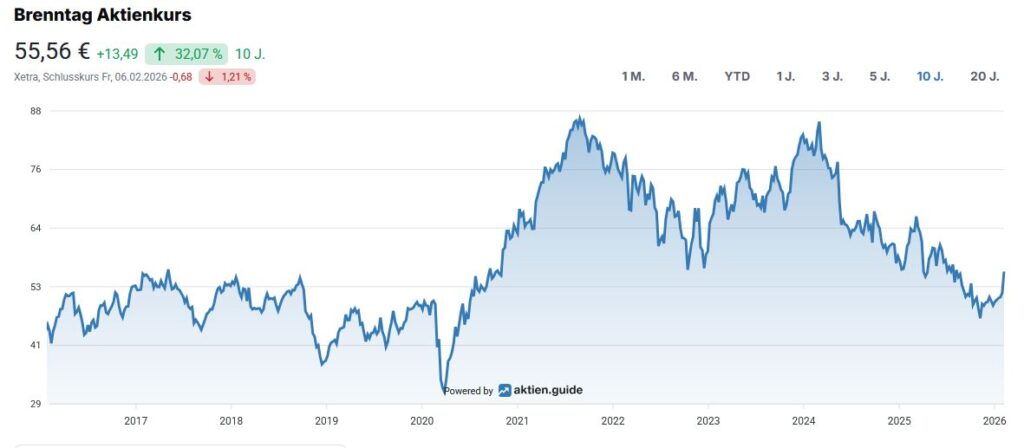
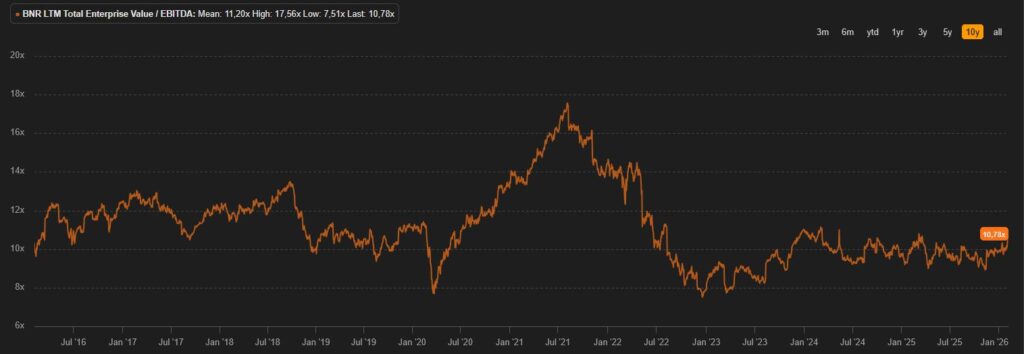
For the valuation of companies, I use the so-called Enterprise Value (EV) is used. In the case of a takeover, the EV indicates the amount required to purchase the assets required for operations and excludes the non-operating assets. I relate this key figure to operating profitability (before interest, taxes and investments (CAPEX)), expressed as EBITDA. The prevailing opinion is that a value of less than 10 indicates a „healthy valuation“ - as is always the case with generic Rules of thumb the company-specific context must be considered in the analysis by the careful investor himself. In the case of Brenntag, we have to consider a more favorable valuation based on the Result of 10.8 not look back very far, as the multiple fell to below 8 in the fall of last year:
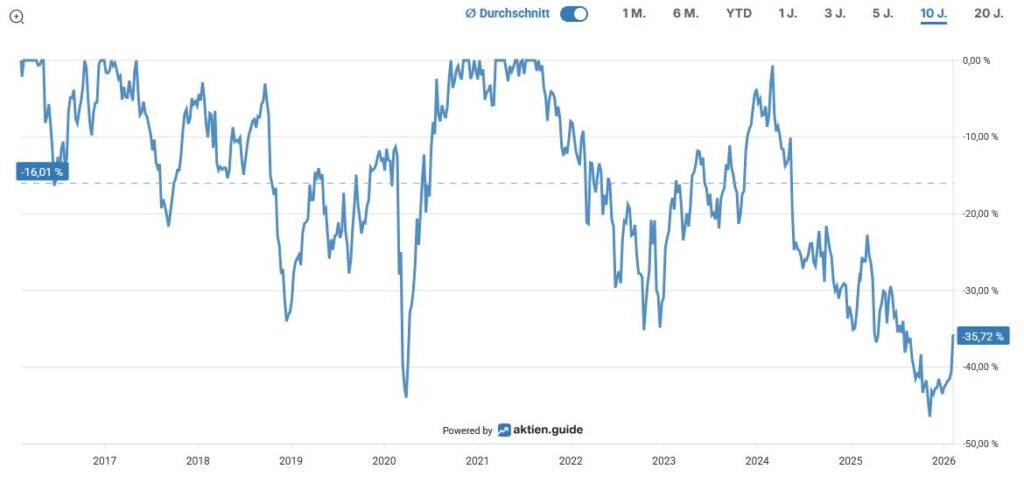
The Maximum decrease in the last ten years amounted to approx. 46 percent last fall 2025:
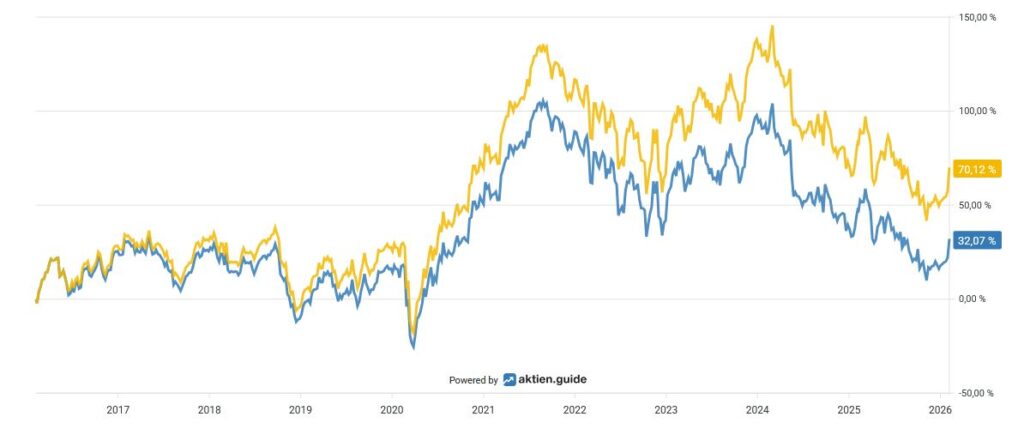
Over the past ten years, an investment in Brenntag, measured in terms of Total Return, including dividends received, a Overall performance from over 70 percent for the investor:
Capital allocation of Brenntag
Burning days Dividend policy provides for the distribution of an annual dividend of 35 to 50 percent of consolidated earnings after taxes.
For the 2024 financial year, a Stable dividend, which is distributed once a year, of EUR 2.10 per share. Since the first dividend was paid in 2010, it has never been reduced and, with one exception, has always been increased. In this respect, the last financial year marked the first year without a dividend increase.
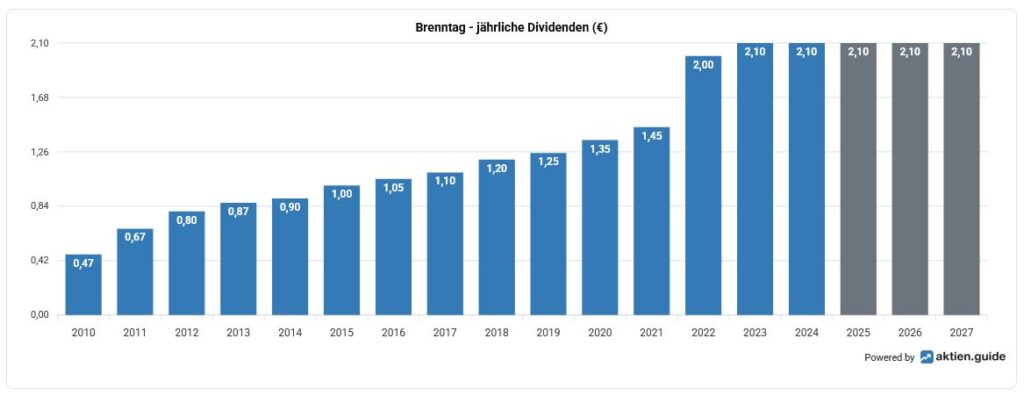
At the current share price of EUR 55.56, this results in a Dividend yield of 3.8 percent. Die Fünfjahres-Dividendenwachstumsrate amounts to 11.7 percent p.a. or 8.6 percent p.a. in the Ten-year period. To round things off, here is an overview of the last few years with dividend increases:
2024: 5 %
2023: 37,9 %
2022: 7,4 %
2021: 8 %
2020: 4,2 %
If we take the average value of the free cash flow der letzten drei Jahre als Grundlage für die Ermittlung der Ausschüttungsquote heran, landen wir bei einem komfortablen Ergebnis von 37.4 percent for Brenntag's payout ratio.
The Number of shares outstanding decreased overall by 6.5 percent in the past ten years.
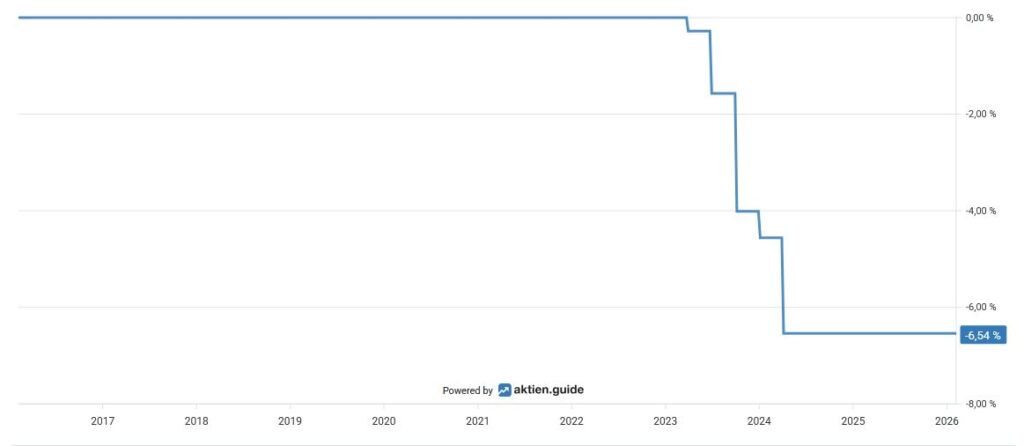
There is currently no new Aktienrückkaufprogramm, However, the Annual General Meeting approved an authorization to acquire treasury shares of up to 10% of the share capital, which is valid until May 2029:

Conclusion: Considerations for my decision to invest in Brenntag
Brenntag is a global leader in chemical distribution. No other supplier has a comparable diversity of business areas and products and is as well integrated as Brenntag. The company is implementing its strategy, optimizing its portfolio and achieving significant cost savings despite geopolitical and market-related pressures. In contrast to chemical production, the distribution of chemicals is a very attractive area, as it is generally less subject to fluctuations in the operating business and end markets.
Nevertheless, investments in the distribution of chemical products, particularly intermediates, are subject to volatility in the end markets. In addition, the last few years have been characterized by headwinds for many companies in this sector. According to both companies and industry sources, there are clear signs that prices will remain under pressure in the medium term due to overcapacity, but also due to lower demand overall.
The distribution sector for chemical products is considered to be even more fragmented than the production sector. Brenntag acts as a global consolidator in this highly fragmented market and benefits from its economies of scale, as regional suppliers are too small to meet the increasing regulatory requirements in the long term. For the model portfolio, the German company is an adequate addition to the basic materials sector.