Dear traders, dear stock market friends.
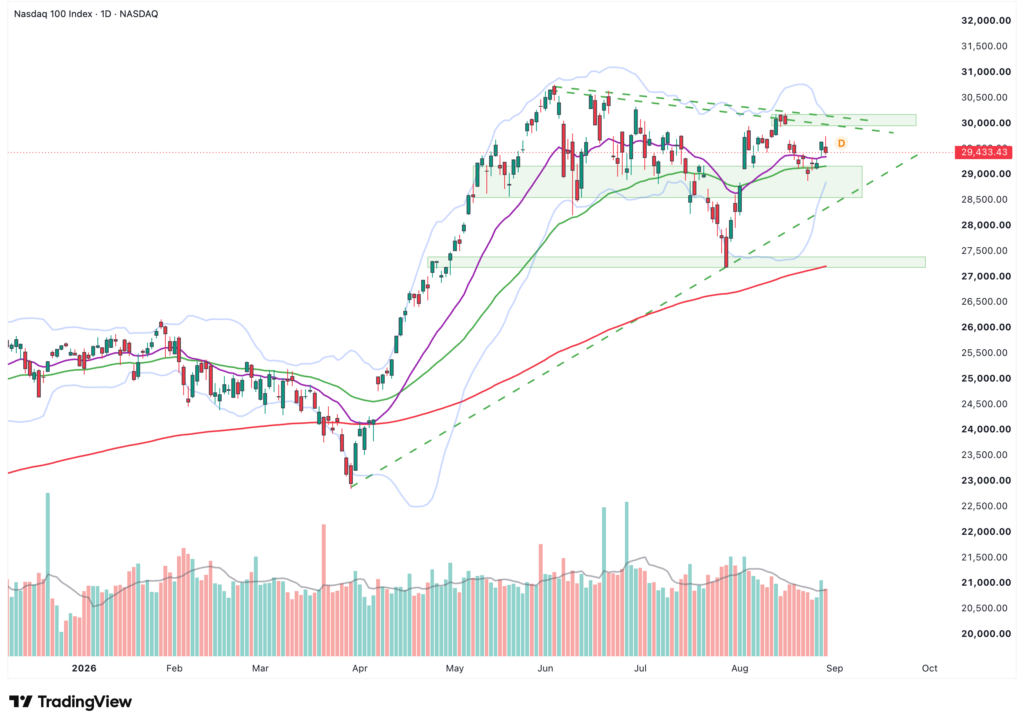
In the past trading week, the focus for the Nasdaq 100 was primarily on two topics: the eagerly awaited quarterly figures from Nvidia and the speech by Fed Chair Kevin Warsh in Jackson Hole. While Nvidia underscored the continued high momentum of the AI boom with strong figures and an once again surprisingly optimistic outlook, Warsh caused headwinds for technology stocks at the end of the week with a more restrictive stance on inflation and key interest rates. On balance, the Nasdaq 100 was nevertheless able to end the trading week with a slight gain.
Nvidia beats expectations: AI boom remains intact
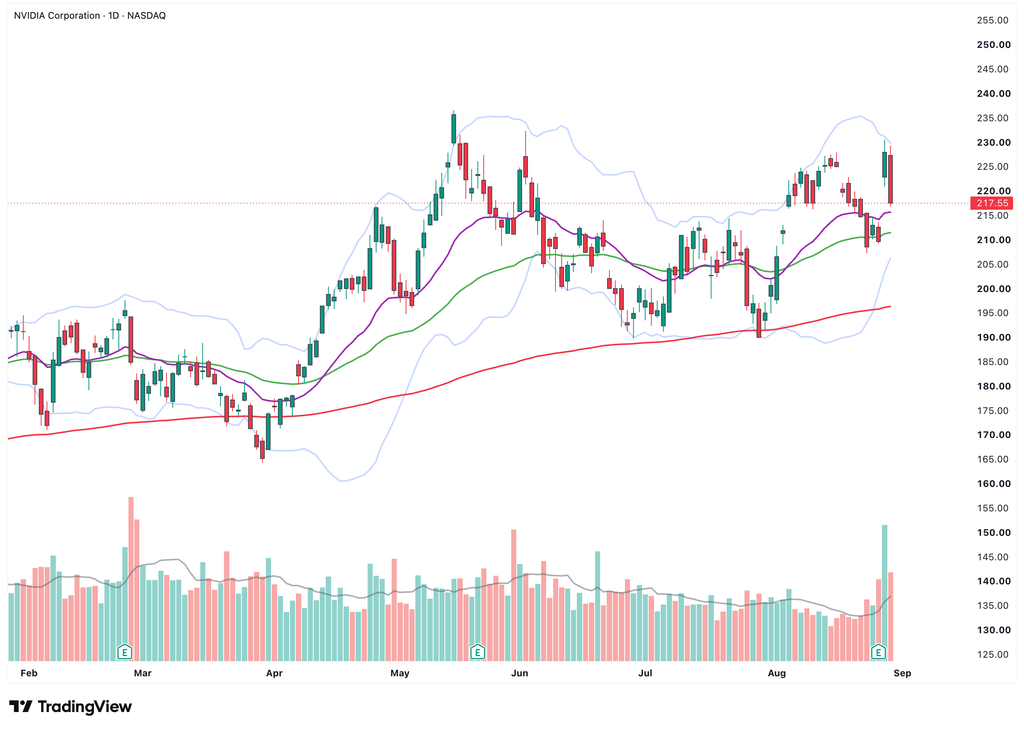
Nvidia's quarterly figures were released on Wednesday after the market close and were eagerly anticipated. Nvidia is now considered an important barometer for whether the enormous investments in artificial intelligence will continue at an unabated pace.
Nvidia was once again able to exceed analysts' high expectations. In the second fiscal quarter, revenue increased by 106 percent year-over-year to 96.2 billion US dollars, while the important data center revenue even grew by 117 percent to 89 billion US dollars. For the current quarter, Nvidia is forecasting revenue of around 108 billion US dollars.
The market reacted particularly positively to the news that Nvidia expects further revenue growth of around 70 percent for the upcoming fiscal year (fiscal year 2028). At the same time, however, the company warned of rising costs and bottlenecks in memory components, which could temporarily put pressure on the gross margin. The Nvidia stock nevertheless reacted on Thursday with an increase of 8.7 percent, while the Nasdaq 100 gained 1.43 percent.
Jackson Hole: Warsh remains significantly more hawkish than the market hoped
At the end of the week, Fed Chair Kevin Warsh caused headwinds with his first speech as Chairman of the US central bank in Jackson Hole. Warsh made it clear that the 2 percent inflation target still applies and that the Fed must continue to act if inflation does not decline quickly enough.
At the same time, Warsh emphasized that the U.S. economy remains in robust shape. Furthermore, the labor market is stable, consumer spending remains strong, and even the high interest rates seen so far have not yet significantly slowed economic activity.
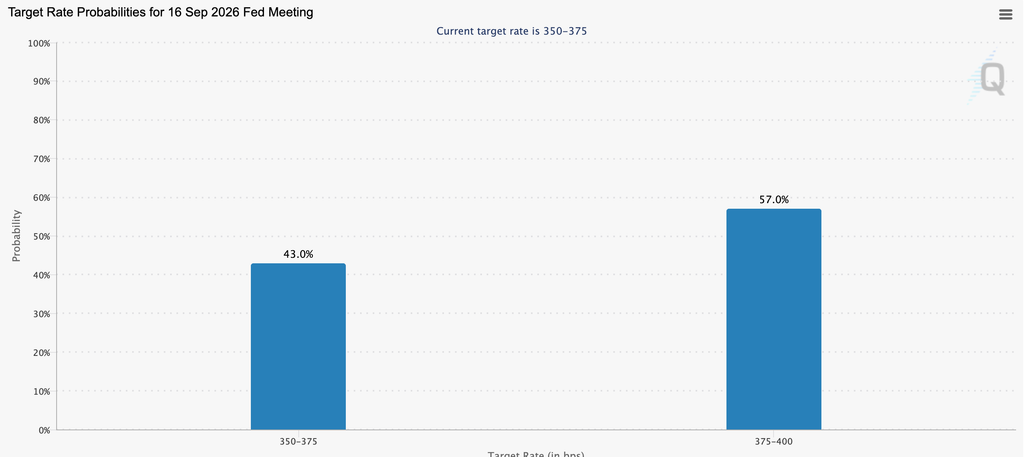
Accordingly, the probability of a September rate hike priced in by the market rose from around 35 to approximately 57 percent, according to the CME FedWatch Tool. The yield on two-year US Treasuries increased, while particularly rate-sensitive tech stocks came under pressure. The Nasdaq 100 lost 0.70 percent on Friday, and Nvidia dropped 4.6 percent.
Why rising interest rates are not necessarily bad for the Nasdaq 100
Rising interest rates initially mean headwinds, especially for highly valued technology stocks, because future profits are worth less with higher discount rates. Nevertheless, another rate hike does not automatically have to be negative for the Nasdaq 100. The crucial factor above all is why the Fed is raising interest rates.
Historically, rate hike cycles have by no means always been bad for stocks. J.P. Morgan analyzed the six completed Fed hiking cycles between 1983 and 2019: in five of them, the S&P 500 rose. On average, the index even gained 13.6 percent during these phases, although the Fed raised the key interest rate by an average of almost 300 basis points.
However, the cycle of interest rate hikes beginning in 2022 also reveals the other side of the story. At that time, the Fed had to take particularly aggressive countermeasures in response to sharply rising inflation. The federal funds rate was raised by a total of 425 basis points, while the S&P 500 lost about 27.5 percent at one point.
The reason for this is that interest rate hikes frequently take place in an economically strong environment. Exactly that is also the crucial point currently. The labor market and consumer spending remain robust, while corporate profits continue to grow.
It would be particularly problematic if inflation were to rise significantly again and the Fed were forced into an aggressive cycle of interest rate hikes. A single interest rate hike of 25 basis points, on the other hand, would not yet be a reason to take a fundamentally bearish view on the Nasdaq 100.
Therefore, the crucial question is not just: Are interest rates rising? But rather: Why are interest rates rising?
Technical Outlook for the Nasdaq 100 Index
From a technical analysis perspective, the Nasdaq 100 Index remains in a consolidation phase after recently reaching an all-time high in early June. The S&P; 500, the Dow Jones Industrial Average, and the Russell 2000, on the other hand, had already reached new highs in August.
Meanwhile, the Nasdaq 100 is consolidating within a descending triangle, from which a false breakout occurred on the downside at the end of July.
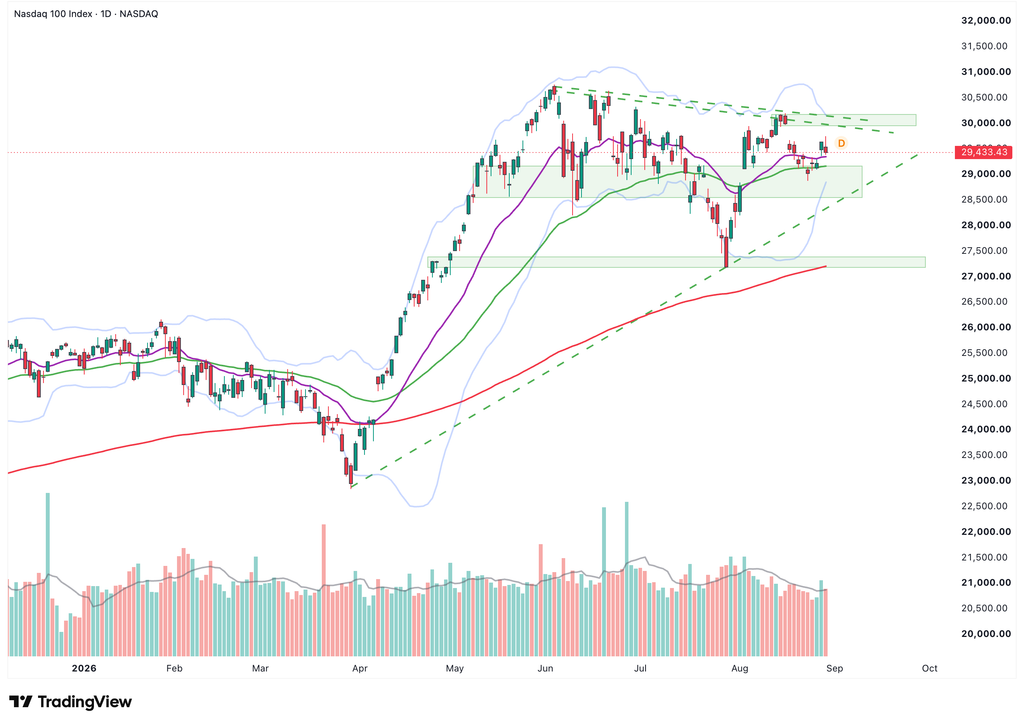
Only a break above the 31,100-point mark would signal a clear breakout from the triangle, coinciding with a breakout above the upper Bollinger Band.
In the event of a breakout below the broad support zone between 28,600 and 29,000 points, the next correction target would be in the area of the daily EMA 200 (red) in conjunction with the local low from July 29 at approximately 27,250 - 27,300 points.
Author: Tobias Schmid
Date: 08/31/2026