


Imagine you're sitting comfortably at home scrolling through your social media feeds. Suddenly you see posts everywhere about a FOMO sharewhich just goes through the roof.
Your heart starts to beat faster, your palms become clammy. "Shouldn't I get on board too?" you ask yourself. "What if I miss this once-in-a-lifetime opportunity?"
This phenomenon can affect you not only Teaching fee costbut also your rational Thinking ability. With the right strategies, you can recognize FOMO stocks and use them to your advantage instead of blindly jumping on a bandwagon without knowing where it will lead.

The most important in a nutshell
- FOMO can lead to impulsive and irrational investment decisions
- Social media and financial news play a crucial role in the emergence of FOMO
- A solid investment plan and diversification protect against FOMO-driven wrong decisions
- Anti-cyclical investing can use other investors' FOMO phases to your own advantage
- Rule-based trading strategies help to rule out emotional decisions
What is FOMO and how does it affect investors?
FOMOthe abbreviation for "Fear of Missing Out" describes investors' fear of missing out on lucrative opportunities on the stock market. This psychological phenomenon can lead to impulsive and often irrational Decisions which in the long term negative Effects on the portfolio.
As an investor, you should pay particular attention if you observe the following behavior:
- Constant review of courses and financial news, also outside trading hours
- Rash buying when prices rise without a thorough analysis of the fundamentals
- The Feeling, absolutely "having to be there" when certain shares or cryptocurrencies rise sharply
- Neglecting your own investment strategy in favor of short-term trends
- Emotional reactions such as stress or insomnia due to market movements
Important:
To counteract FOMO, it is important to become aware of these emotions and develop counter-strategies. A first step can be to develop a Trade journal in which you record your decisions and the feelings associated with them. This allows you to recognize patterns and work on them in a targeted manner.
FOMO shares: what the science says
The study "Catching the FoMO Fever: A Look at Fear in Finance" from 2021 examines the phenomenon of "Fear of Missing Out" (FOMO) on the financial markets.
Main results of the study
- The researchers developed a comprehensive FOMO index that takes into account factors such as market dynamics, news sentiment and the use of margin accounts.
- The analysis shows that FOMO has an impact on the prices of shares and cryptocurrencies.
- At household level, FOMO increases participation in the stock market and the willingness to take risks, especially among less educated households.
- Younger and inexperienced investors are more susceptible to FOMO stocks.

This chart shows the relationship between the FoMO index and the cash flow. A positive trend can be seen: the higher the FoMO index, the greater the capital flow tends to be. This indicates that a stronger "fear of missing out" goes hand in hand with higher investments on the financial markets.
Significance of the results
This study provides important insights into how FOMO influences investment behavior and changes market dynamics. It underlines the need for investors to be aware of the emotional influences on their decisions and to pursue rational investment strategies.
The results could be of interest to you as an investor in order to better understand the impact of FOMO on the financial markets and how to react to it.

This chart shows how the "Fear of Missing Out" (FoMO) index has developed between January 2004 and July 2021. The index fluctuates over time, with two clear peaks:
- After the recovery from the 2009 financial crisis
- During the sharp stock market slump at the start of the COVID-19 pandemic in 2020
Overall, a gradual increase in the FoMO index can be observed since 2010.


How does FOMO arise on the stock market?
FOMO on the stock market is a complex Phenomenonwhich is characterized by various Factors is influenced. The individual aspects are presented below.
The herd instinct: when everyone else is buying, I want to be there too
The Herd instinct is a more fundamental Aspect human behavior, which is particularly evident on the stock market.
Investors tend to do so, Share trends to follow. And often on the assumption that the majority has better information or insights. This so-called "Bandwagon effect" can lead to self-reinforcing cycles:
- Rising share prices attract more investors
- Increased demand continues to drive share prices upwards
- The cycle is self-reinforcing
This Effect can however dangerous as it is often too Overvaluations and ultimately to Market bubbles leads. Experienced investors therefore try to consciously counteract this urge and base their decisions on well-founded analyses.
Historical examples such as the Dotcom bubble show just how dangerous such FOMO-driven rallies and FOMO shares can be.

Emotional rollercoaster: when feelings get the upper hand
FOMO often leads to investors losing their Decisions on Base from Emotions instead of carrying out rational analyses. The Feara Chance of winning to misscan override logical thinking and lead to impulsive actions.
This emotionally driven behavior often manifests itself in:
- Hasty purchases without a thorough examination of the fundamentals
- Neglect of important principles such as diversification and risk management
- Holding positions for too long for fear of missing out on potential gains
To counteract this pattern of behavior, experts recommend developing a disciplined Anlagestrategie and the Utilization from Stop-loss ordersto minimize emotional decisions.
Social pressure and the social media echo chamber: drivers of FOMO on the stock market
The social pressurebeing successful and being able to keep up with others is a key driver for FOMO on the stock marketwhich is characterized by social Media considerable reinforced becomes. In a society that often glorifies material success and financial performance, the impression is created that you are missing out on something if you do not share in the supposed stock market gains.
Platforms like X (formerly Twitter), Reddit or special Financial forums offer investors the opportunity to exchange information about market movements in real time and share their successes, which can lead to an echo chamber in which positive news and success stories are disproportionately amplified.
This pressure is intensified by various factors:
- Social media and financial forums where investors share their success stories
- Comparisons with friends, colleagues or family members
- Media reports on successful investors and spectacular profits
- "Financial influencers" with large followings
- Rapid spread of rumors and unconfirmed information
- Increased volatility due to short-term trends and hypes
It is important to realize that every investor has individual goals and risk tolerances and that the financial success of others is not necessarily transferable to your own situation.
Important:
Investors should Critically scrutinize information from social medianot blindly follow every recommendation and try to create a balanced information base so as not to be influenced by short-term trends.
Media hype: When the stock market becomes a permanent topic
The intensive Reporting about Stock market gains or successful investors plays a central role in the Emergence and strengthening of FOMO shares.
The media tends to focus on success stories and spectacular profits, while losses or risks often receive less attention. This one-sided presentation can create a distorted picture of reality for investors.
Factors that increase the influence of the media:
- 24/7 financial channels that constantly report on market movements
- Portraits of charismatic investors or entrepreneurs
- Short-term price increases due to media attention for certain shares or sectors
It is important to realize that the media often only show a slice of reality. Investors should try to obtain a balanced picture by various sources use and also take critical voices into account.


The crypto gold rush: when digital coins awaken dreams
The success of some early investors in the cryptocurrency market has FOMO and has led to a veritable "pandemic". Crypto boom led. The extreme price fluctuations and stories of "Bitcoin millionaires" have fired the imagination of many investors.
The special features of the crypto market are:
- High volatility and potential for quick profits
- Complex technology that many investors do not fully understand
- Often little regulated environment
It is important to emphasize that the Crypto market despite its potential highly speculative and thorough research and a cautious approach to investments are essential.
The knowledge gap: When ignorance leads to arrogance
A lack of understanding of market mechanisms and valuations can significantly favor FOMO. Many investors, especially newcomers, do not have sufficient knowledge in areas such as fundamental analysis, technical analysis or risk management.
The consequences of a lack of knowledge are:
- Investment decisions based on rumors or short-term trends
- Unrealistic expectations of returns
- Underestimation of risks and overconcentration in certain sectors
It is crucial to continuously invest in your own financial education. This can be done through specialist literature, online courses or exchanges with experienced investors.
Attention:
A better understanding of the markets not only helps to reduce FOMO, but also enables well-founded and potentially successful investment decisions.
Strategies against FOMO stocks: How investors stay rational
The good news is that you can against FOMO shares or the Origin from Protecting FOMO on the stock market can. Various approaches are presented below so that you can act rationally regardless of the current situation.
Development of a solid investment plan
A well thought-out investment plan is your best protection against the fear of missing out on trading or investing.
- Define your long-term Investment objectives (e.g. retirement provision, house purchase) and the time horizon for each goal.
- Determine your Risk tolerance. Reflect on how you generally deal with risks and whether you react emotionally to losses. Adjust your investment strategy accordingly.
- Create a strategic Asset allocation (e.g. 60% shares, 30% bonds, 10% alternatives). Take your age and life situation into account.
- Create a written Investment plan and check It should be updated regularly (e.g. quarterly). Adjust it in the event of major life changes.
- Define Clear rules for buying, selling and rebalancing. Example: "I buy when a position has fallen by more than 20% and its fundamentals are unchanged."
Diversification as protection against FOMO traps
A broad diversification of your portfolio reduces the urge to chase every market movement. The following exemplary approaches can help:
- Invest in at least 20-30 individual stocks from different industries and regions. The best way to find out more is to read our article on the subject of Aktien für Anfänger and Aktien mit hoher Dividende through.
- Or alternatively use ETFs for cost-effective diversification. A core-satellite approach may be appropriate: 70-80% in broadly diversified ETFs (e.g. MSCI World), 20-30% in single stocks or thematic index funds.
- Take into account Various asset classes such as equities, bonds, real estate and commodities. REITs and commodity ETFs can be an easy way to cover these areas.
- Pay attention to geographical diversification. A good starting point could be: 50% domestic market, 30% developed foreign markets, 20% emerging markets.
- Check and rebalance review your portfolio regularly, e.g. every six months. This helps to maintain the desired diversification and forces you, to act anticyclically.
Emotional distance through rule-based action
Rule-based trading strategies help to rule out emotional decisions. Practical implementation options can be
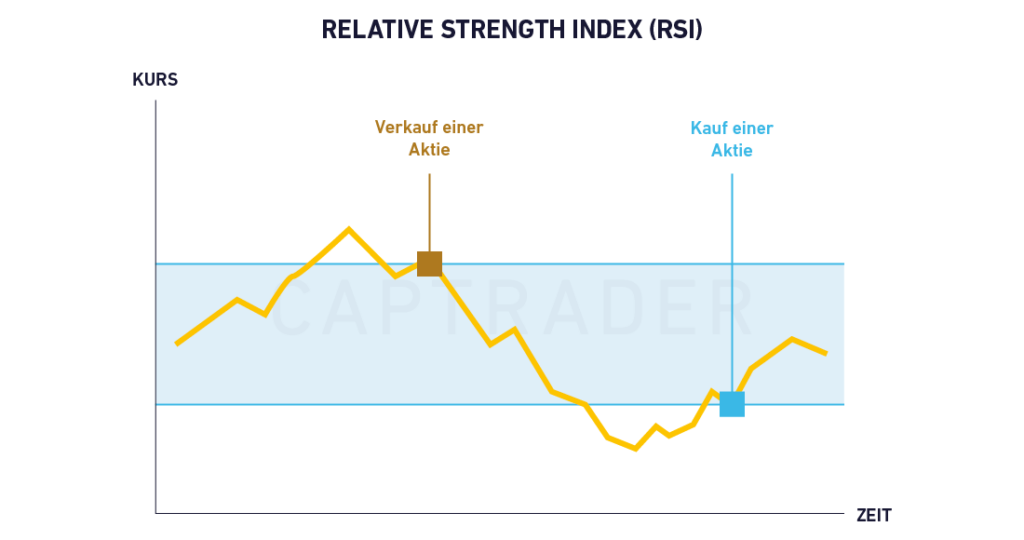
- Define Clear entry and exit rules based on quantitative criteria. Example: "Buy when the RSI falls below 30 and the 50-day moving average is above the 200-day moving average."
- When trading, implement a systematic Money Management. Do not risk more than 1-2% of your portfolio per trade.
- Automate your strategy as far as possible by Limit orders and Stop-loss orders. Alternatively, you can also use a fully automated monthly Shares savings plan invest.
How you can use FOMO to your advantage
Although FOMO often has negative effects, there are ways to make it strategic to use and even Advantages from it to draw. With the right Approach you can turn the market dynamics created by FOMO into Ito your advantage.
Anticyclical investing: Buy when others are selling
A proven strategy is to invest anti-cyclically. So then Day trading shares buy when others are selling for fear of losses or market declines.
In such times, high-quality shares can often be acquired at favorable prices. However, this requires a good understanding of the Share trends and the ability, swimming against the tide.
- Always keep a Cash reserve of 10-15% of your portfolio ready to take advantage of buying opportunities.
- Create a Watchlist with quality stocks and bet Limit buy orders significantly below the current market price.
- Use Market corrections of 10% or more as potential entry opportunities.
- You can also consider working with Trade optionsto generate regular rewards as a kind of passive income. To do this, you can set up a Open an accountwhere this asset class is offered for trading.
- Observe Sentiment indicators like the VIX (volatility index). Extreme values may indicate overreaction.

Exploiting market exaggerations for entry opportunities
FOMO often leads to Markets overheating. Take advantage of these exaggerations to enter the market when prices are rising sharply, but the Fundamental data still a Growth potential to show.
- Analyze the Kurs-Gewinn-Verhältnis (P/E ratio) in a historical context. An above-average P/E ratio can indicate a Überbewertung indicate.
- Use technical indicators like the Relative Strength Index (RSI)to identify overbought situations.
- Set staggered Limit ordersin order to profit from possible price setbacks.
Using momentum strategies
Advanced investors can Trading Arbitrage Use strategies to profit from market inefficiencies. One possibility is to use the momentum generated by FOMO.
Possible approaches could be:
- Identify stocks with strong positive momentum driven by FOMO.
- Set tight stop-loss orders to limit your risk.
- Define clear exit rules, e.g. when the momentum indicator declines or certain price targets are reached.
Use psychological advantages
By FOMO Understand and controlyou can create a psychological Advantage opposite other market participants obtain.
- Remain rational when others act emotionally.
- Take advantage of other investors' overreactions to buy cheaply or sell overvalued positions.
- Be open to alternative ways of thinking by critically questioning popular opinions and trends.


Conclusion: Understanding FOMO shares and making smart decisions
FOMO shares can lead to irrational decisions and have a strong influence on investor behavior. In order to counteract this phenomenon and at the same time benefit from the resulting market dynamics, you should consider a few important aspects.
First of all, it is crucial to Awareness für FOMO to develop and the Signs themselves and other market participants to recognize. This makes it possible, emotional Reactions better control and rational Decisions to meet.
A solid investment planwhich is based on long-term goals and the individual Risk tolerance forms the foundation for successful investing despite the FOMO on the stock market.
Through the Broad diversification of the portfolio about various Asset classes, Industries and Regions reduces the urge to chase every market movement.
At the same time, a emotional distancewhich are characterized by rule-based Trading strategies can be achieved, impulsive Decisions to Avoid.
See market exaggerations as an opportunity for Countercyclical transactions. Buy high-quality shares when others are selling out of fear. You should also invest in your Financial knowledge invest to well-founded decisions to be able to meet.
Now you know the principles of FOMO stocks and how to deal with them. If you take these to heart, you can avoid FOMO-driven wrong decisions and use the market dynamics to your advantage.
