


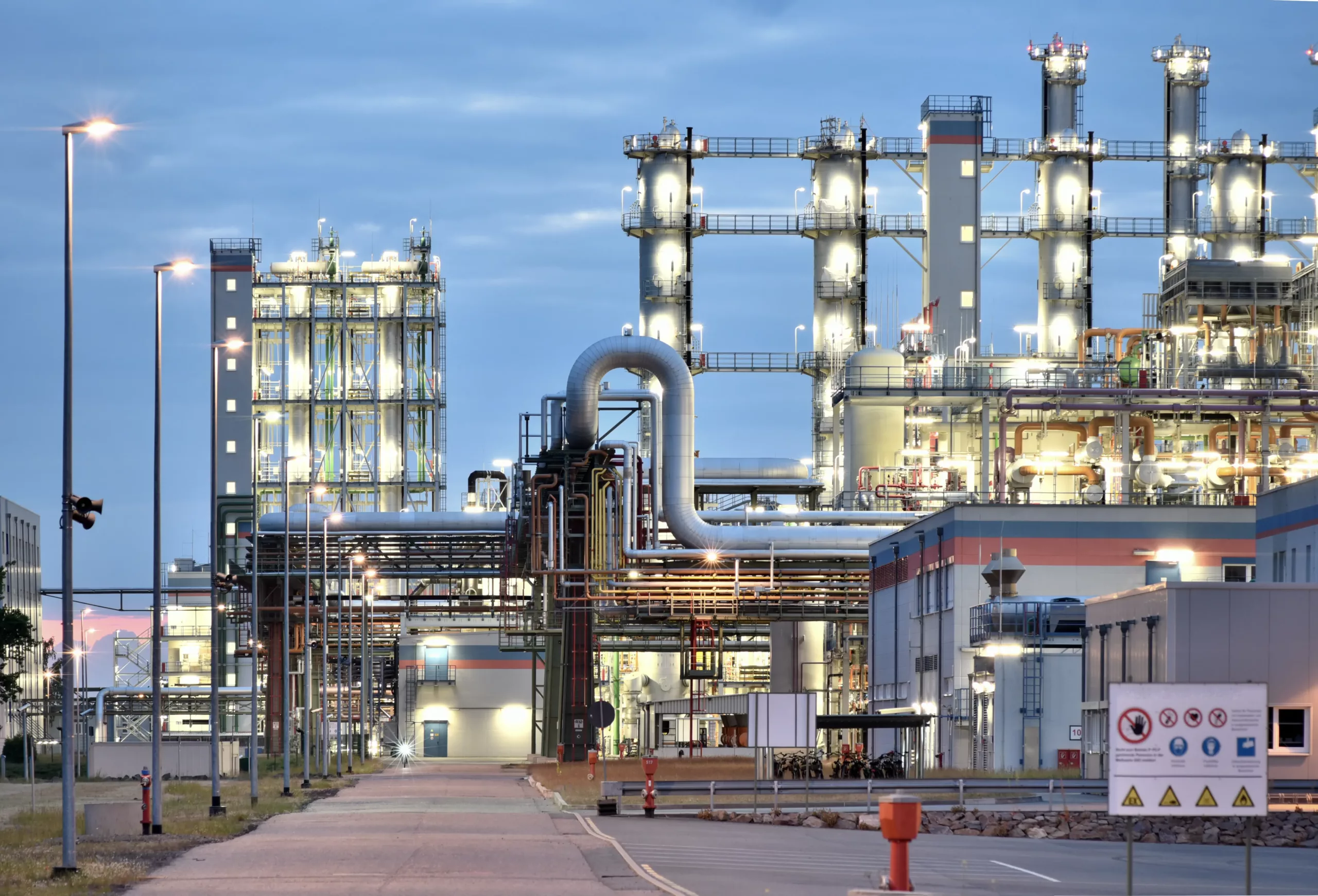
The chemical industry plays a central role in our modern economy. Chemicals and chemically produced substances can be found in almost all products in our daily lives. Companies operating in the chemical industry not only supply raw materials for numerous sectors, but also drive innovation and create jobs worldwide. In this article, we present the chemical industry in general and a selection of chemical stocks in detail.
OVERVIEW OF THE CHEMICAL INDUSTRY
The chemical industry deals with the research, development, production and distribution of chemical substances and is divided into various segments, each of which produces specific types of chemicals and serves different areas of application.
Basic chemicals
Basic chemicals form the foundation of the entire chemical industry. They include basic substances such as ethylene, methanol and chlorine, which are produced in large quantities and used as starting materials for the production of a wide range of other chemicals. Due to their essential role, the prices and production volumes of these chemicals are often an indicator of the general economic situation.
Specialty chemicals
Specialty chemicals are designed for specific applications and are characterized by their high quality and performance. They are used in a wide range of sectors, from the automotive to the electronics industry. The production of specialty chemicals often requires specialized know-how and close cooperation with end customers in order to develop tailor-made solutions.
Fine chemicals
Fine chemicals are highly specialized substances that are mainly used for research purposes, in the pharmaceutical industry or in biotechnology. They are produced in smaller quantities than basic or specialty chemicals, but often at higher prices, as they are generally more complex and purer.
Agrochemicals
The agrochemicals segment focuses on the production of chemicals for agriculture. These include fertilizers that promote plant growth and pesticides that combat pests and diseases. In view of the growing world population and the need to increase food production, agrochemicals play an important role.
Biochemicals
Biochemicals are obtained from biological sources and can serve as a more environmentally friendly alternative to traditional chemicals. They are used, for example, in the production of biofuels or bio-based plastics. With the growing awareness of environmental issues, chemicals are becoming increasingly important.
ECONOMIC SIGNIFICANCE
The chemical industry is a crucial part of the global economy. It contributes significantly to the gross domestic product of many countries, generates billions in revenue through the production and sale of chemicals and, as a major employer, provides highly skilled jobs in areas ranging from research and development to sales and marketing. In addition, the chemical industry supports many other industries by providing essential products and materials that are vital to their operations.
SELECTION OF WELL-KNOWN AND LARGE CHEMICAL STOCKS AT A GLANCE
In the following table you will find a selection of large and well-known chemical stocks. These are often global corporations with a large market capitalization. We then present five chemical stocks in detail.
Top 10 chemical stocks, sorted by market capitalization
| Company | Symbol | Country | Market capitalization |
| Air Liquide SA | AI.PA | France | 94.09 billion USD |
| Merck & Company Inc | MRK.XETRA | Germany | 72.15 billion USD |
| Air Products and Chemicals Inc | APD.US | USA | USD 65.65 billion |
| BASF SE | BAS.XETRA | Germany | 44.56 billion USD |
| Dow Inc | DOW.US | USA | 38.39 billion USD |
| Dupont De Nemours Inc | DD.US | South Africa | USD 35.34 billion |
| Albemarle Corp | ALB.US | USA | USD 29.39 billion |
| Covestro AG | 1COV.XETRA | Germany | USD 10.11 billion |
| Eastman Chemical Company | EMN.US | USA | USD 10.1 billion |
| Wacker Chemie AG | WCH.XETRA | Germany | USD 9.8 billion |
BASF
- Company: BASF SE
- Symbol (TWS): BAS
- ISIN: DE000BASF111
- Stock exchange: XETRA
- Country: Germany
- Currency: Euro (EUR)
- Market capitalization: EUR 41.1 billion / USD 44.56 billion
- Turnover (TTM) in USD: 85.19 billion.
BASF is the largest chemical company in the world and was founded in 1865. The four letters stand for: Badische Anilin- & Soda-Fabrik. The company operates in 90 countries worldwide, where it has over 200 production sites. BASF's business is divided into six divisions: Chemicals, Materials, Industrial Solutions, Surface Technologies, Nutrition & Care and Agricultural Solutions.
Brief analysis & outlook
BASF shares have fallen sharply over the last five years and are still trading around 50 % below their 2018 high. BASF's valuation based on the discounted cash flow (DCF) model shows that the stock is potentially undervalued by up to 47%, with a projected fair value of 88.31 euros. The current share price of just under 50 euros and the analysts' targets indicate that there is still considerable upside potential.
The fundamental analysis shows that despite its strengths, such as a good dividend yield and a strong market position, BASF is also facing some challenges. The recent news about short-time working at the Lampertheim site due to a decline in demand is a sign of potential future challenges. In addition, BASF recorded a significant drop in sales and profits in the second quarter, which has prompted management to cut costs and reduce investments.
The global economy performed better than expected in the first half of 2023, with global GDP growth of around 2.5%. Nevertheless, global chemical production stagnated in the first half of 2023, with a sharp decline in the EU and Germany in particular. BASF does not expect demand to weaken further at a global level in the second half of 2023. However, the company anticipates only a hesitant recovery, as global demand for consumer goods will grow more slowly than previously assumed. This could continue to put pressure on margins.
DOW
- Company: Dow Inc
- Symbol (TWS): DOW
- ISIN: US2605571031
- Stock Exchange: New York Stock Exchange
- Country: USA
- Currency: US Dollar (USD)
- Market capitalization: USD 38.39 billion
- Turnover (TTM) in USD: 49.24 billion
Founded in 1897, Dow is one of the oldest chemical companies in the world. The company's products include coatings, industrial intermediates (chemicals used by other industries), plastics and silicones. With a focus on innovative technologies and solutions used in various industries, Dow has established itself as a key player in the chemical industry.
Brief analysis & outlook
Dow exceeded Wall Street's expectations in the second quarter, although the results were lower than in the previous year. Despite some short-term challenges, Dow has solid fundamentals overall. The company generated free cash flow of around USD 900 million in the first half of 2023 and offers an attractive dividend yield of currently more than 5 %. Expected earnings growth, on the other hand, shows a decline, and full-year forecasts point to a significant decline in both earnings per share and sales.
Nevertheless, there appears to be confidence among institutional investors. Around 66 % of shares are held by institutions, which can be interpreted both as a sign of confidence but also as a potential risk, as large institutional movements can have a significant impact on the share price.
DUPONT
- Company: DuPont de Nemours Inc
- Symbol (TWS): DD
- ISIN: US26614N1028
- Stock Exchange: New York Stock Exchange
- Country: USA
- Currency: US Dollar (USD)
- Market capitalization: USD 35.34 billion
- Turnover (TTM) in USD: 12.53 billion
DuPont de Nemours (short: DuPont) is a U.S. chemical company headquartered in Wilmington, Delaware. The company was formerly known as DowDuPont Inc. and changed its name to DuPont de Nemours, Inc. in June 2019. The company's history includes the 2017 merger between Dow Chemical and the original E. I. du Pont de Nemours and Company. After the merger, the newly formed company, named DowDuPont, was separated again within 18 months and split by industry and application. This created Coverta, which is a spin-off of the specialty chemicals division, and Dow, Inc, a spin-off for the plastics division. The only remaining business unit since 2019 is Specialty Chemicals. DuPont's products are used by customers in numerous industries, including construction, electronics, healthcare, transportation and industrial safety. In February 2021, DuPont spun off its Nutrition and Life Sciences business and merged with International Flavors & Fragrances. In July 2021, DuPont completed the acquisition of Laird Performance Materials for $2.3 billion. This transaction strengthens DuPont's leadership position in providing electronic materials for various markets, including artificial intelligence, autonomous vehicles, Internet of Things and 5G networks. DuPont's materials are already widely used in smartphones, semiconductors and OLED displays.
Brief analysis & outlook
Despite a year-on-year decline in sales of 6.9%, DuPont was able to achieve a net profit margin of 37.09% and a return on equity of 6.11% in the second quarter of 2023, proving that it can remain profitable despite sales difficulties. Analysts are generally optimistic about the stock. The average rating for DuPont de Nemours is currently "Moderate Buy" with a consensus price target of 79.50 US dollars. Some analysts even see a potential of up to USD 102 per share, which indicates a possible undervaluation of the stock.
Despite the positive outlook, DuPont shares have underperformed the broader market this year and some analysts have adjusted their valuations. It will be interesting to see how the stock performs in the coming months, especially given the recent changes in institutional investor holdings.
In terms of the chart, there are resistances in the USD 80 range and at around USD 87. If these are sustainably exceeded, there is further upside potential.
WACKER CHEMISTRY
- Company: Wacker Chemie AG
- Symbol (TWS): WCH
- ISIN: DE000WCH8881
- Stock exchange: XETRA
- Country: Germany
- Currency: Euro (EUR)
- Market capitalization: EUR 9.03 billion / USD 9.8 billion
- Turnover (TTM) in USD: 8.08 billion
Wacker Chemie AG was founded in 1914 and is headquartered in Munich. The company offers chemical products worldwide and operates in four business segments: Wacker Silicones, Wacker Polymers, Wacker Biosolutions and Wacker Polysilicon. Wacker Chemie serves markets such as the construction industry, the automotive industry, paints and coatings, textiles and paper, the solar market and others. The most important raw materials the company needs are ethene and silicon.
Brief analysis & outlook
Wacker Chemie recently lowered its profit forecast for the current year, due to weaker demand in some of its core segments. This has led to short-term share price declines, but these were quickly recovered, indicating investor confidence in the company's long-term potential.
The company's current forecasts for the current year are sales of between 6.5 and 6.8 billion euros and EBITDA of between 0.8 and 1 billion euros. This is below the original expectations and the market consensus. The company cites the persistently weak demand in some sectors and the ongoing destocking by customers as the main reasons for adjusting its forecasts.
Despite these short-term challenges, Wacker Chemie remains an interesting investment, especially due to its positioning in polysilicon, a key raw material for the solar industry. The stock could therefore be attractive for long-term, risk-conscious investors who believe in the solar industry's potential and Wacker Chemie's ability to benefit from this growth.
Fundamentally, it is important to keep a close eye on developments in silicone products and polysilicon, as these two segments are crucial to the company's future performance. It remains to be seen how demand in these segments will develop and whether Wacker Chemie will be able to further expand its market position and benefit from growth opportunities in the solar industry.
AIR PRODUCTS AND CHEMICALS
- Company: Air Products and Chemicals Inc
- Symbol (TWS): APD
- ISIN: US0091581068
- Stock Exchange: New York Stock Exchange
- Country: USA
- Currency: US Dollar (USD)
- Market capitalization: USD 65.65 billion
- Turnover (TTM) in USD: 12.98 billion
Air Products & Chemicals is a company based in the U.S. state of Pennsylvania that distributes chemicals and gases for industrial use. Air Products & Chemicals' customers operate in a variety of industries, including electronics, food and beverage, manufacturing, metals and refining. The company is also a global leader in liquefied natural gas process technology. The shift to clean energy, in particular, is expected to drive growth for Air Products & Chemicals in the coming years. The company is already the largest supplier of hydrogen, which is increasingly being used as a fuel for buses, trucks and other vehicles.
Brief analysis & outlook
Air Products and Chemicals' latest results show mixed signals. While the company generated revenue of $3.03 billion in the third quarter of 2023, down $4.9% year-over-year, earnings per share (EPS) increased to $2.98 compared to $2.62 in the year-ago quarter. While sales declined in the Americas and Europe regions, the Asia division reported an increase in sales of $10%, indicating that the company continues to see growth opportunities in Asia while facing economic and currency challenges in other regions. Despite the current challenges, Air Products and Chemicals has invested in high-yielding industrial gas projects and benefited from productivity measures. However, the economic slowdown in China and Europe could have a negative impact on the business and currency fluctuations, particularly in Asia, could affect results.