


The Long Put is one of the best known, especially among investors and private investors. Option strategies and comes mainly to the Fuse of share positions or share portfolios. In addition, the long put can be used to speculate on falling prices of an underlying instrument and/or an increase in implied volatility.
In this article you will learn what a long put is, what it can be used for and what you should look out for when trading.
Definition Long Put
The term "long put" refers to the purchase of a Put option (put option). The option buyer acquires the right to sell an underlying asset at a certain price (strike price) on a certain date (European type option) or by a certain date (American type option).
The option buyer (long put position) decides unilaterally whether to buy the Law perceive and would like to sell the underlying asset or not.
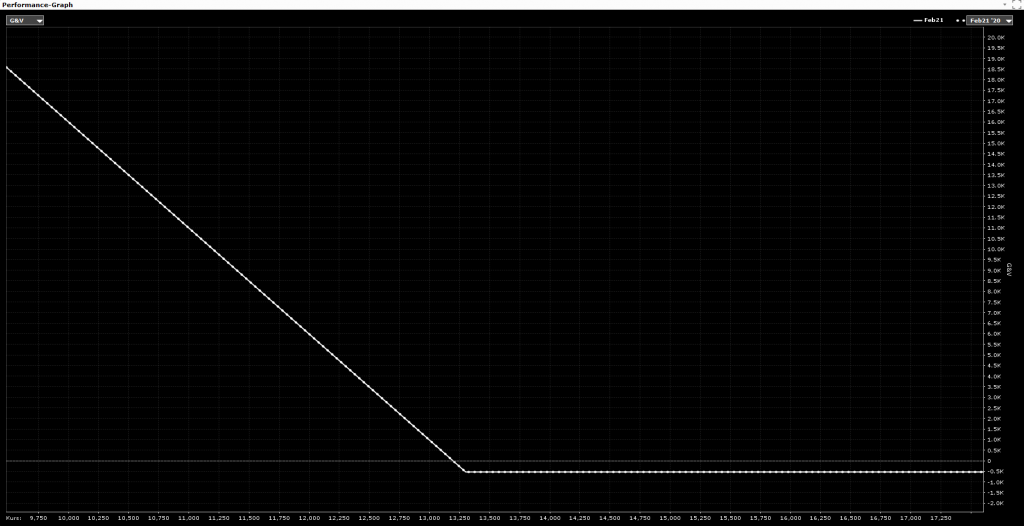
P&L diagram of a long put
The profit and loss diagram shows the possible profit/loss on the expiration date, depending on the price of the underlying. The maximum loss occurs when the underlying is quoted above the strike price of the option. The lower the price of the underlying falls, the higher the profit.
Possible applications
Put options are frequently used by long-term oriented Stock traders and investors bought the shares in order to compensate for an expected decline in the share price. Reduce losses. Options on individual stocks are available, as well as index options to hedge an entire stock portfolio.
In addition, the use of long puts on the commodities or Futures Markets widespread. On the one hand, to hedge against falling prices (e.g. commodity producers) or against exchange rate fluctuations of currencies, on the other hand for speculative purposes.
As private investor or trader, you can therefore use the long put to hedge stock positions or to speculate on falling prices of a stock, an ETF, an index or a futures.
What should I pay attention to when trading a long put?
The long put to hedge a stock position or a portfolio is also called a "Protective Put" or "Married Put" and will be discussed in another article. The following points therefore mainly refer to the speculative use of a long put or describe the development of the put option without taking the underlying into account if it is a put bought as a hedge.
Maximum loss
The maximum loss of a purchased option occurs when the option is Out Of The Money on the expiration date. I.e. the purchased put option expires worthless if the underlying is quoted above the strike price of the option. The initially paid Option premium defines the maximum possible loss.
Maximum and realized profit
The lower the price of the underlying on the expiration date, the higher the profit of the long put. Since a commodity, a currency, a stock index, etc. can hardly fall to zero, the maximum profit is virtually incalculable; theoretically, this is: strike price of the put - 0 - debit.
The actual profit can be calculated by determining the difference between the strike price of the purchased put option and the price of the underlying on the expiration date and deducting the option premium paid (debit) from this.
Profit = (strike price option - price underlying) * multiplier - debit
Break Even Point
In order for the long put to generate a profit, the underlying must fall so low that the profit is compensates for the option premium paid. For example, if you bought a put option on the crude oil (WTI) future with a strike price of 60 USD for 1000 USD, the crude oil price must be below 59 USD on the expiration date for a profit to be made. (The multiplier of the crude oil options is 1000).
Break Even Point = Base Price Put - Debit
Market assessment
The long put is a bearish strategy and makes a profit if the price of the underlying falls during the remaining term of the option. In addition to the correct assessment of the price development, good timing is therefore necessary and the underlying must fall at least to the break-even point so that no loss occurs on the expiration date.
During the life of the option, a profit may also be made if the option is still out of the money but the price of the underlying moves in the desired direction and/or the implied volatility rises.
Implied volatility
The price of a purchased option rises when the implied volatility (IV) rises, which is why the long put also benefits from a rising IV. At the Stock markets implied volatility increases when prices fall, which you can see from the VIX volatility index, among other things.
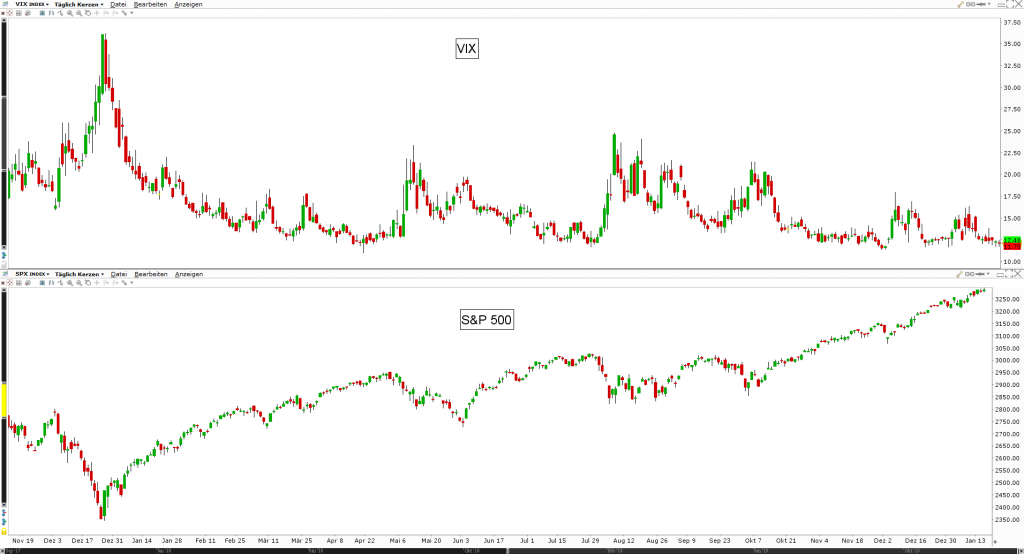
In the commodity markets, however, the IV can rise or fall with rising as well as falling prices. The assessment of the development of volatility, which is necessary for a successful long put, is therefore somewhat more difficult here and requires more precise analyses.
Residual term and fair value expiry
As with all purchased options, as an option buyer you have a claim against the Time value loss of the option. You can see how high this turns out per day from the option indicator Theta read off.
Therefore, if you trade a long put, the time value loss must be overcompensated by the price development of the underlying and/or by an increase in implied volatility.
Exercise of option on expiry date
If you hold a purchased put option beyond the expiration date, the option will automatically be exercised if it is in the money on the expiration date and if it is not settled in cash but is an option with the settlement method "physical delivery". If the option is Out Of The Money, it expires worthless.
Which Settlement method is applied, you can check in the Contract details of the option (double click on an option in the TWS). If you want to exclude the risk of a physical delivery of the underlying, you have to close the trade before the expiration date.