


Stock options are important financial instruments for hedging equity positions for both institutional and private investors. They also offer numerous opportunities for speculative traders. In this article, you will learn what stock options are and what special features they have.
What is a stock option?
The buyer of a stock option acquires the right to purchase a certain number (100) of the underlying shares at a certain price (strike price) (Call option) or for sale (Put option). The option seller receives from the option buyer the Option premium and in return undertakes to buy (put) or sell (call) the shares if the option buyer exercises his right and exercises the option.
Special features of stock options
Regarding the Rights and obligations of the option buyer and the option seller there are no fundamental differences between stock options and other options (e.g. index options or futures options). However, if you take a look at the contract details, you will recognize some special features.
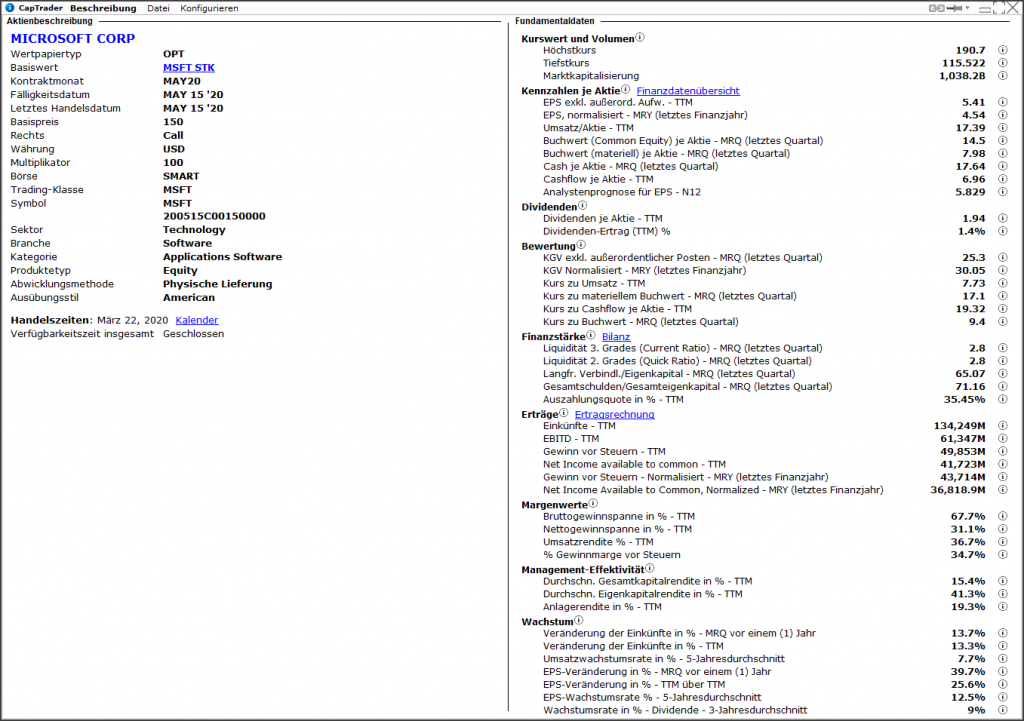
Multiplier
The Multiplier of stock options is usually 100. This means that the option price that you see in the Option Trader of TWS, for example, must be multiplied by 100 to calculate the actual option premium.
Accordingly, one stock option relates to 100 shares. If the option is exercised, you buy or sell 100 shares of the underlying stock with one option.
Settlement method
The settlement method of options can be either cash or physical. Stock options are subject to a physical settlement method. This means that if you exercise the option, you will physically receive the shares in your securities account (long or short).
Exercise style
Stock options have a American exercise style. Thus, a stock option can be exercised during the entire term. In contrast, European-style options can only be exercised at the end of their term. (The exercise style has nothing to do with the country or place of trading and applies to options on American shares just as it does to European shares, for example).