


The price of a Option is composed of the intrinsic value and the outer value together. The intrinsic value can be calculated from the strike price of the option and the price of the underlying. The Current value (outer value) is a premium, so to speak, which is priced in by market participants because an option has the potential to increase in value during its remaining term.
What is the time value?
The Difference between the intrinsic value and the actual value of an option is referred to as its time value or extrinsic value.
The longer the remaining term of an option, the higher its time value. In addition, the time value of an option is higher when implied volatility (high expected fluctuation range of a market) is high than when IV is low.
What is time value expiration?
Since the value of an option on the expiration date consists solely of its intrinsic value, the time value decreases from day to day during the remaining term of an option. This process is referred to as time value decay and is expressed by the option indicator Theta expressed.
Example of the calculation of the fair value
An In The Money call option on Bayer stock (symbol BAYN) with a strike price of EUR 68 and a remaining term of 30 days currently costs EUR 3.30 * 100, or EUR 330. The share price is quoted at EUR 70.38.
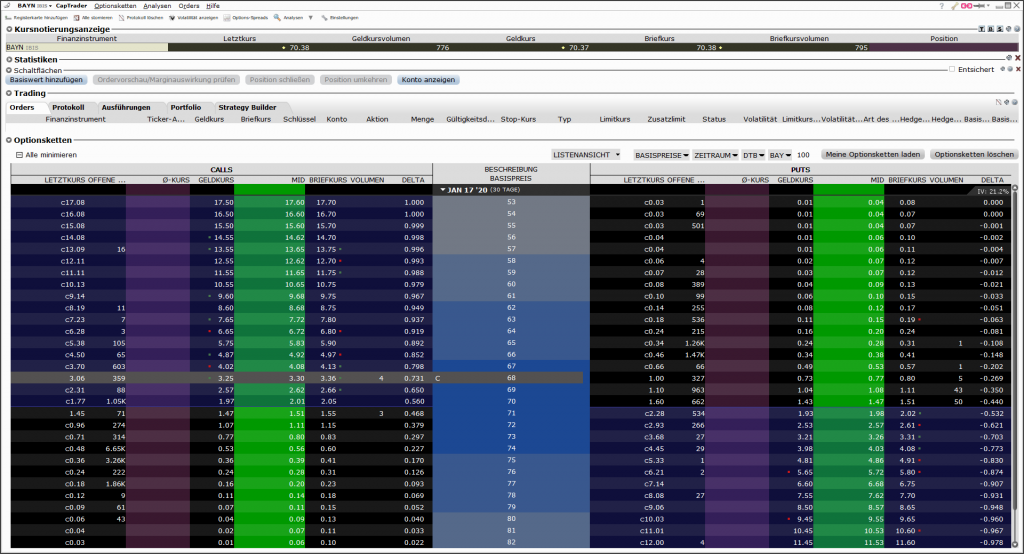
The Inner value of the option is therefore:
(share price - strike price) * 100 = (70.38 EUR - 68 EUR USD) * 100 = 2.38 EUR * 100 = 238 EUR
The Current value - i.e. the difference between the intrinsic value of the option and the option price:
330 EUR - 238 EUR = 92 EUR
The time value of Out Of The Money options
Since Out Of The Money options have no intrinsic value, their option premium at 100% consists of time value.
The further an option is out of the money, the lower the theta or time value loss per day.