

Between oil price spikes, inflation and interest rate worries, investors are currently looking for a common thread. The stock markets have meanwhile slipped from geopolitical to monetary policy thin ice.
The markets are currently in a classic holding pattern. Obviously, no one wants to stick their neck out too far ahead of the ECB key interest rate decision and the release of new US inflation data. On the German stock market, there is a tension between inflation pressure and interest rate concerns, which for now is pushing the prospect of new record highs into the background.
DAX
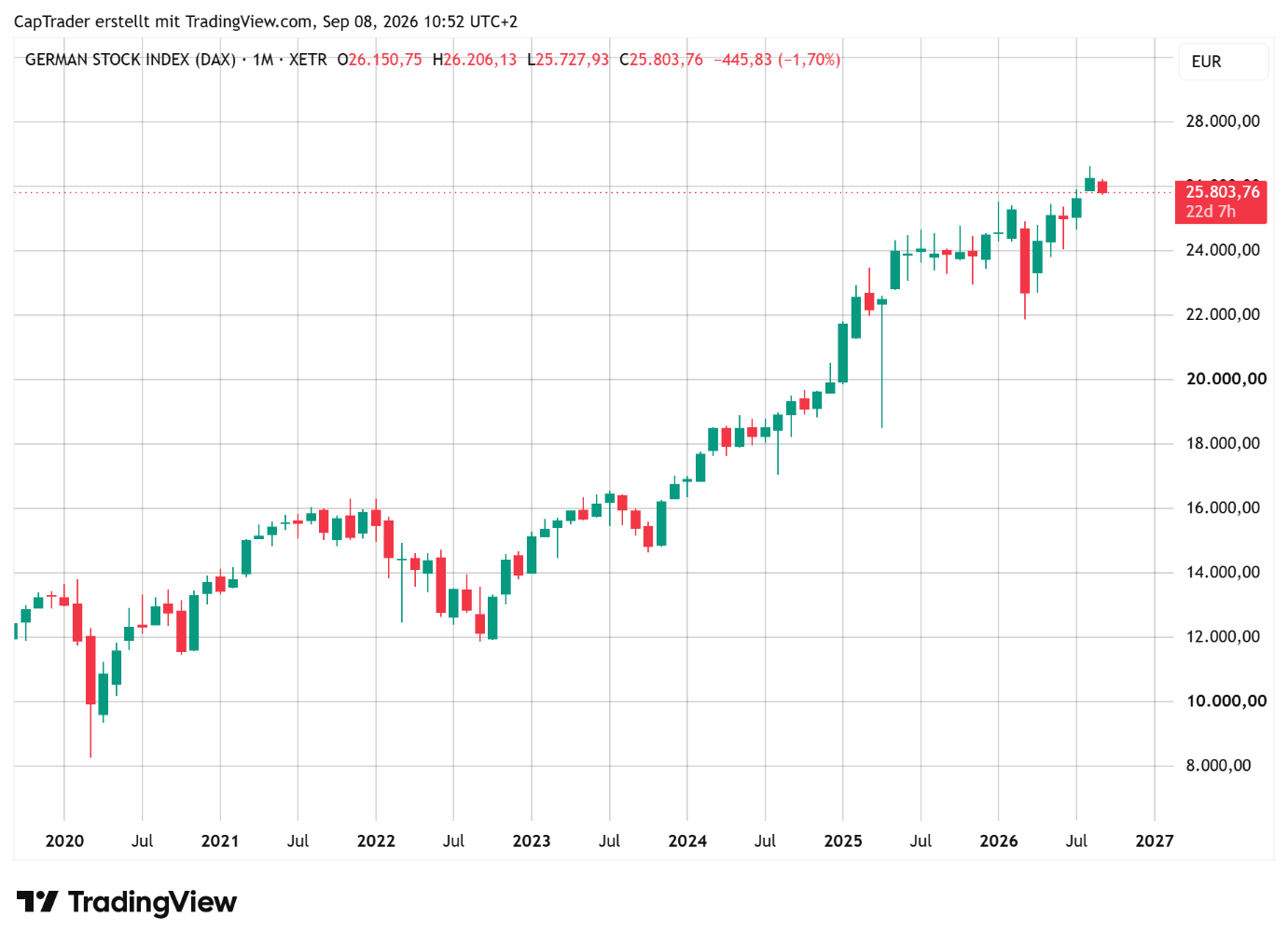
European Central Bank to decide on key interest rate on Thursday – Christine Lagarde in focus
From the perspective of the economic calendar, Thursday is likely to be exciting, particularly with the ECB monetary policy meeting. The key interest rate decision is expected at 2:15 p.m., followed at 2:45 p.m. by the ECB press conference with President Christine Lagarde. The central bank might revise the key interest rate level upward by 0.25 percentage points. The interest rate for the deposit facility currently stands at 2.25 percent and for the main refinancing operations at 2.40 percent.
According to an estimate by the statistical office Eurostat, inflation in the eurozone was 3.3 percent in August, compared to 2.9 percent in July. The ECB actually targets an inflation rate of 2.0 percent. As early as the end of July, the ECB had adjusted its key interest rate upward by a quarter of a percentage point.
US producer prices could send monetary policy signals – Inflation data for the United States expected on Friday
US producer prices are expected on Thursday at 2:30 p.m. and could consequently also provide important monetary policy clues.
However, the US inflation data, scheduled to be released on Friday at 2:30 PM, is likely to serve as the highlight of the week. According to economists, the inflation rate in August may have stood at 3.4 percent (compared to the same month last year), matching the level seen in July. However, a rate of 0.4 percent is expected compared to the previous month, following 0.1 percent in July.
For the core inflation rate, which excludes the energy and food drivers, a decline of 0.1 percentage points to 2.4 percent is expected. Should price pressures overall prove to be higher than expected, this could further fuel interest rate concerns.
Consumer sentiment from the University of Michigan (preliminary data) rounds off the trading week (4:00 PM).