
The most important facts in brief
- UNIQA has established itself alongside market leader VIG in the Central and Eastern European insurance markets.
- Profitable two-pillar model with deliberately asymmetric growth. Austria provides an earnings-stable foundation; the eleven CEE markets, led by Poland, drive the momentum.
- The healthcare ecosystem is the key differentiating feature. Mavie combines health insurance, hospitals, and digital health services into a model that no European competitor offers in this form.
- With a solvency ratio of around 275 percent, UNIQA is operating well above its own target corridor. Thanks to this generous capital buffer, further acquisitions could be financed. Shareholders participate through the progressive dividend with a payout ratio of 50 to 60 percent.
- If you want to read more from Clemens Faustenhammer, then click here DGI-Musterdepot and here for an overview of this series „The dividend custody account“
Who is the UNIQA Group?
A single founding date cannot be determined for the UNIQA Group: it is the result of several merger strands, the oldest of which dates back to 1811 – the year the Salzburger Landes-Versicherung was founded, upon which the group bases its reference to a tradition spanning more than 200 years. In addition, there are the Austria Versicherungsverein, founded in 1860, which from 1948 was considered Austria's largest private health insurer, and the Krankenunterstützungskasse Collegialität, founded in 1899. However, the actual cornerstone was laid by the Versicherungsanstalt der österreichischen Bundesländer, founded in 1922, or Bundesländer-Versicherung for short, which acquired a stake in Salzburger Landes-Versicherung in 1975.
The path to the capital market began in October 1990 when Bundesländer-Versicherung issued non-voting preferred shares with a nominal value of 72.5 million schillings. The free float remained small at first. At the same time, the consolidation of the Austrian predecessor companies took place: in 1991, Austria and Collegialität merged to form the Austria-Collegialität Group, followed in 1993 by the closer integration of Bundesländer-Versicherung with Raiffeisen Versicherung, which was operated as a 99.5 percent subsidiary. In 1997, BARC was created from Bundesländer, Austria, Raiffeisen, and Collegialität insurance, and finally in 1999 the shared umbrella brand UNIQA, for which the traditional brands Austria-Collegialität and Bundesländer-Versicherung were abandoned. From November 8, 1999, the publicly traded company operated under the name UNIQA Versicherungen AG.
The following decade was marked by a consistent Internationalization to Central and Eastern Europe (CEE). Following the acquisition of the Italian company Assicurazioni La Carnica in 2000, UNIQA secured a majority stake in Poland's Polonia in 2001 and renamed the companies in the Czech Republic and Slovakia; Hungary's Funeuropa was added in 2002. In 2003, UNIQA took over the Austrian AXA Group including its companies in Hungary and Liechtenstein, acquired shares in Poland and Slovakia from Germany's R+V, and concluded an expanded framework agreement with the EBRD. This was followed by Astra in Romania and Vitosha in Bulgaria (2005), Zepter Osiguranje in Belgrade and Credo-Classic in Kyiv (2006), Sigal in Tirana along with its subsidiaries in Macedonia and Kosovo (2007), UNITA in Bucharest (2008), and the newly established Raiffeisen Life in Moscow (2009).
The watershed moment crucial for the capital market came in 2011: On July 1, a new executive board team under Andreas Brandstetter took over and developed the UNIQA 2.0 growth strategy. This was followed in 2012 by a cash capital increase of 500 million euros, the buyback of EBRD minority stakes in Croatia, Poland, and Hungary, as well as the divestment of media and hotel investments. In May 2013, following the merger of several domestic units, UNIQA Austria rose to become the country's largest insurer with a 14 percent market share. In July, the holding company was renamed UNIQA Insurance Group AG, and in October, the re-IPO—deliberately staged as a second public offering—generated gross proceeds of over 750 million euros. As a result, the free float rose to 35.4 percent. On March 24, 2014, the share was included in the ATX, and in the same month, the acquisition of the Baloise companies in Croatia and Serbia was completed.
The second half of the decade brought focus instead of expansion. In January 2016, UNIQA launched the largest investment and innovation program in the company's history, totaling around 500 million euros, primarily for business model redesign and IT modernization. In the same year, the group structure was radically streamlined: the holding board shrank from five to three members, the four Austrian primary insurers were merged into UNIQA Österreich, and the number of board mandates in Austria dropped from 22 to 10. At the same time, the UNIQA Private Foundation acquired a 17.64 percent stake from RZB, while the syndicate and Raiffeisen sales cooperation remained in place. The exit from Italy was decided in December 2016 and completed in May 2017; this was followed in 2018 by the sale of the 11.4 percent stake in Casinos Austria to the Czech Sazka Group.
The largest single step in the company's history took place during the pandemic years. In February 2020, UNIQA signed the purchase agreement for the AXA subsidiaries in Poland, the Czech Republic, and Slovakia – around €1 billion for approximately 5 million customers, 1,200 employees, and around €800 million in premium volume. In the same year, the publicly traded holding company as well as UNIQA Österreich and UNIQA International were merged into a single company. With the completion of the legal merger in September 2021, UNIQA rose to become a top-5 player in the CEE region, flanked by the UNIQA 3.0 strategy „Seeding the Future.".
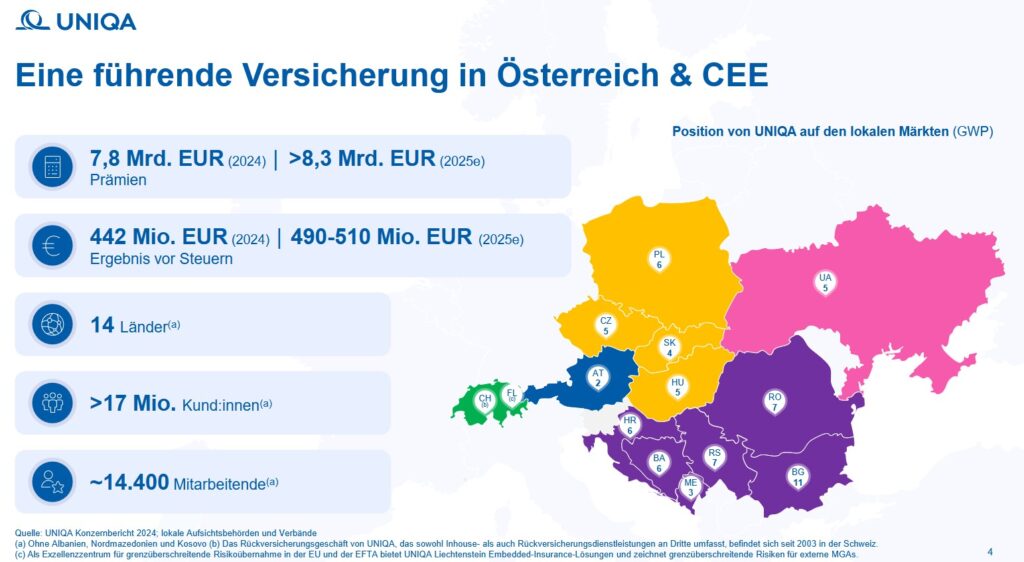
Since then, portfolio streamlining has been dominating while simultaneously increasing earnings. In October 2024, UNIQA completed the sale of Raiffeisen Life and withdrew from Russia, followed in June 2025 by the sale of the companies in Albania, Kosovo, and North Macedonia—thereby divesting the Sigal acquisition from 2007. December 10, 2025 marked the 35th anniversary of the stock exchange listing. Today, around 14,400 employees and exclusive sales partners in 14 countries serve more than 17 million customers. In Austria, UNIQA is the second-largest insurance group with a market share of around 21 percent, following the Vienna Insurance Group.
UNIQA's business model and strategy
The business model UNIQA can be described as that of a classic primary insurer, organized along two axes: by line of business and by region. The group is active in almost all insurance lines and distributes its products through all channels—its own field service, general agencies, brokers, bancassurance, and direct sales. Reporting is conducted through the regionally divided segments UNIQA Austria and UNIQA International, supplemented by the reinsurance business, which has been based in Switzerland since 2003 and encompasses both intra-group coverages and third-party business.
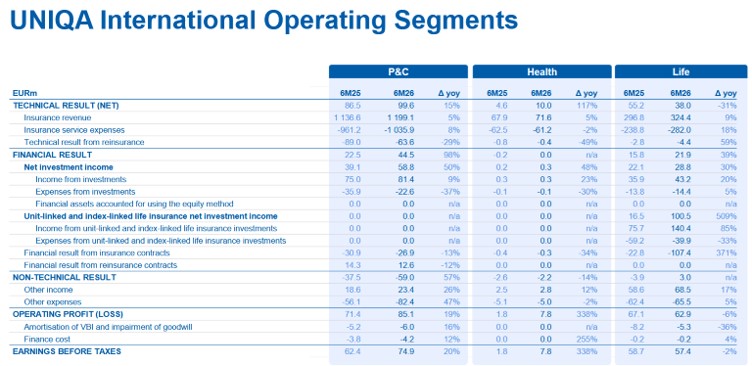
The premium mix shows where the business volume originates. In 2025, written premiums including the savings portions of unit-linked and index-linked life insurance rose by 8.2 percent to around €8.3 billion; of this, €5 billion was attributable to property and casualty insurance, €1.7 billion to life insurance, and €1.6 billion to health insurance. Regionally, in the 2025 financial year, 58 percent of Group revenue was generated by UNIQA Austria and 42 percent by UNIQA International.
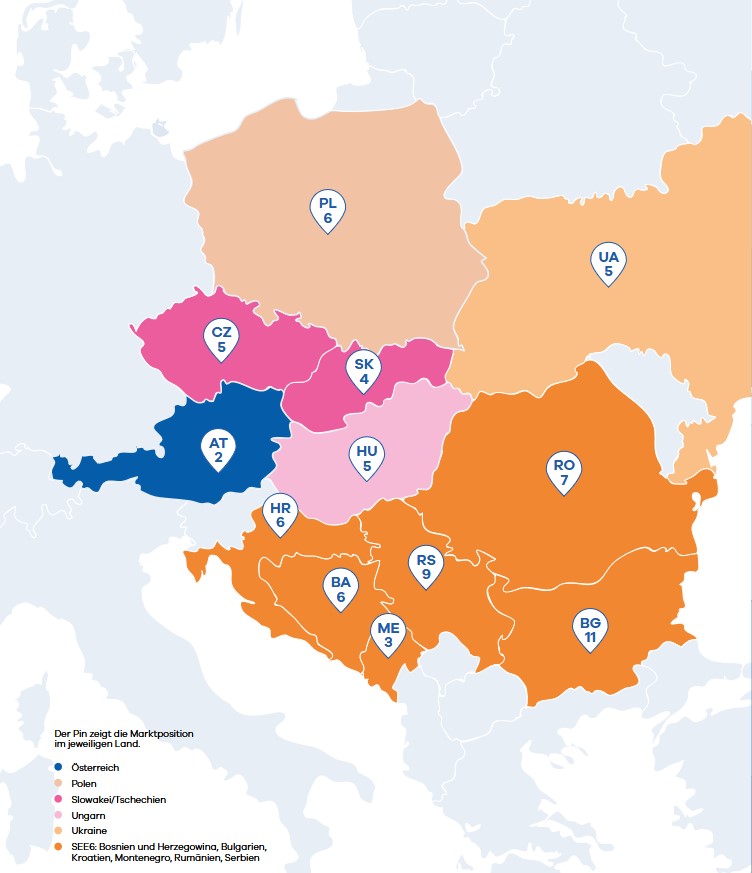
Geographically, UNIQA follows an explicit Two-pillar logic, behind which lie two very different growth dynamics. As the second-largest insurance group in Austria, UNIQA operates in a saturated yet earnings-stable domestic market that forms the foundation. In CEE, UNIQA is present in eleven countries. Since the AXA acquisition in 2020, Poland has developed into the most important growth driver, with seven companies and an estimated 7.5 million customers. A unique selling point in distribution is the close integration at multiple levels with the Raiffeisen sectorThe Raiffeisen banks are sales partners and even operate their own sales brand with Raiffeisen Versicherung, while Raiffeisen Bank International holds a 10.9 percent stake in UNIQA.
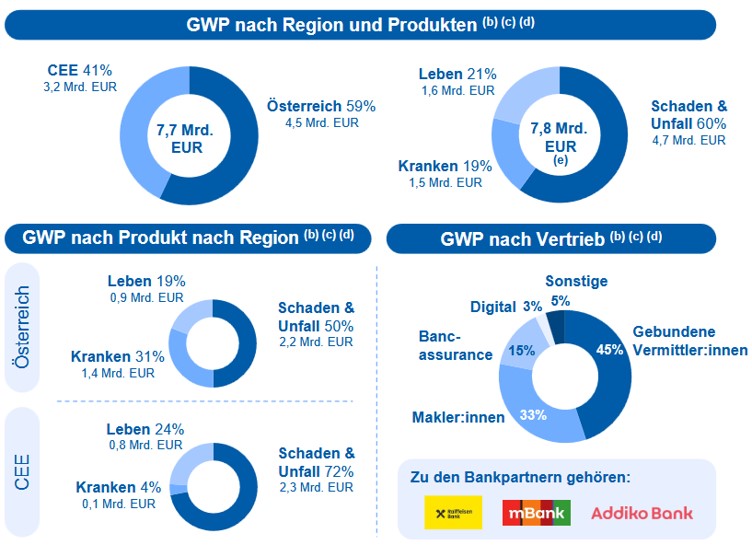
With the founding of the Mavie Holding In September 2022, UNIQA bundled its health activities that go beyond the traditional insurance business and created a „health ecosystem". Mavie Med operates private clinics, medical centers, and outpatient clinics, and in 2025 provided care for around 52,000 inpatient and 135,000 outpatient patients; UNIQA Health Service, through LARA, maintains a network of around 7,500 partners for consultation, diagnostics, and prevention; Mavie Next develops new business models. The approach is thus based on three pillars—health insurance, hospitals, and innovative health services. In May 2025, Raiffeisen-Holding NÖ-Wien came on board as a strategic partner in Mavie Next. Shortly before the end of the year 2025, Mavie Next acquired a 70 percent stake in the Czech provider uLekare.cz, the leading digital health platform in the Czech Republic, Slovakia, and Hungary. Economically, this extends the value chain of health insurance, attracts non-customers, and creates a second, non-insurance-related revenue stream, even though this is still small on a group scale with a revenue ambition of around 100 million euros.
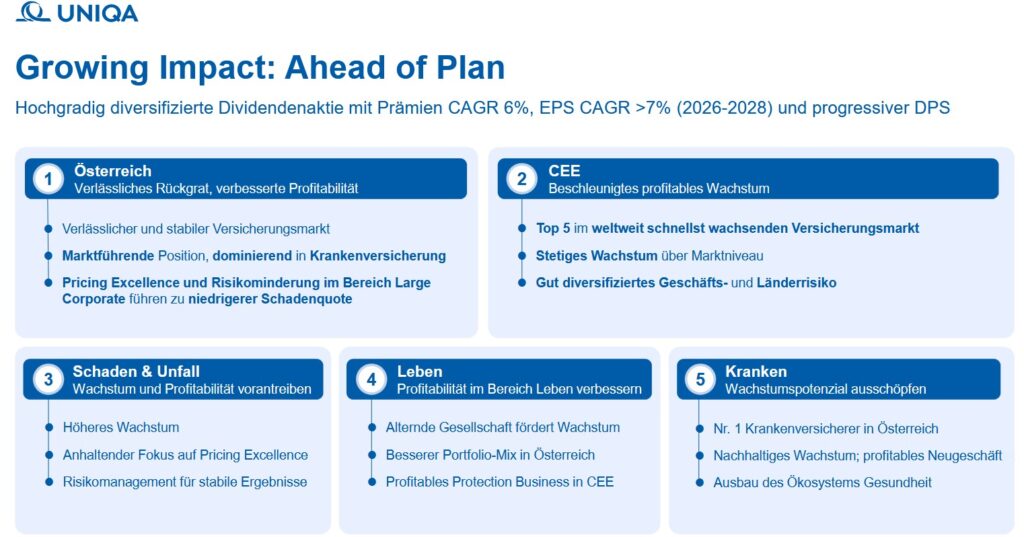
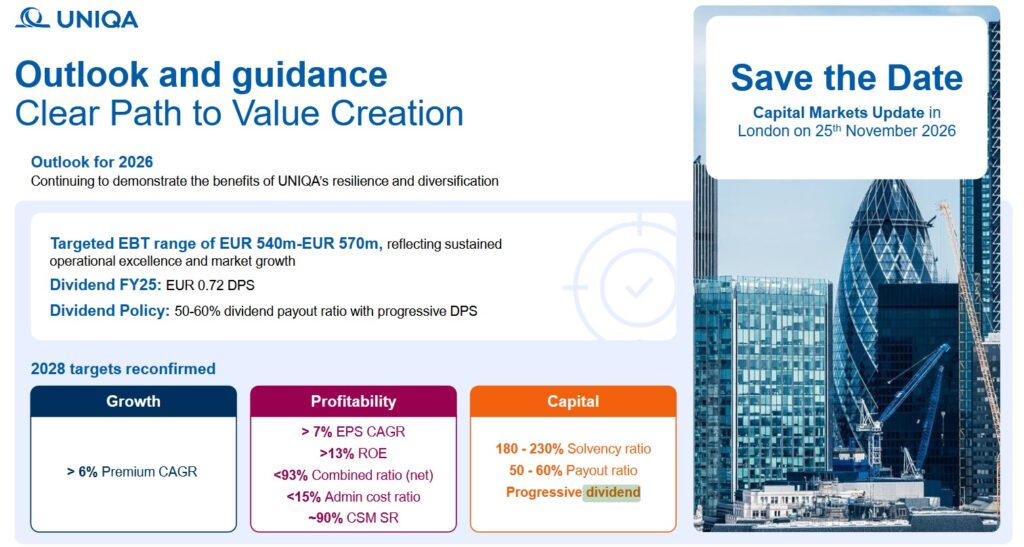
The Corporate strategy operates under the name „UNIQA 3.0 – Growing Impact 2025–2028" and was presented at the Capital Markets Day in London at the end of 2024. Its core elements are profitable growth, further efficiency gains, and the expansion of its strong market position in Austria and CEE; the overarching goal is to position UNIQA as a diversified company with strong dividends and sustainable growth in premiums, earnings, and distributions. After just under a year, the targets have already been refined: since the capital markets update in November 2025, the targets through 2028 are an annual premium growth of six instead of five percent, a group net profit growth of at least seven instead of six percent per year, a net combined ratio of no more than 93 percent, a return on equity of over 13 percent, and a Solvency II ratio of 180 to 230 percent.
Owners and Management of UNIQA
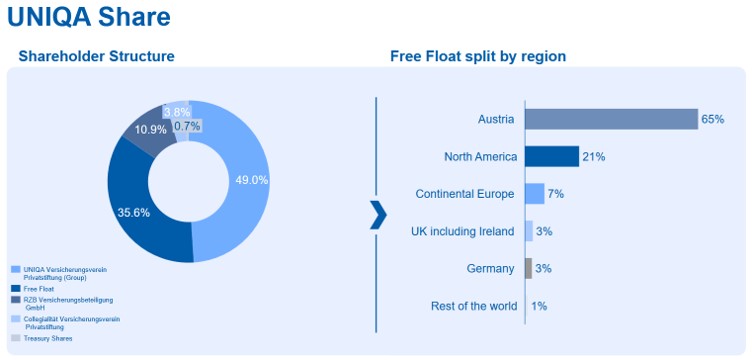
Whoever ownership structure Whoever analyzes UNIQA must first understand that, despite being listed on the ATX, UNIQA is not a public company in the classical sense with a high free float. Control lies with two foundations and the Raiffeisen sector, which have bundled their shares by contract. The largest shareholder is the UNIQA Versicherungsverein Privatstiftung (Group) with 49 percent. The two foundations are not family or financial vehicles, but the legal successors of the former mutual insurance associations. In addition, Raiffeisen Bank International holds 10.9 percent and Collegialität Versicherungsverein Privatstiftung holds 3.7 percent. A voting rights agreement including mutual rights of first refusal exists between UNIQA Versicherungsverein Privatstiftung, Austria Versicherungsverein Beteiligungs-Verwaltungs GmbH, Collegialität Versicherungsverein Privatstiftung, and RZB Versicherungsbeteiligung GmbH. This ensures a permanent controlling majority; the free float has remained practically unchanged at a good third since the re-IPO in 2013.
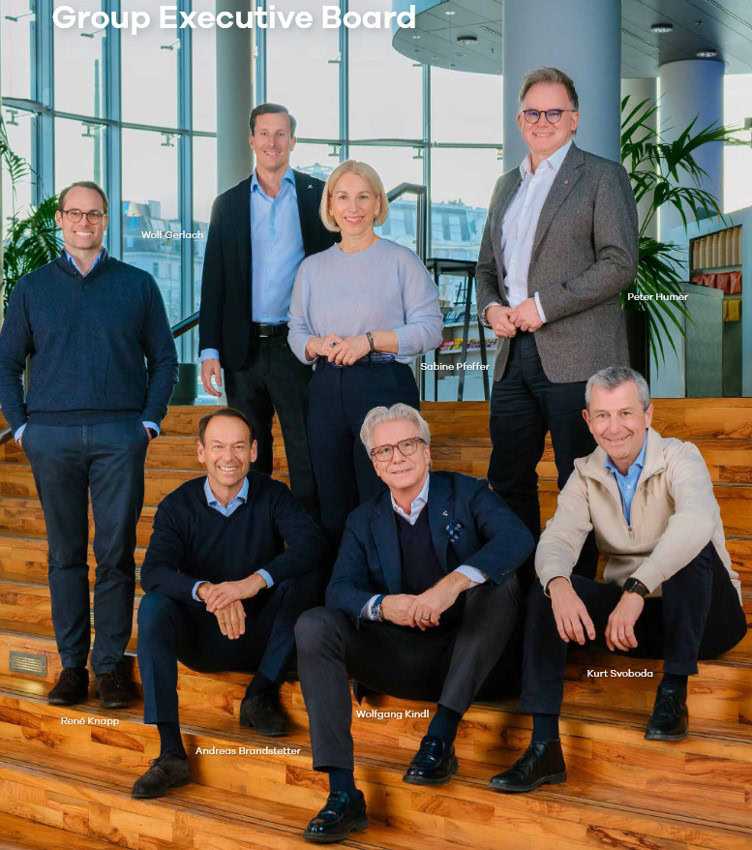
In the Management Board the continuity is extraordinary. Andreas Brandstetter has been a member of the Management Board since 2002 and has headed it since 2011; prior to UNIQA, the Ph.D. in political science headed the EU office of the Austrian Raiffeisen Association in Brussels, and in 2018 he was elected President of Insurance Europe. Since July 1, 2020, he has also been CEO of UNIQA Österreich Versicherungen AG. CFO/CRO Kurt Svoboda has also been on the Management Board since July 1, 2011, while Wolfgang Kindl, René Knapp, Peter Humer, and Wolf-Christoph Gerlach have been represented since July 1, 2020, and Sabine Pfeffer joined as the seventh member. The Management Board was recently deliberately downsized: With the scheduled departure of Peter Eichler and Erik Leyers as of June 30, 2024, the number decreased from nine to seven, with Gerlach taking over Leyers' responsibilities and Knapp taking over Eichler's.
The Supervisory Board directly reflects the ownership structure. The chair has been held since June 2023 by Burkhard Gantenbein, who succeeded the long-serving RZB General Director Walter Rothensteiner. What is notable here is the personal union: Gantenbein became CEO of the UNIQA Private Foundation in 2020 after Brandstetter and Eichler had stepped down from their dual functions in the ownership foundation. Conversely, Peter Eichler moved up to the foundation board upon his departure from the UNIQA executive board as of July 1, 2024. At the 27th Annual General Meeting on June 9, 2026, two mandates were newly filled: Michael Höllerer, RBI CEO since July 2026, succeeded the departing RBI head Johann Strobl. Bernhard Breunlich took over the mandate from Markus Andréewitch.
Industry profile and competitive situation
UNIQA's competitive environment breaks down into at least two, strictly speaking four, playing fields with completely different structures – and this is where the problems in peer group formation arise. The domestic market is mature, sluggish in growth, and highly concentrated. In 2025, Austrian insurers generated gross written premiums of 22.3 billion euros. The number of providers recorded in the VVO ranking fell from 42 to 38 because Bawag P.S.K. Versicherung merged with Generali, HDI Leben and Nexible discontinued their business, and Atradius left the association. At the top – at the level of individual institutes – is UNIQA with 20.8 percent, followed by Wiener Städtische with 16.9 percent, Generali with 14.7 percent, and Allianz Elementar with 6.4 percent, or 8 percent at the group level. Four firms thus cover around 60 percent – an oligopoly in which growth is generated primarily through index adjustments, price, and consolidation, and hardly through shifts in market share.
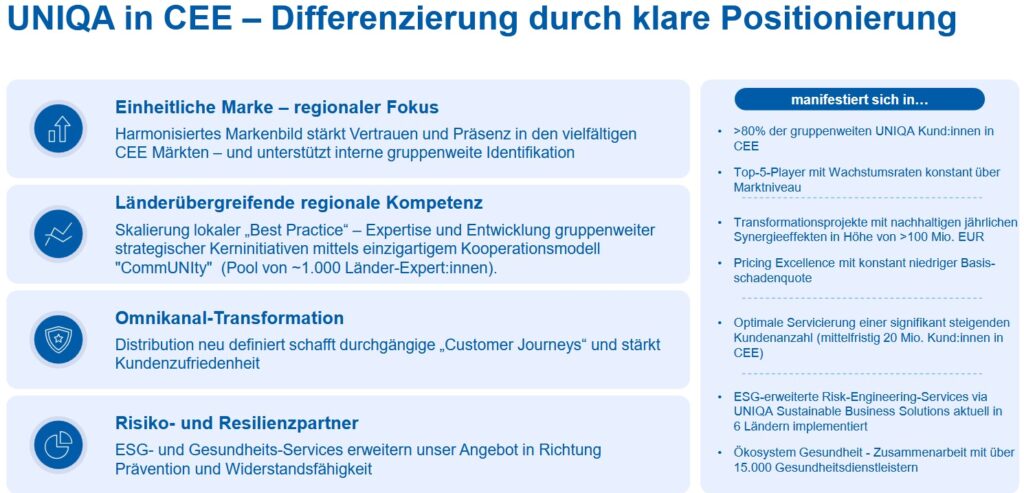
The second playing field, CEE, is the structural opposite: fragmented, high-growth, and entirely differently populated from country to country. The market leader is VIG, which expanded into the region as early as 1990 and is now present with over 50 companies in 30 countries. For a competitive comparison, this means: at the group level, UNIQA, VIG, Generali, Allianz, and PZU face off against each other – at the country level, the competition in Poland is completely different from that in Romania, Serbia, or Hungary. A pure group comparison obscures this.
Two other playing fields are regularly overlooked. First, the health ecosystem: with Mavie Med, the UNIQA Health Service, and Mavie Next, UNIQA is not competing here with insurers, but with clinic operators, telemedicine platforms, and providers of corporate health management. Second, reinsurance—here the difference to VIG is significant: in 2025, VIG Re served around 660 insurance companies in nearly 70 countries, whereas UNIQA Re in Zurich, while growing, plays a significantly smaller role.
At its core, the only truly reliable individual comparison that remains is VIG - same home market, comparable CEE orientation, with the reservation that the health insurance share and the ownership structure differ. Here the Link to the VIG portrait. Explicitly not peers are Allianz, AXA, Zurich and the large reinsurers.
Opportunities & risks
The most important opportunity is of a structural nature and lies in one of the two core markets. UNIQA's management consistently argues that Central and Eastern Europe is growing more dynamically than the eurozone. The targets are calibrated accordingly asymmetrically: six percent premium growth per year for the group, driven by four percent in Austria and eight percent internationally. Insurance penetration in CEE remains significantly below the Western European level. Poland has become the most important driver in this regard.
Secondly, UNIQA has unleashed an operational leverage that is not yet fully exploited. The net combined ratio improved in 2025 from 93.1 to 91.7 percent, and net profit grew by 22.2 percent to 424.8 million euros. The company attributes the fact that its growth and profitability targets could be raised after less than a year of strategy implementation to the consistent execution of its strategic measures.
Third, UNIQA has a significant buffer in the form of excess capital. The Solvency II ratio stood at around 275 percent at the end of 2025, compared to a target range of 180 to 230 percent through 2028—a surplus that could finance acquisitions in a still-fragmented CEE market without having to tap the capital market. The refinancing in May 2026 further improved the capital structure: the repurchased legacy bonds carried coupons of 6 percent, while the new Tier 2 bond bears interest at 4.5 percent for ten years.
The fourth and strategically most interesting opportunity is the health ecosystem, because it removes UNIQA from pure premium competition. According to industry observers, the triad of health insurance, hospitals, and innovative health services is considered a significant competitive advantage. Expansion is underway: at the end of 2025, Mavie Next acquired a 70 percent stake in the Czech provider uLekare.cz, followed by Wellbeing Polska in early 2026. The demand trend supports this—while health insurance is well established in Austria, the business in CEE is only in its infancy, which UNIQA itself describes as particularly large long-term growth potential. Finally, distribution access remains an advantage that is difficult to copy: Raiffeisen banks distribute UNIQA products under their own brand, and the reinsurance pillar provides an additional earnings pool.
The most obvious risk is climate exposure. Caution is advised here when interpreting the recent figures. The excellent combined ratio for 2025 is essentially attributable to a low-loss year with only 106 million euros in natural catastrophe losses. CEO Brandstetter pointed out that there were fewer catastrophes than in the past. A year like 2024 with the „Boris" flood would noticeably impact the earnings level.
The second risk is geographical concentration, which at the same time underpins the growth story. The commitment in Ukraine is manageable in terms of size—most recently around six percent of UNIQA International’s pre-tax profit—but cannot be dismissed. UNIQA has been represented by two companies in Kyiv since 2006, whereby war damage is generally uninsurable and no war-related risks are assumed in directly affected regions. The company has already experienced that geopolitical risks can materialize: the sale of Raiffeisen Life was completed in October 2024 and the withdrawal from Russia was executed.
Thirdly, the domestic market remains structurally sluggish in terms of growth and leaves little room for market share gains. In the Austrian market, UNIQA's market share practically stagnated, and the gap to the domestic industry leader VIG remained unchanged. Growth here is generated through index adjustments and pricing, not through displacement or consolidation.
Fourth, the governance structure, which ensures stability and limitation at the same time. The voting trust agreement between the foundations and the RZB participation company, including reciprocal rights of first refusal, secures a permanent controlling majority. Fifth, a capital allocation risk arises from the company's own strength. The gap between the current solvency ratio of around 275 percent and the target range of up to 230 percent creates expectations; however, the obvious path via share buybacks is effectively blocked because the authorization only permits purchases at a maximum of 15 euros per share. This currently leaves only M&A. A failed integration would be the most expensive conceivable mistake. Building up the healthcare business is capital-intensive: 180 million euros alone for the new construction of the Confraternität and Goldenes Kreuz private clinics, plus 65 million euros for the expansion of the Döbling private clinic. Whether the strategically convincing narrative will turn into a high-margin second mainstay cannot currently be assessed from the outside.
The finances of UNIQA
After getting an overview of the industry in general and taking a closer look at the company, management, and competition, I will now examine UNIQA's balance sheet and the financial ratios derived from it. The focus here is on the aspects Growth, profitability and Solvency.
To analyze the financial situation, I will first examine the development of revenue and profit. Over the past five years, insurance revenue grew at an average annual rate of 3.6 percent, driven, among other things, by the IFRS 17 transition in 2023 and the sale of the Russia business in 2024.
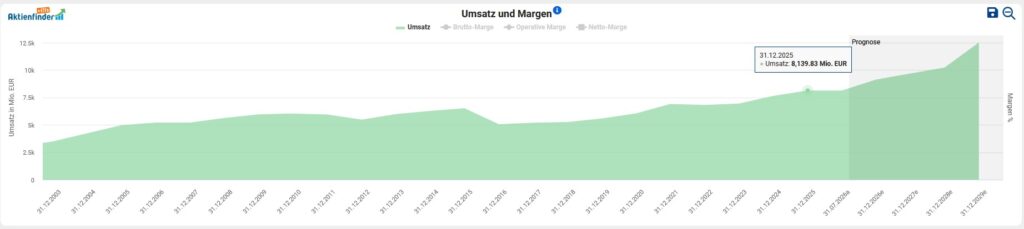
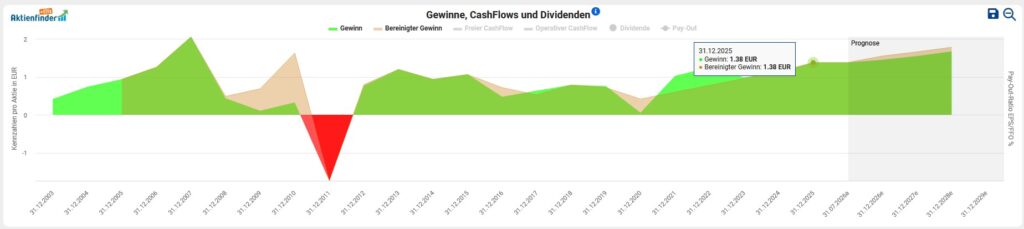
At Earnings per share has shown a very dynamic upward trend overall since 2020. If I look at the past 2025 financial year, the adjusted earnings per share by 21 percent (1.38 vs. 1.14 Euro). UNIQA achieved a in 2025 Net profit from 425 million euros.
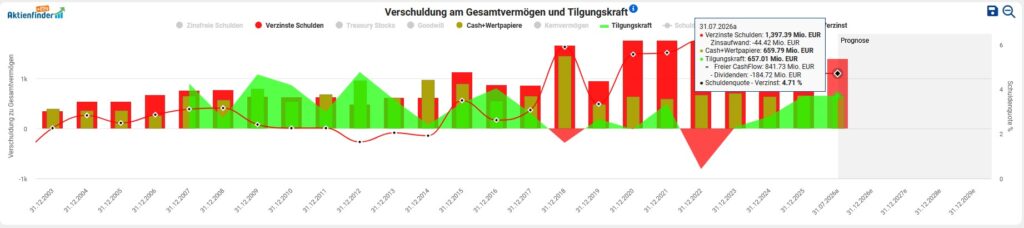
A critical look at the Debt situation shows that interest-bearing financial liabilities amount to EUR 1.4 billion, which are offset by cash and cash equivalents and securities of EUR 0.7 billion at the end of the 2025 financial year. This results in net debt of EUR 0.7 billion.
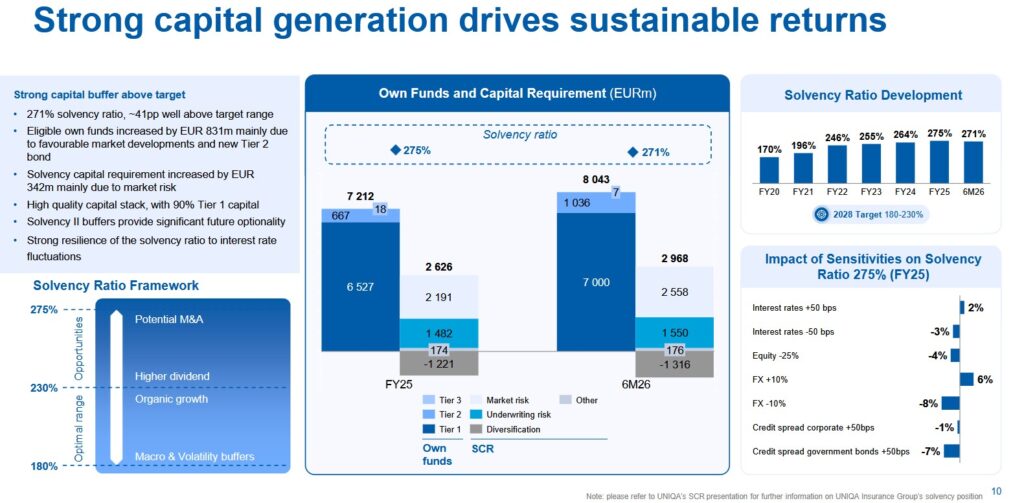
UNIQA's solvency has been developing at a consistently high level for years. The Group Solvency II ratio sets the eligible own funds in relation to the solvency capital requirement (SCR); 100 percent is the regulatory lower limit. The Solvency II ratio is moving above the self-imposed target corridor of 180 to 230 percent. In recent years, it has consistently been above 250 percent:
- 2025: 275 %
- 2024: 264 %
- 2023: 255 %
- 2022: 246 %
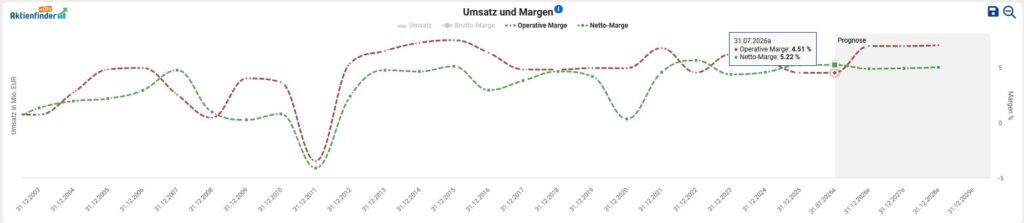
Finally, I am considering Profitability UNIQA based on the development of the operating margin and net margin. Since the 2021 financial year, a significantly more volatile trend can be seen in the margin profile of the insurance group compared to its competitor. VIG. Over the past five years, the UNIQA management succeeded in increasing the net margin by 70 basis points.
Current rating of the UNIQA share
Although, when evaluating companies in the same industry, I prefer the so-called Enterprise Value (EV), but this step does not make sense for insurance companies due to the high liabilities towards their existing customers, which are typical for this business model. Any key figures in connection with the Free Cashflow. The cash flow generated by insurance companies is not as easy to determine as that of manufacturing or trading companies.
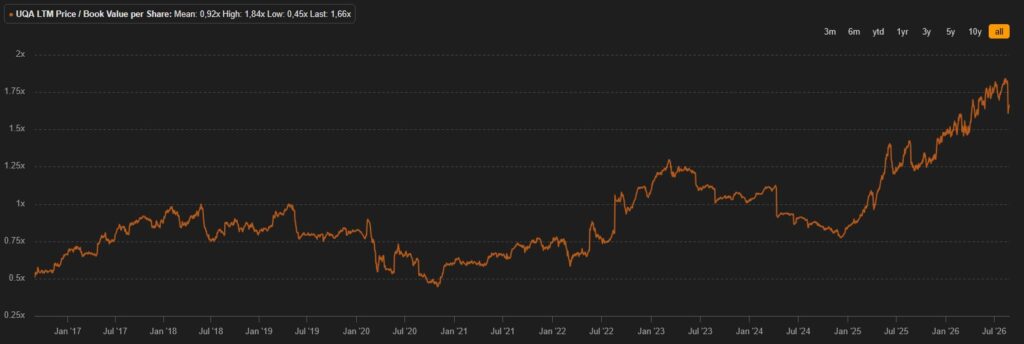
In conjunction with the adjusted P/E ratio, I would like to refer to the Price/book multiple (Price-to-Book Value). Basically, a price-to-book ratio of less than 1 means that the company is worth less on the stock exchange than its book value. In contrast, a P/B ratio of more than 1 shows that the market values the company above its book value. As with any Rule of thumb however, the company-specific context must be taken into account by the careful investor in the analysis. As a sole criterion, however, the P/B ratio is not suitable because the metric does not accurately reflect the true economic value of many companies. Insurers and banks are sometimes traded below book value for long periods, even though the companies generate solid profits and are well capitalized.
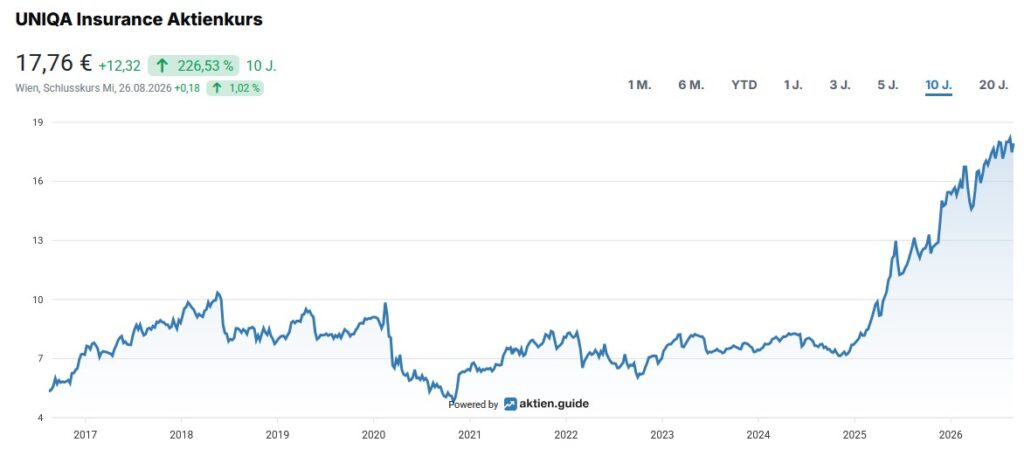
At UNIQA, the P/B ratio is currently at 1.7 – close to its historical high. In 2020, the stock traded at a multiple of below 0.5, which was significantly cheaper than it is today.
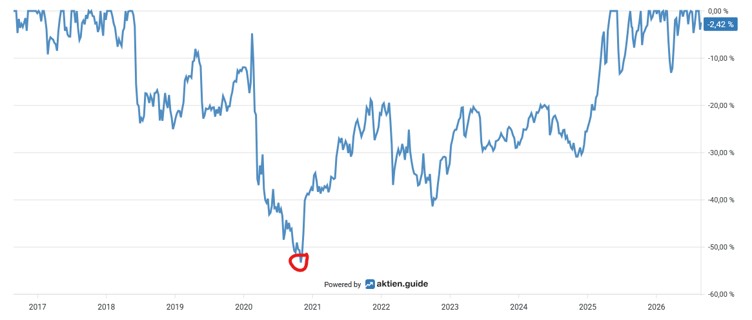
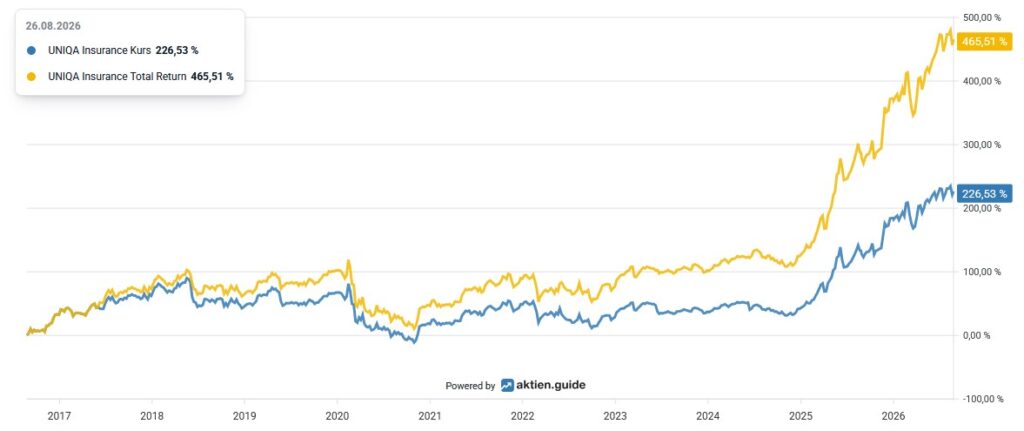
The Maximum drawdown was at around 53 percent at the end of 2020:
Over the ten-year period, an investment in the UNIQA stock brought a remarkable Total return from around 465 percent:
UNIQA's capital allocation
In the Capital allocation strategy UNIQA focuses on dividends as well as growth capital for acquisitions in CEE and for the healthcare segment. The company is committed to a progressive dividend policy with a target payout ratio of 50 to 60 percent. Share buybacks do not play a role in UNIQA's capital allocation. What does exist is a authorizing resolution in reserve: The 2025 Annual General Meeting authorized the Management Board to acquire treasury shares amounting to up to 10 percent of the share capital in the period from December 7, 2025, to June 6, 2028 (at a equivalent value of at least 1 and at most 15 euros per no-par value share).
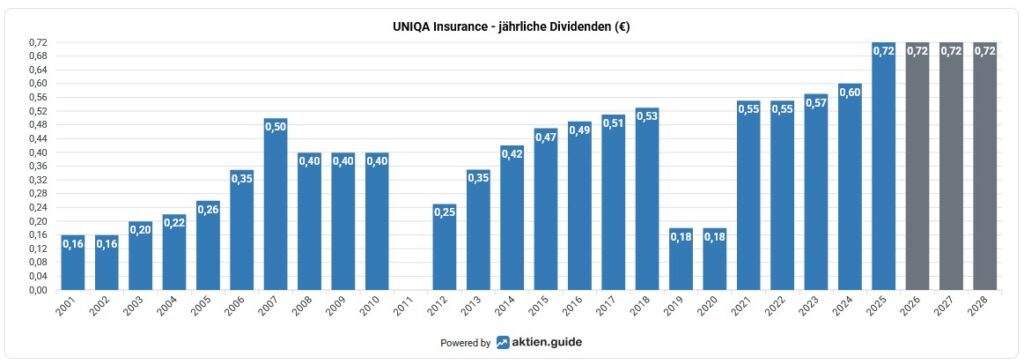
UNIQA generally pursues a dividend policy that is attractive to shareholders – at least if the payout amount is used as the central criterion. Because when looking at the long-term Dividendenhistorie It is noticeable that UNIQA cancelled or significantly cut its dividend during phases of external shocks (2008 financial crisis, 2020 and 2021 Covid pandemic).
At a current price of 17.80 euros, this results in Dividend yield from 4.1 percent based on the last dividend. Finally, an overview of the dividend payouts of recent years:
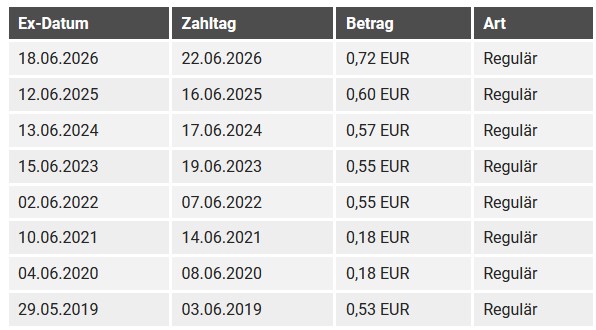
The annual dividend beträgt aktuell 0.72 Euros per share and was paid out this June. If I use the average profit of the last three years as the basis for determining the payout ratio, the result is a moderate 52.3 percent for the Payout ratio.