
The most important facts in brief
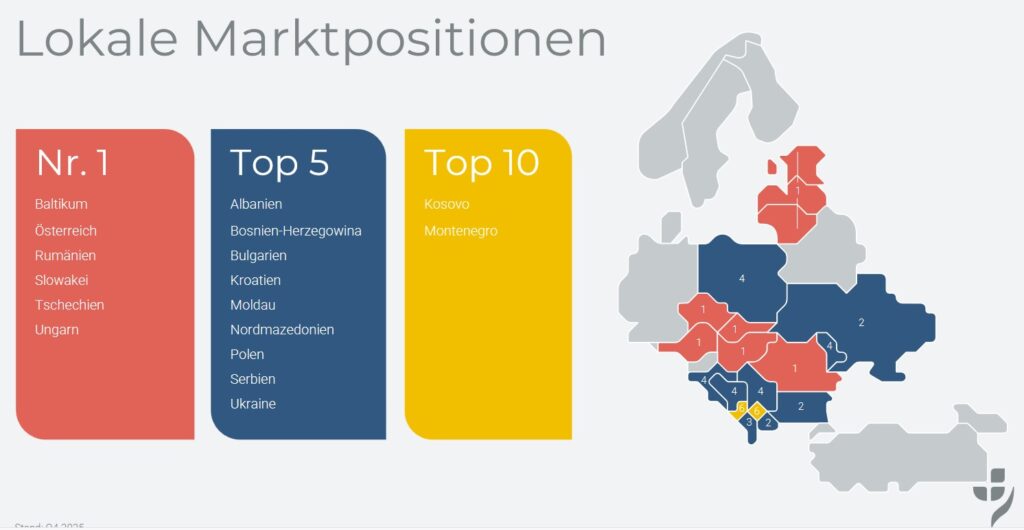
- The VIG has held a leading position in the Central and Eastern European insurance markets for decades.
- In a region where insurance density is still significantly below the Western European level, the market is growing organically. This market position is supplemented by the exclusive bank distribution through Erste Group, secured until 2033.
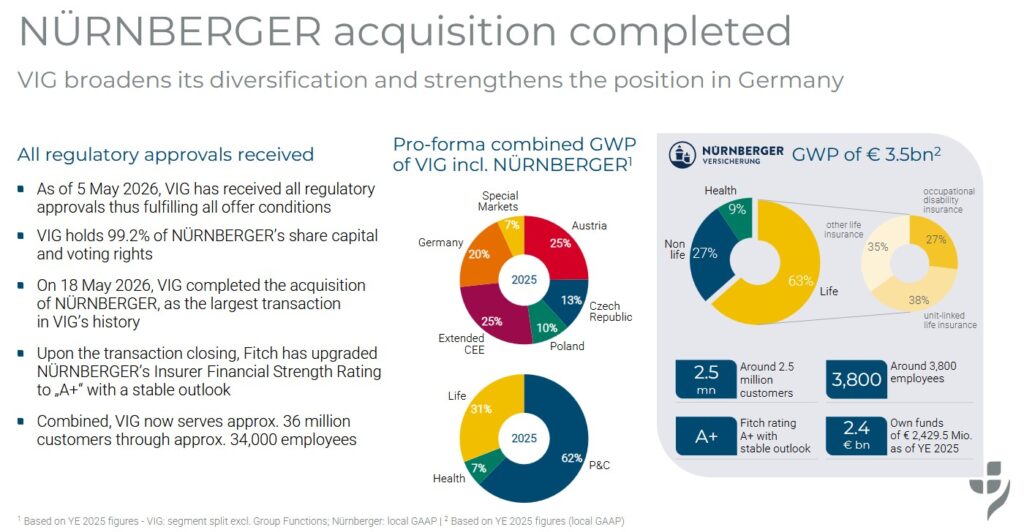
- Growth at VIG is to a significant extent inorganic. The billion-euro acquisition of NÜRNBERGER is the largest deal in the group's history and diversifies the group significantly outside its core region for the first time.
- With a solvency ratio of almost 300 percent, VIG is far above its own target corridor and can finance acquisitions without capital increases. Surplus capital flows first into M&A, then into dividends.
- If you want to read more from Clemens Faustenhammer, then click here DGI-Musterdepot and here for an overview of this series „The dividend custody account“
Who is the Vienna Insurance Group (VIG)?
The roots of VIG date back to the Habsburg Monarchy and are consolidated in three predecessor companies: the one on December 24, 1824 from the „Mutual Imperial-Royal Privileged Fire Damage Insurance Institute" founded by Georg Ritter von Högelmüller, the first Austrian life insurance company initiated in 1839 by mathematics professor Josef Salomon, which later operated under the name „Janus," as well as the „Municipal Emperor Franz Joseph Jubilee Life and Pension Insurance Institute" established in 1898 by the Vienna City Council on the occasion of Emperor Franz Joseph's 50th anniversary of his reign. The short form Wiener Städtische, still in use today, derives from its renaming in 1919 to „Gemeinde Wien-Städtische Versicherungsanstalt" (Vienna Municipal Insurance Institute). In 1924, the two older institutions were merged, in 1938 all three predecessors merged, and on June 14, 1955, the corporate headquarters still in use today was opened with the Ringturm on Schottenring – Vienna's first office skyscraper.
The expansion steps in the Austrian domestic market from the 1960s onwards laid the foundation for today's business model. After a cooperation with the life insurer „Jupiter" and the acquisition of 40 percent of „Österreichische Volksfürsorge", Wiener Städtische took over the majority of shares in 1971 in the company founded in 1867. Danube Insurance. Since DONAU was continued as an independent second brand, this local multi-brand strategy, which still characterizes the group today, emerged. In 1977, the merger of Anglo-Danubian Lloyd with DONAU raised the share to 75 percent. After the merger with Sun Alliance Insurance in 2000, DONAU – the only Austrian insurance company to retain its founding name to this day – is once again among the five largest providers in the country.
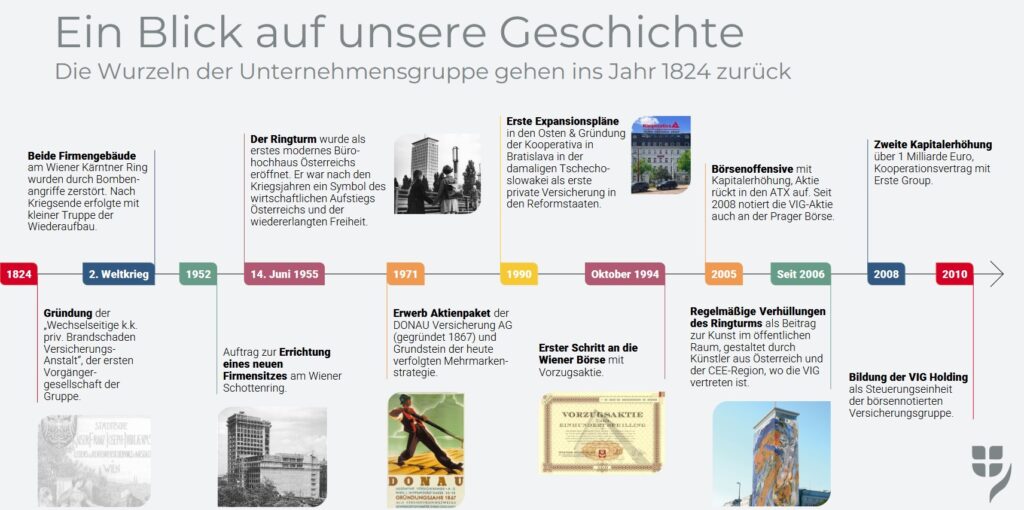
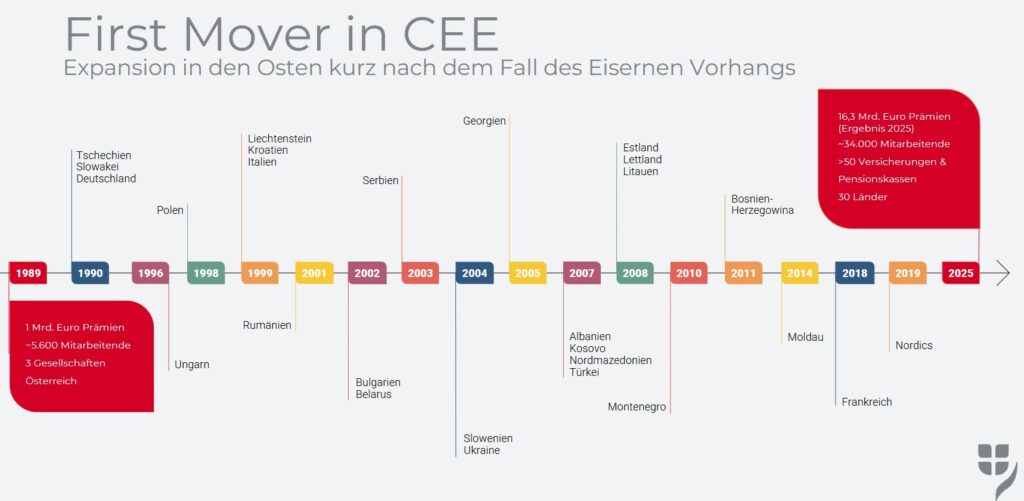
The real turning point came with the fall of the Iron Curtain in Eastern Europe: in October 1990, Vienna Insurance Group participated in the newly founded Kooperativa in what was then Czechoslovakia, making it one of the first Western European insurers in Central and Eastern Europe. This was followed in quick succession by Hungary (1996), Poland (1998), Croatia (1999), Romania (2001), Serbia (2003), Ukraine (2004), Turkey and North Macedonia (2007), the Baltic states (2008), and later Moldova (2014) and the Nordic markets (2019). This course was largely financed through the capital market. The initial listing on the Vienna Stock Exchange took place on October 17, 1994. Günter Geyer, who drove the CEE expansion as CEO, explicitly describes the IPO in retrospect as an efficient way to raise the necessary capital. At that time, the company was operating in six countries with around 4,000 employees. The stock was admitted to the ATX in 2005, and in 2006, the Vienna Insurance Group„ introduced, from February 2008 trading was conducted under the new name and additionally, a listing on the Prague Stock Exchange was added; since November 2022, there has been a further listing in Budapest.
The year 2008 was strategically crucial. A capital increase financed the acquisition of s Versicherung, the insurance division of Erste Group Bank, which made VIG the market leader in Central and Eastern Europe. The distribution agreement concluded at the same time was prematurely extended in 2018 until 2033. In 2008, VIG Re was established in Prague, a captive insurance. Two years later, a structural reorganization followed. Since August 2010, the publicly traded Vienna Insurance Group AG Wiener Versicherung Gruppe has functioned as a holding company with a steering role, while the operational Austrian business is consolidated in Wiener Städtische Versicherung AG Vienna Insurance Group.
In the recent past, two transactions dominated. The acquisition of the Aegon companies in Hungary, Poland, Romania, and Turkey, signed at the end of November 2020, was initially blocked by the Hungarian Ministry of the Interior, approved by the EU Commission in August 2021, and resolved in December 2021 through an agreement with the Hungarian government, which secures a 45 percent state participation in the Hungarian subsidiary. Most recently, VIG secured around 99.2 percent of NÜRNBERGER Beteiligungs-AG after a takeover bid in October 2025, with completion in May 2026 – the largest deal in the Group's history to date.
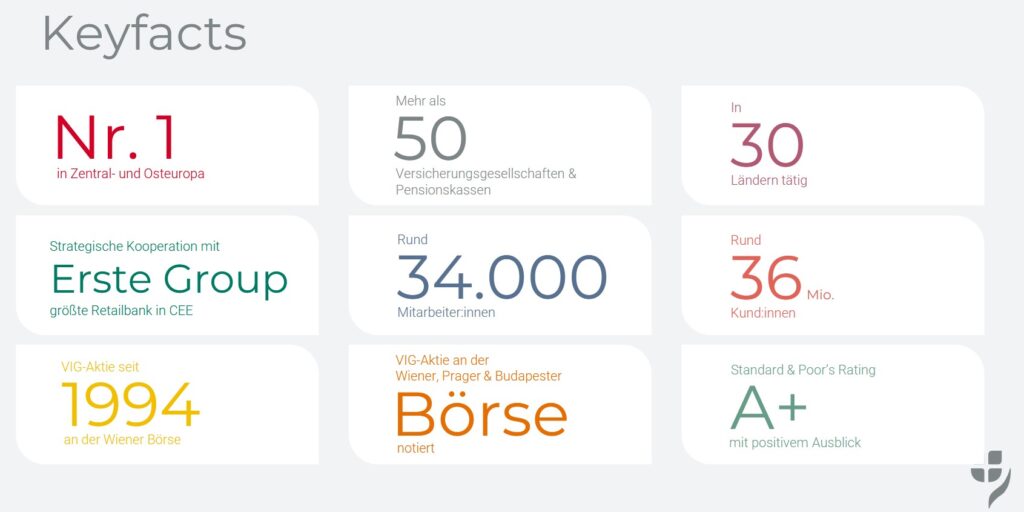
Economically, the group is thus on its strongest foundation to date: in 2025, billed premiums rose by over 7 percent to 16.3 billion euros, and the pre-tax profit exceeded 1.16 billion euros for the first time Billion-dollar threshold, the Group's profit reached around 835 million euros. Today, VIG comprises more than 50 insurance companies and pension funds in 30 countries with around 34,000 employees and approximately 36 million customers.
Business Model and Strategy of VIG
The business model The VIG can be described as a broadly diversified composite insurer that aims for market leadership in a geographically clearly defined region. It offers the entire range of non-life, life, and health insurance, complemented by pension funds and asset management. Reporting is done in the segments Austria, Czech Republic, Poland, Expanded CEE, Special Markets, and Group Functions, with Germany, Georgia, Liechtenstein, and Turkey counting among the Special Markets.
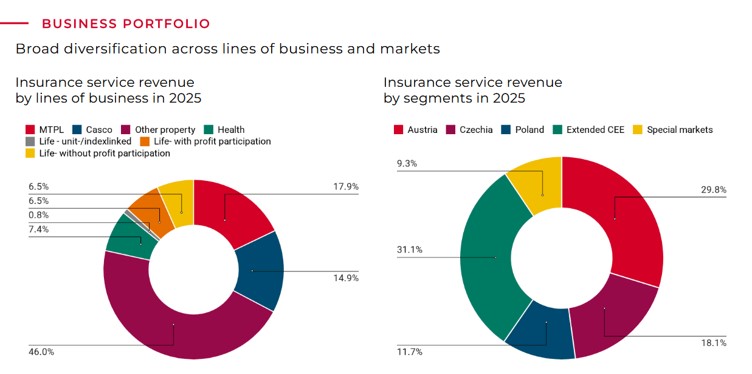
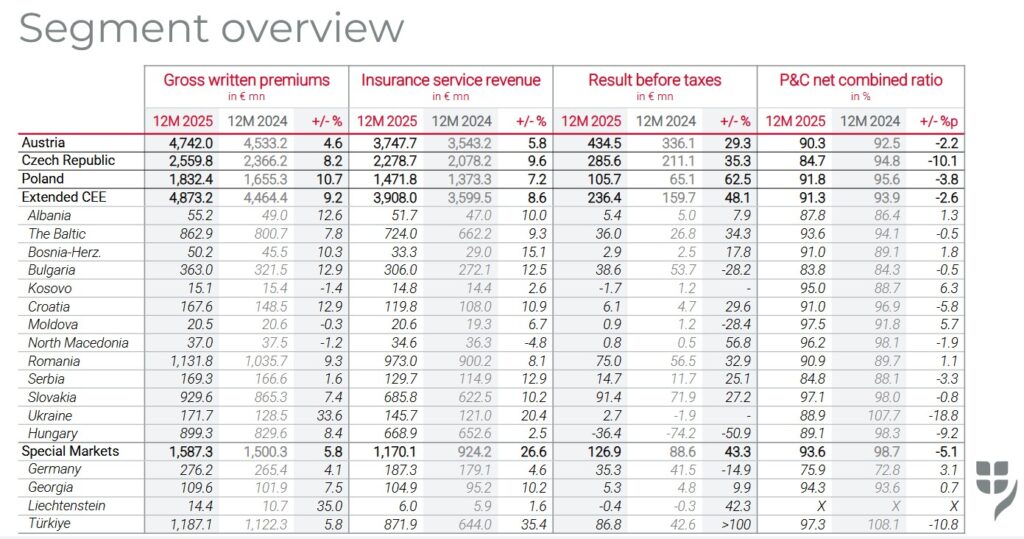
As one of the first European insurance companies, the Group expanded into the CEE region as early as 1990 and is today the leading insurance group in the region with over 50 insurance companies and pension funds in 30 countries. Its own reinsurance subsidiary, VIG Re, founded in Prague in 2008, retains part of the reinsurance margin within the Group.
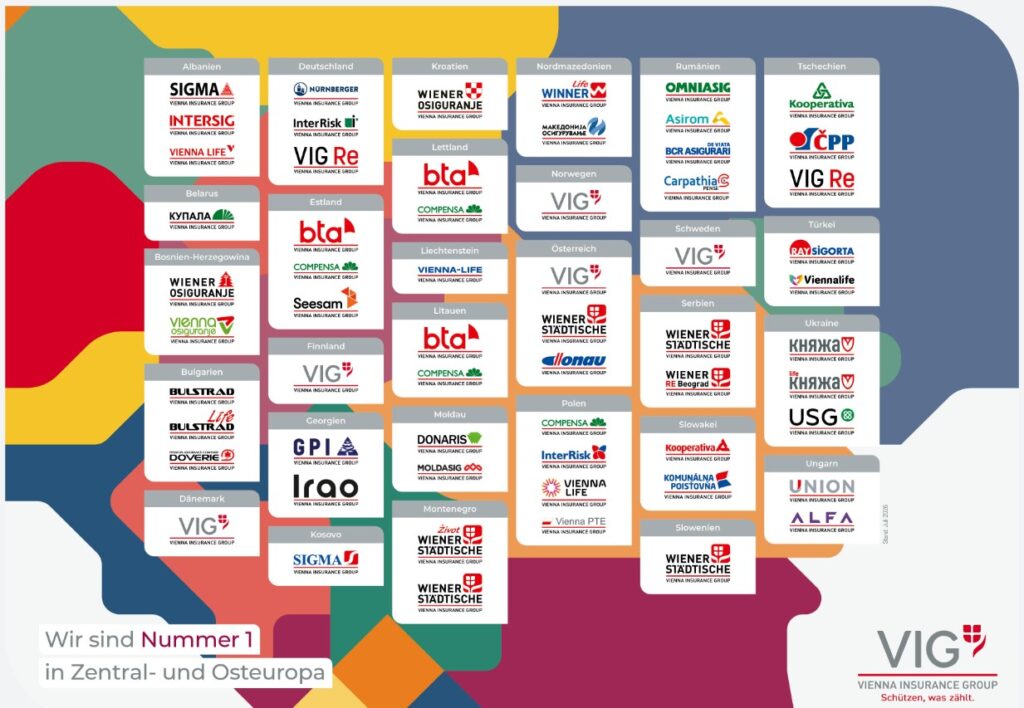
The real distinguishing feature is the combination of Multi-brand strategy and decentralized control. VIG is active in most of its markets with more than one company or brand. As part of its expansion, it consciously decided to retain established brands that are anchored in customer awareness in order to address different target groups and differentiate product portfolios. The group companies use their local brand as a first name, while the addition of Vienna Insurance Group signals internationality. From the group's perspective, this diversification spreads regional risks across the entire group, enables the sharing of capacities, and facilitates knowledge exchange between countries. The group relies on a multi-channel approach for sales, with the decentralized structure focusing on local entrepreneurship. Historically, this principle dates back to the acquisition of DONAU in 1971, when the acquired company was deliberately continued as an independent second brand.
A second pillar is the Bank sales. With the acquisition of s Versicherung in 2008, not only was market leadership in Central and Eastern Europe achieved, but also a long-standing distribution agreement with Erste Group Bank was concluded, which was extended ahead of schedule in 2018 until 2033. This gives VIG exclusive access to the branch network of one of the largest retail banks in the region in its core market – a distribution advantage that is difficult to replicate and significantly supports organic growth.
The current Corporate strategy is named „evolve28" and applies to the years 2026 to 2028. It was developed in conjunction with local insurance companies, focuses on growth, increased earnings, and a continuously rising dividend, and is divided into four framework elements. These are Values and Principles, Country Portfolio and Corporate Strategies, Group Programs, and CO³. The core element is the local strategies of the around 50 companies, each of which has developed its strategy based on a structured market and trend analysis, which was then consolidated at the holding company level. The five strategic fields include expanding the customer base, strengthening sales, extending the product offering, operational improvements, and employees and corporate culture. Above these are five group-wide programs – Sustainability, Capital Management, Banking Cooperation, Artificial Intelligence, and Health – each overseen by a member of the Executive Board. CO³ stands for Communication, Collaboration, and Cooperation and is intended to systematize internal exchange.
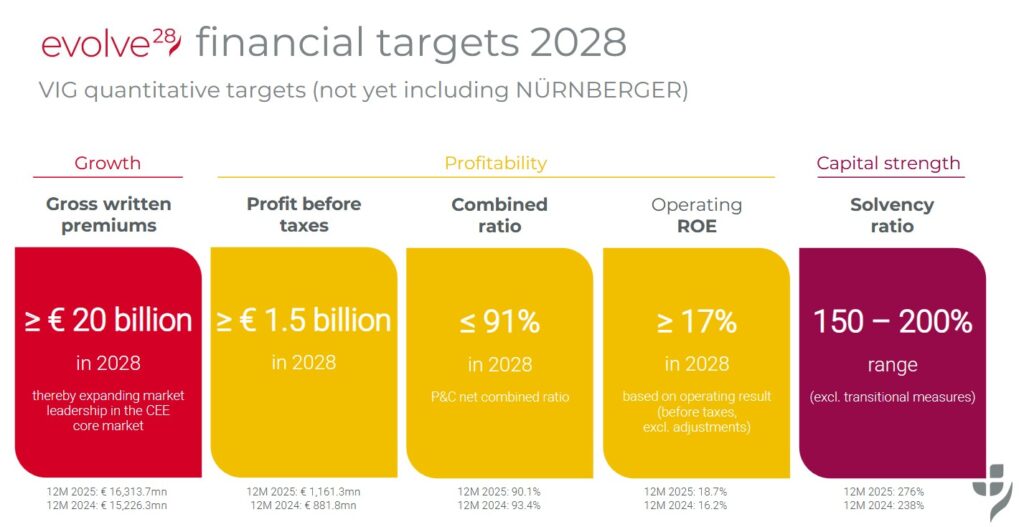
Quantitatively, the strategy is precisely substantiated: by 2028, the invoiced premiums are to increase to at least 20 billion euros and the profit before tax to at least 1.5 billion euros, with a combined ratio of at most 91 percent, an operating return on equity of at least 17 percent, and a solvency ratio between 150 and 200 percent. The acquisition of Nürnberger is not yet factored into these targets. The core region's focus will not change: VIG has been Market leader in Central and Eastern Europe and will continue to expand this position; the growth strategy for CEE remains undiminished according to CEO Hartwig Löger.
The acquisition of Nürnberger is justified as a diversification into the German market, which is intended to support the growth strategy in the core CEE region. At the same time, the acquisition is intended to position the group as a provider of biometrics products across the group.
Owners and Management of VIG
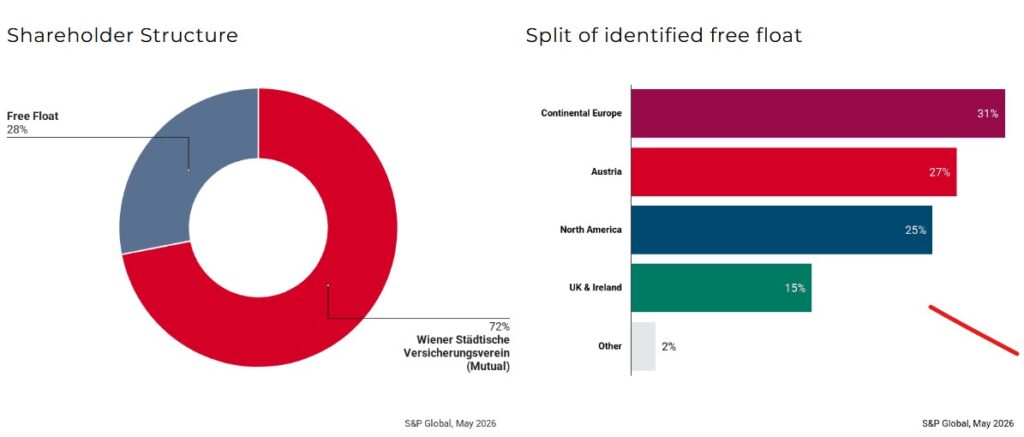
Looking at the ownership structure The most striking feature is that VIG has a dominant anchor shareholder. The main shareholder is Wiener Städtische Wechselseitige Versicherungsverein with around 72 percent of the shares, and free float is around 28 percent. The association has borne its current name since 2010 and is not a publicly traded company, but a mutual insurance association without external shareholders. Among its main tasks is expressly the preservation and safeguarding of the economic independence of the insurance group. Operationally, it appears primarily as a sponsor of cultural and social activities, with a focus on the CEE countries in which the group operates. Remarkable for the interlocking directorates analysis: The insurance association is also represented as a shareholder in Erste Group Bank.
In practice, this constellation means that VIG cannot effectively be taken over and activist investors can exert little pressure. The price for this is a comparatively low free float with correspondingly limited liquidity and the fact that minority shareholders can be structurally outvoted at the general meeting. Additionally, the articles of association secure control even if the majority is lost. The association is entitled to appoint up to one-third of the supervisory board members. This right of appointment is suspended as long as its share exceeds 50 percent of the voting shares and is reactivated as soon as the share no longer falls below this threshold.
In the Supervisory Board A generational change has taken place at VIG since 2024, which at the same time maintains continuity. The Günter Geyer era ended at the general meeting on May 24, 2024. Geyer joined Wiener Städtische in 1974, moved to the management board in 1988, and became CEO in 2001. He is considered the defining figure behind the CEE expansion and subsequently took over the management of the insurance association. In May 2024, Rudolf Ertl was elected Chairman until June 30, 2025; on July 1, 2025, Peter Thirring took over the chairmanship after his cooling-off period expired. Thirring moved from Generali to the Group in 2016, became CEO of DONAU, was a member of the VIG Management Board from 2018, and has been Deputy CEO of Wiener Städtische Versicherungsverein since 2023. This means that a man who is also anchored in the management of the majority shareholder heads the supervisory body – as does Robert Lasshofer, who, as CEO of the insurance association, sits on the VIG Supervisory Board and additionally took over the chairmanship of Wiener Städtische's Supervisory Board in 2024. The composition is international, including former ECB Executive Board member Gertrude Tumpel-Gugerell and representatives from the Czech Republic, Slovakia, and Hungary.
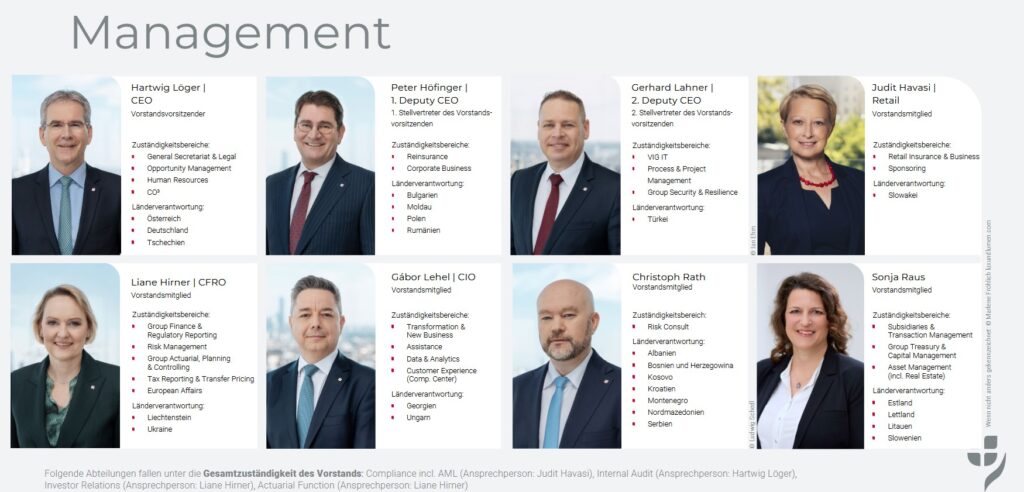
In the Management Board there has been a significant expansion recently. Effective July 1, 2026, the board was increased from seven to eight members – justified by the group's expansion course. A special feature of management is that each board member, in addition to their specialist departments, bears regional responsibility – with the CEO Hartwig Löger these are Austria, Czech Republic, and Germany.
The CEO deviates from the norm in that he did not climb the corporate ladder within the group. Before his time as Austrian Finance Minister, Hartwig Löger was on the management board of competitor Uniqa – most recently as a board member of Uniqa Österreich Versicherungen AG, where he was responsible for sales. Prior to that, he headed sales at DONAU Versicherung from 1997 to 2002 – which is already a VIG company. After leaving politics, Löger worked for the group from July 2019 to December 2020 under a consulting agreement with Wiener Städtischer Versicherungsverein, before joining the management board in January 2021 and taking over from Elisabeth Stadler on July 1, 2023. His connection to the majority shareholder thus already existed before he joined the management board. He has recently gained additional influence in Germany: after the Nürnberger acquisition was completed, Löger was elected Chairman of the Supervisory Board of Nürnberger in July 2026.
Industry profile and competitive situation
The VIG competes in approximately 30 countries, each with different competitors. The competition thus takes place at the country level, while the balance sheet is drawn up at the group level. Precisely this crucial difference makes any comparison challenging. Structurally, four cross-border providers can be identified in Central and Eastern Europe – VIG, Uniqa, Generali, and Allianz – which are countered by national champions in the larger markets. The Austrian dominance in the region is remarkable: According to an FMA report, the foreign premium volume of the five internationally active Austrian groups increased by 10.7 percent to 14.3 billion euros in 2025, thus once again surpassing domestic business with 11.3 billion euros; the foreign share is 56 percent.
In the domestic market, the constellation is tight. After VVO data In 2025, Austrian insurers achieved booked premiums of 22.3 billion euros; Uniqa accounted for 20.8 percent, Wiener Städtische for 16.9 percent, Generali for 14.7 percent, and the Allianz Group for 8 percent. If DONAU and s-Versicherung are added, the picture changes: at the group level, VIG leads with 22.5 percent, ahead of Uniqa. Depending on the aggregation level, one or the other is the market leader.
Competition is also being conducted through acquisitions. VIG and Uniqa are behind around two-thirds of all Austrian insurance M&A transactions from 2015 to 2025, with VIG alone accounting for 42 percent of all acquisitions – driven by the goal of achieving a top-3 position in 19 CEE countries. Competition is also creating movement: PZU and Bank Pekao signed a memorandum in June 2025, according to which the bank will head a joint bancassurance group in the future and be the sole company listed on the Warsaw Stock Exchange. On the Western European side, Helvetia Baloise Holding was formed from Helvetia and Baloise in December 2025.
In summary, there is no true comparable company. VIG is a hybrid of a European mid-cap's size, a multi-line insurer's product breadth, and a growth profile that is more characteristic of emerging markets. The business mix is the next filter. Uniqa has a significantly higher health insurance share, and PZU consolidates banks, making it only partially useful as an insurance comparison. A multiple comparison without adjusting for the line of business and segment mix is misleading.
The only truly robust individual comparison remains Uniqa: same home market, largely overlapping CEE presence, and comparable rating level – with the caveat that the health insurance portion and ownership structure differ. This is an invitation to examine Uniqa next in this series.
Opportunities & risks
The most basic Chance The VIG's competitive advantage is structural in nature and cannot be replicated in the short term. The insurance group is a market leader in a region where insurance penetration is still significantly below the Western European level and the economy is growing faster. As long as premium volume and purchasing power converge towards the Western European level, the market will grow organically – without VIG needing to gain market share. Its lead stems from its early market entry in 1990 and local embeddedness, built up over more than 35 years, which new competitors can only acquire at a high cost.
The second lever is capital strength. At the end of the first quarter of 2026, the solvency ratio was 290 percent compared to the strategic target range of 150 to 200 percent. This difference allows for acquisitions without capital increases. VIG has an impressive track record in this regard: it is responsible for 42 percent of all Austrian insurance M&A transactions in the past ten years. In addition, there is a moderate payout ratio of only around 27 percent recently, which leaves ample room for further dividend increases.
The acquisition of Nürnberger Versicherung is the third, albeit double-edged, opportunity. It diversifies the group significantly outside the CEE region and Austria for the first time, brings in biometric expertise that is to be marketed group-wide, and, as a turnaround case, offers significant earnings leverage if the restructuring in the property and casualty business is successful.
In addition, there are smaller but characteristic niche positions: In Ukraine, VIG has a cooperation with US Development Finance Corporation DFC to cover war risks. Through a partnership with the IFC, it acquired ten percent of Romanian pension fund acquired. In Moldova, the group aims to become the market leader through the acquisition of Moldasig, together with the existing Donaris.
An obvious Risk is politically alien to Western European peers, and this keenness is also alien. The Hungarian case is the precedent: the Aegon takeover was blocked by the Ministry of Interior and ended in a construction with a 45 percent state share, followed by goodwill write-downs of around 72 million euros in 2025. Special taxes, price regulation in mandatory motor liability insurance, and state intervention in product design are not exceptional cases in the region. Added to this is geopolitics – Ukraine, Belarus, Turkey with hyperinflation accounting – which creates earnings and currency volatility that has nothing to do with operational performance.
Furthermore, climate-related damage events are a persistent risk factor. The flood caused by storm Boris in 2024 cost 617 million euros gross and was the largest damage event in the company's history. Analysts explicitly point out that the combined ratio of 90.1 percent in 2025 is primarily due to the absence of major natural disasters. The low insurance penetration in CEE is not just a promise of growth, but also an expression of a protection gap, the closure of which brings volatility to VIG's earnings structure.
The implementation risk for Nürnberger Versicherung is substantial. The Franconian insurer posted a loss of 77 million euros in 2024 on premium income of around 3.6 billion euros, mainly due to the property and casualty business, which requires restructuring and where profitable growth is not expected until 2027. It is the first major acquisition in a saturated, highly competitive market in which VIG has only been present as a niche provider until now. The group must demonstrate concrete synergies after the integration.
Finally, competition is intensifying. In the Polish automotive business, management itself speaks of fierce competition; PZU and Pekao are forming one of Europe's largest financial conglomerates, and Generali and Allianz are advancing their CEE positions with global balance sheet strength. At the same time, data-driven pricing is pressuring margins in the mass market business.
The Finances of VIG
After getting an overview of the industry in general and taking a closer look at the company, management, and competition, I will look at the VIG's balance sheet and the resulting financial ratios. The focus here is on the aspects Growth, profitability and Solvency.
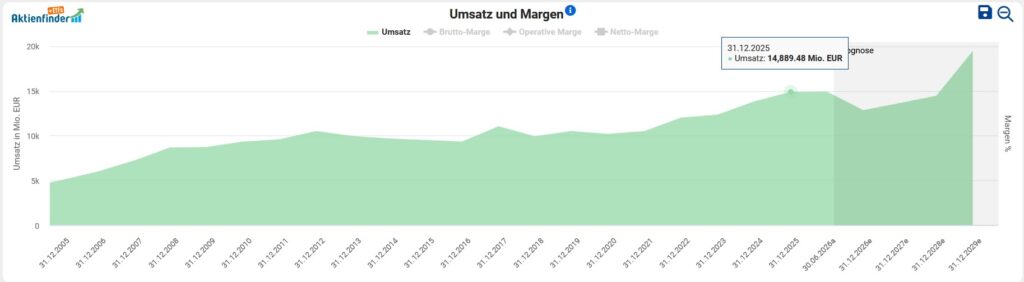
To analyze the financial situation, I'll first look at the development of revenue and profit. On average, the top line grew by 8.1 percent p.a. over the last five years.
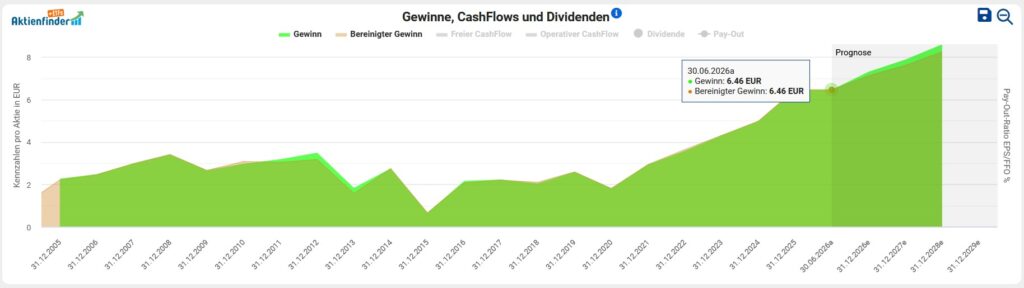
At Earnings per share since 2020, a very dynamic upward trend has been observed overall. Taking the past fiscal year 2025 as an example, the Adjusted earnings per share 29.7 percent an (6.46 vs. 4.98 Euro). VIG achieved in 2025 a Net profit from 835 million euros.
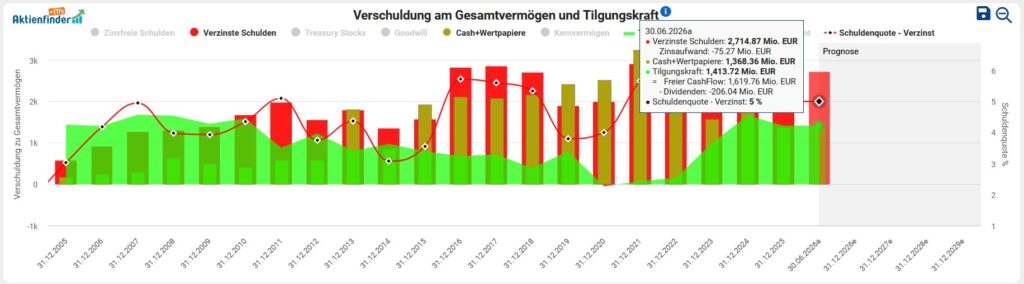
A critical look at the Debt situation shows that interest-bearing financial liabilities amount to €2.7 billion, offset by cash and securities of €1.4 billion at the end of fiscal year 2025. This results in a low net debt of €1.3 billion.
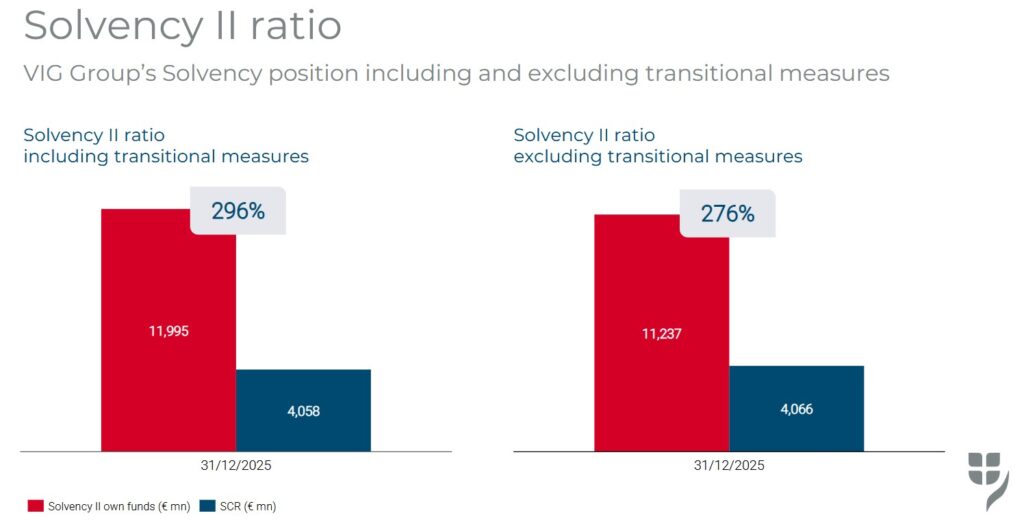
The solvency of VIG has been developing at a consistently high level for years. The Group Solvency II ratio relates the eligible own funds to the solvency capital requirement (SCR); 100 percent is the regulatory minimum. VIG reports including transitional measures as standard and also reports the ratio without them. The so-called Solvency II ratio is moving above the self-imposed target corridor of 150 to 200 percent. In recent years, it has consistently been well over 250 percent:
- 2025: 296 %
- 2024: 261 %
- 2023: 269 %
- 2022: 280 %
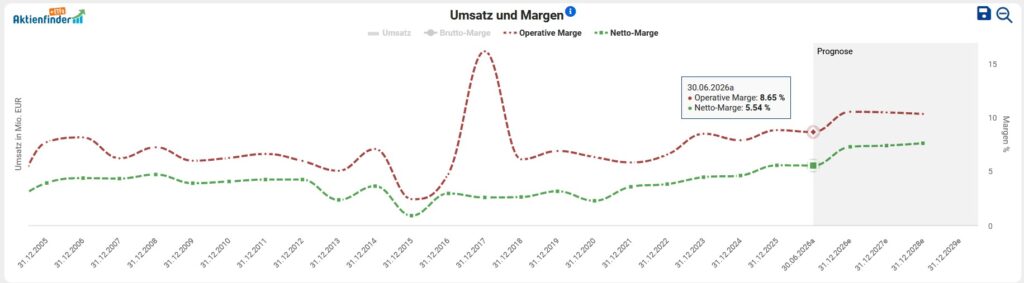
Finally, I am considering Profitability The VIG based on the development of operating and net margins. Since fiscal year 2020, a dynamic upward trend has been observed in the insurance group's margin profile. In the last five years, the VIG management has succeeded in doubling the margins.
Current VIG share price
Even though when evaluating companies in the same industry I like to use the so-called Enterprise Value (EV), this step does not make sense for insurance companies due to the typically high liabilities they have towards their existing customers for this business model. Any key figures in connection with the Free Cashflow. The cash flow generated by insurance companies is not as easy to determine as that of manufacturing or service companies.
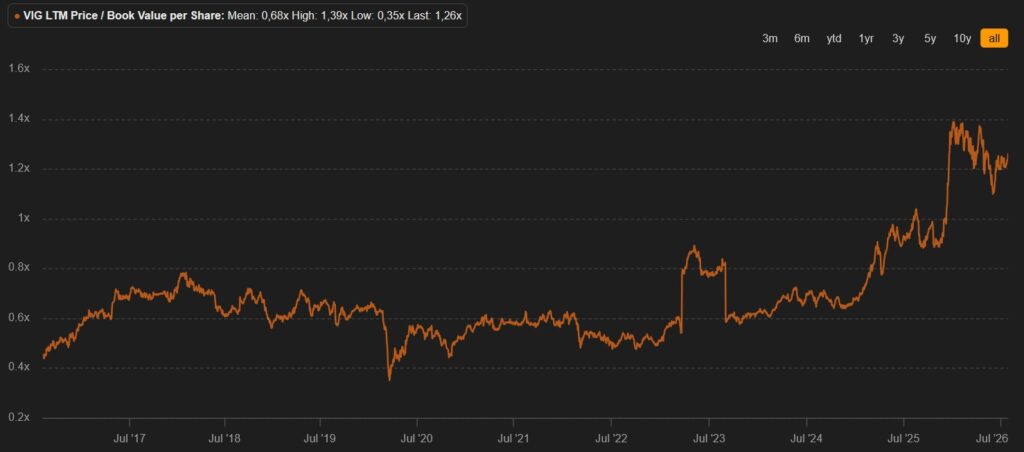
In conjunction with the adjusted P/E ratio, I would like to refer to the Price/book multiple (Price-to-Book Value). Generally, a price-to-book ratio of less than 1 means that the company is worth less on the stock market than its book value. In contrast, a P/B ratio of more than 1 indicates that the market values the company above its book value. As with all generic Rules of thumb However, the company-specific context must also be considered by the careful investor in the analysis. It is undisputed that the P/B ratio does not serve as the sole determining criterion for a purchase decision, because the ratio does not accurately reflect the true economic value of many companies. Insurers and banks are sometimes traded below book value for long periods, even though the companies are generating solid profits and are well-capitalized.
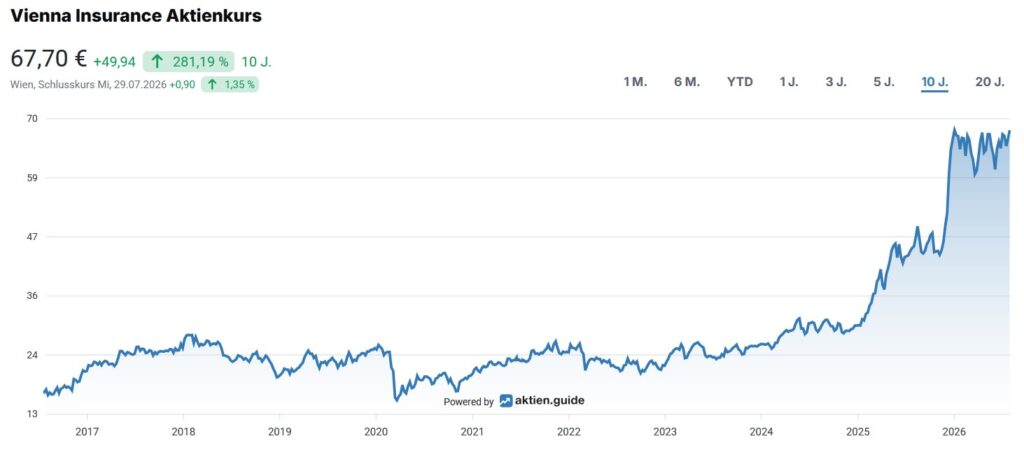
In the VIG use case, the P/B ratio is currently 1.3 – close to its historical high. In 2020, the stock traded significantly cheaper than currently, at a multiple of less than 0.4.
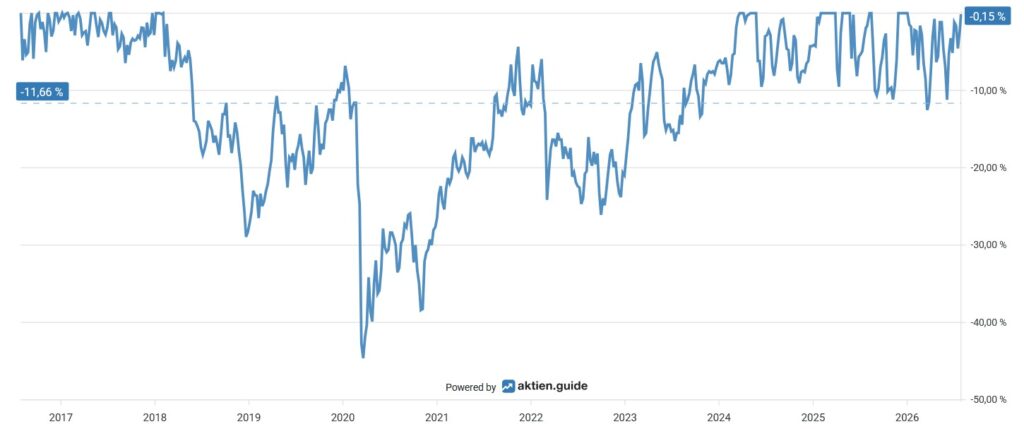
The Maximum drawdown in the past ten years at around 45 percent in 2020:
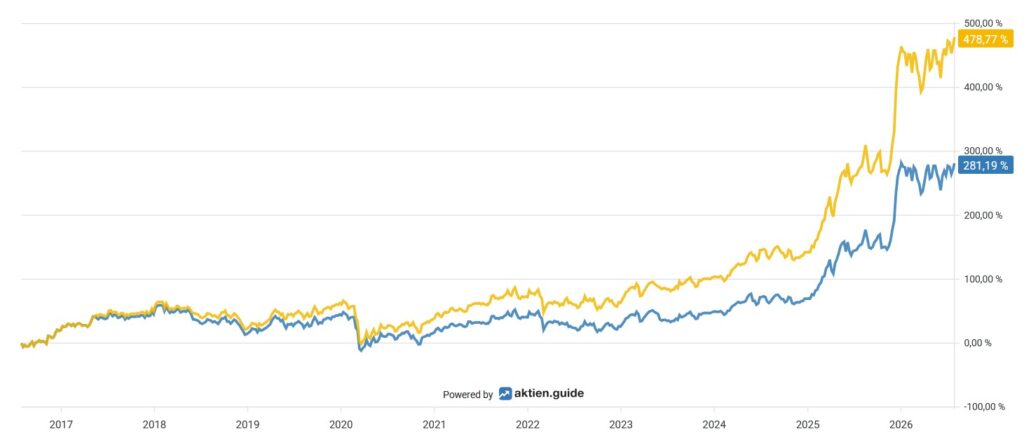
In the ten-year period, an investment in VIG stock, measured by Total Return, a remarkable Overall performance from around 479 percent for the investor:
VIG's Capital Allocation
In the Capital allocation strategy For VIG, the focus is on dividends and inorganic growth through M&A. Excess capital will first flow into acquisitions. The acquisition of Nürnberger had a volume of around EUR 1.4 billion. In addition, smaller transactions such as the acquisition of Moldasig or Phinance Investment in Poland. Share buybacks simply do not play a role in VIG's capital allocation. Neither the dividend policy nor the evolve28 strategy mention them as an instrument. Furthermore, no ongoing program is known. The structural reason for the lack of a buyback program lies on the ownership side: with around 72 percent held by Wiener Städtischer Versicherungsverein, any buyback would mechanically increase its stake further – heading towards and beyond the 75 percent threshold – and further reduce the already limited free float.
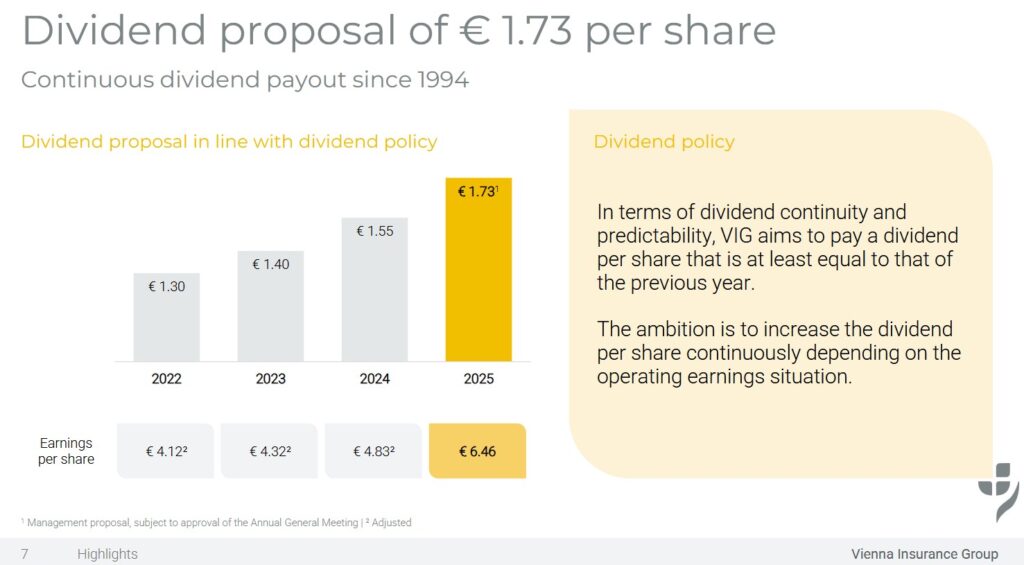
VIG fundamentally pursues a dividend policy that is attractive to shareholders. When considering the long-term Dividendenhistorie However, it is noticeable that VIG has partially massively cut its dividend in phases of external shocks (financial crisis 2008, Covid pandemic 2020) or company-specific problems (impairment on an IT program 2015).
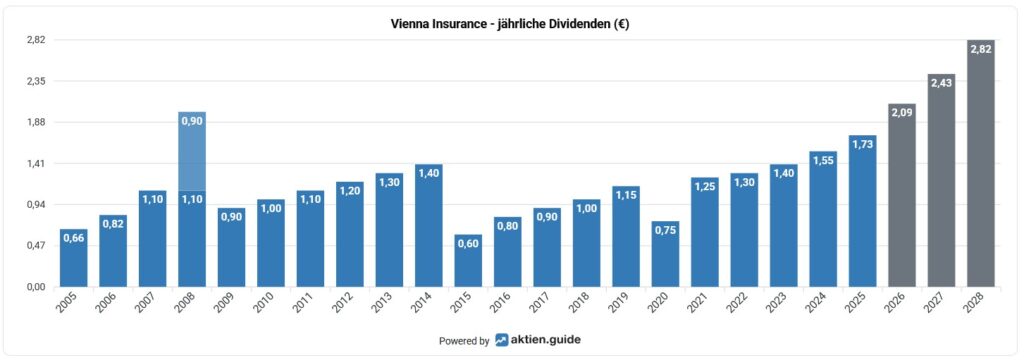
At a current price of 67.70 Euros, this results in a Dividend yield from 2.6 percent Based on the dividend. Finally, an overview of dividend payouts in recent years:
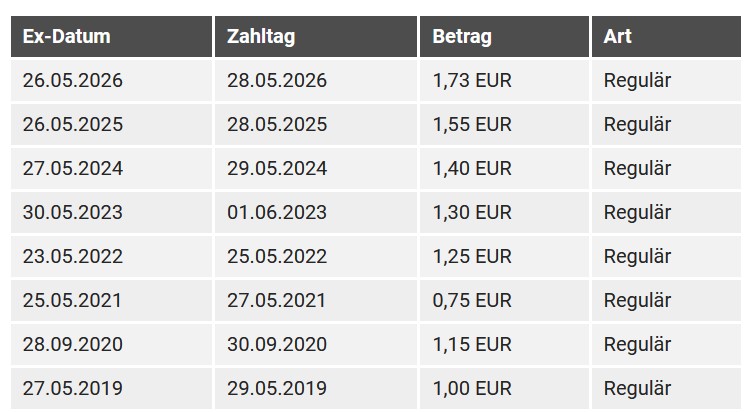
The annual dividend beträgt aktuell 1.73 Euro per share and was paid out this May. If we use the average profit of the last three years as the basis for determining the payout ratio, we arrive at a comfortable result of 32.6 percent for the Payout ratio.