The most important in a nutshell
- Business model: LVMH is the world's leading luxury goods group, with its 75 brands such as Louis Vuitton, Dior and Tiffany generating a combined revenue of 80.8 billion euros in 2025.
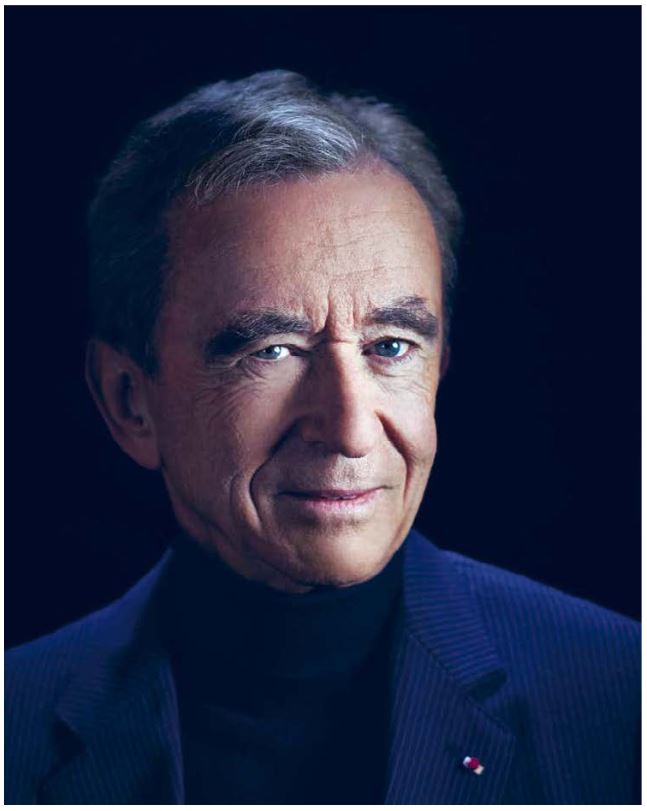
- Management: Bernard Arnault has led LVMH as chairman and CEO since 1989; his family holds the majority of the capital and about two-thirds of the voting rights, and all five children have leadership positions – but who succeeds him is up to him.
- Financial situation: Despite declining profits, LVMH remains highly profitable and solidly funded with moderate net debt.
- Capital allocation: LVMH invests its high free cash flow primarily in brands, stores and prime real estate, pays a stable, well-covered dividend and additionally repurchases its own shares.
- Click here for the DGI-Musterdepot and here for an overview of this series „The dividend custody account”.
Company profile and business model: Who is LVMH and what does the company do?
LVMH was formed in 1987 from the merger of Moët Hennessy and Louis Vuitton, However, the roots of the company date back to the 18th century. In 1743, Claude Moët founded the house in Champagne that later became Moët & Chandon; in 1765, Richard Hennessy opened his cognac house; and in 1854, the leather merchant Louis Vuitton opened his own shop in Paris.
The first step towards the present group was taken in 1971 by Moët & Chandon and Hennessy, which merged to form Moët Hennessy. Louis Vuitton ventured in 1984 under the leadership of Henry Racamier. Initial public offering in Paris and New York. In June 1987, the two groups finally merged to form LVMH Moët Hennessy Louis Vuitton, which at that time counted ten houses and 12,000 employees and generated sales of around 3 billion euros. The share of the new group is traded on the Paris stock exchange and has been part of the French stock market since its launch in 1987. Leading index CAC 40 in 1988 without interruption to its members.
The defining figure of the company was Bernard Arnault. In 1984, he acquired the ailing textile company Boussac for the symbolic price of one franc and kept mainly Christian Dior and the Parisian department store Le Bon Marché from it. From 1988 onwards, Arnault bought into LVMH on a large scale, initially in conjunction with the beverage company Guinness. In January 1989, he took over the leadership, prevailed in a bitter power struggle against Racamier and has since become the largest shareholder and chairman and CEO. Under his leadership, LVMH also grew through acquisitions: in 1996, Loewe and Celine were added, in 1997 the perfume chain Sephora and in 1999 Krug, Château d’Yquem and TAG Heuer as the seed fund for the watch & jewellery division.
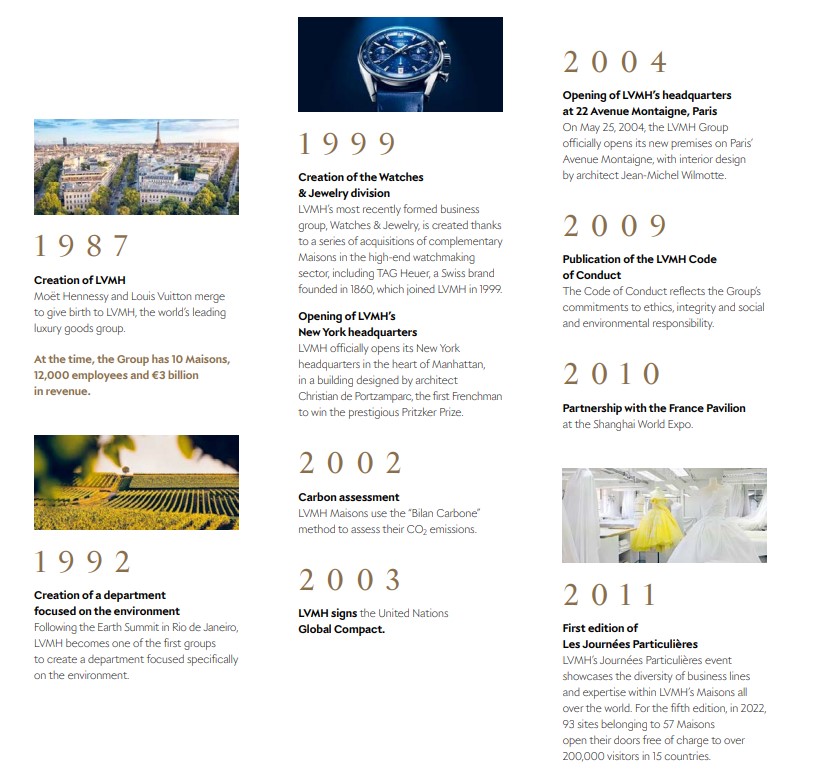
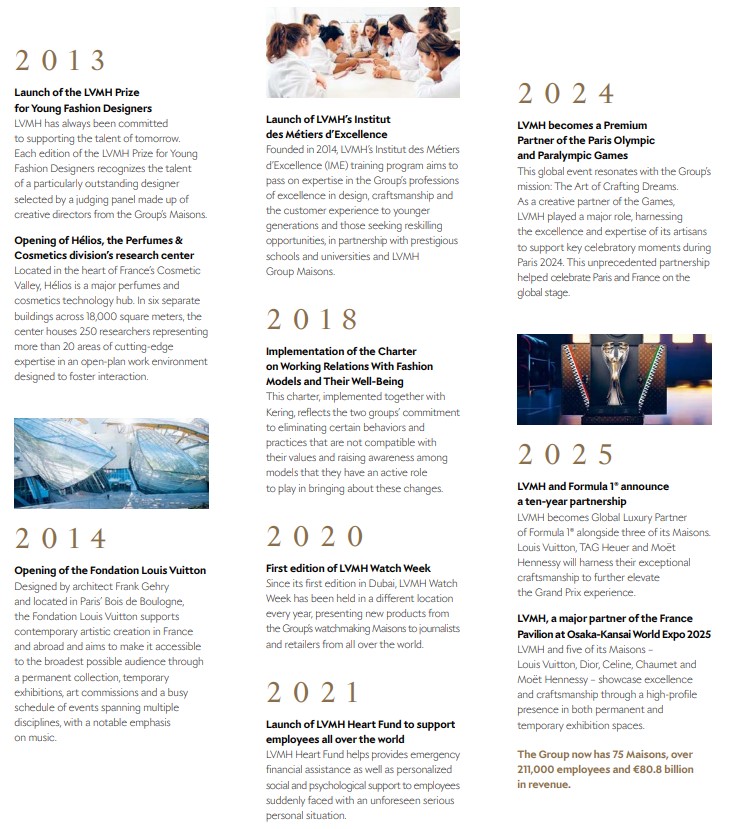
This was followed by Fendi (2001), Bulgari (2011), Rimowa (2016), the luxury hotel group Belmond (2019) and in 2021 the US jeweler Tiffany & Co. A special case was the takeover of Christian Dior Couture for 6.5 billion euros by the Arnault holding company Christian Dior, with which the entire Dior brand was united under the umbrella of LVMH. Culturally, the group made its mark, for example with the 2014 opening of the Fondation Louis Vuitton and the Institute of Métiers d’Excellence, founded the same year, which trains young people for trades.
In recent times, visibility and focus have been at the forefront. LVMH was a premium partner of the Olympic and Paralympic Games Paris 2024 and signed a ten-year partnership with Formula 1, which runs from 2025 onwards. At the same time, the group slimmed down its portfolio: in 2026 it sold the majority of travel retailer DFS and the Marc Jacobs fashion brand. LVMH Moët Hennessy Louis Vuitton SE is today the world’s leading luxury goods group: in 2025 its 75 houses generated a turnover of 80.8 billion euros.
LVMH is consolidating its brands into six business areas, Of these, fashion and leather goods are by far the most important: in 2025, 47 percent of sales and nearly three-quarters of operating profit came from this area. This includes houses such as Celine, Loewe, Fendi, Givenchy, Loro Piana, Berluti, and Rimowa, in addition to the luxury brands Louis Vuitton and Christian Dior. With 37.8 billion euros in sales, the division generated 13.2 billion euros in operating profit, a margin of 35 percent.
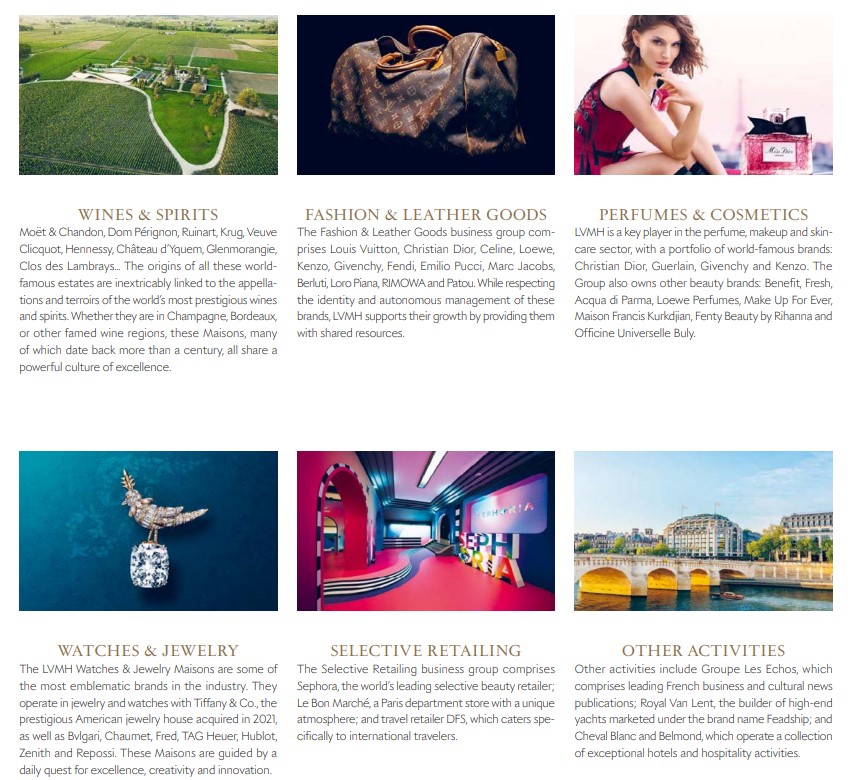
The second largest segment is selective retail with 18.3 billion euros in sales. Its driving force is the cosmetics chain Sephora, which increased its sales and profits in 2025 and opened around 100 new stores. In addition, the Parisian department stores Le Bon Marché and La Samaritaine are included, while LVMH has now largely sold the travel retailer DFS.
Watches & Jewelry reached 10.5 billion euros and is supported by Tiffany & Co. and Bulgari, complemented by Chaumet, Fred, and the watch brands TAG Heuer, Hublot, and Zenith. Perfumes & Cosmetics generated 8.2 billion euros, including perfumes by Christian Dior, Guerlain, Parfums Givenchy, Benefit, Fenty Beauty, and Maison Francis Kurkdjian. Wine & Spirits generated 5.4 billion euros with Champagnes such as Moët & Chandon, Dom Pérignon, Veuve Clicquot, Krug, and Ruinart, Cognac Hennessy, Glenmorangie whisky, and sweet wine Château d’Yquem.
The sixth pillar, the other activities, includes, among others, the business newspaper Les Echos and other media, the hotels of Belmond and Cheval Blanc, as well as the yacht shipyard Royal Van Lent with the Feadship brand.
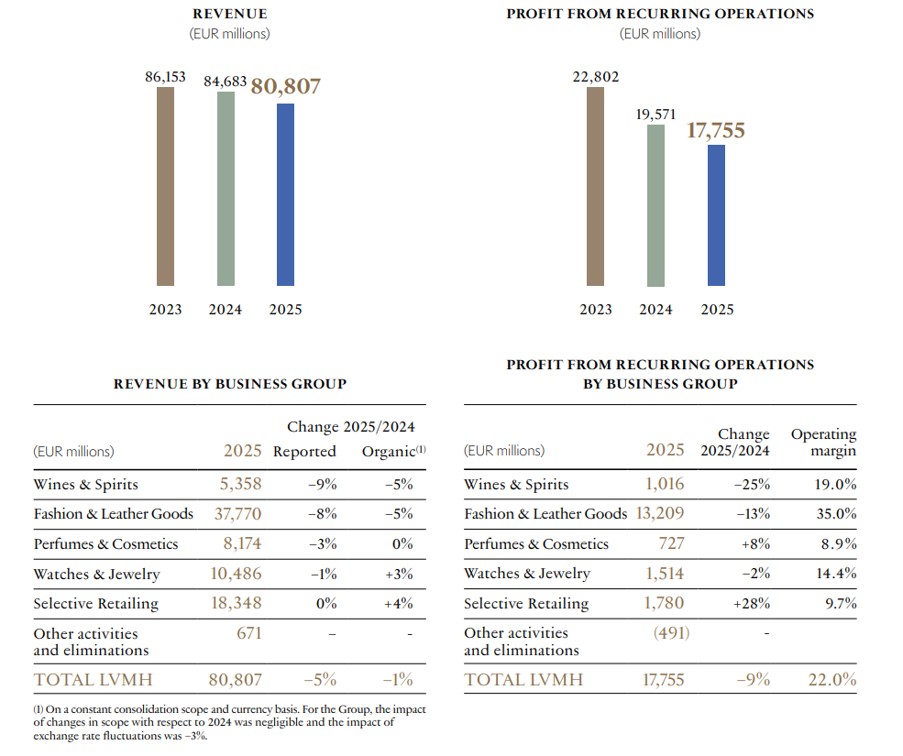
Regional The group is well diversified: in 2025, 26 percent of revenue came from the USA and Asia excluding Japan, 18 percent from Europe excluding France, 8 percent from France and Japan, and 14 percent from the remaining markets. The business segments are also evolving differently recently. In the first nine months of 2026, watches & jewelry grew organically by 8 percent, retail by 6 percent, and wine & spirits by 5 percent, while fashion & leather goods shrank organically by 2 percent mainly due to weaker demand in China.
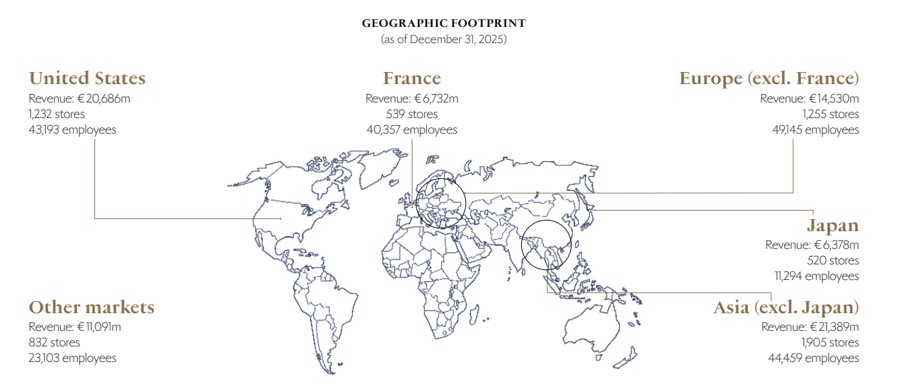
LVMH earns its money by maintaining traditional brands over the decades and selling their products at high margins. The group acts as a hub: It provides the maisons with the resources for design, production, and selective distribution, while they retain their independence. A key element is vertical integration. LVMH controls the value chain from sourcing to manufacturing to sales, thus retaining control over the image of its brands. In France alone, the group operates 117 production sites, and through a network of 6,283 stores it maintains direct contact with customers worldwide.
Strategically LVMH focuses on the long-term development of desirable brands rather than on rapid growth at any cost. The company sums up its mission in the formula „The Art of Crafting Dreams“ and lists creativity and innovation, excellence, entrepreneurial spirit, and a positive impact on society and the environment as its values. How to achieve this is described by LVMH with seven principles that together form its model.
First of all, LVMH is relying on a Decentralized organizationThe houses operate independently and closely with their customers, make decisions quickly and are intended to foster the entrepreneurial spirit of their employees. Second, growth on its own merits, meaning the development of existing properties and the protection of their creativity. Acquisitions complement this course, as the long list of acquisitions from Bulgari to Tiffany shows.
Third and fourthly, LVMH mentions the vertical integration described above and the synergies that are used across the group without compromising the brands’ independence. Fifthly, the group aims to preserve savoir-faire and pass it on to new recruits, for example through the Institut des Métiers d’Excellence; according to its own figures, LVMH employs 280 experts in the fields of craftsmanship, design and customer experience.
Sixthly, innovation, driven by its own research centers, a network of start-ups, and partnerships with universities and professional companies, should make products and shopping experiences even more attractive. Seventhly, the balance between business divisions and regions ensures resilience against crises and fluctuations in the economy.
The long breath is supported by the ownership structure. With a majority stake in capital and voting rights, the Arnault family, according to analysts, can decide on dividends, major acquisitions, and the composition of the board without having to depend on other major shareholders. Control by the next generation is already secured. Each of the five children holds 20 percent of the controlling company Agache Commandité; none may sell it in the next 30 years without the consent of the others, and the chairmanship rotates every two years. It is unclear who will succeed the father at the helm. There is no immediate pressure, however, because the retirement age for chairman and CEO has been raised to 85 years.
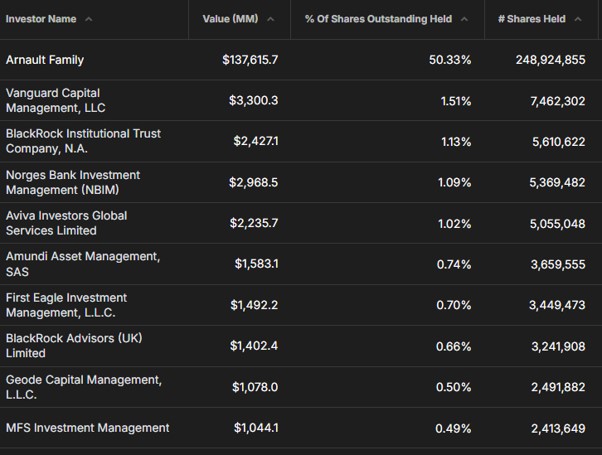
On September 23, 2026, the family presented a plan to shorten the chain of its holdings. Financière Agache is to merge into Agache and Agache will then be transformed into Christian Dior, which is to be converted into a limited partnership with shares. The remaining publicly traded company would then hold directly 49.76 percent of the capital and 65.55 percent of the voting rights of LVMH. The personally liable shareholders would be the controlling company of the children, Agache Commandité, and Bernard Arnault, who would also retain the management of the business. A bar offer will be made to the free Dior shareholders.
All five children of Bernard Arnault hold leadership positions within the group. They all hold leadership positions. Delphine heads Christian Dior Couture, Antoine is responsible for image and communication, Alexandre is deputy chief of Moët Hennessy, and Frédéric has been the CEO of Loro Piana since June 2025. Jean is responsible for marketing and development of Louis Vuitton watches. Four of the five, all but Jean, sit on the board of directors. Investors increasingly complain that there is no clear succession plan.
Industry profile and competitive situation
LVMH has no single competitor, The group faces other competitors in each of its six business divisions. The market is dominated by an oligopoly: a few large companies such as LVMH, Kering and Richemont share the business with independent brands such as Hermès, Chanel and Prada. New entrants have a hard time competing because they need brand history, craftsmanship, top-notch stores and high marketing budgets. The battle is fought less over price than over desire, creativity and design talent. At the same time, the industry is consolidating: Prada has acquired Versace, and L’Oréal has bought Kering Beauté.
When choosing the peer group, it is especially important to note that LVMH is a mixed-product company. Comparing the group’s margin directly with that of Hermès or Prada is misleading, because LVMH also includes more margin-sensitive areas such as Sephora and wine and spirits. A more meaningful comparison is between each division or with a basket of comparison companies weighted according to LVMH’s revenue mix. Price segments also differ significantly: absolute luxury brands like Hermès behave differently in a crisis than brands for the upper middle class like Burberry or more affordable providers like Tapestry. Furthermore, important competitors are not publicly listed, such as Chanel, Rolex, or Patek Philippe. Chanel, for example, only publishes annual figures and is therefore a benchmark. The reporting currencies and business models also differ from each other. Prada, for example, operates only through licensing agreements for eyewear and cosmetics, which distorts the margins. Differences in growth often reflect more the share of sales of China and the USA than the competitiveness.
For fashion and leather goods, Hermès, Kering, Prada, Moncler, Brunello Cucinelli and Burberry are the core peer groups. In the watch and jewelry sector, Richemont and the Swatch Group are included. In perfumes and cosmetics, L’Oréal with its luxury division, Estée Lauder, Puig and Shiseido are included. Estée Lauder and Puig remain separate comparables, as their merger talks failed in May 2026. In wine and spirits, Diageo, Pernod Ricard and Rémy Cointreau are included, while for Sephora, Ulta Beauty and Douglas are the comparables.
The financial situation of LVMH
After considering companies, industry and competition, I take a look at LVMH’s financial figures. The focus is on the aspects Growth, profitability and Financing.
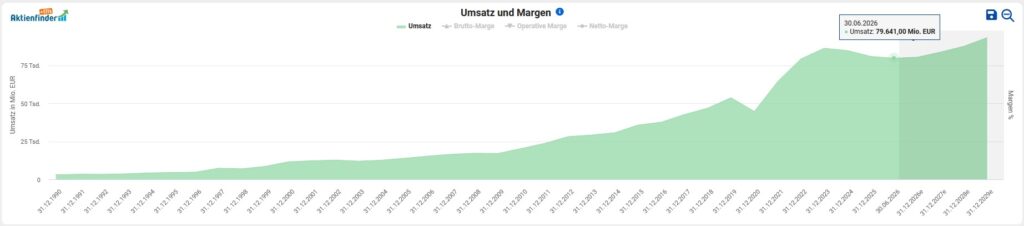
To analyze the financial situation, the first step I take is to look at the development of revenue, profit, and free cash flow. The Turnover grew by an average over the past five years 4.9 percent per year.
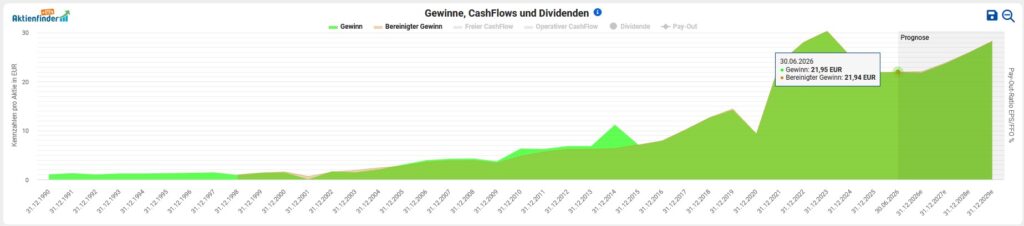
The Earnings per share Over the past ten years, the trend has been upward, but in the last two years this has been interrupted by a decline. In the 2025 financial year, earnings per share fell by around 13 percent from EUR 25.12 to EUR 21.86. LVMH generated a profit of EUR 25.12 in 2025. Net profit of 10.9 billion EUR.
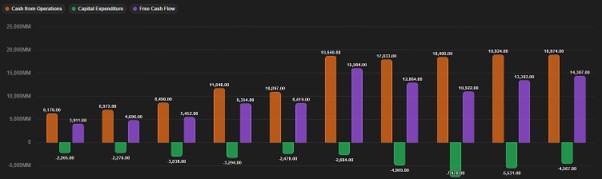
The amount available to the company Free Cashflow, That is, the operating cash flow is used to cover expenses such as capital expenditures or for research and development, debt repayment, expansion through acquisitions, dividends (or increased dividends), or share buybacks. In absolute terms, the interplay between operating cash flow and capital expenditures (CapEx) over the period 2016 to 2025 is as follows:
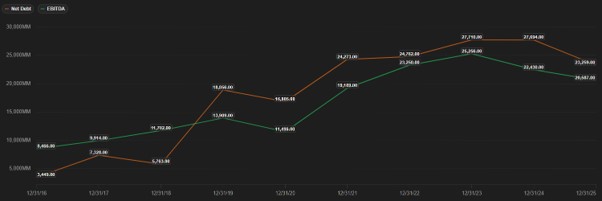
A critical look at the Debt situation This shows that interest-bearing financial liabilities amounted to EUR 36.8 billion, against which liquid assets and securities of EUR 13.5 billion were available at the end of the 2025 financial year. This results in a net debt of EUR 23.3 billion. Compared to the EBITDA of EUR 20.6 billion, this corresponds to a debt ratio of 1.1. This is significantly below the critical threshold of 3, which varies depending on the industry.
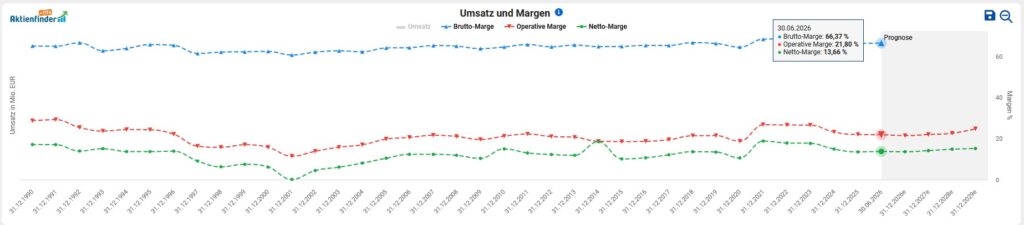
Finally, I am considering Profitability by LVMH based on the development of gross margin, operating margin and net margin. The operating margin has normalized but has not broken through. The luxury boom after Corona brought record values of 26.7 percent (2021), 26.6 percent (2022) and 26.5 percent (2023). At the mid-year of 2026 at 21.8 percent, it is again roughly at the level of the 2010s. The pricing power is largely intact, because the gross margin has been stable for decades. However, it has recently slightly decreased from 69 percent in 2023 to 66 percent in 2025. The decline in the operating margin is mainly due to declining sales due to high fixed costs for stores, personnel and marketing. Additionally, there were currency effects: LVMH’s operating margin of 22 percent for 2025 was burdened by exchange rate fluctuations.
Opportunities & risks
LVMH’s most important opportunity lies in the long-term growth of the luxury market. Bain & Company and the Italian industry association Altagamma believe it is realistic that the market for personal luxury goods will grow by 4 to 6 percent per year to 525 to 625 billion euros by 2035. In addition, markets such as the Middle East, Latin America, Southeast Asia, India and Africa have already generated around 45 billion euros in sales in 2025, making them as large as mainland China. As a market leader with stores in 81 countries, LVMH is well positioned to contribute to this growth.
In the second quarter of 2026, Fashion & Leather Goods returned to organic growth, which LVMH attributes primarily to the positive start of Anderson’s first designs for Dior, notably the Cigale bag; in the third quarter, the division also saw the creative reinvention bear fruit. Because the division generates about three-quarters of the operating profit, a sustained recovery here would particularly boost the Group’s bottom line. At the same time, LVMH is trying to win back more price-conscious customers who have in recent years switched to cheaper brands like Coach or Ralph Lauren. This is achieved through entry-level products such as Louis Vuitton’s first beauty line, featuring a lipstick priced at $160, or bag pendants. If it succeeds in attracting a portion of this clientele, that would be an additional driver of growth.
In addition, LVMH has growth engines beyond fashion. Watches & Jewelry grew organically by 8 percent in the first nine months of 2026, driven by strong jewelry sales at Tiffany and Bulgari, and Sephora is gaining market share in many countries and opening new markets with Belgium and Croatia. Wine & Spirits is also recovering with an organic increase of 5 percent, thanks in part to champagne in Europe and new ready-to-drink Hennessy cocktails in the USA. Regionally, LVMH benefits from robust demand in the USA, where sales increased organically by 5 percent in the third quarter of 2026; Europe and Japan also grew. With three Louis Vuitton workshops in the USA and another one planned for Dallas for the end of 2026 or beginning of 2027, the Group can also reduce its risk of tariffs. In China, despite the current weakness, LVMH continues investing and emphasizes the strategic importance of the market.
The biggest risk is dependence on the fashion business. Fashion & Leather Goods saw weak sales growth: In the first nine months of 2026, revenue in the division fell organically by 2 percent, and in the third quarter by as much as 5 percent. According to analysts at Bernstein and Jefferies, there were additional brand-specific problems at Louis Vuitton, such as a dispute over the logo similar to the Monogram of a Chinese tea manufacturer and a temporary logistical problem. This is closely linked to dependence on China and Asia. Asia excluding Japan accounts for about a quarter of sales, and there was an organic growth of minus 5 percent in the third quarter of 2026. Chief Financial Officer Cécile Cabanis pointed to a subdued consumer sentiment, partly due to plans to tax foreign purchases by Chinese customers; in addition, Chinese brands such as Laopu Gold, Songmont, and Bosideng are gaining popularity.
A structural risk is the so-called „luxury fatigue“ after years of strong price increases. Many casual buyers can no longer keep up. Since most luxury brands, according to fund managers, plan only minimal price increases of less than 2 percent in 2026, growth must come from more sales volume. But the market environment has become more challenging. Reasons cited include the war in the Middle East, higher oil prices, high inflation in the USA, and a weaker global economy. LVMH has directly felt the impact of the war in the Middle East. The company incurred around one percentage point of organic growth in the first and second quarters of 2026 due to the war around Iran, as demand in the Gulf states declined and fewer tourists came to Europe. The region accounts for about 6 percent of the group’s revenue.
In addition, there is the unpredictable US trade policy. The USA account for around a quarter of sales, and after the 15 percent tariff in the trade agreement with the EU from the summer of 2025 was followed by alternating replacement tariffs after the Supreme Court had overturned the previous legal basis in February 2026. It remains unclear what tariffs LVMH will have to plan for in the most important individual market in the medium term. In the spirits business, trade disputes also pose additional challenges. Since July 2025, China has been imposing anti-dumping tariffs of up to 34.9 percent on EU brandy; Hennessy is exempt from these tariffs as long as it maintains fixed minimum prices. The weak demand for cognac has already led to a 25 percent drop in operating profit in 2025. Another, albeit inherent, risk is exchange rates, as LVMH generates the majority of its sales outside the euro area. The strong euro weighed on reported sales in the first half of 2026, and currency effects already in 2025 burdened the operating margin.
After all, the leadership and ownership structure carries risks. Bernard Arnault is 77 years old and has not announced any succession plan; in a Reuters survey, six out of seven institutional investors surveyed knew nothing about succession plans. Because the family holds the majority of the capital and about two-thirds of the voting rights, minority shareholders have little influence.
Current valuation of the LVMH stock
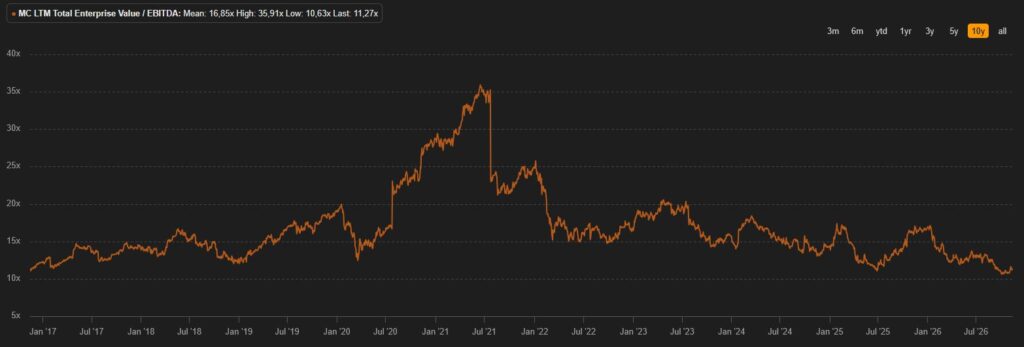
For the valuation of companies, I use the so-called Enterprise Value (EV) Earnings per share (EPS). The Enterprise Value quantifies the amount that would be spent on the necessary assets in the event of a takeover; non-necessary assets are excluded from this calculation. I use this figure in conjunction with earnings before interest, taxes, depreciation and amortization (EBITDA). As a rule of thumb, a value below 10 signals a „healthy“ valuation. However, as with all generic rules of thumb, the individual context of the company must be carefully considered by the investor in the analysis. In the case of LVMH, the EV/EPS at 11.3 is clearly in the lower range of the last ten years – thus being valued favorably by our own valuation history:
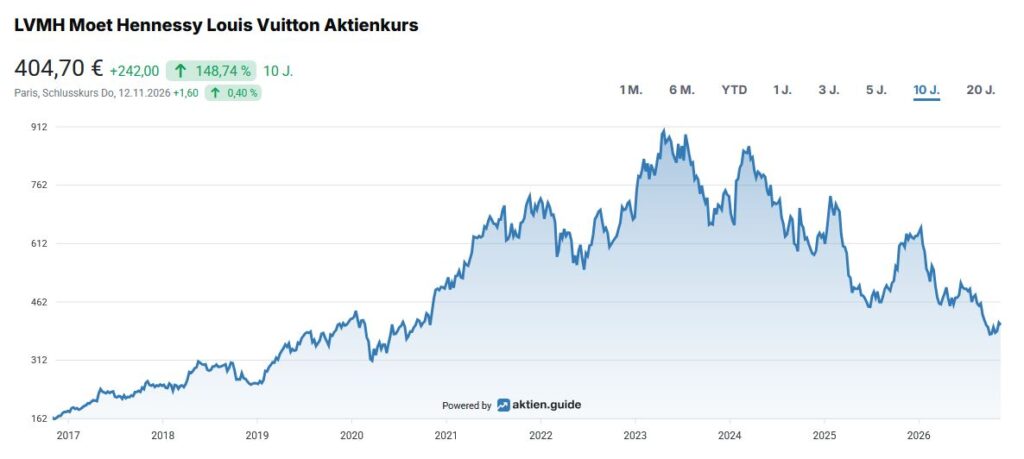
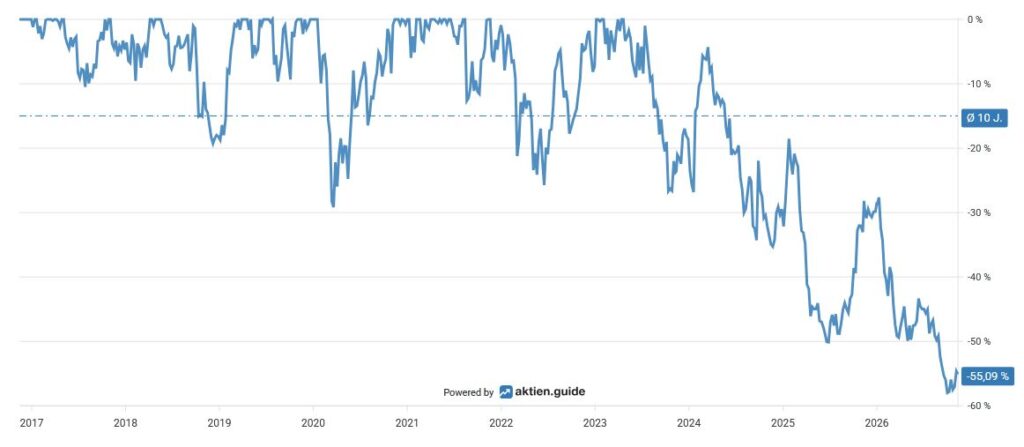
The Maximum decrease over the past ten years was around 58 Percent Reaches 2026 in the recent period of weakness:
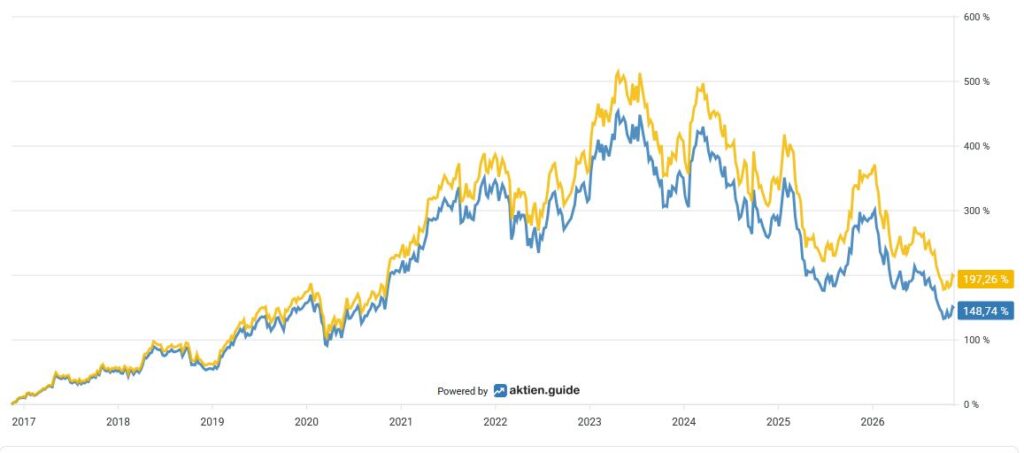
Over the ten-year period, an investment in LVMH, measured by Total Returna Overall performance from around 197 percent for the investor:
Capital allocation by LVMH
LVMH uses its high cash flow for three purposes: investments in its own houses, dividends to shareholders, and targeted acquisitions and investments. The group keeps its debt low. Investments are primarily made in stores, workshops, and high-quality real estate. In 2023, LVMH spent a record amount of around 2.45 billion euros on real estate, including the Louis Vuitton flagship store on the Champs-Élysées for around 770 million euros and the No. 150 building on the same avenue for around one billion euros.
The Dividend increased from 10 euros per share for 2021 to 12 euros for 2022 to 13 euros for 2023 and has remained stable since then despite declining profits. It is semi-annually Paid out. A interim dividend of 5.50 euros is planned for 2026 on December 3, 2026.
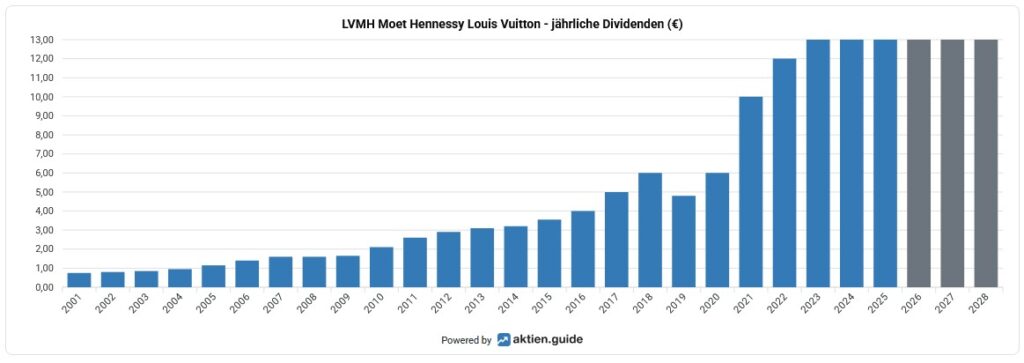
At a current price of 404.70 EUR, the calculation results in Dividend yield of 3.2 percent. Die Fünfjahres-Dividendenwachstumsrate amounts to 14.8 percent p. a. or. 14.5 percent p. a. in Ten-year period. The company recently increased its dividend by 8.3 percent in February 2024.
If the average free cash flow of the last three years is taken into account, the result is 49 percent for the LVMH payout ratio. This means that the dividend is comfortably covered by free cash flow.
The Number of shares outstanding decreased over the past ten years by a total of 2 percent.
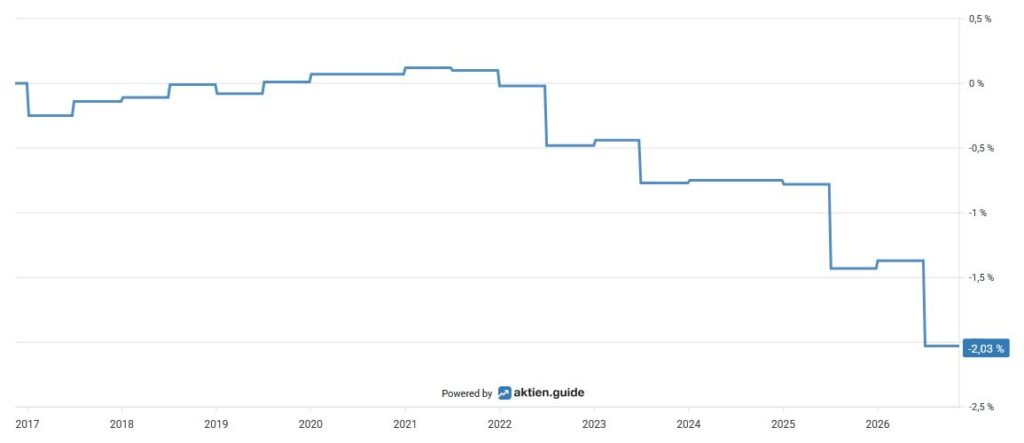
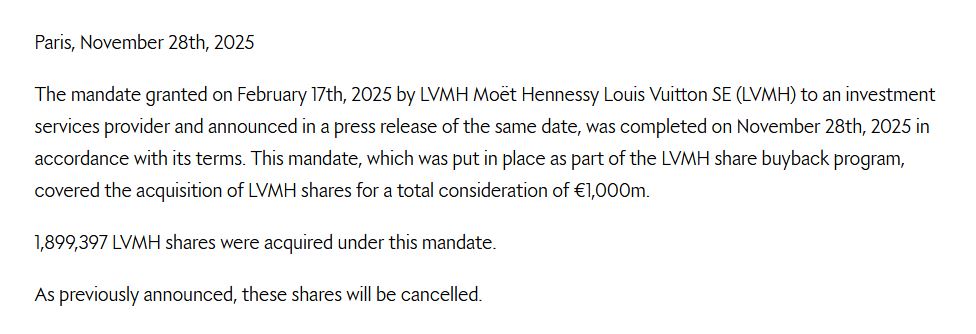
In addition, LVMH buys back and redeems its own shares; since 2021, the group has launched several such programs. In the most recent program, between February and November 2025, the group acquired nearly 1.9 million shares for a total of one billion euros, approximately 0.4 percent of the capital, at an average price of around 526 euros per share:
Conclusion: Considerations for my decision to invest in LVMH
LVMH brings a wide portfolio of coveted brands, a balanced lineup, and strong financial strength, but in 2026 it faces pressure due to weak demand in China, a declining fashion business, and geopolitical headwinds. Whether the opportunities or the risks outweigh depends primarily on how quickly the creative reinvention of the fashion houses translates into sales and how the overall luxury demand recovers. I consider the world's leading luxury goods group to be a base investment in the cyclical consumer sector. The current valuation offers an interesting opportunity to consider entering the LVMH share at a fair price level – measured against its own valuation history.
Haftungserklärung
When compiling this article, we obtained the actual information from generally considered reliable sources available to us. We cannot claim any accuracy or completeness of this information. Our assessments based on these actual information represent non-binding value judgments at the time of compiling this article. Subsequent changes cannot be taken into account. We cannot accept any liability for the completeness or accuracy of this article. This article does not constitute an offer or solicitation to purchase shares of the issuer. This article in no way replaces client- and objective-appropriate advice. We cannot verify whether the recommendations match your personal investment strategies and objectives. For client- and objective-appropriate advice, we recommend that you seek the advice of an investment advisor. An analysis publication can and should not replace a securities prospectus required for an investment and/or expert investment advice. Therefore, it cannot be the sole basis for deciding on an investment.