


Consumer staples stocks offer investors long-term stability amidst trends like sustainability, digitalization in retail, and premium consumption. You’ll quickly identify which market leaders promise truly sustainable growth and which stocks are already overvalued.
This guide clearly explains the dynamics of the consumer goods sector, introduces top consumer goods stocks that have delivered attractive returns in recent years, and highlights the risks involved in entering the market.

The most important in a nutshell
- Consumer staple stocks secure stable revenues through daily demand, making them a safe haven, especially during recessions.
- Trends such as premiumization, the expansion of e-commerce, and the rising purchasing power of the middle class in emerging markets offer long-term stock potential.
- Strong brands like Nestlé, Procter & Gamble, or L'Oréal can often pass on increased costs to consumers, thereby protecting their margins.
What are consumer goods stocks?
Consumer goods stocks are equity in companies that produce and sell everyday necessities such as food, beverages, cosmetics, and household products. They benefit from constant demand, regardless of economic fluctuations.
The consumer goods sector encompasses the production and sale of food and hygiene products, as well as cyclical goods such as fashion and luxury products. You can find these stocks in supermarkets, drugstores, and online shops worldwide.
| Consumer staples | Consumer staples |
| Demand can be deferred if needed | Constant daily need |
| Examples: Vehicles, clothing, luxury goods | Examples: Food, beverages, cleaning supplies, cosmetics |
| Strong fluctuations depending on the economic situation | Stable regardless of economic conditions |
Examples of leading consumer goods companies include Nestlé, Unilever, Procter & Gamble, L'Oréal, Coca-Cola, and Walmart. Those who want to familiarize themselves with stock fundamentals first can find information in our guide on Aktien für Anfänger an introduction.


What characterizes consumer goods?
Consumer goods are products for daily use, divided into non-durable goods (e.g., dairy products) and essential goods (e.g., soap), which form the basis for stable consumer goods stocks. They differ from capital goods through direct consumer proximity and recurring purchases.
Key characteristics of consumer goods stocks are:
- You secure stable revenue through daily demand, even during recessions.
- Brand strength and pricing power enable margins despite cost increases – ideal for manufacturers like Unilever worldwide.
- They are perfect for dividend investors, focusing on brand portfolios where you invest through consumer goods stocks.
- Brands like Nestlé or P&G dominate, supplemented by premium segments like L'Oréal.
These characteristics make consumer staples stocks defensive assets: from drugstores to supermarkets, they drive technologies like e-commerce and sustainability, which secure the success of many top stocks.
The market potential of consumer goods stocks in concrete numbers
The Global X Emerging Markets Great Consumer ETF, which invests in consumer goods companies in emerging markets, is predicted by analysts to reach an average price of $42.85 by 2030. This represents an increase of 41.13 %from current levels.
By 2035, predict Experts even an average price of $55.59, an increase of 83.12 %. These optimistic forecasts are based on the massive expansion of the middle class in emerging markets, which, according to McKinsey its global spending will nearly triple by 2030.
In the medium term, defensive consumer staples stocks could regain attractiveness once interest rates stabilize and inflation recedes. Many corporations are investing heavily in digital sales channels, direct-to-consumer business, and sustainable solutions, which strengthens their long-term competitiveness.
The graphic shows that the global FMCG market is set to increase steadily from approximately US$2.47 trillion in 2019 to 2029, indicating stable, moderate growth. For 2025, an annual growth of 3.1% compared to 2024 and an average annual growth rate of 3.2% for the period 2024–2029 are shown, increasing the market by an additional US$456.9 billion in these five years.
Growth drivers for consumer goods stocks
As an investor, you benefit from clear growth drivers in consumer goods stocks, which reliably propel the sector forward and secure long-term, dependable returns.
- PremiumizationFor example, Unilever (GB00B10RZP78) recorded double-digit growth in 2025 through premium innovations, which boosted adjusted revenue by 3 % in the first quarter.
- E-commerce growthThe e-commerce business grew exceptionally strong in 2025. Between 16 and 27 % per quarter. E-commerce sales have tripled in the last five years, which also benefits Komsum stocks.
These drivers will very likely ensure a reliable increase in revenue in the coming years. Short-term oriented traders try to frequently use short-term trends Swing trading strategy by trading medium-term price movements in equities.
Regional Opportunities in Consumer Goods Stocks
Regional opportunities in consumer goods stocks arise primarily from different growth dynamics, income developments, and consumption habits worldwide.
USA: Brand Loyalty and Stable Domestic Market
In the U.S., large brands benefit from high brand loyalty, pricing power, and a broad domestic market that remains relatively stable even during weaker economic periods:
- Procter & Gamble (US7427181091): Household products, personal care
- Coca-Cola (US1912161007): Beverages with Global Brand Leadership
- Nike (US6541061031): Sportswear
- Starbucks (US8552441094): Premium Coffee, Quick Service Restaurant
Europe: Diversification and Efficiency Focus
In Europe, international consumer giants offer access to globally diversified revenues, but the domestic market is more mature and growing significantly slower, placing a greater focus on efficiency, premiumization, and cost control:
- Nestlé (CH0038863350): Food, world's largest group
- Unilever (GB00B10RZP78): Food, Cosmetics
- L'Oréal (FR0000120321): Cosmetics, Beauty Leader
- Diageo (GB0002374006): Premium Spirits
Asia: Structural Growth Fueled by Exploding Middle Class
Asia holds the most exciting structural opportunities that can be very rewarding for investors. Asian consumer stocks are benefiting from rising wages (China: by 2030 at 45% of US wages), urbanization, digital penetration, and the near tripling of global middle-class spending by 2030.
- Kweichow Moutai (CNE0000018R8): Premium Liquor Producer
- Ryohin Keikaku/Muji (JP3976300008): Retailer of household goods, clothing, furniture
- Kikkoman Corporation (JP3244800006): Soy Sauce and Asian Spices
- ITC Ltd. (INE154A01025): Tobacco, Food, Packaging, Agri-Export (Grains, Coffee, Seafood)
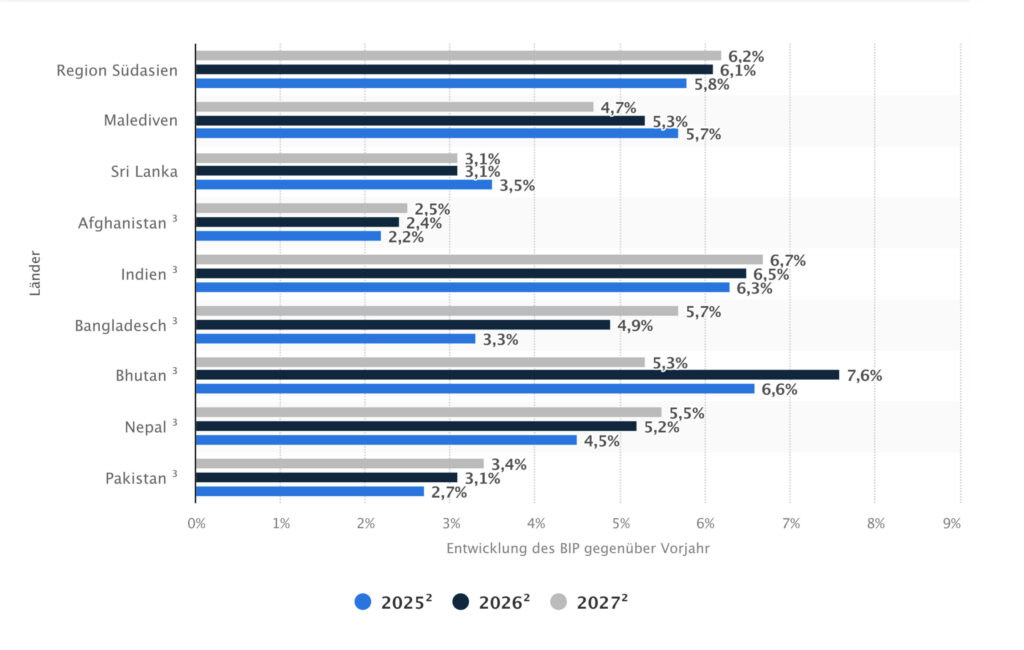
The World Bank forecasts India's economy to grow by approximately 6.3 %in 2025, followed by around 6.5 % in 2026 and 6.7 % in 2027.
For South Asia as a whole, annual growth rates of approximately 5.8 and 6.1 % are expected for 2025 and 2026, respectively.
Risks of Consumer Staples Stocks: What You Should Know
Consumer staples stocks have a reputation for being defensive and crisis-proof. However, even these seemingly safe havens carry risks that you, as an investor, should keep in mind.
The years 2025 and 2026 clearly show that even established corporations are struggling with challenges.
Raw materials and margins under pressure
Fluctuating commodity prices are increasingly affecting the industry. Cocoa and dairy products are continuously becoming more expensive, putting massive pressure on the profit margins of Unilever and other manufacturers.
Companies often cannot fully pass these cost explosions on to consumers. The result is shrinking profitability. Anyone who wants to trade these strong fluctuations intraday should first thoroughly familiarize themselves with suitable Day trading strategies and a consistent Money Management to deal with.
When supply chains falter
Geopolitical tensions will be more than just headlines in 2026 and will concretely impact your investments:
- Blockades in the Red Sea endanger international transport routes and make deliveries more expensive.
- Regional bottlenecks for critical raw materials are delaying production cycles.
- Diversified procurement is becoming a competitive advantage. Companies with suppliers in multiple regions have a clear advantage.
Regulation costs money
Stricter environmental regulations are not a passing fad, but a permanent reality that consumer goods companies worldwide are facing. What sounds like sensible environmental protection at a political level translates into a significant cost factor on company balance sheets. And thus, ultimately, into your return as an investor.
- Plastic bans and recycling quotas require expensive packaging innovations
- Nestlé has already invested 2 billion Swiss francs in sustainable packaging.
- CO₂ targets further increase production and logistics costs
These transformation costs will weigh on profits in the short term, even though they are essential for market access in the long term.
Don't underestimate currency risks
When you invest in international consumer goods companies, you automatically speculate on currencies.
A strong euro may be pleasing from a macroeconomic perspective, but for European exporters like Nestlé, Unilever, or Danone, it is a real problem. Their products automatically become more expensive on international markets, which weakens their competitiveness.
At the same time, sales in foreign currencies reduce the consolidated group profit when converted back into euros. What looks like solid growth in dollars can suddenly appear disappointing in the euro balance sheet.
Conversely, US dollar fluctuations disrupt Asian markets. Many Asian consumer goods companies import raw materials in dollars while selling in local currencies. If the dollar strengthens, their import costs rise.
An effect that immediately puts pressure on margins, especially when higher costs cannot be passed on to price-sensitive consumers.
Investment risks in the tobacco sector and alcohol sector
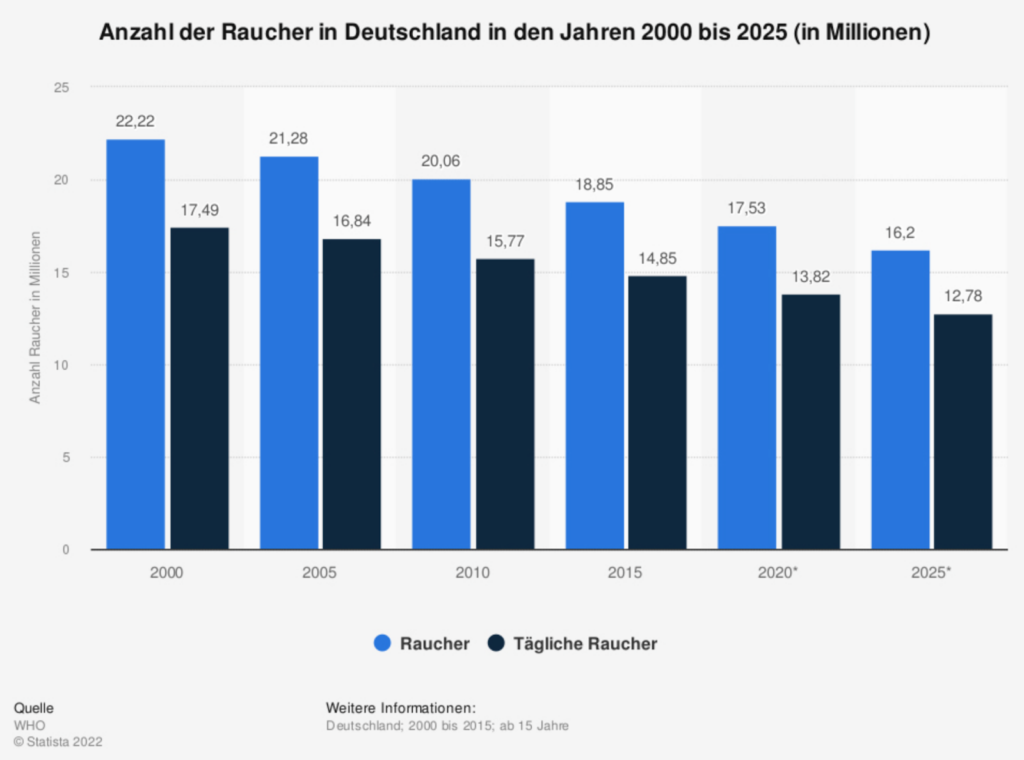
Not all consumer stocks are benefiting from rising consumer numbers. The number of smokers in Germany fell from 22.2 million (2000) to 16.2 million (2025), with daily smokers declining from 17.49 to 12.78 million. This is a clear and continuous downward trend over the past 25 years.
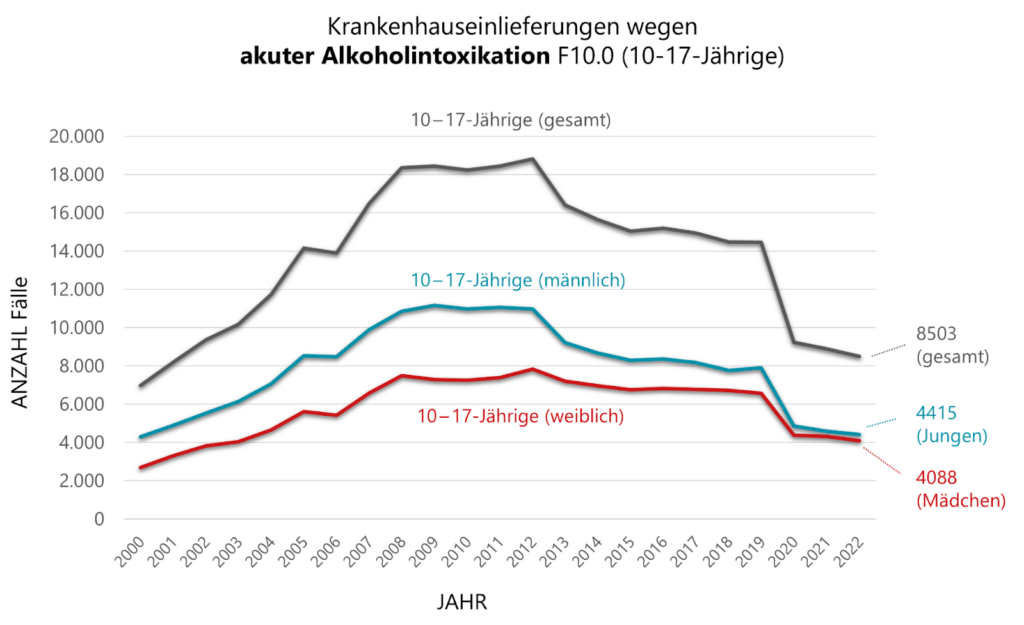
Alcohol producers similarly suffer from declining consumption among younger people, which pressures the sales and margins of specialized companies. While basic consumer goods grow steadily, cyclical or substance-based segments are vulnerable to societal trends such as health consciousness, regulations, and generational change.
The largest and best-known consumer goods stocks at a glance
The following list provides a consolidated overview of the 15 most significant consumer goods companies from the USA and Europe, sorted by their current global market capitalization.
To enable a direct comparison of the corporations, the valuations were uniformly converted into US dollars based on current exchange rates.


Top 15 Consumer Goods Stocks Worldwide by Market Capitalization
| Rank | Company | ISIN | Country | Market capitalization (Billions USD) |
| 1 | Walmart | US9311421039 | USA | 954 |
| 2 | Costco Wholesale | US22160K1051 | USA | 428 |
| 3 | Procter & Gamble | US7427181091 | USA | 338 |
| 4 | Coca-Cola | US1912161007 | USA | 303 |
| 5 | Philip Morris | US7181721090 | USA | 270 |
| 6 | Nestlé | CH0038863350 | Switzerland | 241 |
| 7 | L'Oreal | FR0000120321 | France | 238 |
| 8 | PepsiCo | US7134481081 | USA | 202 |
| 9 | British American Tobacco | GB0002875804 | UK | 126 |
| 10 | Altria | US02209S1033 | USA | 104 |
| 11 | Mondelez | US6092071058 | USA | 73 |
| 12 | Target | US87612E1064 | USA | 50 |
| 13 | Diageo | GB0002374006 | UK | 49 |
| 14 | Estée Lauder | US5184391044 | USA | 41 |
| 15 | Handle | US0266588512 | Germany | 33 |
Source: Marketsscreener from 17.01.26
Before you select individual shares, you first need a securities account. How to set up a securities account step by step Open an account, you can find out in CapTrader's detailed guide.
We present a selection of consumer goods stocks in more detail in the following section.
Procter & Gamble
Procter & Gamble is a popular Blue chip share and above all known for its major brands such as Gillette, Braun, Head & Shoulders, Oral-B, Blend-A-Dent, Pampers, and many more. The household and personal care company is almost 200 years old and has 22 brands that generate an annual revenue of more than one billion dollars.
Almost all of these brands are number 1 or number 2 in their categories, which include paper products, detergents, diapers, and beauty products. P&G is also a dividend aristocrat, meaning its dividends have grown continuously for many years.
| Tax year | Estimated Revenue (in millions of US dollars) | Change compared to previous year |
| 2025 | 84.284 | 0,29 % |
| 2026 | 86.759 | 2,94 % |
| 2027 | 89.203 | 2,82 % |
Source: Marketsscreener from 17.01.26
The company is currently developing innovative products, including the non-toxic insect repellent Zevo, and launched a line of plant-based cleaning products in 2019. After streamlining the company by selling non-core brands, restructuring, and cutting costs, P&G's position is stronger than ever.
Like other consumer staples manufacturers, P&G has recently been able to increase its sales and earnings per share due to the pandemic.
2. Henkel
Another well-known name in the consumer goods sector is Henkel. The company was founded in 1876 and has its headquarters in Düsseldorf. Henkel operates worldwide and offers products in three different business units.
A business segment focuses on adhesives, sealants, and functional coatings for various business areas, including packaging and consumer goods, automotive and metal, electronics and industry, and crafts, construction, and professional applications.
The products are primarily marketed under the brand names Loctite, Technomelt, Bonderite, Teroson, and Aquence.
| Tax year | estimated revenue (in million euros) | Change compared to previous year |
| 2025 | 20.632 | -4,42 % |
| 2026 | 20.738 | 0,52 % |
| 2027 | 21.306 | 2,74 % |
Source: Marketsscreener from 17.01.26
The Beauty Care segment offers hair cosmetics, body care, skin care and oral care products and operates professional hair salons. The products are sold through various channels under brand names such as Schwarzkopf, Dial and Syoss.
The Laundry & Home Care segment offers heavy-duty and specialty detergents, fabric softeners, laundry boosters and other fabric care products, hand and automatic dishwashing products, bathroom and WC cleaners, household, glass and specialty cleaners, as well as air fresheners and insect repellents for the home. Well-known brand names include Persil, Bref and Purex.
3. Nestlé
Founded in 1866, Nestlé AG, headquartered in Vevey, is one of the world's largest food companies. Its broad brand portfolio includes global market leaders in baby food (Cerelac, Gerber), water (Perrier, S.Pellegrino), cereals (Nesquik, Lion), and confectionery such as KitKat and Smarties.
In addition, the company dominates the coffee market with Nescafé and Nespresso and offers an extensive range of food products and ready meals under brands such as Maggi, Thomy, and Wagner.
| Tax year | Estimated revenue (in millions of CHF) | Change compared to previous year |
| 2025 | 89.805 | -1,7 % |
| 2026 | 91.001 | 1,33 % |
| 2027 | 94.045 | 3,34 % |
Source: Marketsscreener from 17.01.26
4. L'Oréal
L'Oréal is one of the world's largest and best-known cosmetics and beauty companies, covering almost all segments of the beauty market with its brands. Among its most important brands are L'Oréal Paris, Maybelline, Garnier, Lancôme, Yves Saint Laurent Beauté, Kiehl's, and Vichy, which have a strong presence in the mass market as well as in the premium and luxury segments.
The company benefits from a very broad global presence, a strong focus on research and development, and high pricing power in many categories.
| Tax year | estimated revenue (in million euros) | Change compared to previous year |
| 2025 | 44.173 | 1,58 % |
| 2026 | 46.120 | 4,41 % |
| 2027 | 48.577 | 5,33 % |
Source: Marketsscreener from 17.01.26
5. PepsiCo
PepsiCo is a global food and beverage manufacturer and directly competes with Coca-Cola in many categories, but also has a very strong snack business.
The brand portfolio includes, among others, Pepsi, Mountain Dew, Gatorade, and 7UP in the beverage sector, as well as Lay's, Doritos, Cheetos, and Ruffles in the snack segment, which are market leaders or top brands in numerous countries.
Through this combination of beverages and snacks, PepsiCo achieves very stable, broadly diversified revenues and operates in over 200 countries and territories.
| Tax year | Estimated Revenue (in millions of US dollars) | Change compared to previous year |
| 2025 | 93.412 | 1,7 % |
| 2026 | 96.926 | 3,76 % |
| 2027 | 99.998 | 3,17 % |
Source: Marketsscreener from 17.01.26
PepsiCo is investing heavily in high-growth categories such as reduced-sugar beverages, functional beverages, and healthier snack alternatives to address changing consumer habits and regulatory pressure.
CapTrader can do that:
At CapTrader, the trading fees are extremely low: you can trade US shares from as little as $ 0.01 per share (order minimum $ 2.00) and German shares from as little as 0.1 % of the order volume (order minimum €2.00), options from €2.00, futures from €1.00, ETFs from €2.00 and much more!
Conclusion: Consumer Staples Stocks in 2026
Consumer staple stocks are suitable as essential core investments in 2026, convincing through their crisis resilience and pricing power.
While the global economy is subject to fluctuations, brands like Nestlé, Procter & Gamble, and PepsiCo secure stable cash flows and attractive dividends through the steady demand for everyday necessities.
Particularly noteworthy is the potential through e-commerce and the growing purchasing power in emerging markets, which are creating new growth impulses. Despite challenges such as commodity price volatility and stricter environmental regulations, the sector offers a solid opportunity for long-term outperformance due to its moderate valuation.
For investors, this means an ideal combination of security, predictable returns, and structural growth in a volatile market environment.
