


In addition to equities, ETFs and futures, equity indices are underlyings on which Options can be bought or sold. Apart from a speculative use, investors often use Index optionsto hedge an entire stock portfolio. In this article you will learn what index options are and what special features they have.
What is an index option?
The buyer of an index option acquires the right to "buy" a certain underlying index at a certain price (strike price) (Call option) or to "sell" (Put option). The option seller receives from the option buyer the Option premium and in return undertakes to "buy" (put) or "sell" (call) the index if the option buyer exercises his right and exercises the option.
Special features of index options
With regard to the rights and obligations of the option buyer and the option seller, there are no fundamental differences between index options and other options (e.g. stock options or futures options). However, there are some things to consider regarding multiplier, settlement method and exercise style.
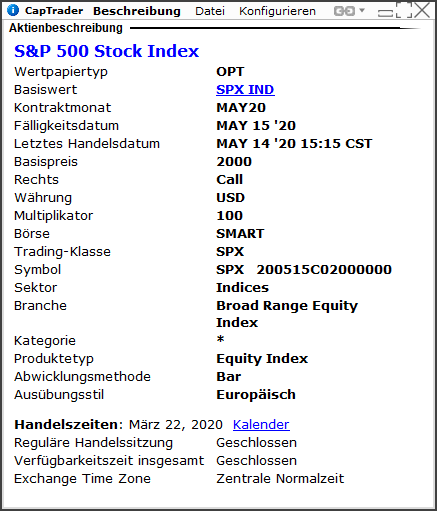
Multiplier
Index options have No uniform multiplier. However, the multiplier for the main American index options is all 100 USD. The multiplier for the DAX index is 5 EUR. The multiplier for the Euro Stoxx 50 index is 10 EUR.
Settlement method
Since an index cannot be purchased physically, index options (in case of exercise of the option) will be bar settled/settled. I.e. the difference between the base price and the current index score is multiplied by the multiplier and settled in cash.
Exercise style
If in doubt, please also refer to the contract details of the respective index option for the exercise style. Most index options are subject to a European exercise styleHowever, there are also exceptions, such as the S&P 100.
Index Options vs Index Futures Options
In addition to index options, there are numerous index futures on which options can be traded. These usually differ from the index options in terms of settlement method, exercise style and multiplier. Therefore, it is advisable to take a look at the contract details before trading.