Today's blog post is "naturally" again about Real Estate Investment Trusts (REIT). This time, however, I have not brought along a single REIT, but would like to write something about individual sectors and a few selected companies on a quarterly basis in future. In this article, I will focus on two representatives each from the net lease and residential sectors. In principle, every REIT can be assigned to a sector quite easily depending on the type of property or purpose (with a few exceptions). The business model may often be the same, but within a sector there are specific challenges for the companies.
Net Lease REITs
Strictly speaking, the first sector I would like to highlight is not a separate sector according to Nareitbut rather a business model, which does have some peculiarities. (Triple) net lease primarily means that the landlord has to pay for almost all costs, be it maintenance, taxes or insurance. Net lease REITs usually have very long-term leases of up to 20 years, including various renewal options and annual rent increases as well as inflation clauses. On the one hand, all of this ensures lower expenses for the company and, on the other, a certain amount of organic growth. As a result, net lease REITs often have a lower valuation than REITs from other sectors. And because they rely on acquisitions for inorganic growth, net lease REITs are very likely to lead the recovery in rate cuts. We are already seeing this to some extent.
W.P. Carey
W.P. Carey (TWS abbreviation: WPC, ISIN: US92936U1097) is one of the representatives of this sector, which could be classified as "Diversified", as it is represented in many areas, as can be seen quite clearly in the chart below. One sector has been missing for some time, namely Office, which was perhaps spun off somewhat hastily (including a cut in the dividend). What remains are mainly Industrial and Warehouse Assets.
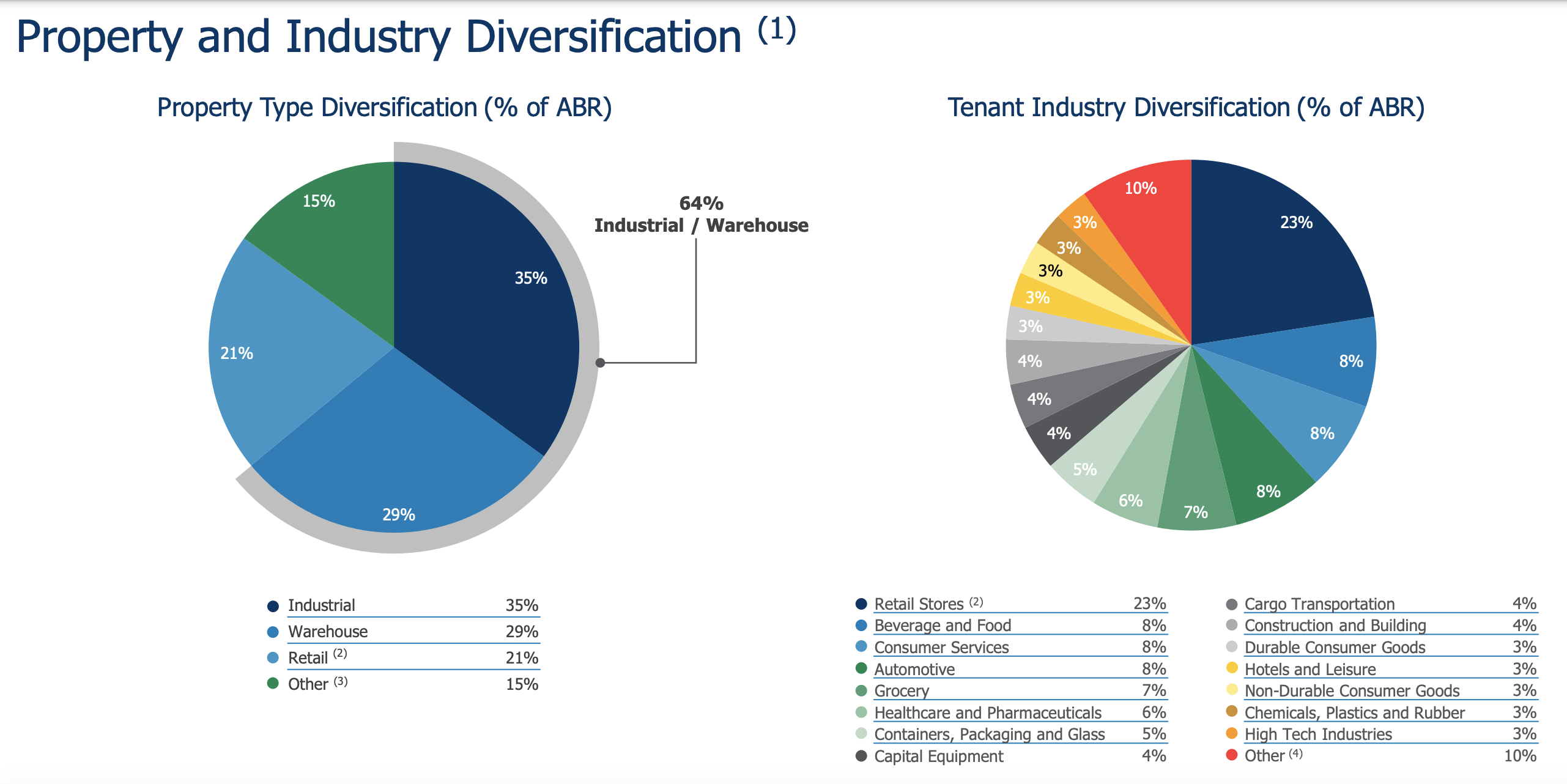
Property and Industry Diversification (Source: Second Quarter 2024 Investor Presentation)
WPC has only experienced the first slight recovery in REIT prices in the last few days. In the second quarter, the forecast for adjusted funds from operations (AFFO) was reduced slightly and the internal self-storage segment showed a minimal decline in net operating income (NOI). The proceeds from the sale of the office properties have not really been touched yet and could be invested accordingly in the coming months, which are seasonally among the better months in terms of investment activities. In terms of valuation, WPC is currently valued at a P/AFFO of around 13x, so there is still some way to go to the historic high of around 15x and the company would collect a good cash flow for waiting (Dividend yield approx. 5.6%). As mentioned above, the largest part of the portfolio is industrial real estate, so one could of course apply higher multiples for WPC over time.
VICI Properties
The casino REIT VICI Properties (TWS abbreviation: VICI, ISIN: US9256521090) also uses the net lease model, but has performed better than WPC. With a market capitalization of around USD 35 billion, VICI is one of the larger net lease REITs, but the company still finds good opportunities to place its money, most recently reinvesting in the Venetian Casino or providing Great Wolf Resort with a high-interest mezzanine loan, for example.
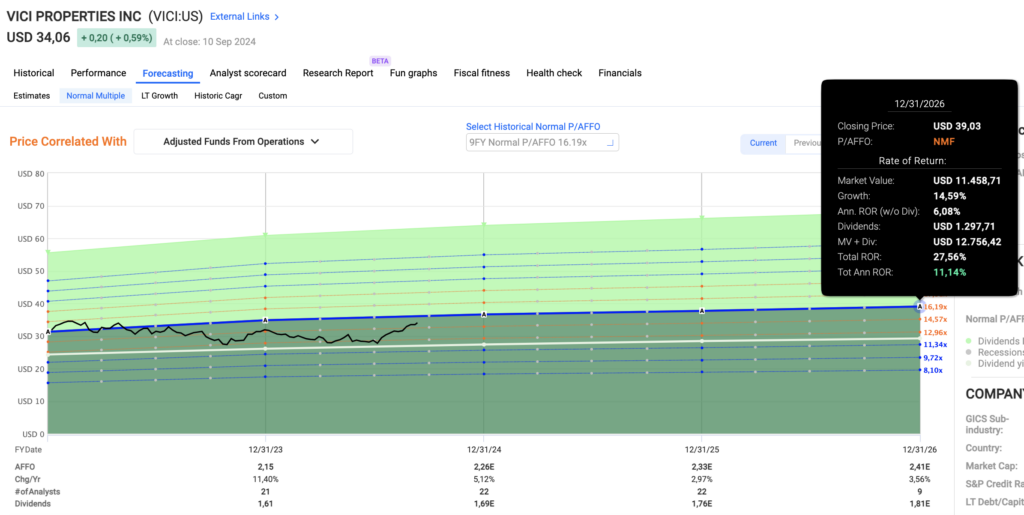
VICI Forecasting (source: fastgraphs.com)
Q2 was very good, as AFFO per share grew by almost 6% compared to last year. In addition, the annual outlook was raised and there was also a dividend increase of 4.2% at the beginning of September. Looking at the valuation, VICI at P/AFFO 15x is very close to its historical value of 16x. Taking the dividend into account, however, this still means a total return of >10% for the future.
Residential REITs
As mentioned at the beginning, each REIT sector has specific challenges. For residential REITs, the big issue is balancing the historically large increase in multifamily supply this year with the ongoing long-term housing shortage. While the increased supply is putting short-term pressure on rental growth and increasing vacancy rates, the affordability of homeownership remains at an all-time low. Home prices in the US have risen sharply, mortgage rates are high, and the ratio of home prices to household income has reached record levels.
In contrast to the real estate bubble of the 2000s, which was characterized by oversupply and euphoric market sentiment, the market today is characterized by very restrained construction activity, restrictive lending and low transaction figures. These differences reduce the likelihood of a drastic fall in prices, which continues to keep the affordability of residential property low.
The high demand for rental apartments is currently ensuring high demand in the multifamily real estate sector. Although a decline in new construction is expected in the coming year, the structural housing shortage remains. This supports the fundamentals across the entire spectrum of residential REITs, from multifamily houses to single-family houses and manufactured houses, and offers solid long-term growth opportunities, despite the current short-term challenges.
BSR REIT
BSR REIT (TWS abbreviation: HOM.U, ISIN: CA05585D1033) is also a little exotic, similar to Safehold (was sold in the last Article analyzed). The company is listed on the Toronto Stock Exchange, but focuses exclusively on Texas as a market. There it owns a portfolio of Class B apartments in the suburbs. In the residential sector, BSR is one of the most undervalued stocks if one focuses purely on net asset value (NAV). Although the NAV is still declining somewhat, there is still a discount of around 20% to the current share price and, given the situation in the residential sector, it can be assumed that the NAV should grow again soon.
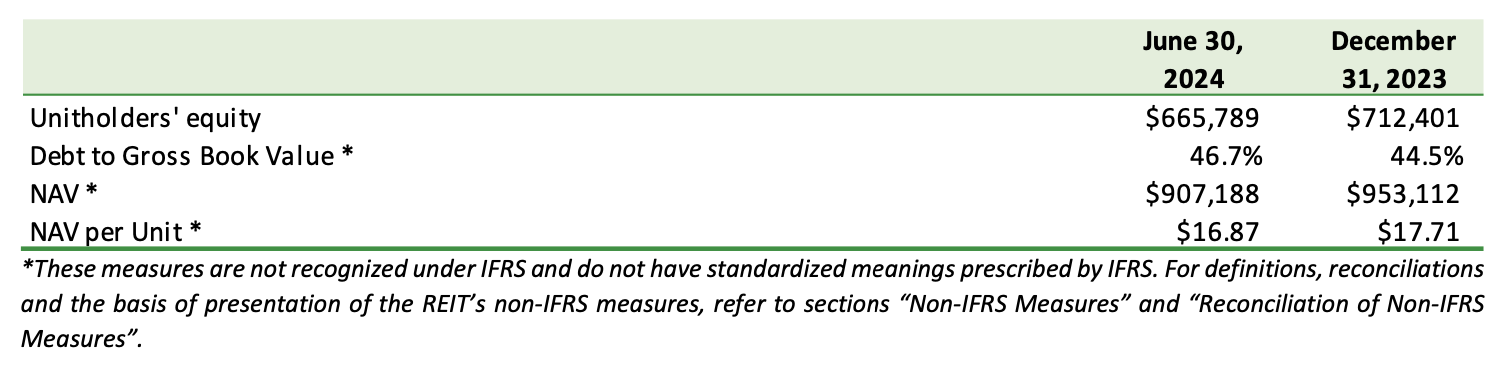
In Q2, the vacancy rate was similar to previous quarters, Same-Property Net Operating Income (SSNOI) grew by almost 5% and AFFO by 20% YoY. Moreover, as the management has been diligent due to the undervaluation Buys back sharesthat is Payout ratio decreased accordingly. This was recently used to increase the monthly dividend paid out by a nice 7.7%.
Sun Communities
Sun Communities (TWS code: SUI, ISIN: US8666741041) is a representative of the residential sector that focuses on manufactured housing (MH). In addition to MH, it also has RVs and marinas in its portfolio and also owns some MH assets in the UK.
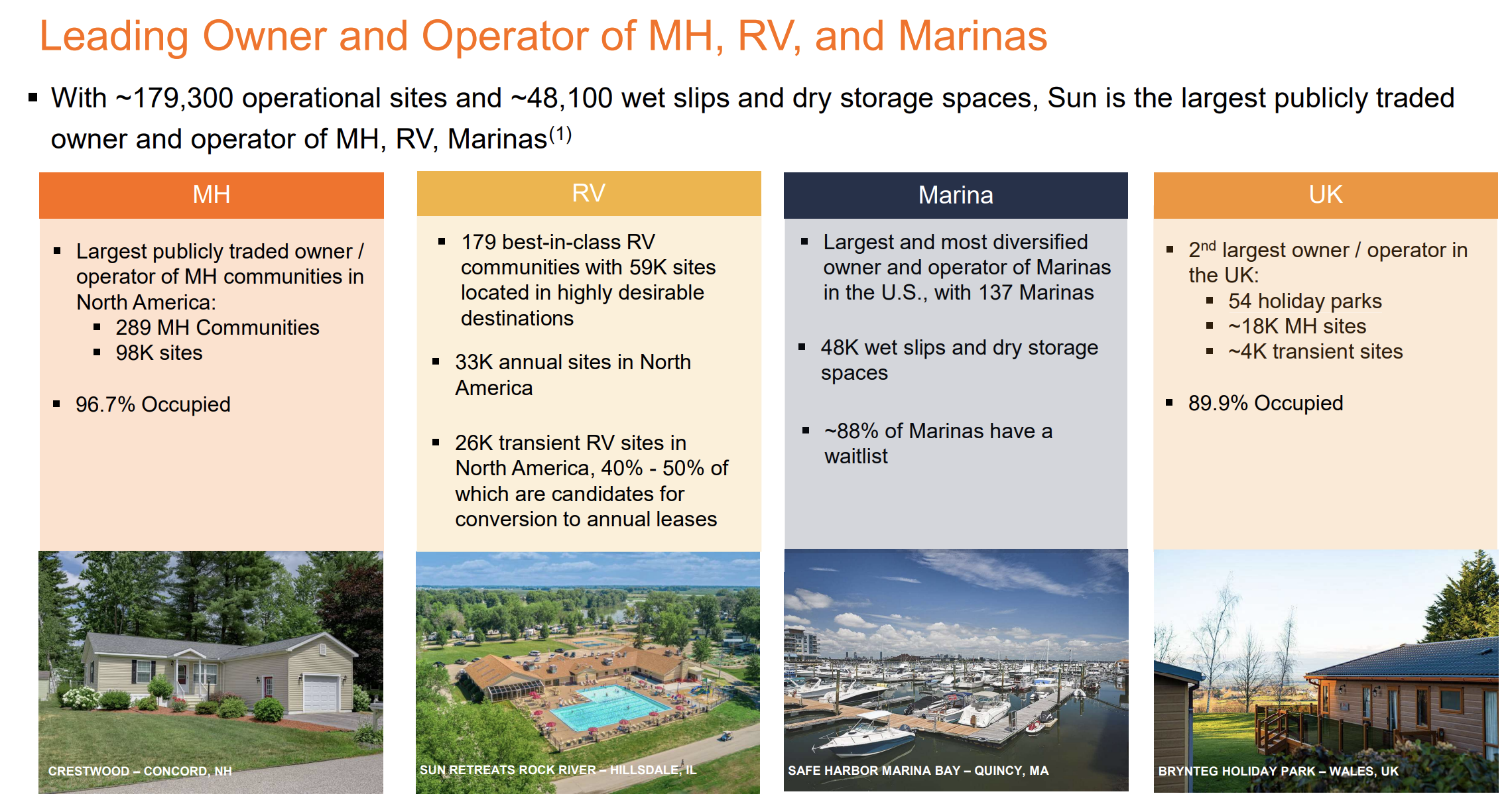
An important issue at SUI is the increased debt, especially the higher proportion of variable interest compared to peers. This resulted in higher interest costs in Q2, which caused core FFO to decline by around 5% YoY. There were also some sales of assets, the proceeds of which were used to service debt. However, the maturities until 2026 are actually very manageable. Sun Communities is currently valued at a P/AFFO of 22-23x, but historically >25x was the rule, which is why 20% upside still seems possible here, purely in terms of price, especially if debt continues to fall and refinancing with lower interest rates is possible.
Options trading
I myself also act actively Optionsbut almost exclusively as a so-called "writer". I am therefore naturally also interested in REITs that are suitable for additional Cash flow or for a favorable entry by means of delivery. The Volatility (VIX) is currently at a slightly higher level again, so the premiums are definitely interesting.
- W.P. Carey: For WPC there are Short Puts with a Strike from $55 in October or a little longer running with $55 in January '25 that offer halfway reasonable premiums.
- VICI Properties: For VICI there are Short Puts with a Strike from $32.5 in October or somewhat more conservative and longer running with $30 in December an.
- Sun Communities : For SUI there are Short Puts with a Strike from $130 in October an.